RF jamming is a denial-of-service attack on the airwaves, and critical infrastructure operators need to understand how it works, what stationary jammers can do, and why operating one is almost always a federal crime. Here is the technical, commercial and legal picture in plain English.
What Is a Signal Jammer and Why Does Critical Infrastructure Need Protection?
A signal jammer is basically a radio transmitter that deliberately drowns a wireless channel in noise or fake signals, so legitimate devices can no longer pick out the actual data. That makes jamming a denial-of-service attack at the physical layer — not a software exploit or a stolen-credential kind of hack. Once the signal-to-noise ratio falls below what a receiver needs to function, Wi-Fi, Bluetooth, GPS, and cellular links can all fail at once.
For critical infrastructure, this is a big deal, because so much of today's power grid, water systems, and transportation networks runs on wireless links. CISA counts 16 critical infrastructure sectors, and the numbers in Dragos's 2025 OT Cybersecurity Year in Review are sobering: of the industrial ransomware incidents that got a response during 2024, 75% led to a partial shutdown of operational technology, while 25% caused a full shutdown. A jammer can inflict that same kind of operational pain without ever touching a single server.
How RF jamming Works: Noise, Barrage, Spot and Sweep Techniques
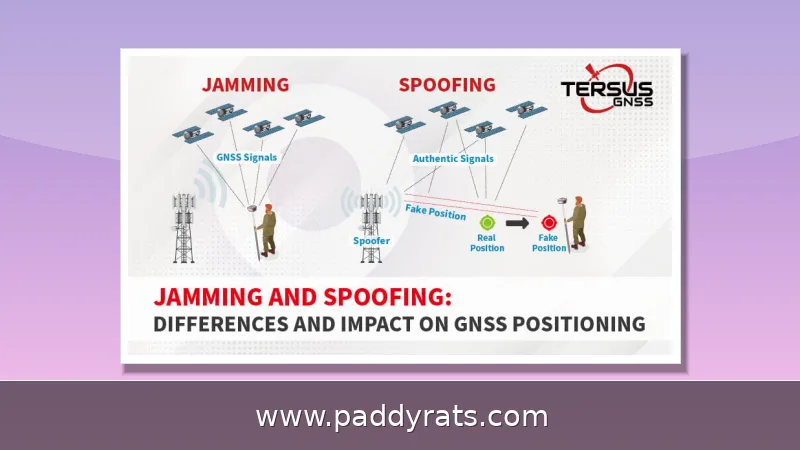
At the physical layer, jamming is a pretty straightforward idea—it's just that the hardware behind it keeps getting more sophisticated. The jammer transmits on the same frequency the target device is using, whether that's Wi-Fi, Bluetooth, GPS, or a cellular link, and it does so through signal generators, high-gain antennas, or software-defined radios that can be retuned on the fly. The receiver on the other end has no clue anything is wrong. All it sees is a wall of interference where a clean signal used to be, and its signal-to-noise ratio drops so far that the intended transmission can no longer be pulled out of the noise floor. That's the key distinction here. Nothing is being hacked, decrypted, or stolen in the traditional sense. The data isn't intercepted or altered—it just never shows up. That's exactly why security researchers consistently frame jamming as a denial-of-service (DoS) attack on the airwaves rather than a data breach, and why it can quietly take down everything from a wireless sensor network to a GPS timing feed without tripping the kind of alarms a network intrusion would.
Attackers don't stick to a single playbook, and that flexibility shows up both in how a jammer behaves and in what it goes after. Constant jamming is the simplest case, and it's exactly what it sounds like: the interference just never stops. Reactive jamming is sneakier. The device stays quiet until it detects a legitimate signal, then it fires. Deceptive jamming takes a completely different approach, feeding false data into the receiver instead of drowning the channel in noise, while random jamming flips on and off with no discernible pattern, which makes it far harder to pin down. Frequency targeting opens up another set of options. Barrage jamming spreads across a wide spectrum, spot jamming concentrates all its power on one narrow band, and sweep jamming races through frequencies to catch signals that try to hop out of the way. Then there's the question of what actually gets targeted, and the list is long: Wi-Fi, Bluetooth, Zigbee, 4G/5G, GPS/GNSS navigation, IoT and sensor networks, smart home security, industrial control systems, and drones. For critical infrastructure operators, that second-to-last category is the one that really counts, since industrial control systems are what keep power grids, water systems, and transport networks running.
| Category | Type | How it works |
|---|---|---|
| By behavior | Constant | Continuous interference with no breaks |
| Reactive | Activates only when a valid signal appears | |
| Deceptive | Sends false data rather than pure noise | |
| Random | Irregular on/off pattern that is harder to detect | |
| By frequency targeting | Barrage | Wide spectrum coverage |
| Spot | Narrow band, concentrated power | |
| Sweep | Rapid frequency movement |
Detection isn't guesswork. It really comes down to watching a handful of measurable symptoms. Operators keep an eye on Packet Delivery Ratio (PDR) to see how many packets actually make it through, RSSI/SS for received signal strength, Bad Packet Ratio (BPR) for corruption rates, Carrier Sensing Time (CST) for how long a device has to wait before it can transmit, and Packet Inter-Arrival Time (IAT) for irregular gaps between packets. Those numbers tell you something's wrong, but not why. That's where spectrum analysis tools and machine learning models earn their keep, since they can separate ordinary congestion from deliberate interference. Mitigation basically runs the same logic in reverse. Frequency hopping (FHSS) keeps signals moving across channels, power control and directional antennas reduce exposure, channel switching sidesteps congested bands, and network redundancy gives you backup paths. Encryption and authentication shut out spoofed signals, jammer localization pinpoints where the source is, and adaptive protocols adjust on the fly. Simply put, detection measures the damage; mitigation is the coordinated response.
Anti-jamming devices sit on the opposite side of the equation from jammers. Rather than transmitting interference, they harden the receiver so that deliberate noise never gets the chance to drown out the signal it needs to hear. In practice, that means filtering or cancelling incoming interference right at the receiver instead of trying to block or overpower the jamming transmission itself. Vendors like to call this a digital bodyguard for signals, and honestly, that image fits. The point isn't to fight the attacker out in the airwaves — it's to protect the listening device so it can keep doing its job. For infrastructure operators, that distinction ends up mattering more than any spec sheet. Under current U.S. rules, you're allowed to shield and harden your own receivers, but you generally can't legally transmit interference of your own, no matter how good your reason might be. One path keeps you inside the law; the other can put you on the wrong side of it.
Stationary Jammer Deployment: Frequency Bands, Power and Antenna Placement
A stationary jammer runs on grid power instead of a battery, and that's the whole reason it can keep going at full strength for hours on end. Prodefence, for example, says one of its units puts out up to 100 watts per channel, which works out to a reliable radius of about three kilometers in open terrain. But here's the catch: reinforced concrete, dense city blocks, and other heavy structures absorb and scatter RF energy, so real-world coverage can shrink fast—sometimes to just a fraction of what the spec sheet promises. If you're weighing your options, the takeaway is pretty straightforward. Treat the advertised range as a best-case number measured under ideal conditions, not something you can count on once you're actually on site. Build your deployment plan around open-field specs and it will almost certainly fall short the moment buildings, terrain, and local interference come into play.
| Deployment Factor | Effect on Effective Range |
|---|---|
| Power source | Grid power enables continuous output up to 100 W per channel |
| Open area | Reliable radius up to ~3 km (vendor figure) |
| Reinforced concrete / dense urban structures | Sharply reduced effective distance |
| Published range specs | Best-case numbers, not guarantees |
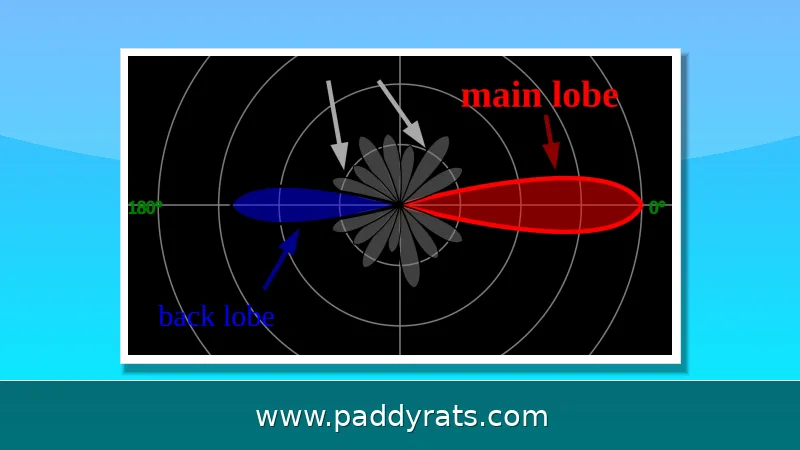
Deployment success comes down to geometry as much as raw wattage. A stationary jammer can put out serious power, but if the antenna sits behind buildings, trees, or uneven terrain, a good chunk of that energy will never reach the target. That's why operators mount antennas on 15-meter masts — the height provides a clean line of sight, so the signal travels across open ground instead of scattering off whatever is in the way. The hardware also has to hold up outdoors. IP66-rated enclosures keep out dust and heavy water intrusion, so rain, grit, and washdowns never get to the electronics inside. Heat is the other issue that tends to catch people off guard: active cooling keeps the unit running at full strength once ambient temperatures climb past 40 degrees Celsius, which is roughly where cheaper designs start to derate or shut down altogether. Directional shielding, meanwhile, controls where the energy actually goes, keeping side-lobe radiation under 2% so the jammer doesn't leak unintended interference onto nearby systems that were never meant to be affected.
Sometimes a concrete example makes these specs a lot easier to grasp. Take the 2150–2350 MHz, 100 W signal jamming device that Shenzhen Jingwei Technology lists on Made-in-China, marketed specifically for critical infrastructure protection. That frequency falls within the 2.1–2.4 GHz band, and the unit is built around an analog sweeping design. The sweep rate is customizable from as low as 50 KHz up to 300K, with 200K as the default setting. At just 150 × 80 × 23 mm and 590 g, it's a compact, panel-style device rather than some rack-mounted monster. The listing also mentions ISO certification and HS Code 8543904000, plus a production capacity of 1,000 pieces per year and a price of US$298.00 each — and the minimum order quantity is only one. The table below lays those specs out side by side.
| Specification | Detail |
|---|---|
| Frequency band | 2150–2350 MHz |
| Output power | 100 W |
| Analog sweeping speed | Customizable from 50 KHz to 300K; default 200K |
| Dimensions | 150 × 80 × 23 mm |
| Weight | 590 g |
| Price | US$298.00 per piece (MOQ 1) |
| Certification | ISO certified |
| HS Code | 8543904000 |
| Production capacity | 1,000 pieces per year |
Specifications to Compare: Range, Wattage, Sweeping Speed and Enclosure Ratings
When you're comparing stationary jammers, four numbers matter more than any glossy spec sheet: output power per channel, realistic range in the environment you'll actually deploy in, sweeping speed flexibility, and environmental protection. Output power tells you how much signal the unit can push per band, but it only translates into distance under the right conditions. That's where range gets tricky — most marketing figures come from open-field tests with clear line of sight, so a jammer rated for three kilometers may cover only a fraction of that once you're inside a substation, a rail yard, or any site crowded with concrete, metal fencing, and heavy equipment. Sweeping speed flexibility matters because different threats call for different coverage patterns, and adjustable sweep rates let you tune the unit to the target signals. Finally, environmental protection — enclosure ratings, cooling, and shielding — determines whether the hardware survives heat, dust, and weather without losing performance. Miss any one of these, and a unit that looks impressive on paper can underdeliver where it counts.
The table below pulls together the vendor-reported specs for one commercially listed jamming device, alongside the deployment and environmental figures that matter for infrastructure sites. Treat these as reported specifications from vendors and marketplaces, not independent lab results.
Legal Framework: FCC Rules, SAFER SKIES Act and Authorized Operators
In the United States, operating, marketing or selling RF jamming equipment is a federal crime unless you are an authorized government entity. The Communications Act of 1934 (47 U.S.C. 301, 302a, 333) is the backbone of that prohibition, and the FCC warns that interference from RF jammers can prevent people from making 911 calls or receiving emergency alerts, delaying critical response. Penalties reach up to $112,500 per incident, plus potential criminal prosecution.
The SAFER SKIES Act, included in the FY2026 NDAA, narrows the circle of who may lawfully jam. It newly authorizes state and local law enforcement only after training at the FBI's National Counter-UAS Training Center in Huntsville, Alabama. It also covers correctional facility security agencies meeting federal certification, and agencies protecting National Special Security Events and SEAR-rated events such as the FIFA World Cup 2026.
Just as important is who is not authorized. Private companies, including critical infrastructure operators, are excluded unless they act under direct federal authority. Individual property owners and private security firms are also excluded unless contracted by an authorized agency. For operators, the practical takeaway is that jamming is a government capability, not a commercial security product you can deploy on your own site.
Detecting Jamming: GPS Interference, MIDAS and Jammer Localization
Detection research has advanced well beyond noticing that a signal dropped. The University of Bath's MIDAS (Multi-Instrument Data Analysis System) reconstructs 3D images of the ionosphere in real time and was developed over 20 years; it is used under licence by academic institutions globally. IDM (Interference Detection and Monitoring) sensors identify the location and direction of a GPS jammer, while Chronos Technology's JammerCam is described as the first GPS jamming detector able to photograph a moving source.
Real-world cases show why localization matters. A criminal gang used GPS jamming to hide car theft and refit operations in so-called chop shops; UK police recovered 30 stolen cars and made 12 arrests. On the commercial side, Loch AirShield says its location tracking closes the incident response gap to within 1 inch and monitors GPS, Cellular/CBRS, IoT, Wi-Fi and EMI attack surfaces.
These tools matter for infrastructure because jamming is often a precursor or a cover for another crime. If a site cannot tell whether an outage is equipment failure, spectrum congestion or deliberate interference, response times stretch and evidence disappears. Monitoring GPS, cellular and Wi-Fi attack surfaces gives operators the telemetry to escalate quickly and to hand investigators a location rather than a guess.
Market Context: How Big Is the Signal Jammer Market?
Market estimates vary widely because analysts define the category differently, but the direction is consistent. Technavio forecast in May 2024 that the signal jammer market would increase by USD 1.08 billion at a CAGR of 5.66% between 2023 and 2028, with year-over-year growth of 5.27% from 2023 to 2024. Coherent Market Insights valued the market at USD 1.8 billion in 2026 and expects USD 3.6 billion by 2033, a 10.4% CAGR.
Other research houses land in a similar range. Fortune Business Insights projects growth from $4.98 billion in 2026 to $9.27 billion by 2034 at an 8.1% CAGR. Strategic Market Research put the 2025 value at USD 2.85 billion, rising to USD 4.64 billion by 2032 at 7.2%. Dataintelo reported $2.8 billion in 2025 growing to $5.6 billion by 2034, also at 8.1%, while Verified Market Research valued the signal jamming device market at $1.66 billion in 2024, reaching $3.31 billion by 2032 at a 10.3% CAGR from 2026 to 2032. Reanin estimated USD 913.05 million in 2025, increasing to USD 1209.32 million.
The composition of that demand is telling. Coherent Market Insights reports portable jammers at 45% share, with multi-band jammers leading, government and defense as the largest application, North America the largest region and Asia Pacific the fastest-growing. In other words, the growth is concentrated exactly where the legal authority to jam also sits.
Mitigation and Anti-Jamming: What Infrastructure Operators Can Legally Do
Because transmitting interference is off-limits for private operators, the practical defense playbook is about resilience and detection rather than counter-jamming. Frequency hopping spread spectrum, power control, directional antennas, channel switching and network redundancy all make a link harder to drown out with noise. Encryption and authentication ensure that even a deceptive jammer sending false data cannot inject commands that systems will trust.
Layered monitoring completes the picture. Packet Delivery Ratio drops, unusual RSSI spikes, higher Bad Packet Ratio, longer Carrier Sensing Time and spectrum analysis together distinguish jamming from ordinary congestion. Adding jammer localization and adaptive protocols lets a network shift behavior when interference appears, and anti-jamming devices that filter or cancel noise at the receiver can protect GPS and timing feeds without violating federal law.
For critical infrastructure teams, the honest conclusion is that jamming is a threat to plan against and a capability to escalate to federal partners, not a tool to buy. Documenting interference events, preserving spectrum evidence and coordinating with the FCC and law enforcement is the defensible path when a site suspects deliberate RF interference.
Frequently Asked Questions
How does a signal jammer disrupt wireless communication?
A jammer transmits powerful radio signals on the same frequency as the target device, flooding the channel with noise or false signals. This lowers the signal-to-noise ratio so legitimate devices cannot interpret valid data, causing a denial-of-service that blocks Wi-Fi, Bluetooth, GPS, cellular and radio links.
Is it legal to operate a signal jammer in the United States?
No. Under the Communications Act of 1934 (47 U.S.C. 301, 302a, 333), the FCC prohibits operating, marketing or selling devices that block authorized radio communications. Violations carry fines up to $112,500 per incident and potential criminal prosecution. Only authorized government entities may lawfully operate jamming equipment.
What are common jamming techniques used against critical infrastructure?
Common techniques include constant jamming (continuous noise), reactive jamming (activates only when a valid signal is detected), deceptive jamming (sends false data), random jamming, and frequency-targeting methods such as barrage, spot and sweep jamming. These target GPS/GNSS, Wi-Fi, Bluetooth and cellular networks.
How can organizations detect and mitigate jamming attacks?
Detection relies on packet delivery ratio drops, unusual RSSI spikes, higher bad packet ratios, carrier sensing time and spectrum analysis. Mitigation includes frequency hopping (FHSS), power control, directional antennas, channel switching, network redundancy, encryption, jammer localization and adaptive protocols.