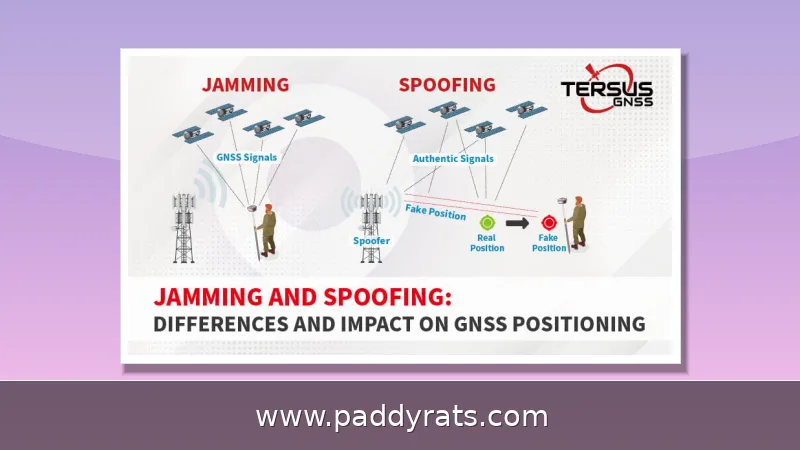
Military signal jammers are electronic warfare tools that detect, intercept, and overpower enemy radio, radar, and GNSS signals. Here is how jamming waveforms work, what the hardware specs look like, and where the legal lines fall.
What Is a Military Signal Jammer and What Does It Do?
A military signal jammer is really just a transmitter built to drown out someone else's signal. It doesn't crack encryption or read messages — it simply pushes so much radio energy onto a frequency that the receiving antenna picks up noise instead of the traffic it was trying to hear. In military circles, this falls under electronic warfare (EW): using the electromagnetic spectrum or directed energy to detect, identify, intercept, and locate hostile emissions, then radiate interfering signals to neutralize the threat. Jamming is considered a form of electronic countermeasures, and it's one of the few weapons out there that can do its job without ever crossing a border.
A military signal jammer is built to go after just a few practical targets: comms links, radar returns, drone control channels, and satellite navigation. Take out a tactical radio net and a commander can no longer move units in step. Flood a radar return with interference and the operator staring at the scope just sees static where an aircraft should be. Sever the link between a drone and its pilot and the thing either drifts off course or drops out of the sky. Deny GPS timing to a guided munition and it may never reach what it was aimed at. Notice that none of this actually destroys anything, and that's the whole point. Jamming is invisible and reversible, too—switch it off and the radio net comes right back, which is why militaries tend to treat it as a graduated tool rather than a blunt weapon. It can serve as a warning, set the tempo of an operation, or shut down an adversary's ability to coordinate altogether. That kind of flexibility, more than any single technical breakthrough, helps explain why defense budgets around the world keep pouring more money into these systems.
How Do Military Signal Jammers Work? Waveforms, Signal-to-Noise Ratio, and Receiver Overpowering
Every jammer, no matter how sophisticated, comes down to a single goal: degrading the signal-to-noise ratio at the receiver until the real signal is buried. The jammer transmits its own radio signal—called a waveform—toward a radar or radio antenna. That antenna then picks up the jamming energy instead of the intended transmission, or at least right alongside it. Think of it like trying to follow one person's voice in a crowded, noisy room: the voice is still there, but once the background noise gets loud enough, your ears simply can't isolate it anymore. A receiver faces the same problem. If the interfering power reaching the antenna is strong enough relative to the incoming signal, the demodulator can't extract the underlying data, and the link fails. Distance matters a great deal here, because jamming weakens the farther it has to travel to reach the target—which is precisely why a jammer has to overpower the transmitter signal rather than just match it.
Effectiveness also falls off with distance, and that's where the physics stops doing you any favors. To jam something for real, you have to overpower the transmitter's signal right at the point where it gets received. That means you need enough effective radiated power, decent antenna gain, and ideally a clear line of sight to the target receiver. Noise jamming is the blunt-force option: it just raises the noise floor until the real signal drowns in it. Deceptive jamming is much sneakier. Rather than blanking out the screen, it feeds in false returns or spoofed messages that look legitimate, pushing a radar or receiver toward the wrong conclusion instead of no conclusion at all.
Here's a quick rundown of the main jamming methods out there, along with what each one actually does once the signal hits a receiver.
Types of Military Jamming: Electronic Attack, Protection, and Support
Military electronic warfare isn't just one trick — it's really three disciplines that constantly feed into each other. Electronic attack is the offensive side: it uses electromagnetic energy, anti-radiation weapons, directed energy, RF weapons, signal jamming, spoofing, and lasers to disrupt, deny, degrade, destroy, or deceive enemy communications. Electronic protection is the defensive side, shielding friendly forces and their equipment from enemy electronic attacks so operations can keep going. Electronic support sits in between, rapidly detecting, intercepting, identifying, and tracking electromagnetic energy sources — work that feeds both targeting and signals intelligence. In practice, the three form a loop: support finds the threat, attack goes after it, and protection keeps friendly signals alive long enough to exploit whatever was learned.
| Discipline | Core Role | Typical Means |
|---|---|---|
| Electronic attack | Disrupt, deny, degrade, destroy, or deceive enemy communications | Electromagnetic energy, anti-radiation weapons, directed energy, RF weapons, signal jamming, spoofing, lasers |
| Electronic protection | Shield friendly forces from enemy electronic attacks | Protective measures against electronic attack |
| Electronic support | Detect, intercept, identify, and track electromagnetic energy sources | Targeting and signals intelligence support |
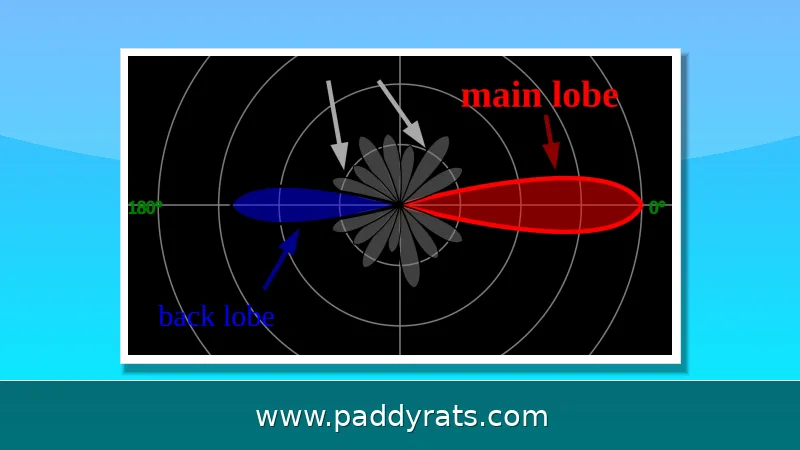
Electronic support is the quiet half of the fight, and it rarely gets the credit it deserves. Before anyone jams a signal, someone has to find the emitter, figure out what kind of system it is, and pin down where it's located — that's why SIGINT, ELINT, and COMINT collection sits upstream of every jamming decision. Think of it as the reconnaissance phase of electronic warfare: you can't disrupt what you haven't identified, and you can't target what you haven't located. On the other side of the ledger, anti-jamming devices work to filter, cancel, or simply ignore interference so the original signal still gets through. The toolbox here is a mixed bag. Beamforming antennas steer gain toward the wanted signal and away from the noise. Frequency hopping keeps moving the carrier so a jammer can't camp on one frequency. Signal processing algorithms actively subtract interference from the received waveform. And when GNSS itself becomes unreliable, non-GNSS sensors pick up the slack — inertial navigation systems, LiDAR, radio ranging, and even visual landmarks can keep a platform on track. Bottom line: electronic support finds the threat, and anti-jamming keeps friendly forces talking.
The trade-off basically comes down to two totally different jobs. Jamming is loud, fast, and broad — it floods a receiver with noise or false signals until the real transmission can't get through. Anti-jamming flips that around: it's quiet, slower to adapt, and narrower in scope, filtering out or canceling interference so the original signal survives. Neither one replaces the other. A unit that only jams is basically broadcasting its own presence with every pulse, so a jammer that can't survive an enemy electronic attack is nothing more than a beacon — the second it powers on, it gives away its position. That's exactly why modern forces treat electronic attack and electronic protection as a matched pair instead of choosing one over the other. The jammer buys time and disrupts the threat; the anti-jamming gear keeps friendly communications, navigation, and timing links alive while the fight is still going on.
Anti-Drone and Counter-UAS Jamming Systems
Drone jamming has become the most visible face of tactical EW. Anti-drone jamming systems use directed energy to interfere with the control and navigation signals of hostile drones—cutting the operator link or spoofing the navigation solution so the aircraft drifts, hovers, or turns around and heads home. Industry and military users tend to describe RF jamming as the preferred and safest way to control rogue UAVs. It keeps the drone intact for forensic analysis, and it poses far fewer risks than netting or shooting it down over populated areas.
There are basically two form factors worth knowing here. Handheld drone jammer guns project a cone of about 15 to 30 degrees, and the heavy-duty versions can reach targets from nearly a mile away — that kind of range is what makes them handy for convoy escort, base perimeter defense, and VIP protection. Vehicle-mounted and fixed counter-UAS (CUAS) setups trade away that portability in return for continuous coverage and more power. As for the frequencies being targeted, you're typically looking at 900 MHz, 2.4 GHz, and 5.8 GHz, plus the 4G and 5G bands that cellular-linked UAVs depend on.
GNSS and GPS Jamming: Why L-Band Signals Are So Vulnerable
Satellite navigation is the softest target in the spectrum, and there is a simple physical reason for that. GNSS signals travel roughly 20,000 km from medium Earth orbit before they reach a receiver, and by the time they arrive they are extraordinarily faint—often weaker than the ambient noise floor a receiver is already sitting in. That weakness is the whole vulnerability. Jammers exploit it by emitting noise or deceptive signals on GNSS frequencies, typically in L-band, where GPS L1 and L2 operate, so the receiver locks onto the interference instead of the satellite. It does not take much: a few watts pointed at the sky, or even a small personal privacy device plugged into a car outlet, can wipe out positioning and timing across a wide radius, taking down not just one user but every GNSS-dependent system nearby.
That timing dependency is the part people underestimate. Aviation, maritime shipping, telecommunications networks, and financial transaction systems all lean on GNSS for synchronization, not just location. A single GPS satellite broadcasts an extremely faint signal—roughly 20,000 km from medium Earth orbit—so even a low-power jammer can drown it out by raising the noise floor across L-band, where GPS L1 and L2 operate. The trouble is that this noise doesn't discriminate. A jammer aimed at one convoy or drone can degrade timing references hundreds of kilometers away, throwing off cellular handoffs, stock trades, and power grid synchronization along the way. That's why GNSS anti-jamming usually means layering defenses rather than relying on any single fix: combining multiple constellations like GPS, Galileo, and GLONASS, using controlled reception pattern antennas that steer nulls toward interference, and falling back on inertial or terrestrial timing sources when the sky goes quiet.
Military Jammer Specifications and Antenna Hardware
Specifications vary enormously between a manpack unit and a base-station system, but the numbers tell you what mission a jammer was built for. Output power, frequency coverage, antenna type, and environmental hardening are the four parameters that matter most when comparing systems. A wideband software-defined radio platform can cover everything from HF through C-band, while a purpose-built GPS jammer may only need a narrow slice of L-band.
The table below pulls together representative published figures from three very different corners of the military jamming world: portable military signal jammers built for rapid deployment, KBR's jamming systems engineered for sustained military use, and Trival Antene's military jamming antennas. Read together, the numbers show how much jamming hardware varies in scale—from compact units with a few hundred watts of output to antenna assemblies rated for kilowatts. They also highlight the environmental and operational tolerances that separate field-grade equipment from consumer-grade gear. The figures are drawn from manufacturer specifications and should be treated as illustrative examples rather than a complete catalog.
| System / Component | Key Published Specifications |
|---|---|
| DT-520 Portable Military Signal Jammer | SDR jamming; interference frequency range 8 MHz to 6500 MHz; whole RF power up to 350W; omni antenna |
| One military signal jammer (representative) | 135 watts; blocks 4G, WiFi, GSM, GPS and more; radius of influence up to 150 meters |
| KBR Portable Jamming System (PJS-100 / PJS-300) | 100- and 300-watt output models; 208 VAC 3-phase; cooling and heating capacity 2,500 BTU/h; operating temperature -30 to 120 F; wind survivability 60 MPH gusts; rain 4 in/hr; solar radiation 360 BTU/h/ft2; relative humidity 100% |
| KBR Wireless Bomb Jammer (WBJ) | Eight analog spots adjustable in frequency, bandwidth, and power; 40 digital spots; MIL-STD-810F tested; field programmable from a laptop |
| Trival Antene AD-10/D wideband dipole | 450–3000 MHz; 1–2.5 dBi; 500–200 W |
| Trival Antene AD-22/G log-periodic | 400–6000 MHz; 8 dBi; up to 2750 W |
| Trival Antene AD-22/F | 1–6 GHz; 9–11 dBi; up to 1.7 kW |
| Trival Antene antenna types | Manpack, vehicular, tactical, base station |
| Drone jammer guns | Project a cone of about 15–30 degrees; heavy-duty models work from almost a mile away |
Portable vs Stationary Jammers: What Are the Trade-Offs?
Portable jammers are compact, limited in range, and user-friendly, which makes them suitable for dismounted teams, route clearance, and quick-reaction tasks. Stationary jammers are more robust, with higher power output for larger areas such as government buildings, airports, and prisons. The same logic applies in reverse for defenders: a fixed installation can afford bigger antennas and better cooling, while a manpack has to be carried, powered, and concealed.
A useful way to think about it is coverage versus exposure. High-power fixed jammers radiate predictably and can be located by enemy electronic support, so they are often paired with decoys and emission control. Portable systems radiate briefly and move, trading area coverage for survivability. Neither is universally better; the mission decides.
The comparison table below lays out the practical differences between the two form factors.
Applications and Use Cases Across the Battlefield
Military applications run from the tactical to the strategic. Jammers disrupt enemy communications, protect personnel and platforms, counter enemy drones and unmanned reconnaissance aircraft, support counter-improvised explosive device operations, and feed missile and laser warning systems. In counter-IED work, jamming is used to prevent remote detonation of devices and to protect sensitive communications during dismounted movement.
Anti-jamming matters just as much on the defense side. It is vital for defense operations, unmanned aerial systems, and critical infrastructure such as aviation, maritime shipping, and telecommunications. A military that can jam but cannot resist jamming is trading one vulnerability for another, which is why procurement increasingly funds protection and support capabilities alongside offensive electronic attack.
The pattern across recent conflicts is consistent: whoever manages the electromagnetic spectrum better tends to see first, decide first, and shoot first. Jamming is one lever in that contest, not the whole machine.
Risks, Compliance, and Legal Limits on Signal Jammers
Jammers do not discriminate well. They may interfere with public safety communications, leaving first responders without vital communications and situational awareness, according to the Department of Homeland Security. That collateral risk is why the regulatory picture is so restrictive. In the United States, the FCC states that only certain military and federal law enforcement agencies may use such devices, and only under strict guidelines.
Other jurisdictions are even tighter. In Australia, operating a jammer is illegal because of public safety risks, while anti-jamming devices are legal and considered essential. Personal privacy devices (PPDs), the small GPS blockers sold online, are illegal in many countries but remain widely available, and their use can cause collateral damage to nearby GNSS-dependent systems including aviation and emergency services.
For anyone researching this space, the practical takeaway is that jamming hardware is a controlled capability, not a consumer gadget. Legitimate interest usually belongs on the anti-jamming side of the fence.
How Big Is the Military Jammer Market?
Market forecasts for jamming hardware vary by scope, but they all point in the same direction. One estimate valued the signal jammer market at USD 913.05 million in 2025, expected to reach USD 1,209.32 million by 2032. Another forecast projected the signal jammer market to grow by USD 1.08 billion at a CAGR of 5.66% between 2023 and 2028. Broader definitions that include military-grade systems produce larger numbers.
The global military jammer market was valued at USD 6.8 billion in 2024 and is expected to reach USD 10.9 billion by 2030 at a CAGR of 8.1%. A separate projection put the global signal jammer market growing from $4.98 billion in 2026 to $9.27 billion by 2034, also at a CAGR of 8.1%. The spread between these figures reflects how analysts define the category: consumer-grade blockers, counter-UAS equipment, and full EW suites are often counted differently.
What the numbers do confirm is sustained demand. Drone proliferation, GNSS dependence, and renewed great-power competition all push spending upward, and anti-jamming research grows alongside it.
Key Vendors, Products, and Terminology to Know
The supplier landscape mixes large defense integrators with specialized antenna and navigation firms. KBR Electronic Warfare Solutions supplies EW systems to the U.S. Air Force, Army, and Navy, and its GPS jamming systems have been used in JPO-approved exercises. KBR products include the Portable Box Jammer (PBJ/GATER), the Portable Jamming System (PJS-100 and PJS-300), Wireless Bomb Jammers (WBJ), and Micro GPS Jammers. Trival Antene lists military jamming antennas, and SBG Systems maintains a jammer and anti-jamming glossary.
Terminology matters when reading specifications or procurement documents. You will see electronic warfare (EW), electronic countermeasures, jamming systems, signal jammers, signal blockers, drone jammers, anti-drone jammers, counter-UAS (CUAS), GNSS jamming devices, GPS jammers, radar jamming and deception, self-protection jamming (SPJ), and PPDs (personal privacy devices). Each term maps to a slightly different capability, and vendors are not always consistent in how they use them.
For buyers and analysts, the safest approach is to anchor on frequency coverage, output power, and intended platform rather than marketing labels.
Military Jammer Specifications at a Glance
| System | Key specs | Notes |
|---|---|---|
| DT-520 Portable Military Signal Jammer | SDR jamming, 8 MHz to 6500 MHz, up to 350W RF, omni antenna | Wideband portable platform |
| Generic military signal jammer | 135W, blocks 4G, WiFi, GSM, GPS, radius up to 150 m | Short-range area denial |
| KBR PJS-100 / PJS-300 | 100W and 300W output, 208 VAC 3-phase, 2,500 BTU/h cooling and heating | Operating range -30 to 120 F, 60 MPH gusts, 4 in/hr rain |
| KBR WBJ | 8 analog spots plus 40 digital spots, adjustable frequency, bandwidth, power | MIL-STD-810F tested, field programmable from a laptop |
| Trival AD-10/D dipole | 450-3000 MHz, 1-2.5 dBi, 500-200 W | Wideband dipole |
| Trival AD-22/G log-periodic | 400-6000 MHz, 8 dBi, up to 2750 W | High-power directional |
| Trival AD-22/F | 1-6 GHz, 9-11 dBi, up to 1.7 kW | Manpack, vehicular, tactical, base station types |
Portable vs Stationary Jammers Compared
| Factor | Portable jammer | Stationary jammer |
|---|---|---|
| Size and mobility | Compact, man-carried or vehicle-mounted | Fixed installation |
| Range and power | Limited range, lower output | Higher power, larger coverage area |
| Typical users | Dismounted teams, route clearance, convoy escort | Government buildings, airports, prisons, bases |
| Survivability | Moves and radiates briefly | Predictable emission, needs protection |
| Best fit | Fast, local, temporary denial | Persistent area denial and infrastructure protection |
Frequently Asked Questions
How do military signal jammers work?
Jammers transmit radio signals, called waveforms, toward a radar or radio antenna to disrupt telecommunications by decreasing the signal-to-noise ratio. The jammer overpowers the original transmitter so the receiver cannot get the desired information, blocking communication, navigation, or timing data. Effectiveness drops with distance, so jamming must overpower the transmitter signal at the receiving antenna.
What frequencies do military and drone jammers target?
Common drone jamming frequencies include 900 MHz, 2.4 GHz, and 5.8 GHz, plus 4G and 5G bands. GNSS jammers target L-band signals such as GPS L1 and L2. One listed military jammer covers 8 MHz to 6500 MHz with up to 350W RF power, while dedicated GPS jammers work in a much narrower slice of L-band.
Are signal jammers legal for military use?
In the United States, only certain military and federal law enforcement agencies may use jamming devices under strict guidelines, according to the FCC. In Australia, operating a jammer is illegal due to public safety risks, while anti-jamming devices are legal and considered essential. Personal privacy devices remain illegal in many countries despite being sold online.
What is the difference between a jammer and an anti-jamming device?
A jammer is an offensive tool that overwhelms a receiver with noise to block the original signal, causing loss of communication, navigation, or timing data. An anti-jamming device is defensive: it filters, cancels, or ignores interference so the intended signal still gets through, preserving continuity of operations through methods like beamforming antennas, frequency hopping, and non-GNSS sensors.