Signal jammers flood the same radio frequencies your phone, Wi-Fi, or GPS uses, blocking the downlink so devices simply show no service. In the US they are illegal under the Communications Act of 1934, with narrow exceptions for a handful of federal agencies.
What Is a Signal Jammer and How Does It Work?
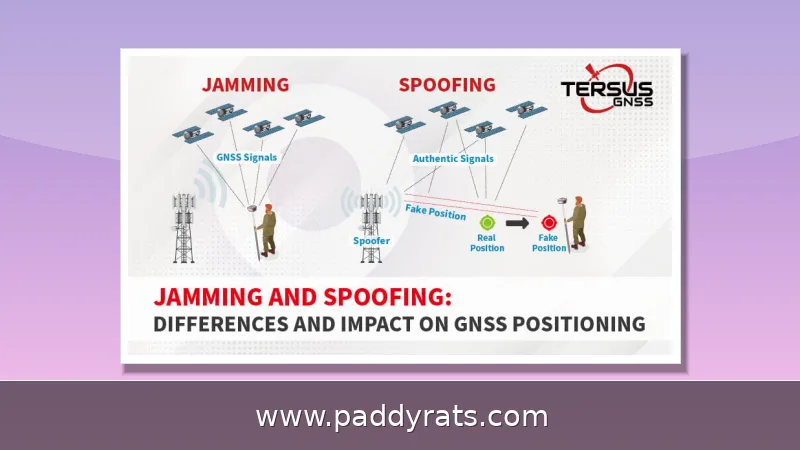
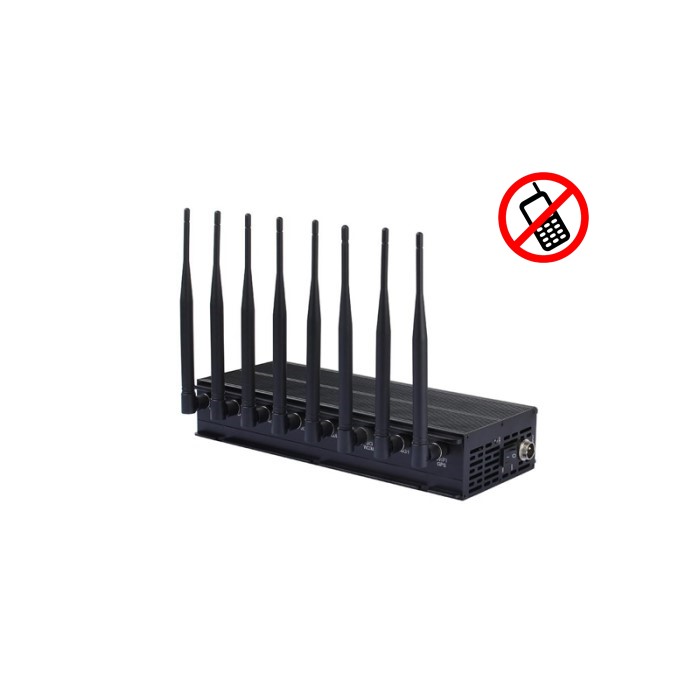
A signal jammer is really just a radio transmitter that broadcasts on the same frequencies your phone or other devices rely on, drowning out the original signal with noise. Engineers call this a denial-of-service attack on the airwaves. Here's the part most people miss: the jamming happens on the downlink. The cell tower is still transmitting as usual, but your handset can't pick it up anymore, so you get no bars and your calls or data simply fail. That same principle applies to Wi-Fi, GPS, and drone control links, which is why you'll run into terms like RF jammer, signal blocker, RF inhibitor, and ECM (electromagnetic countermeasures, sometimes called soft kill).
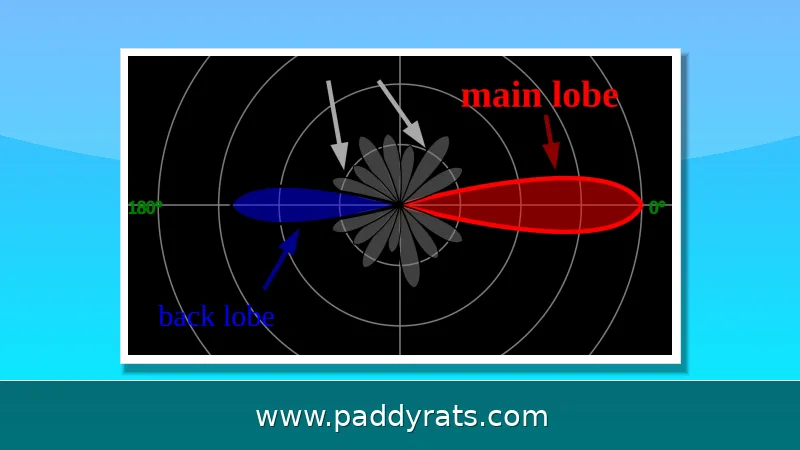
Drone jammers don't quite work like the indoor units that block phones, since they aren't just silencing a single signal—they're going after a two-way link. A drone stays in constant conversation with both its operator and its navigation satellites, so a jammer floods the command, control, video, and navigation channels all at the same time. Once that conversation gets cut, the aircraft drops into some kind of fail-safe mode: it either returns to where it launched, hovers in place, or just lands. A handheld drone jammer gun usually throws a cone of roughly 15 to 30 degrees, while the heavy-duty units mounted on vehicles or fixed positions can reach targets from almost a mile out. From what I've seen testing indoor units, the real takeaway is that jamming isn't some kind of magic trick. It comes down to power and antennas, and physics always wins in the end.
Why Government Buildings Use RF Jamming Systems
Government buildings, research centers, and financial institutions turn to jammers in places where confidentiality really matters—rooms where a single leaked sentence can undo months of work. The goal is straightforward: shut down eavesdropping, block unauthorized data transmission, and close off the kind of corporate espionage that thrives on a stray Wi-Fi signal or an open cellular line. Prisons and correctional facilities rely on RF jammers to kill contraband phones that smuggle in outside contact and criminal coordination. Courtrooms and interrogation rooms use them to protect privileged discussions between attorneys and clients, or between investigators and witnesses. Exam centers and schools deploy signal blockers to stop cheating via hidden earpieces and text messages, while corporate boardrooms and R&D departments use them to keep trade secrets from walking out the door. Even hotels, auditoriums, and conference halls sometimes install them to create controlled private security zones and safe rooms. In each case, the same principle applies: if a device can't reach the tower, it can't leak what was said.
Most people don't realize how long that use case list really gets. Government and military offices are still the bread and butter, sure, but you'll also find these systems in hotels, auditoriums, conference halls, exam centers, corporate boardrooms, and private security zones or safe rooms. The common thread across all these spaces? A controlled perimeter. Walls, ceilings, and dense building materials do a lot of the heavy lifting, keeping RF energy trapped inside the target area instead of letting it spill out into the street. That containment is what makes indoor RF jammer units workable for secure facilities in the first place — the building itself handles part of the job. And it's exactly why a sloppy outdoor deployment can become a public safety mess in a hurry: out there, nothing stands between the transmitted signal and the neighborhood around it.
| Environment | Why It Fits Indoor Jamming |
|---|---|
| Government and military offices | Confidentiality is critical; controlled perimeter limits RF leakage |
| Hotels, auditoriums, conference halls | Enclosed spaces contain RF energy; prevents unauthorized transmission |
| Private security zones and safe rooms | Dense materials reinforce containment; blocks eavesdropping |
Who Is Legally Authorized to Operate Jammers?
In the US, running a signal jammer is against the law under the Communications Act of 1934 — specifically 47 U.S.C. 301, 302a, and 333 — with just a handful of exceptions carved out for government use. So who's actually allowed to operate one? Short answer: almost nobody, and only when Congress or federal law gives the go-ahead. On the federal level, that list includes the Department of Defense and military installations, which fall under Title 10 — a scope that got broader thanks to JIATF-401 guidance in January 2026. Then you've got the Department of Homeland Security, CBP and the Secret Service included, along with the Department of Justice and the FBI. The Department of Energy makes the cut too, but only for guarding nuclear facilities, and the Coast Guard is cleared for maritime security. Private companies, individual property owners, and private security firms? They're not on the list — unless they're operating under direct federal authority or working as a contractor for an agency that's authorized.
The SAFER SKIES Act, passed as part of the FY2026 NDAA, created some new categories of authorized users. State and local law enforcement can now operate jammers, but there's a catch: officers have to complete training at the FBI's National Counter-UAS Training Center in Huntsville, Alabama first. Correctional facility security agencies qualify too, as long as they meet federal certification requirements. The same goes for agencies protecting National Special Security Events and SEAR-rated events — the FIFA World Cup 2026 being a prime example. That said, none of this extends to private companies, which aren't authorized unless they're acting under direct federal authority. Individual property owners and private security firms can't just go out and run jammers on their own. Outside the US, the picture is just as restrictive. Canada bans jammers outright under sections 4, 9, 10, and 15.1 of the Radiocommunication Act. In India, the Department of Telecommunications limits legal use and purchase to defense forces, government-approved institutions, and law enforcement. The UK has allowed law enforcement, intelligence agencies, and jails to use jammers since 2012, though under strict regulation. Brazil, New Zealand, and Sweden have all considered making exceptions for correctional facilities.
Indoor vs Outdoor Jammer Specifications and Coverage
The specs on a conference-room jammer versus a pole-mounted prison system aren't even in the same universe, and honestly, the numbers tell you way more than any marketing copy ever could. Indoor units tend to run lower power with tighter coverage, and that's on purpose — you don't want the signal leaking out into the streets around the building. Outdoor high-power setups go the opposite direction. They trade away any hope of subtlety in exchange for serious range, plus hardware built to shrug off rain, heat, and whatever else the elements decide to throw at them.
| System | Bands | Output / Range | Notes |
|---|---|---|---|
| Phantom indoor jammer | 2G/3G/4G/5G, Wi-Fi 2.4/5 GHz, GNSS | Typically 10-40 m indoors | Remote activation via IR controller |
| Action ATJ5-100-X | 2G/3G/4G/5G, Wi-Fi | 43±1 dBm/20 W per channel, 100 W total, up to 200 m | FPGA-powered DDS, DC-48V, ≤580 W, IP65, pole mount |
| Stratign Prison Jammer | 2G/3G/4G/5G, downlink only | Up to 8 Tx modules | DDS, LAN networking, remote monitoring, VSWR protection, optional UPS |
| Airsight Smart and Autonomous Jammer | Multi-band | 360-degree coverage out to 1.9 miles | Manual or automatic activation, fixed, tripod, or vehicle mount |
Take one look at the ATJ5-100-X and it becomes pretty clear that these aren't the kind of thing you just pick up on a whim. At 615x600x280 mm and up to 45 kg, it has more in common with a piece of telecom infrastructure than with anything you'd toss in a backpack. It's also built to run from -25 to +50°C with an IP65 rating, so you can pole-mount it outdoors and let it sit through rain and dust without much fuss. KBR jamming systems take that comparison even further, wiring straight into the building with 208 VAC three-phase power and 2,500 BTU/h of both cooling and heating capacity. In other words, a real deployment ends up looking a lot more like a construction project than a gadget purchase. And those range figures you see advertised? They assume clean line-of-sight, which is rarely what you get inside an actual building, where walls, vehicles, and heavy materials steadily eat away at coverage.
| Specification | ATJ5-100-X | KBR Jamming Systems |
|---|---|---|
| Dimensions | 615x600x280 mm | — |
| Weight | ≤45 kg | — |
| Operating temperature | -25 to +50°C | — |
| Ingress protection | IP65 (outdoor mounting) | — |
| Power | DC-48V; ≤580W consumption | 208 VAC, 3-phase |
| Cooling / heating | — | 2,500 BTU/h / 2,500 BTU/h |
Frequencies Blocked: Cellular, Wi-Fi, and GNSS
Indoor jammers typically cover the everyday wireless traffic you'd find in an office or secure room: cellular 2G, 3G, 4G, and 5G, Wi-Fi on both the 2.4 GHz and 5 GHz bands, and GNSS/GPS signals. That combination matters because it shuts down voice, data, and location tracking at the same time. Step outside, though, and you're usually dealing with high-power DDS units, which are built to hit much wider bands — for example, 758–803 MHz, 869–894 MHz, 1930–1990 MHz, 2110–2170 MHz, and 3300–3800 MHz. Those ranges aren't random; they line up with the low-band and mid-band spectrum that North American carriers rely on for both coverage and capacity. In practice, that means an outdoor unit can disrupt the bulk of consumer cellular traffic in the area, from calls and texts to mobile data, rather than just blocking a single frequency. The trade-off is that wider coverage also raises the odds of interfering with nearby networks you didn't intend to touch.
GPS and GNSS blocking deserves special caution. These signals arrive from satellites at extremely low power, so even a modest jammer can wipe them out across a wide area, and GPS timing underpins everything from financial transaction stamps to aviation navigation. Jammers also interfere with Wi-Fi, police radar, and cell phone signal boosters, which is why a signal jammer is effectively a signal booster jammer too. If you have ever wondered why a booster stopped helping during an incident, an active jammer nearby is one of the first things a technician will check.
FCC Enforcement, Fines, and Penalties
The FCC doesn't treat jammer enforcement as a paperwork exercise — it's a priority, and the penalties are very real. Under the Communications Act, violations can bring fines of up to $112,500 per incident, and the agency can pursue criminal prosecution on top of that. For cell phone jammers specifically, penalties may include fines up to $11,000, seizure of the equipment, and even imprisonment. The FCC has shown it will follow through: in an order dated January 27, 2022, the Commission upheld a $22,000 fine against a Texas warehouse business. That total broke down as $10,000 for operating without authorization, $7,000 for causing interference, and $5,000 for egregious conduct — a useful reminder that the agency stacks penalties based on how the device was used and what harm it caused, not just whether it was switched on.
The Texas case is worth studying closely, because the business involved was not running a spy operation or selling secrets—it was a warehouse operator that simply wanted to keep employees off their phones during work hours. That distinction is exactly what the FCC's January 27, 2022 order was designed to address: intent carries no weight in the eyes of the law, only authorization does. The agency upheld a $22,000 penalty against the company, broken down as $10,000 for operating a jammer without authorization, $7,000 for causing interference, and $5,000 for egregious conduct. For a facility manager who is weighing a jammer purchase right now, the compliance math is unforgiving. Without written federal authority, you are essentially one neighbor's complaint away from fines that can reach $112,500 per incident, seizure of your equipment, and even criminal prosecution—cell phone jamming alone can bring up to $11,000 in penalties and possible imprisonment. If you suspect a jammer is already running nearby, detection is not as simple as downloading an app. Dropped service is usually the first sign, and while spectrum analyzers can confirm a jammer's presence, they are expensive and not commonly available; consumer detection apps, meanwhile, remain largely unproven.
Risks and Limitations of Jamming in Secure Facilities
The biggest risk is emergency communications. Jammers can prevent 911 calls, interfere with first responder radio traffic, and disrupt aviation and marine safety communications. The Department of Homeland Security has warned that jammers may interfere with public safety communications and leave responders without vital communications and critical situational awareness, which is precisely the opposite of what a secure facility wants during an incident.
Physics imposes its own limits. Jamming can be blocked or weakened by physical barriers including vehicles, buildings, and heavy materials, so coverage claims rarely hold up in a real floor plan. Detection is also asymmetric: dropped service is usually the first sign, and while a spectrum analyzer can confirm a jammer, most organizations do not own one. For licensed amateur radio operators, there is no legal way to stop jamming; the practical path is direction finding to locate the source and report it to the FCC. Signal jamming is also becoming a cybersecurity concern, because a jammer can halt data transfers by creating a constant storm of white noise.
Market Growth and Industry Outlook
Government agencies and the military are key segments driving signal jammer market growth, and the forecasts reflect that demand. One estimate puts the global signal jammer market at USD 1.8 billion in 2026, expected to reach USD 3.6 billion by 2033. Another estimate values the market at USD 2.85 billion in 2025, projected to reach USD 4.64 billion by 2032 at a 7.2% CAGR, while Technavio projected an increase of USD 1.08 billion at a 5.66% CAGR between 2023 and 2028.
Those numbers should be read with the legal picture in mind. Growth is concentrated in authorized government, military, and correctional deployments rather than consumer sales, because the compliance barrier keeps casual buyers out. Vendors such as Phantom Technologies LTD, Stratign, Shenzhen Action Technologies, Airsight, Cellbusters, Wilson Amplifiers, and Nacon Wireless compete on power, band coverage, and remote management rather than price alone. If you are evaluating a deployment, ask for the authorization path first and the spec sheet second.
How Do You Tell If a Jammer Is Active Nearby?
The first sign is usually a cluster of devices losing service at the same moment in the same place. If your phone shows no bars, Wi-Fi drops across multiple devices, and GPS locks fail simultaneously, you are likely inside a jamming field rather than experiencing a normal outage. Because jamming hits the downlink, moving a few feet toward a window or exterior wall often restores service, which is a useful diagnostic.
A spectrum analyzer can confirm the source by showing elevated noise floors across specific bands, but these instruments are expensive and uncommon outside professional RF teams. Consumer phone apps that claim to detect jammers are largely unproven, so treat them as entertainment. If you suspect illegal jamming, document the time, location, and affected services, then report it to the FCC rather than attempting to counter-jam, which would itself be a violation.
Frequently Asked Questions
Are signal jammers legal in government buildings?
In the United States, jammers are illegal under the Communications Act of 1934, with only a few exceptions recognized for government use. Authorized federal entities such as the Department of Defense, DHS, DOJ, and Department of Energy may operate jamming equipment under specific authority, while private parties generally cannot.
How does a signal jammer work?
A jammer transmits RF signals on the same frequencies as targeted devices, overpowering the original signal. This creates a denial-of-service effect that disrupts the downlink between a cell phone and its base station, so devices show no service and cannot send or receive data.
What frequencies do government building jammers block?
Indoor systems typically block cellular 2G, 3G, 4G, and 5G, Wi-Fi at 2.4 and 5 GHz, and GNSS/GPS signals. Outdoor high-power DDS jammers can cover bands such as 758-803 MHz, 869-894 MHz, 1930-1990 MHz, 2110-2170 MHz, and 3300-3800 MHz.
What penalties apply for illegal jammer use?
The FCC can impose substantial civil penalties, seize illegal equipment, and pursue criminal sanctions including imprisonment. In one case, the FCC upheld a $22,000 fine against a Texas business for operating a jammer, including $10,000 for operating without authorization and $7,000 for causing interference.