An SDR jammer replaces racks of analog hardware with software-defined waveforms, letting a $300 radio imitate constant, sweeping, or reactive jamming. Here is how the physical-layer attack works, what HackRF and LimeSDR can actually do, and how defenders spot it.
What Is a Software Defined Radio Signal Jammer?
A software defined radio signal jammer is really just a radio platform where the heavy lifting—filtering, modulation, error correction, synchronization, and frequency tuning—happens in software instead of dedicated analog circuits. The RF front end is still there, of course, but the brains of the operation live in DSPs, FPGAs, or general-purpose processors. That's what makes it so flexible: the same box can act like a constant noise source, a sweeping blocker, or a reactive jammer, and all it takes is loading a different flowgraph. A basic SDR setup usually amounts to a computer with a sound card or some other analog-to-digital converter sitting behind that RF front end, which explains why hobbyist rigs and military systems end up sharing so much of the same architecture.
At its core, jamming is a physical-layer attack, even though its effects can ripple upward and bleed into higher layers of the protocol stack. When a jammer overlaps its signal with a legitimate transmission, it corrupts packets at the receiver, which drags down the packet delivery ratio (PDR). Meanwhile, that same interference can trick a legitimate transmitter into sensing the channel as busy, which lowers the packet send ratio (PSR) too. The jammer never actually has to touch the transmitter—it only needs to override the transmitted signal at the receiving antenna. That one insight goes a long way: it explains why jamming is fundamentally an electronic attack problem rather than a networking one, and why SDR tools built for legitimate spectrum work—HackRF, LimeSDR, USRP, GNU Radio—translate so directly into jamming research.
How Does an SDR Jammer Work at the Physical Layer?
At its core, an SDR jammer is just a transmitter competing for the same slice of spectrum that a legitimate link depends on. It dumps RF energy onto the target frequency, and the wanted signal either gets buried under stronger overlapping power or loses the signal-to-noise ratio it needs at the receiver. Once SNR drops far enough, demodulation falls apart and the packet never shows up intact. What makes software defined radio so handy here is that the waveform itself is written in code. Using something like GNU Radio, an operator can spin up noise, single-tone, swept-sine, or QPSK-modulated signals on the fly, rather than buying a separate hardware jammer for each mode. The jammer doesn't need to decode the protocol or know what the packets mean. It only has to win the power contest at the receiver's front end — which is why even a fairly basic SDR setup can disrupt links it was never built to speak.
The timing math is what makes reactive jamming interesting, and it comes down to a race between sensing and transmission. A reactive jammer needs a few milliseconds to detect activity on the target spectrum and fire back a blocking signal. Compare that to the airtime of actual payload: one byte sent over a 1 Mbps PHY occupies the channel for only 8 microseconds. So by the time the jammer reacts, a short burst of data has already slipped through and can be demodulated at the receiver. Proactive jamming sidesteps this problem entirely. It transmits without caring which nodes or channels are active, which burns energy constantly but eliminates the reaction window altogether. Neither approach is free. Reactive jamming saves power but leaks a little data with every transmission, while proactive jamming plugs the leak at the cost of running hot all the time. Choosing between them is really a trade between energy efficiency and how much leakage the attacker can tolerate.
Constant, Sweeping and Reactive Jamming Modes Compared
The three classic jamming paradigms mostly come down to two things: how they burn through energy, and how easy they are to spot from the outside. A constant jammer just never lets up. It puts out a continuous signal that keeps the medium busy, so legitimate nodes sense the channel is occupied and back off. A sweeping jammer is more methodical, hopping from one channel to the next in sequence and cycling through the band over and over. A random channel hopping jammer does pretty much the same thing, except it picks its next channel at random instead of following any order. That makes its behavior harder to predict and harder to fingerprint. Reactive jamming flips the whole approach. Rather than transmitting blindly, it listens first and only fires a blocking signal once it detects a nearby transmission, which saves a huge amount of energy. The catch is that brief demodulation window: a little bit of data can still slip through before the jammer reacts.
| Mode | How it transmits | Energy use | Characterization |
|---|---|---|---|
| Constant | Continuous signal keeps the medium busy | Highest | Easiest to detect |
| Sweeping | Hops across channels sequentially | Moderate | Predictable pattern |
| Random channel hopping | Picks channels at random | Moderate | Harder to characterize |
| Reactive | Senses spectrum, then transmits a blocking signal | Lowest | Leaves a small demodulation window |
The table below pulls together the trade-offs that tend to come up most often when I'm comparing these jamming modes in an SDR setup.
| Mode | Behavior | Energy Use | Detection Profile |
|---|---|---|---|
| Constant | Continuous emission, keeps medium busy | Highest | Easiest to spot |
| Sweeping | Hops channels sequentially and continuously | Moderate | Predictable pattern |
| Random hopping | Picks channels randomly | Moderate | Harder to characterize |
| Reactive | Senses first, then blocks | Lowest | Intermittent, bursty |
A sweeping jammer working a 2.4 GHz Wi-Fi band doesn't just park itself on one of the 14 channels and stay there. Instead, it hops from channel to channel in sequence, again and again, cycling through the entire band in a continuous loop. That steady, predictable rhythm is basically a gift to anyone monitoring a spectrum analyzer: the interference appears as a regular stripe crawling across the waterfall display, simple to notice and just as simple to identify. Random channel hopping, on the other hand, deliberately destroys that pattern. There is no tidy periodicity to latch onto, so characterizing the signal demands much more effort. Reactive jamming is the toughest of all to attribute, since the jammer remains silent until it detects a legitimate transmission, then it strikes. This approach saves energy, but it also leaves a small opening—a receiver can still demodulate a bit of data before the blocking signal arrives. Non-standard PHY and MAC implementations can partially evade reactive jamming by keeping packets short and pairing that with diversity techniques, which shrinks the attacker's window even more.
Hardware and Software Used for SDR Jamming
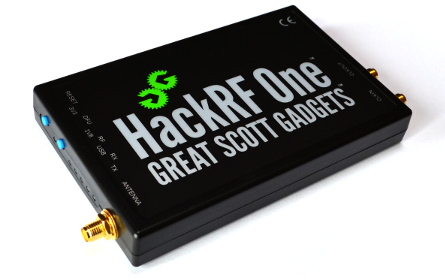
The hardware side of SDR jamming research is surprisingly modest—most of it is consumer-grade gear you can just buy off the shelf. HackRF is the usual starting point. It can generate signals anywhere from 10 MHz to 6 GHz, which sounds like plenty until you run into its 20 MHz maximum bandwidth. That ceiling means a single HackRF can't blanket the entire Wi-Fi spectrum at once, so researchers fall back on sweeping: hopping across channels instead of flooding them all simultaneously. LimeSDR takes a simpler route to the same goal—load GNU Radio, push a noise signal onto the target frequency, and you're jamming. At the higher end sit the USRP platforms, which cost more but deliver cleaner, more flexible signal generation. One documented setup paired a USRP B-210 with GNU Radio to produce a GPS jamming signal, achieving a protection radius of roughly 29 meters with an omnidirectional monopole antenna. That's modest coverage, but enough to demonstrate the principle under controlled conditions.
| SDR Platform | Frequency Range | Key Jamming Spec |
|---|---|---|
| HackRF | 10 MHz – 6 GHz | 20 MHz max bandwidth; sweeping required for wideband targets |
| LimeSDR | — | Noise signal via GNU Radio on target frequency |
| USRP B-210 | — | GPS jamming signal via GNU Radio; ~29 m protection radius with omnidirectional monopole antenna |
On the software side, most people begin with the tiiuae/jamrf GitHub repository, which has become something of a reference implementation for SDR jamming experiments. It comes in two flavors: jamRF_v1 implements both proactive and reactive jammers using single-tone, swept-sine, and Gaussian noise waveforms, while jamRF_v2 adds QPSK-modulated waveforms along with extra features. That progression matters, because the waveform you choose shapes how the jamming signal behaves in the target band — a swept sine marches across frequencies, for instance, while Gaussian noise spreads energy more broadly. To run jamRF, you need two HackRF SDRs, one transmitting and one receiving, a spectrum analyzer GUI for hackrf_sweep so you can actually watch what you are doing, and a Linux machine to tie it all together. Jerry Olla went a different route, flashing custom HAVOC firmware onto a HackRF paired with a PortaPack. His setup adds FSK tone sweep modes and configurable presets, which makes repeatable field tests far easier when you are out in the real world rather than on a bench.
| Tool | Role | Key Limit |
|---|---|---|
| HackRF | Transmit and receive | 20 MHz max bandwidth, 10 MHz-6 GHz |
| LimeSDR | Noise transmission via GNU Radio | Front-end dependent |
| USRP B-210 | GPS jamming research | ~29 m protection radius |
| jamRF v1/v2 | Proactive and reactive jammer code | Needs two HackRF units |
| HAVOC + PortaPack | Portable signal generator modes | Custom firmware |
Real-World SDR Jammer Examples and Specifications
Commercial responsive jammers show what the SDR approach looks like when it is packaged for field use, and the RSJ470PL is a good example to study. It puts out 150W total, with 30W maximum and 1W minimum per band, adjustable in 1 dB power control steps so operators can dial in just enough signal. Response time is roughly 10 ms, and the jamming cycle can be set anywhere from 100 ms to 10 seconds. On the receive side, it covers 20-520 MHz with -132 dBm sensitivity, which lets it listen for activity before it transmits. The unit jams VHF/UHF bands with channel bandwidth from 15 KHz to 2 MHz, minimum channel spacing of 10 KHz, and a 4000-channel automatic memory scan. All of that fits into a 15 kg package with battery, so it stays man-portable despite the power.
| Specification | RSJ470PL |
|---|---|
| Total output power | 150W |
| Max / min power per band | 30W / 1W |
| Power control step | 1 dB |
| Response time | ~10 ms |
| Jamming cycle | 100 ms to 10 seconds |
| Receiver range | 20-520 MHz |
| Sensitivity | -132 dBm |
| Jammed band | VHF/UHF |
| Channel bandwidth | 15 KHz to 2 MHz |
| Minimum channel spacing | 10 KHz |
| Channel memory scan | 4000 channels, automatic |
| Weight with battery | 15 kg |
Power and endurance are the usual constraints. The RSJ470PL runs on a 25.9V/24AH Li Po battery for about 2 hours of continuous operation and is rated from -10C to +65C. At the research end, DARPA's WARP program awarded L3Harris a $7.2 million contract to pursue adaptive RF filtering with a 9:1 tuning ratio for full-band coverage across 2-18 GHz. Wideband A/D converters have already achieved greater than 10 GHz instantaneous bandwidth with 8-10 ENOB, which is the kind of front-end performance that makes software-defined electronic attack practical.
Static filtering only uses a fraction of digital receiver bandwidth, and while automatic gain control capitalizes on more of that bandwidth, it decreases sensitivity to small signals, and signal limiters can introduce cross-modulation distortion. That is the engineering trade space every adaptive filter program is trying to escape.
| Specification | RSJ470PL |
|---|---|
| Total output power | 150W |
| Per-band power | 30W max, 1W min |
| Power control step | 1 dB |
| Response time | ~10 ms |
| Jamming cycle | 100 ms to 10 s |
| Receiver range | 20-520 MHz, -132 dBm |
| Weight | 15 kg with battery |
How Is Jamming Detected With SDR?
SDR-based detectors continuously monitor a frequency range and log signals that exceed a set power and duration threshold. Tools like rtl-sdr-analyzer use z-score analysis to flag when the signal mean deviates from the baseline, which indicates a jamming or interference event rather than ordinary traffic. Because the detector is itself software-defined, the same hardware that could generate a waveform can also characterize one, and the waterfall display becomes the primary forensic artifact.
Detection is really a statistical problem. A constant jammer is easy: the noise floor simply rises and stays there. Sweeping and random hopping jammers show up as periodic or scattered energy across channels, and reactive jammers appear as short bursts that correlate with legitimate transmissions. On the mitigation side, ISCO International and the ORAN Development Company announced a partnership on September 1, 2026, integrating ISCO IMC jammer cancellation into the ODC RANIQ AI-RAN platform for Layer-1 jammer resiliency. That is a meaningful shift, because it moves jammer resilience into the radio access network itself rather than treating it as an external filtering problem.
Legal and Operational Considerations for SDR Jamming
Jamming is used in electronic warfare and counter-drone soft-kill applications, where the goal is to sever a control or navigation link without destroying the platform. Hard kill uses lasers and missiles instead. The physics of soft kill are unforgiving: saturating drone receivers requires large field amplitudes, large direct currents, and thermal radiators, which is why counter-drone jammers are bulky and power-hungry rather than pocket-sized.
Transmitting jamming signals is illegal for private parties in most jurisdictions, including the United States, where it interferes with licensed and safety-of-life services. The material here is about how the technology works and how it is detected, not an invitation to transmit. For anyone building defensive systems, the practical takeaway is that SDR gives defenders the same flexibility attackers enjoy, and detection, characterization, and Layer-1 mitigation are where that flexibility pays off.
The research timeline matters too. The jamrf repository was archived on September 9, 2025, Perotoni et al. published in 2025, and earlier foundational work includes Bhojani in 2016, Thanakan in 2021, and Lehmann in 2024. Together they trace the shift from bespoke analog jammers to reproducible, software-defined ones that anyone with two HackRF units and a Linux machine can study.
Frequently Asked Questions
Frequently Asked Questions
How does a software defined radio jammer work?
A jammer transmits RF signals on the same frequency as legitimate communications, either overlapping the signal with more power or lowering the signal-to-noise ratio at the receiver. SDR-based jammers generate these waveforms in software, using tools like GNU Radio, instead of dedicated analog hardware, so the same radio can switch between noise, tone, and modulated jamming modes.
What is the difference between constant, sweeping and reactive jamming?
A constant jammer continuously emits signals to keep the medium busy. A sweeping jammer hops across channels sequentially, while a random channel hopping jammer picks channels randomly. Reactive jammers sense the spectrum first and only transmit a blocking signal in response to a nearby transmission, which conserves energy but leaves a short window where data can still be demodulated.
Can a HackRF or LimeSDR be used as a jammer?
Yes. HackRF has a maximum bandwidth of 20 MHz and can emit jamming signals, and LimeSDR can jam by transferring a noise signal in GNU Radio on the target frequency. Custom firmware such as HAVOC for PortaPack adds signal generator and jammer modes, though transmitting jamming signals is illegal for private parties in most countries.
How is jamming detected with SDR?
SDR-based detectors continuously monitor a frequency range and log signals exceeding a set power and duration. Tools like rtl-sdr-analyzer use z-score analysis to flag when the signal mean deviates from the baseline, indicating a jamming or interference event. Constant jamming raises the noise floor, while reactive jamming shows up as short bursts tied to legitimate transmissions.