Blocking cell phone signal indoors is possible with jammers, Faraday cages, or app-based Wi-Fi pauses, but legality varies sharply by country. Here is how the technology works, what it costs, and which options keep you compliant.
What Is a Cell Phone Signal Jammer and How Does It Work?
A cell phone signal jammer works by broadcasting a high-intensity radio signal on the same frequencies your carrier uses. That competing transmission drowns out the tower signal at the handset, so calls, texts, and mobile data can't get through anywhere inside the coverage zone. Picture two radio stations airing on one frequency — the audio turns to mush because neither signal comes through cleanly. What you end up with is a local dead zone that your phone reads as no service, not as a blocked call.
If you're shopping for one of these, the engineering side actually matters. A jammer can only take down the frequencies it's tuned to, so a unit designed for 2G and 3G bands might do nothing at all to 4G LTE or 5G traffic. That's exactly why the older Brazilian models never touched the 700 MHz and 2.5 GHz LTE layers. And if you want to cover a whole building, you can't just crank up one device—you need an integrated system with multiple emission points, basically a mesh network built to do the opposite of what a carrier's network does.
For a legal comparison, the Wi-Fi pause feature in the Google Home app does something completely different. It cuts internet to selected devices or groups through your router and never touches cellular networks, so calls and SMS keep working. Signal amplifiers and repeaters also sit outside the jamming category because they improve reception instead of destroying it.
Which Frequencies and Technologies Can Be Blocked?
When you're comparing blockers, frequency coverage is the spec that matters most, and the numbers Brazilian sellers publish make it pretty easy to sort them into tiers. The portable three-antenna units take care of the classic voice bands, while four-antenna and larger models throw in GPS disruption and cover more ground. The table below pulls together the ranges sellers report along with the technical coverage from TecMundo and Canaltech.
| Device class | Antennas | Frequencies covered | Typical range | Price range |
|---|---|---|---|---|
| Simple portable jammer | 3 | 800–900 MHz, 800–1900 MHz, 2.1–2.2 GHz (GSM, 3G, iDEN/Nextel) | Up to 20 m | R$ 200–350 |
| Robust office jammer | 4 or more | Adds GPS at 1500–1600 MHz, 1200–1230 MHz, 1250–1280 MHz, 1170–1180 MHz | Up to 100 m² | Over R$ 2,000 |
| Military-grade listing | Multi-band | 5G, Bluetooth, Wi-Fi, GPS | Not specified | Premium |
Here's the catch with those cheap models, though: they don't touch Brazil's 4G LTE bands at 700 MHz and 2.5 GHz. So anyone who bought a R$ 300 box thinking it would shut down every bit of mobile traffic ended up disappointed — and that gap is behind a lot of the complaints you see in Brazilian forums. Wi-Fi is a different story. Routers use 802.11b/g at 2.4 GHz and 802.11a at 5 GHz, and 802.11n can run on either band. DECT 6.0 cordless phones, meanwhile, work at 1.9 GHz, which is why they don't mess with your Wi-Fi.
Is It Legal to Block Cell Phone Signals in Brazil?
No. Anatel doesn't allow individuals or companies to use signal blockers, and running one without authorization counts as clandestine telecommunications activity, which carries a penalty of two to four years of detention. Only approved public security and government agencies can deploy jammers, and only in authorized locations. That legal line is exactly why most consumer listings for these devices are basically gray market, and why buying one online doesn't make it lawful to actually turn it on.
Anatel's resolution of February 2, 2023 widened the list of places where jammers are allowed: penitentiaries, ports and airports, public or military security zones, and temporary sites connected to public security, national defense, or foreign delegations. As for who can request one, the list includes the Presidency, GSI, the Ministries of Defense, Justice, and Foreign Affairs, the Armed Forces, Abin, public security agencies, and prison administration bodies. In most cases, requests have to be filed 15 days ahead of time — the exception being urgent requests from the Presidency, GSI, the Defense Ministry, and the Armed Forces.
France takes a narrower approach, but it's actually more permissive: there, jammers are allowed in cinemas, concert halls, and other performance venues, since the point is just to keep phones quiet during a show rather than to secure an entire facility. If you're thinking about buying any kind of blocking device, though, check with your own country's regulator before you spend a cent. Brazil's rules are strict, and the consequences aren't just administrative fines; they can land you in criminal territory.
Types of Jammers: Portable, Stationary, and Multi-Antenna Systems
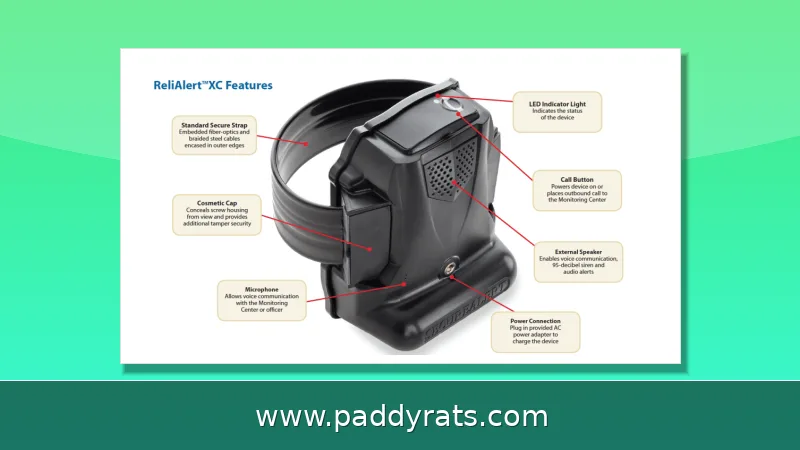
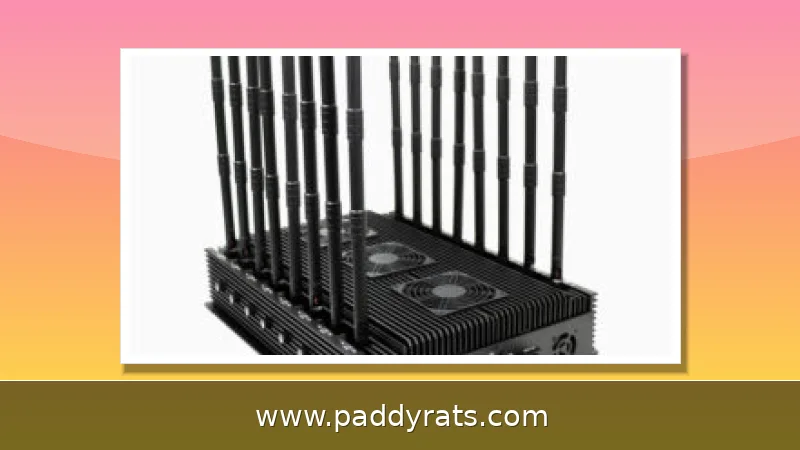
In practice, the market breaks down into three main categories. First, there are portable jammers with three antennas, which run on a built-in rechargeable battery, cover the standard voice bands, and reach about 20 meters—enough for a small room or a vehicle. Then you have stationary office units with four or more antennas that extend coverage to roughly 100 square meters and add GPS bands, which is exactly why they cost upward of R$ 2,000. At the top end, military-grade listings advertise 5G, Bluetooth, Wi-Fi, and GPS blocking, complete with detachable wrist straps and fireproof, waterproof, anti-tracking housings.
If you look at what Brazilian sellers are actually charging, the price range says a lot. SuplementosAqui had portable jammers starting at R$ 1,200, and Loja do Detetive wasn't far off at around R$ 1,700. Go back to 2016 and TecMundo was finding basic models for just R$ 200–350 in Brazilian online stores, while the more serious office-grade units ran past R$ 2,000. That gap isn't about branding — it comes down to how many antennas you get, the quality of the amplifier, and whether the thing covers extra frequency bands. Bottom line: a cheap jammer is cheap for a reason.
Criminal use is part of the same story. Jammers are known in Brazilian criminal circles as capetinha or chupa cabra and have been used in car thefts to block vehicle trackers. That reputation is exactly why regulators treat private ownership so harshly, and why legitimate buyers should expect scrutiny even when the hardware itself is legal to import in some jurisdictions.
Legal Alternatives: Faraday Cages, Wi-Fi Pause, and Shielding
A Faraday cage blocks signals by surrounding a space with conductive material, which is legal because you are shielding your own enclosure rather than broadcasting interference into the air. Build one by lining a room, box, or bag with conductive fabric, mesh, or foil, then verifying that the phone loses service inside. The tradeoff is total isolation: everything is blocked, including emergency calls and any device you actually wanted to keep online.
Wi-Fi pause through the Google Home app is the most surgical legal option. Open the app, tap Favorites, then Wi-Fi, then Devices, select the device, tap Pause device, choose a duration, and save. For groups, go to Favorites, Wi-Fi, Family Wi-Fi, and tap Pause or Resume. Scheduled pauses live under Favorites, Wi-Fi, Family Wi-Fi, Add Schedule, where you name the schedule, pick the group, set start and end times and days, then tap Done.
If your real problem is weak signal rather than unwanted signal, the fix runs in the opposite direction. Place the router near a window or high point, add an amplifier chain with an external antenna, amplifier, and internal antenna, install repeaters, configure Wi-Fi Calling, avoid electronic interference, and use external antennas where possible. Signal amplifiers and repeaters improve coverage instead of blocking it, and Wi-Fi Calling lets calls ride your internet connection when cellular service is poor.
Can You Block a Jammer, and What Are the Side Effects?
Blocking a jammer is theoretically possible but impractical for consumers. You would need strong magnetic fields or massive current flow, or you could try destroying the antenna's power supply, or place a small Faraday cage around the jammer source itself. Anti-jammer products exist, but their effectiveness is questionable and their origin dubious, so treat any listing promising effortless jammer defeat with heavy skepticism.
The side effects are the stronger argument against private use. Jammers interfere with emergency calls, GPS, Wi-Fi, and police radar, and neighbors living near prisons have reported losing cell service when authorized systems operate nearby. A single illegal device in an apartment building can degrade service for everyone on the floor, which is precisely the externality the Anatel rules are designed to prevent.
There is also a practical ceiling on what any blocker achieves. Older jammers never touched Brazil's 4G LTE frequencies at 700 MHz and 2.5 GHz, and modern 5G deployments add more bands that a fixed-frequency device cannot follow. Anyone selling a universal solution is overselling, and anyone using one privately is risking two to four years of detention for a dead zone that a Faraday pouch or a scheduled Wi-Fi pause can deliver legally.
How Do You Legally Block a Network Signal in a Room?
If your goal is blocking a specific network rather than cellular service, you can work within the rules. First identify the frequency, either 2.4 GHz or 5 GHz, then use a device operating on that same band to create interference, such as a microwave, an old cordless phone, or a Bluetooth device, or simply adjust your router settings to disable the band. This is a network-level fix, not a radio-level one, and it affects only equipment on your own network.
For a hard cellular block in one room, build a Faraday shield by enclosing the space with conductive material. A conductive pouch or box is the practical version for a single phone, while a lined room is the permanent version. Test with a call or a speed test before relying on it, because seams, windows, and cable penetrations leak signal and can leave you with partial shielding that looks like success until an important call arrives.
Neither approach interferes with your neighbors or with emergency services, which is the whole point. The legal path is slower and less absolute than a jammer, but it keeps you on the right side of Anatel, the FCC, and most other regulators, and it does not expose you to criminal penalties for a problem that a scheduled pause or a shielded box can usually solve.
What Should You Check Before Buying Any Blocking Device?
Before spending money, confirm three things: the frequencies your carrier actually uses in your area, the legal status of jammers where you live, and whether a legal alternative solves the same problem. In Brazil, the answer to the second question is a firm no for private use, and the answer to the third is usually yes if you only need to silence one room or one device.
Check the band list against your carrier's deployment. If your operator runs 4G LTE at 700 MHz and 2.5 GHz, a three-antenna portable unit will not stop data, and if 5G is live, the gap widens further. On the legal side, remember that Anatel's authorized locations are limited to penitentiaries, ports and airports, security areas, and approved temporary sites, requested by specific government bodies with 15 days of advance notice.
The safest plan for a home or small office is a Faraday enclosure for hard isolation plus a scheduled Wi-Fi pause for routine limits. That combination is legal, reversible, and does not put your neighbors' emergency calls at risk. If you need coverage rather than blocking, invest in amplifiers, repeaters, and Wi-Fi Calling instead, because those fixes improve service without creating a criminal exposure.
The Bottom Line on Blocking Cell Phone Signal
Jammers work by flooding carrier frequencies with interference, and they are effective, but in Brazil and most countries private use is illegal and carries two to four years of detention. Faraday cages and Wi-Fi pause are the compliant alternatives, and for weak-signal problems, amplifiers and repeaters are the correct tool. Choose based on your actual goal, not on the most powerful device you can find.
The technical ceiling matters too. Cheap three-antenna units cover GSM, 3G, and iDEN up to about 20 meters, while four-antenna systems reach roughly 100 square meters and add GPS bands, yet none of them reliably cover modern LTE and 5G layers. Knowing that gap prevents wasted spending and unrealistic expectations, whether you are securing a facility or just trying to get some quiet at home.
For most readers, the practical answer is a shielded pouch or room for hard blocks and app-based pauses for everything else. Both are legal, both are testable, and neither turns a household problem into a criminal case. Check your regulator's rules before you buy anything that transmits, and prefer the option that only affects equipment you own.
Risks, Compliance, and Limitations to Keep in Mind
The compliance picture is not optional. Illegal use can lead to two to four years of detention under Brazil's clandestine telecommunications rules, and authorized deployments are restricted to specific government and security bodies at approved sites. Even where jammers are tolerated, such as French cinemas and performance venues, the permission is narrow and tied to a specific venue type rather than general ownership.
Operational risks compound the legal ones. Jammers can interfere with emergency calls, GPS, Wi-Fi, and police radar, and people living near prisons have lost cell service when approved systems run nearby. Anti-jammer gadgets promise relief but their effectiveness is questionable and their origin dubious, so they are not a reliable defense. Older jammers also missed Brazil's 4G LTE bands entirely, which means a device bought for one purpose may fail silently at another.
The durable takeaway is to match the tool to the goal. If you need silence, use a Faraday enclosure or a scheduled Wi-Fi pause. If you need coverage, use amplifiers, repeaters, and Wi-Fi Calling. If you need facility-wide blocking, that is a regulated government process with a 15-day notice requirement, not a consumer purchase, and treating it as one is where people get into trouble.
How Does a Cell Phone Signal Jammer Actually Work?
The mechanism is straightforward interference. A jammer emits a high-intensity signal on the same frequencies used by mobile networks, and that competing energy overwhelms the carrier signal at the handset. Phones cannot separate the tower's transmission from the noise, so calls, messages, and data fail inside the coverage area, much like two radio stations broadcasting on one frequency.
Because the effect is frequency-specific, a jammer must be tuned to the bands your carrier uses locally. That is why a device built for 800–900 MHz, 800–1900 MHz, and 2.1–2.2 GHz handles GSM, 3G, and iDEN but leaves 4G LTE at 700 MHz and 2.5 GHz untouched. Larger systems with four or more antennas add GPS bands at 1500–1600 MHz, 1200–1230 MHz, 1250–1280 MHz, and 1170–1180 MHz, extending both coverage and collateral interference.
Frequently Asked Questions
How does a cell phone signal jammer work?
A jammer emits a high-intensity radio signal on the same frequencies your carrier uses. This competing transmission overwhelms the tower signal at the handset, so calls, texts, and mobile data cannot get through inside the coverage zone. The phone reports no service rather than a blocked call, and only frequencies the jammer is tuned to are affected.
Is it legal to use a cell phone jammer in Brazil?
No. Anatel prohibits individuals and companies from using signal blockers, and unauthorized operation is classified as clandestine telecommunications activity with penalties of two to four years of detention. Only approved public security and government bodies may deploy jammers at authorized locations such as penitentiaries, ports, airports, and approved temporary sites.
What are legal alternatives to jammers for blocking cell signals?
Faraday cages and Wi-Fi pause features are legal alternatives. A Faraday cage surrounds a space with conductive material to block signals without broadcasting interference. Wi-Fi pause through apps like Google Home cuts internet to selected devices via your router and never touches cellular networks, so calls and SMS keep working.
Can you block a jammer, and what are the side effects?
Blocking a jammer is theoretically possible but impractical for consumers. You would need strong magnetic fields or massive current flow, or destroy the antenna's power supply. Side effects of jammers include interference with emergency calls, GPS, Wi-Fi, and police radar, and neighbors may lose cell service when illegal devices operate nearby.