Prisoner monitoring covers two very different worlds: electronic tracking of offenders on ankle bracelets and GPS, and independent oversight of places of detention. Here is how each one actually works, what the data shows, and where the risks sit.
What Is Prisoner Monitoring and Why Does It Matter?
"Prisoner monitoring" sounds like one thing, but it's really two. On one side, there's electronic monitoring of offenders—ankle bracelets, GPS trackers, RFID tags, home arrest setups that keep tabs on where someone is in real time. On the other, there's detention monitoring: independent inspectors who show up at prisons, talk to inmates and staff, and write down what they see. Both fields are expanding quickly, and both force us to ask uncomfortable questions about cost, dignity, and who's really calling the shots.
This isn't some niche practice, either. According to the Vera Institute of Justice, more than 150,000 people are on electronic monitoring at any given moment across state and local systems in the US as of February 2024. And it's hardly just an American thing — over 60 countries use electronic bracelets, with more than 200,000 offenders wearing them worldwide, based on 2014 research by Timofeeva and Motin. On top of that, prison overcrowding keeps nudging governments toward cheaper alternatives, which is a big reason the topic keeps coming up in policy debates.
The terminology really does matter here, because the search intent splits pretty cleanly into two camps. When someone types in "ankle bracelet GPS tracking" or "how does electronic monitoring work," they're after hardware and supervision—bracelets, signals, the whole technical side of things. But when the query is about preventive monitoring in prisons, that's a different world entirely: human rights oversight, inspections, the kind of work organizations like the APT and PRI do. I'm keeping both in view throughout this piece, since in practice they're really just two answers to the same fundamental question—how do you supervise people without either locking everyone up or simply looking away?
How Electronic Monitoring Works: Bracelets, GPS, and Geofencing
The basic mechanism here is pretty easy to grasp. A transmitter, typically worn on the ankle, sends out a signal that reaches a receiver from about 100 to 200 feet away — that range comes from the Office of Justice Programs. With radio-frequency home arrest systems, a stationary base unit sitting in the residence picks up an RFID tag remotely. GPS setups work differently: the tracker receives satellite signals, and its position gets pinpointed through GPS, cell towers, or Wi-Fi. One thing a lot of people get wrong — GPS trackers only receive signals, they don't send them out.
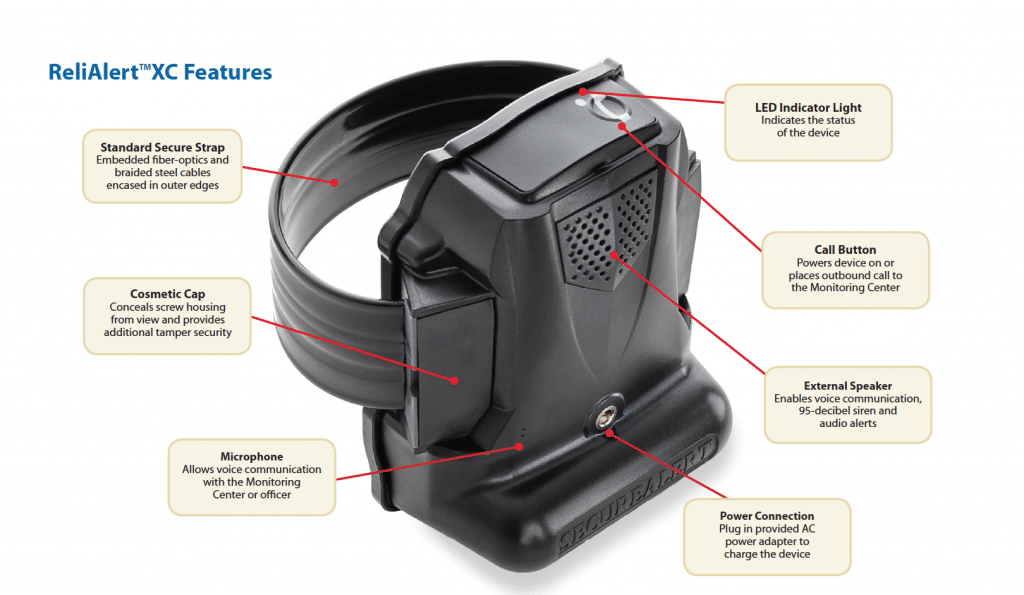
Today's bracelets do more than just track a location. Geofences set the allowed boundaries around a home, a job, or a treatment facility, so the wearer knows exactly where they can and can't be. A body-temperature sensor and a fiber-optic strap catch any attempt to remove or tamper with the device, and a vibration gives the wearer a heads-up before an alert actually goes out. If something does go wrong, the violation goes straight to a supervisor. And the GPS itself is no slouch: according to Kommersant, accuracy can reach about 2 meters, which is precise enough to hold up in a courtroom.
Here's a rundown of how the main technical specs stack up across the systems I run into most often on the job.
Preventive Monitoring of Detention: Tools, Guides, and Standards
Preventive monitoring is what happens when independent monitors go into prisons to see firsthand what conditions are like and how detainees are treated. They're looking for the factors that make torture more likely, and they talk with the authorities about what they find. The point isn't just to flag problems — it's to figure out why those problems exist and push for changes that actually last, so human rights protections get stronger over time. The OSCE ODIHR guidance doesn't soften the first step either: when you walk in for that initial visit, you inspect every space that prisoners use or are meant to use.
The DIGNITY manual came out on September 29, 2026, and it sets up a method you can actually repeat. The stages run like this: interview people in prison and the staff who work there, observe conditions firsthand, review records, spot patterns and risks, triangulate what you've gathered, make recommendations, then follow up. That final stage is the one that tends to slip. Most monitoring efforts don't collapse dramatically—they just quietly fade out, because a recommendation with no follow-up visit behind it is nothing more than paper.
Penal Reform International and the Association for the Prevention of Torture put out a Detention Monitoring Tool, and it's built around a set of thematic papers. These cover things like prison labor, deaths in custody, corruption, the culture inside institutions, and the specific situations of women, LGBTI people, and older prisoners. There are also papers on security and dignity, plus radicalization. Alongside those, you get factsheets on more everyday practices: body searches, how incidents get managed, instruments of restraint, pre-trial detention, working conditions for staff, and video-recording in police custody. It's a lot of ground to cover, sure, but that's only because the risk factors themselves are spread out just as widely.
Case Study: Home Arrest with Wialon in Nuevo León, Mexico
Mexico spends about $1 billion a year on its prison population, and officially its prisons are 97% full. But that national number hides what's really going on: in some states, occupancy climbs to 150% or even 300%. That gap is exactly why budget offices start paying attention to electronic monitoring. Nuevo León tested this out in a pilot program that placed 500 offenders under home arrest with trackers, running on the Wialon platform through its Mexican partner Lertek, with a Gosafe G737 device equipped with an RFID tag and LBS service.
The numbers coming out of Nuevo León are pretty eye-catching: officials say they cut costs by as much as 70% per offender, kept tabs on the whole group around the clock, and haven't had a single escape since the program started. I'd take those figures as what the operators are reporting rather than something an outside auditor has confirmed, but even so, the overall trend lines up with what other jurisdictions have seen. At the end of the day, keeping someone under house arrest is just cheaper than paying for a prison bed.
Moldova took a similar path earlier. It planned to start electronic monitoring in 2015 with 100 people, scaling to 500 by 2018, supported by four monitoring centers and one server, with the law adopted July 17, 2014. Russia moved in the opposite direction in terms of narrative: after introducing electronic monitoring, the number of prisoners reportedly fell by 20%, according to Kommersant in 2006. At the start of 2025, about 313,000 people were held in Russian penal institutions, per pravo-pro.ru.
Inmate Tracking Systems: Features, Hardware, and Software
Inmate tracking systems are a different product category from offender bracelets, even though the hardware overlaps. They combine hardware and software such as RFID tags, GPS trackers, and location-based services to monitor movement inside a facility, ensure safe transfers, and optimize prison management. Features typically include real-time alerts, geofencing, reporting dashboards, and cybersecurity safeguards, because a prison network that leaks location data is its own kind of liability.
Vendors in this space include Zebra, 4Sight Labs, and Guardian RFID. 4Sight Labs says its technology is trusted by more than 80 agencies across 19 states, which gives a useful sense of how fragmented the public-sector buyer market still is. The Wialon deployment in Nuevo León monitored 500 offenders around the clock, showing that the same platform logic can stretch from a jail wing to a home arrest program.
A related role shows up in training material: the civilian monitoring technician, a jail staff position covered in a YouTube report. These technicians watch feeds, handle alerts, and escalate incidents, which means the human layer is still doing the judgment work even when the sensors are always on.
Risks, Ethics, and Limitations of Monitoring
The cost savings are real, but so are the ethical concerns. The Brennan Center warned on July 26, 2022, that electronic monitoring incentivizes prolonged punishment, because supervision can quietly extend far beyond what a sentence would have required. Vera's February 8, 2024 census showed usage rising significantly, which means more people are living under surveillance conditions without a prison cell involved.
Technical limitations matter too. GPS accuracy, battery life, signal dead zones, and false alerts all create friction, and a false violation can send someone back to jail. There is also the risk of reprisals against monitored persons, which DIGNITY explicitly flags: monitors should minimize the risk of retaliation against people who speak with them. An oversight visit that endangers the person who talks is not oversight.
In Russia, the Znaykray map of human rights violations in prisons documented COVID-19 outbreaks, overcrowding at roughly 120 people per barrack, reduced immunity, HIV, and poor medical care. These conditions are exactly what preventive monitoring is designed to surface. Whether the tool is a bracelet or a clipboard, the underlying question stays the same: who watches the watchers, and what happens after they file a report.
How Do You Choose Between Electronic Monitoring and Detention Monitoring?
They are not substitutes. Electronic monitoring supervises an individual in the community; detention monitoring supervises an institution on behalf of the public. A jurisdiction with overcrowded prisons usually needs both, because moving people out of cells without independent oversight just relocates the accountability problem.
My practical rule is simple: if the goal is reducing prison population, look at bracelets, home arrest, and geofencing. If the goal is preventing torture and neglect, look at preventive monitoring bodies, the PRI and APT tools, and the DIGNITY method. Fund the follow-up stage either way, because that is where the results actually live.
Timeline and Cost Reference
Dates and figures in this space are worth pinning down, because programs get announced, delayed, and quietly expanded. The table below collects the milestones and cost signals referenced in this guide.
One caveat on the Mexico figure: the 70% per-offender saving comes from the operating authority, not an independent audit. Treat it as a strong signal rather than a settled benchmark, and ask any vendor for the underlying cost model before you sign.
Frequently Asked Questions
How does electronic monitoring of offenders work?
Offenders wear a transmitter, usually an ankle bracelet, that emits a signal received by a stationary base unit at home or tracked via GPS, cellular towers, and Wi-Fi. If the person leaves a permitted area or tampers with the device, the system alerts supervisors immediately. GPS trackers receive satellite signals rather than transmit them, and accuracy can reach about 2 meters.
What is preventive monitoring of places of detention?
Preventive monitoring means independent monitors visit prisons to assess conditions and treatment, identify torture risk factors, and engage authorities in dialogue. The goal is not only to find problems but to understand causes and recommend lasting changes that strengthen human rights protections. The DIGNITY manual outlines stages from interviews and observation through recommendations and follow-up visits.
What technology is used in inmate tracking systems?
Inmate tracking systems combine hardware and software such as RFID tags, GPS trackers, and location-based services. They help monitor movement, ensure safe transfers, and optimize prison management. Features include real-time alerts, geofencing, reporting, and cybersecurity safeguards. Vendors such as Zebra, 4Sight Labs, and Guardian RFID serve this market, and 4Sight Labs says it works with more than 80 agencies across 19 states.
Does electronic monitoring reduce prison populations?
In Mexico's Nuevo León pilot, 500 offenders were placed under home arrest with trackers, and authorities reported saving up to 70% of the budget per offender with no escapes since launch. In Russia, after introducing monitoring, the number of prisoners reportedly fell by 20%, according to Kommersant. Independent researchers caution that cost savings and population effects vary widely by jurisdiction.