A signal jammer device deliberately drowns out the radio link between a phone, GPS unit, or WiFi router and its signal source. Here is how jamming works, which frequencies it hits, and why the FCC treats selling or using one as a federal offense.
What Is a Signal Jammer Device?
A signal jammer is a piece of hardware designed to deliberately cut off the connection between a wireless device and whatever signal source it relies on. Take a cell phone jammer, for instance: it severs the link between your phone and the nearest cell tower, which means your screen shows zero bars and you can't make or receive calls. That same basic idea applies to GPS receivers, WiFi routers, and two-way radios as well.
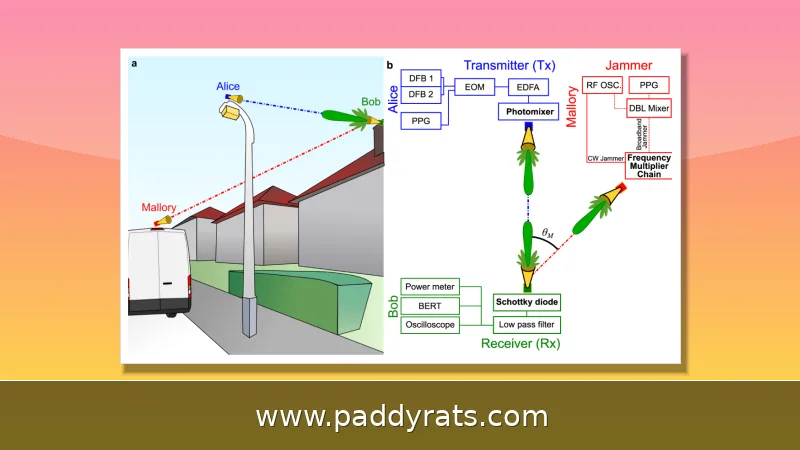
People call these things a lot of different names — cell jammers, mobile phone jammers, signal blockers, GPS jammers, text stoppers. The label changes, but what's happening under the hood doesn't. The jammer pushes out radio frequency energy on the very same frequencies your device is trying to use, and that competing transmission drowns out the real signal. If you think about it in security or networking terms, it's basically a denial-of-service attack — except it travels through the air instead of down a wire.
How Does a Signal Jammer Work?
A signal jammer doesn't physically block your phone from reaching a tower. What it does instead is transmit on the exact same radio frequencies your device uses — which is why experts call this a denial-of-service attack in the RF spectrum. The jamming signal is deliberately stronger than whatever's coming in from the nearest cell tower, so your phone latches onto the stronger transmission and the weaker one effectively cancels out. Think of it as a battle of signal strength: the jammer wins just by shouting louder than the tower. And since the interference hits the downlink signal, the phone never registers usable service and shows no signal bars at all, leaving you with what looks like a dead zone rather than an obvious attack. Under the hood, the jamming noise drags down the signal-to-noise ratio until the phone can't pick out a clean carrier anymore. Less sophisticated jammers only block a single frequency, which can trick a device into thinking no signal exists at all.
At bottom, radio jamming is a numbers game that plays out at the receiver. Any device listening for a signal has to pick out the tower's faint voice against a background of ambient radio noise, and jamming just tips that balance by lowering the signal-to-noise ratio until the tower's transmission drowns in static. Practically speaking, the jammer's own broadcast hits the antenna with so much more energy than the distant cell tower that the receiver can't separate the two anymore. Simpler jammers take a blunt approach: they block just one frequency, which is often enough to make a phone decide there's no service at all, since the band it depends on looks empty. That trick is cheap and it works, but it has limits. More advanced models go after the control channels — the signaling pathways devices use to register on the network and hand off cleanly from one tower to the next. Disrupting that layer doesn't just silence a single call; it stops devices from negotiating a connection in the first place, which makes the outage much harder to work around.
If you've ever gone looking for a DIY cell phone jammer schematic, you've probably run into the same basic design over and over. The circuit comes down to three subcircuits working together: an RF amplifier, a voltage controlled oscillator, and a tuning circuit. The parts list is short and cheap—resistors R1 and R2, capacitors C1 through C7, a transistor labeled Q1, and an inductor L1. The real action happens in the tuned circuit formed by C1 and L1, which acts as an oscillator that produces a high frequency with minimal damping. That steady RF output is what allows a build like this to block UMTS, 3G, CDMA, GSM, and PHS transmissions. In other words, a handful of off-the-shelf components can interfere with several generations of cellular traffic at once—which is exactly why these designs keep circulating online, and why regulators treat them as more than just a curiosity.
What Signals Can a Jammer Affect?
Jammers don't really discriminate when it comes to what they shut down. Cell phones usually hog the spotlight, sure, but the underlying trick works on just about anything that depends on radio frequencies. That means the cellular bands your phone needs for calls and data, the GPS signals your maps app uses to figure out where you are, and the WiFi networks keeping your laptop and smart home gadgets connected. Even two-way radio setups aren't safe — think the VHF and UHF channels used by walkie-talkies and public safety teams. The table below breaks down the main categories and the bands each one covers.
| Category | Bands / Frequencies Affected |
|---|---|
| Cellular networks (2G, 3G, 4G, 5G) | 700 MHz, 800 MHz, 900 MHz, 1800 MHz, 1900 MHz, 2100 MHz |
| GPS | 1575 MHz band |
| WiFi | 2.4 GHz and 5 GHz bands |
| Radio communications | VHF and UHF |
| Drone signals | ISM bands and navigation signals |
| Service | Typical bands | What jamming looks like |
|---|---|---|
| Cellular networks | 700MHz, 800MHz, 900MHz, 1800MHz, 1900MHz, 2100MHz | No bars, dropped calls, failed texts |
| GPS | 1575MHz | Lost position fix, navigation errors |
| WiFi | 2.4GHz and 5GHz | Disconnects, high latency, packet loss |
| Radio communications | VHF and UHF | Static, lost dispatch traffic |
| Cellular generations | 2G, 3G, 4G, 5G | Fallback to older networks or no service |
WiFi jammers go after the 2.4GHz and 5GHz bands — the exact frequencies your router and wireless devices depend on. That's why a jammed office can feel strangely half-dead: every laptop and phone loses its wireless connection, but the wired Ethernet lines keep working like nothing's wrong. Multi-band and full-spectrum jammers push this even further by knocking out several bands at the same time, and the more sophisticated ones might add protocol jamming that specifically targets control channels. Drone jammers are a special case of their own. They hit ISM bands and navigation signals, which pushes a drone into failsafe hover or return-to-launch mode instead of just cutting it off. And on the passive side, Faraday cage panels block signals without transmitting a single thing.
Types of Signal Jammers: Portable, Fixed, and Multi-Band
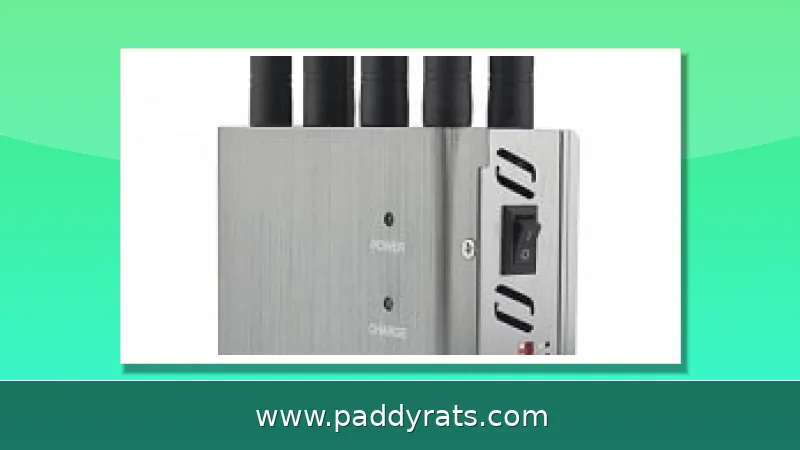
Portable jammers are the smallest, most flexible option in this category. They're compact, battery-powered, and fully cordless, using built-in antennas instead of external ones. That design makes them a solid pick for temporary operations, off-site meetings, and other mobile setups where a small footprint matters more than wide coverage. Fixed jammers sit at the opposite end of the spectrum. These units are permanently installed and put out noticeably more power and broader coverage—which is exactly why you'll find them in executive offices, conference rooms, and high-security facilities where the goal is consistent, around-the-clock blocking. Advanced signal control systems take things a step further by integrating with detection devices, giving operators a clearer picture of what's being blocked and when. So in the end, choosing between portable and fixed comes down to one simple trade-off: mobility and discretion on one side, raw power and reach on the other.
How well a jammer actually works comes down to four things: its output power, how far away the target devices are, physical obstacles like walls, and the type and strength of the original signal. A low-powered jammer will cut off calls within roughly 30 feet (9 meters), and its coverage usually doesn't exceed about 30 square feet. Portable mobile phone silencers typically reach somewhere between 8 and 15 meters. In practice, that means a jammer stuffed in a bag can quiet a single room, but it's rarely going to take down an entire building.
Are Signal Jammers Legal? FCC Rules and Global Enforcement
In the United States, selling, advertising, distributing, or operating cell signal jammers is against the law. The Federal Communications Commission (FCC) has been clear about why: jamming equipment can seriously disrupt critical public safety communications, block 9-1-1 and other emergency calls, and interfere with the radio systems law enforcement relies on every day. The legal footing for this goes back a long way — the Communications Act of 1934 already prohibited interference with authorized radio broadcasts, and that foundation still holds today. Penalties are not trivial. Violators can face fines of up to $11,000, have their equipment seized, and even face criminal sanctions, including imprisonment. Importantly, there are no exceptions carved out for businesses, classrooms, residences, or vehicles — the ban applies across the board, no matter who you are or where you use the device.
| Violation | Potential Penalty |
|---|---|
| Selling, advertising, distributing, or operating a jammer | Fines up to $11,000 |
| Equipment involved in the violation | Seizure of equipment |
| Criminal violations | Criminal sanctions, including imprisonment |
| Exemptions for businesses, classrooms, residences, or vehicles | None |
In the United States, jamming is treated as a federal matter, not a local one. City police departments and county sheriffs have no independent authority to green-light a jammer, even for a narrow purpose like quieting cell traffic in a courtroom or a holding cell. Only certain federal agencies may be permitted to operate jammers in limited, tightly controlled instances. Other countries draw the line differently. Canada bans radiocommunication jammers outright, with no exceptions carved out for private or public users. The United Kingdom takes a more permissive approach: since 2012, law enforcement, intelligence agencies, and prisons have been allowed to deploy signal jammers, but only under strict regulation and oversight. Brazil, New Zealand, and Sweden have each weighed narrow exceptions for correctional facilities, reflecting the same tension between security needs and the risk of cutting off emergency communications. One useful distinction is that cell phone detectors are perfectly legal in the United States and are common inside correctional facilities. In other words, detecting interference is permitted; causing it is not.
| Country/Region | Legal Status for Jamming | Notable Details |
|---|---|---|
| United States | Illegal; federal authority only | Local law enforcement cannot authorize; limited federal agency use possible; cell phone detectors legal and common in prisons |
| Canada | Prohibited outright | Radiocommunication jammers banned |
| United Kingdom | Permitted under strict regulation | Law enforcement, intelligence agencies, and prisons have used jammers since 2012 |
| Brazil | Narrow exceptions considered | Correctional facilities |
| New Zealand | Narrow exceptions considered | Correctional facilities |
| Sweden | Narrow exceptions considered | Correctional facilities |
How Do You Detect a Signal Jammer?
The most common symptom is dropped service, especially when several devices lose connectivity at the same time in an area that normally has strong coverage. Apps that claim to detect jammers are largely unproven and require a working signal to function, which is a problem when the whole point is that the signal is gone. Spectrum analyzers can detect jammers by analyzing frequencies, but they are not commonly available and require specialized knowledge to interpret.
Signs of WiFi jamming include bad signal quality, disconnections, high latency, packet loss, and reduced bandwidth, while wired Ethernet connections keep working normally. Signs of cell jamming include loss of service on multiple devices and erratic signal fluctuations. The clearest indicator is an inability to communicate in an area with typically good coverage. The Department of Homeland Security advises moving 10 to 20 feet away to see whether service returns.
Countermeasures: What Actually Works Against Jamming
The most reliable countermeasure is to locate and disable the jammer, which usually looks like a walkie-talkie, a cell phone, or a wireless router rather than a piece of exotic hardware. Switching frequency may work against less sophisticated jammers that block only one band, but it will not help against multi-band or full-spectrum devices. Relocating is the best bet when you cannot find the source.
Signal boosters amplify existing signals but do not stop jammers, and any signal jammer is also a signal booster jammer, so a booster is not a fix. If you suspect jamming, report it to law enforcement or file a complaint with the FCC. Security teams should treat repeated jamming as a physical-security signal, not just a network nuisance.
Market Examples and Pricing for Signal Jammers
Listings for jamming hardware are easy to find online even though selling them in the US is illegal. The prices below come from public product listings and are shown for context on what the market looks like, not as a recommendation.
| Product | Type | Listed price |
|---|---|---|
| Colibri Y3 mini jammer | Portable 2.4/5.8 WiFi and Bluetooth | $250.00 |
| GP5000 Car Anti-Tracking GPS Blocker | GPS blocker | $119.99 |
| Albatross Pocket 3G (GPS) GSM Jammer | Portable | $179.00 |
| Alligator Powerful 10 bands Jammer (10W) | Multi-band | $720.00 |
| Stalker 5G 12 bands portable jammer | Portable 5G | $850.00 |
| Altron-4 4 bands jammer (35W) | Multi-band | $840.00 |
| HPJ1000-5G desktop jammer | Fixed desktop | $999.00 |
| HPJ20-H 20 bands desktop jammer (130 to 5900 MHz) | Fixed desktop | $2,190.00 |
Drone-specific hardware sits at the top of the price range. The Spectrum handheld drone jammer lists at $2,250.00, while Jammer Master offers a 4G Phone Jammer JM021 at $520.00, a Drone UAV Signal Jammer JM004 at $2,399.99, a Handheld WiFi Bluetooth Jammer JM012 at $569.99, and a Handheld Mobile Phone Jammer with 16 antennas and a 25-meter range, the JM018, at $699.00. The pattern is consistent: more bands, more power, and more targeted protocols push the price up.
Why Signal Jamming Is a Growing Security Concern
Jamming is no longer just a theoretical nuisance. Since 2021, US Customs and Border Protection has seen a roughly 830% increase in signal jammer seizures. Los Angeles leaders and law enforcement have warned about burglars using WiFi jammers to disable home security cameras and alarms before breaking in. In June, the Department of Homeland Security reported jamming devices in several Vermont bank robberies, and jamming devices were recovered in an attempted jewelry store robbery in La Verne, California.
Health researchers have also looked at the human side of exposure. A 2018 study examined the electromagnetic fields of mobile phone jammer exposure on people attending places where jammers operate. That work does not establish harm from consumer jammers, but it underlines that these devices emit real RF energy and belong to regulated spectrum for a reason. For anyone weighing a purchase, the practical takeaway is simple: the legal risk and the safety risk both fall on the person operating the device.
Frequently Asked Questions
What is a signal jammer device?
A signal jammer is a device that deliberately disrupts the connection between a wireless device and its signal source. It transmits on the same radio frequencies as cell phones, WiFi, GPS, or radio systems, creating interference so the receiving device cannot distinguish the original signal from the noise.
How does a signal jammer work?
Jammers emit radio frequency noise on the same frequencies used by target devices, such as 700MHz to 2100MHz for cellular, 1575MHz for GPS, and 2.4GHz and 5GHz for WiFi. This stronger signal overpowers the original, lowering the signal-to-noise ratio and blocking communication in that area.
Are signal jammers legal in the United States?
No. The FCC prohibits operating, marketing, or selling jamming equipment that interferes with authorized radio communications, including cellular, police radar, and GPS. There are no exemptions for businesses, classrooms, residences, or vehicles, and penalties can include fines up to $11,000 and imprisonment.
How can I detect a signal jammer?
Common signs include dropped service on multiple devices, erratic signal strength, WiFi disconnections while wired connections still work, and high latency or packet loss. Spectrum analyzers can confirm interference, but consumer apps claiming to detect jammers are largely unproven and need a working signal to run.