A signal jammer is a device that deliberately drowns out the radio link between a phone, GPS unit, Wi-Fi device, or drone and its signal source. Here is how jamming works, what it blocks, and why it is illegal across most of the world.
What Is a Signal Jammer?
A signal jammer is a device that deliberately disrupts the link between a device and its signal source. Simply put, it's a signal blocker that floods a wireless connection with interference until the target device can't send or receive properly anymore. Take a cell phone jammer: it cuts off communication between a cell tower and a mobile phone, which is why a jammed handset shows no signal bars. The same idea applies to GPS jammers, Wi-Fi jammers, and Bluetooth jammers. Jamming, then, means intentionally blocking or interfering with wireless communications—quite different from the accidental interference that engineers spend entire careers trying to stamp out.
The terminology can get confusing fast, since search results tend to lump several labels together. Depending on who you ask, you'll see these devices called cell jammers, mobile phone jammers, signal blockers, GPS jammers, or even text stoppers. Different names, sure, but they all point to the same basic idea: a deliberate denial-of-service attack on a radio link. It also helps to understand what a jammer doesn't do. It doesn't crack encryption, intercept calls, or read your messages and data. Instead, it drowns out the wireless channel with competing energy, making that channel unusable for everyone within range, including whoever is operating it. That distinction is why jamming counts as a weapon of disruption rather than a tool of surveillance. A jammer doesn't want your information; it just wants your connection to stop working. And that blunt, indiscriminate nature is exactly what makes it so disruptive.
How Do Signal Jammers Work?
A cell phone jammer doesn't have to damage the phone at all. What it does instead is talk over the tower. The device puts out a radiofrequency (RF) signal on roughly the same frequency band your carrier uses, but it's more powerful than whatever is reaching you from the nearest cell site. Picture two people talking at the same time: your phone picks up both voices, but it has no way to separate them, so it goes with the louder one. The weaker signal from the tower, the legitimate one, just gets drowned out. There's one detail worth keeping in mind here. The interference goes after the downlink, which is the tower-to-handset direction, not the signal your phone sends back to the network. And since the phone relies on the downlink to figure out whether a network even exists, a jammed downlink looks like an empty one, so you get zero bars on the screen even though your phone is perfectly fine. That's exactly why experts call jamming a denial-of-service attack: nothing gets broken, but service is deliberately taken away.
What's actually happening here is basically a denial-of-service attack on the air interface—the wireless link that a phone and a tower use to talk to each other. The jammer isn't hacking the phone or the network; it just drowns out that conversation with noise. A cheaper, less sophisticated jammer might only block a single frequency, and even that can be enough to trick nearby devices into thinking there's no signal at all. The real catch is range: consumer-grade jamming usually covers no more than about 30 square feet, so the device has to be sitting right next to its target to do anything. How far and how consistently that interference spreads comes down to a few things—power output, antenna design, and whatever else is going on in the surrounding RF environment.
Types of Signal Jammers and What They Block
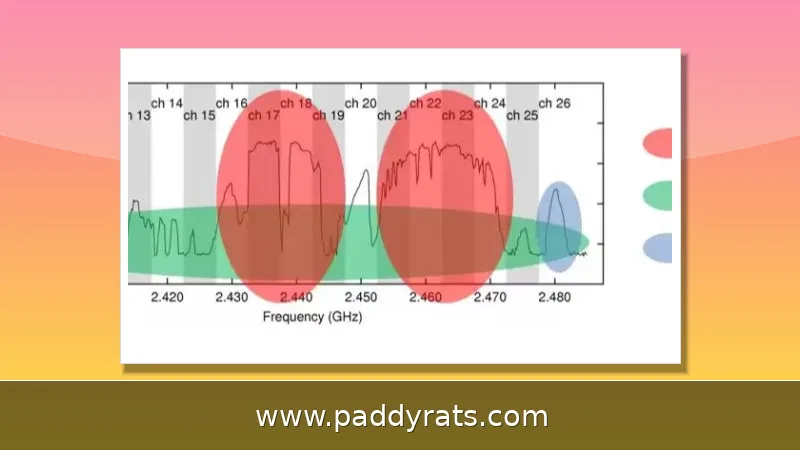
What a jammer can take down depends mostly on which frequencies its hardware was built to cover, though most consumer-grade units go after several targets at once. Mobile networks come first — 2G, 3G, 4G, and 5G — because those are the signals people notice vanishing before anything else. From there, a mobile signal jammer often bleeds into GPS, Wi-Fi, and even police radar, since those services sit close enough on the radio spectrum that one device can sweep them up. Wi-Fi jammers are more targeted: they transmit on the same bands your home or office network already uses, usually 2.4 GHz and 5 GHz, basically drowning the airspace in digital noise until laptops, phones, and smart devices can't reach the router anymore. Bluetooth jammers follow a similar playbook, but with a twist. They flood the 2.4 GHz ISM band, and since Bluetooth runs on Frequency-Hopping Spread Spectrum (FHSS) — a technique that normally hops across all 79 available channels as often as 1,600 times per second — the jammer has to overwhelm every single one of those channels to actually succeed.
The table below breaks down the most common types of jammers, showing which signals each one targets and what that actually means in practice—basically, what you'd notice if one were running nearby.
| Jammer type | Signals blocked | Typical effect |
|---|---|---|
| Mobile phone jammer | 2G, 3G, 4G, 5G | No bars, dropped calls, failed texts |
| GPS jammer | GPS and location bands | Lost location tracking and navigation |
| Wi-Fi jammer | 2.4 GHz, 5 GHz | No wireless internet, disconnects |
| Bluetooth jammer | 2.4 GHz ISM band | Short-range pairing and audio fail |
| Drone jammer | Control link and GPS | Unauthorized drones grounded or diverted |
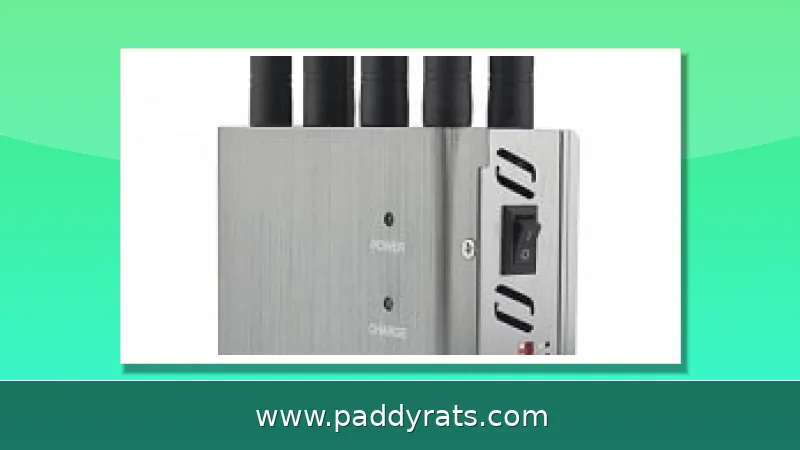
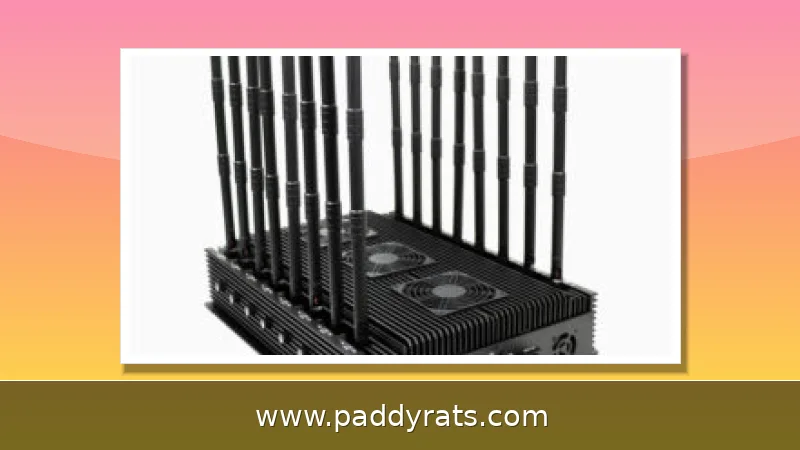
Bluetooth jammers show up in a wider variety of forms than most people expect, and the shape of the device usually tells you something about who's using it and what they're after. The most basic ones are portable and battery-powered — small enough to toss in a bag or pocket, which is exactly why they appeal to people who want to cut off nearby wireless connections while they're on the move. Fixed installations are a completely different story. These get mounted in conference rooms, boardrooms, or secure facilities, where the whole point is keeping sensitive conversations and data from leaking out into the air. Then you've got multi-frequency models, which go beyond Bluetooth and also knock out Wi-Fi and cellular signals — sometimes all at the same time. That last group is what keeps security teams up at night. One box that can silence phones, wireless cameras, and sensors all at once is a much bigger problem than something that only messes with a pair of earbuds, since it can blind an entire monitoring or communication setup in a single move. In a way, it's electronic warfare logic shrunk down to a much smaller scale — concentrate power across several bands, and you get a broad denial-of-service effect instead of a narrow one.
Jamming Techniques in Electronic Warfare
Jamming antennas—usually just called jammers—do their job by interfering with radio noise or signals. In electronic warfare, these systems send interfering signals toward an enemy's radar, drowning out the receiver with concentrated energy so the actual return never makes it through. The methods behind this fall into two main categories: noise techniques and repeater techniques. On the noise side, spot jamming puts all of the jammer's power on one frequency. That works great against fixed-frequency radar, but it's basically useless against frequency-agile radar that can just hop to another channel. Sweep jamming works differently—it moves full power from one frequency to the next in sequence, covering more ground but only touching each frequency for a moment. Barrage jamming casts an even wider net, hitting multiple frequencies at the same time. The trade-off is that the available power gets spread thin, so it's weaker at any single frequency.
DRFM stands for digital radio frequency memory, and it's a repeater technique used in electronic warfare. Rather than just drowning an enemy radar in noise, it grabs the incoming radar energy, stores it digitally, and then sends that same energy back toward the source, tweaking the pulse delay just slightly along the way. Those manipulated delays can trick the enemy's radar screen into showing targets that aren't actually there. It's a pretty sophisticated trick, and it sits at the opposite end of the spectrum from those cheap handheld jammers you see sold illegally online. Still, the basic idea is the same in both cases: overwhelm or confuse a receiver until it can't trust what it's picking up.
Are Signal Jammers Legal?
In the United States, it is against the law to sell, advertise, distribute, or even operate cell signal jammers, and many other countries take a similar stance. The FCC is clear on this point: federal law prohibits the operation, marketing, or sale of any jamming equipment that interferes with authorized radio communications, a category that covers cellular and Personal Communication Services (PCS), police radar, and GPS. What surprises a lot of people is just how broad the ban is. There are no exemptions for business, classroom, residence, or vehicle use, so the "but it's my own property" argument does not hold up. These protections trace back to The Communications Act of 1934, and the consequences are not trivial. Penalties can include fines of up to $11,000, seizure of the equipment, and criminal sanctions that may even include imprisonment.
Enforcement varies by country. Local law enforcement in the US lacks independent authority to use jamming equipment, while federal agencies may be authorized in limited instances. In India, the Department of Telecommunications (DoT) regulates jammers, and only defense forces, government-approved institutions, and law enforcement may legally use or purchase them. In the United Kingdom, law enforcement, intelligence agencies, and jails have used signal jammers since 2012 under strict regulation. Brazil, New Zealand, and Sweden have considered exceptions for correctional facilities. Cell phone detectors, by contrast, are legal in the United States and common in correctional facilities, which is why detection is often the practical answer where jamming is not.
Uses and Misuse of Jamming Devices
Jammers were developed for military and law enforcement use, originally to combat threats such as cell phone-triggered explosives and hostage situations. Proponents argue they are useful where phone etiquette is hard to enforce, such as schools, theaters, vehicles, or quiet train rides. That argument has never carried legal weight in the US, but it explains why demand persists despite clear rules.
Bad actors use jammers to force silence, keep drones away, or block emergency responders. Burglars use cell and Wi-Fi jammers to disable alarm signals and prevent outside communications before entering homes, jewelry stores, and financial institutions. In those cases the jammer is not a privacy tool at all; it is a pre-attack step that buys a few minutes of silence. That is also why regulators treat the sale of these devices as a public-safety issue rather than a simple consumer electronics question.
How to Detect and Respond to Jamming
Common symptoms of jamming include dropped service, loss of service on multiple devices in areas with good coverage, and erratic signal fluctuations. Wi-Fi jamming signs include significantly reduced signal strength near the router, repeated disconnections, high latency, packet loss, reduced bandwidth, and slow data transmission. Wired Ethernet connections continue to work because jammers only affect wireless devices, so a quick wired test is one of the most useful diagnostics available to a home or small business user.
Apps claiming to detect jammers are largely unproven and require a working signal to function. Spectrum analyzers can detect jammers by analyzing frequencies, but they are not commonly available and require specialized knowledge to interpret. If jamming is suspected, contact the wireless network provider, law enforcement, or file an FCC complaint. Moving away may restore reception given the short range of typical jammers.
Jammers vs Signal Boosters
Jammers and signal boosters sit at opposite ends of the same problem. A jammer adds noise to kill a link; a booster amplifies the legitimate signal so a link survives. Boosters are legal in the US when they are FCC-certified for the bands they amplify, while jammers are prohibited outright. If your goal is better coverage in a building, a certified booster plus a wired backhaul is the compliant path. If your goal is to silence phones in a room, there is no legal consumer product that does that in the United States, no matter how the listing is worded.
The Bottom Line on Signal Jammers
The signal jammer meaning is simple: a device that intentionally blocks wireless communication by overpowering it with interference. That covers cell phone jammers, GPS jammers, Wi-Fi jammers, Bluetooth jammers, and drone jammers, and the physics is the same in every case. The legal picture is equally consistent: in the US and much of the world, selling, advertising, or operating these devices is prohibited, with fines up to $11,000, equipment seizure, and possible imprisonment. Detection tools and wired connections are the legitimate alternatives when jamming is suspected.
Frequently Asked Questions
What does signal jammer mean?
A signal jammer is a device that deliberately disrupts the connection between a device and its signal source. It transmits interference on the same radio frequencies used by phones, Wi-Fi, GPS, Bluetooth, or radio, so the targeted device cannot send or receive signals properly. That makes it an intentional denial-of-service attack on a wireless link.
How does a signal jammer work?
Jammers emit a radiofrequency signal stronger than the one coming from a nearby cell tower or access point. Because both signals share a similar frequency, the device cannot distinguish them, picks up the stronger jamming signal, and the weaker legitimate signal is cancelled out. Because the downlink is affected, a jammed phone shows no signal bars.
Are signal jammers legal?
In the United States, federal law prohibits operating, marketing, or selling jamming equipment that interferes with authorized radio communications, including cellular, PCS, police radar, and GPS. There are no exemptions for businesses, classrooms, residences, or vehicles. Penalties can include fines up to $11,000, equipment seizure, and imprisonment. Similar restrictions apply in many other countries.
How can I tell if a signal jammer is being used?
Common signs include dropped service on multiple devices in an area with normally good coverage, erratic signal fluctuations, and Wi-Fi disconnections, high latency, or packet loss. Wired Ethernet connections keep working because jammers only affect wireless links. If you suspect illegal jamming, contact law enforcement or file an FCC complaint.