Signal jammer apps and detector tools sit at the crossroads of RF physics, network security, and strict federal law. Here is how jamming works, what detector apps can and cannot do, and why the FCC bans private use.
What Is a Signal Jammer (Inhibidor de Señal) and How Does It Work?
A signal jammer—often searched as inhibidor de señal or bloqueador de señal—is an electronic device that interrupts wireless communications by transmitting radio frequency energy that interferes with normal channels. It doesn't hack your phone or crack a password. Instead, it just drowns out legitimate signals with stronger noise on the same frequency. That one simple principle can take down mobile phones, GPS receivers, Wi-Fi networks, Bluetooth links, and drone control signals all at once.
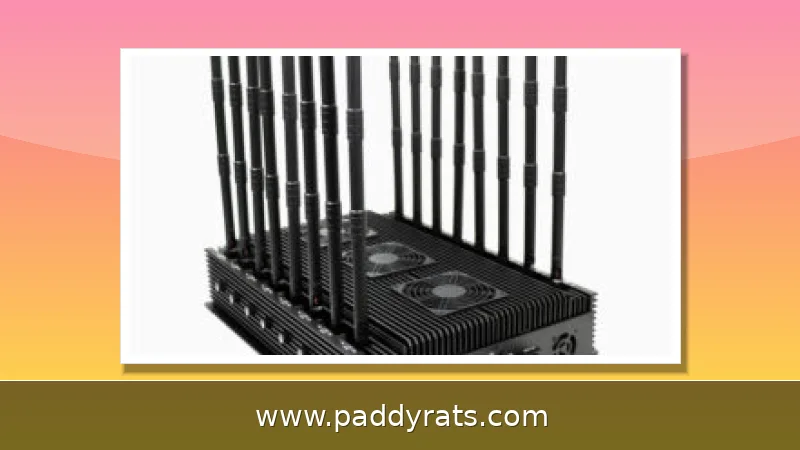
The hardware itself isn't as sci-fi as it sounds. Most jammers break down into three basic parts: an RF signal generator that produces the interference waveform, a power amplifier that cranks up its strength, and one or more antennas that broadcast it across the target frequencies. How far that disruption actually reaches comes down to output power and antenna gain — indoors you might only get a few meters, while high-power military-grade units can push several kilometers. More advanced models are programmable, too, meaning they can adjust on the fly as the signal environment around them changes.
How Do Jamming Attacks Work: Spot vs Barrage Interference?
Jamming basically works by blasting noise on the same frequency you're trying to use, which wrecks the conversation between a transmitter and a receiver. Think of it like talking loudly over someone else's conversation until neither person can hear what the other is saying. The legitimate signals don't just vanish, though — they get blocked, degraded, or saturated. That's exactly why jamming counts as a denial-of-service (DoS) technique rather than a form of eavesdropping.
There are really two main types of jamming you'll run into in practice. Spot jamming, also called narrowband, zeroes in on one specific frequency or a small set of them — it's precise, but it's also pretty easy to sidestep. Barrage jamming, or wideband, is the opposite approach: it spreads across a wide frequency range and hits multiple channels and devices all at once, sacrificing efficiency for sheer coverage. Wi-Fi tends to be a popular target here, since it only uses 11 channels squeezed into the 2.402 GHz to 2.483 GHz band — a narrow slice of spectrum that a single jammer can easily flood.
The practical effects tend to show up quickly: slow transmission, packet loss, dropped calls, and in some cases a total loss of connectivity. When someone carries out a jamming attack, they typically start by identifying the target—whether that's a Wi-Fi network, mobile systems, two-way radios, or satellite systems—then pick the jammer type that fits the job, configure it to emit interference on specific frequencies, and finally switch it on. Detection basically runs the same process in reverse. An RF signal detector scans the surrounding environment, picks up on a significant jump in signal strength, and from there the operator moves toward wherever that peak is coming from.
Signal Jammer Detector Apps: Features, Setup and Limitations
This is where a lot of search traffic gets it wrong. The Wi-Fi Jammer Detector app, from developer Eye LLC, is free and weighs in at 30.6 MB. You'll find it under Utilities, it's rated 4+ (4.8 out of 5, though only from 5 ratings so far), and it runs on iPhone and iPad in English. As for what it actually does, the app sends you jamming notifications, offline and online alerts, and sharing options, and it can pick up both weak and strong jamming attempts as well as deauth attacks. The version history is a long one: it starts at 1.0 (10/14/2025), then moves through 1.1 (11/25/2025), 2.0 (Mar 17), 2.1 (Jun 1), 2.2 (Jun 9), 3.0 (Jun 24), 3.1 (Jun 24), 3.1.3 (Jul 2), 3.2.0 (Jul 18), 3.3.2 (Jul 23), 3.3.3 (Aug 18), and finally lands at 3.4.3 (Oct 2).
Here's the hitch: you need hardware. The app only works if you buy a separate detector device from wifijammerdetector.com, keep it powered on, and wire it to your main router or switch. On its own, the app won't catch jamming, since a phone's Wi-Fi chip can't really tell deliberate interference apart from everyday network congestion. So if you were hoping a free download would double as a signal blocker app, it's probably time to adjust those expectations.
Meanwhile, other tools in this space serve entirely different purposes. The Señal Detector app on Google Play (com.lefan.signal) keeps an eye on cellular 5G and 4G, Wi-Fi, Bluetooth, GPS, and magnetic field signals, which makes it handy for finding good signal sources and troubleshooting network problems. Then there's the Bloqueador de Internet App (com.greatstuffapps.appnetblocker), basically a simple firewall that cuts off internet access for individual apps without requiring root. Neither of these actually jams or blocks RF interference—they just measure and manage your connectivity.
Which Detector and Jammer Tools Compare, and What Do They Cost?
Specs matter more than marketing hype in this category, so it's worth putting the options side by side. The table below lays out the apps and hardware that tend to come up most often alongside inhibidor de señal searches — range, pricing model, and what each tool actually does.
| Tool | Type | Range / Specs | Cost |
|---|---|---|---|
| Wi-Fi Jammer Detector (Eye LLC) | Detection app | Needs external detector wired to router | Free, 30.6 MB |
| Señal Detector (com.lefan.signal) | Signal monitor | 5G/4G, Wi-Fi, Bluetooth, GPS, magnetic | Free on Google Play |
| Bloqueador de Internet App | App firewall | Blocks app internet access, no root | Free |
| A-INFO LB-650-10-C-SF | RF hardware | Extreme range up to 3 KM, SC connection | Enterprise quote |
| nRFBox | DIY jammer kit | Compact Bluetooth and Wi-Fi jamming | Low-cost hardware |
| Signal blocker pouch | Passive shield | RFID, GPS, Wi-Fi, Bluetooth, cellular | Consumer retail |
The pattern here is pretty straightforward: detection and shielding gear is cheap and legal, while actual jamming hardware costs a lot, is tightly controlled, and generally only gets sold to authorized buyers. Sure, some jammers support 3G and 4G, and let you configure Wi-Fi settings like the name, password, and IP, along with different compatible carriers — but those features are built for licensed deployments, not for regular consumers. As for signal blocker pouches, which shield RFID, GPS, Wi-Fi, Bluetooth, and cellular signals for phones and key fobs, those remain the one interference-adjacent product most people can legally pick up for travel privacy and data protection.
Are There Legitimate Uses for Jamming and Interference?
Yes, and they are narrower than most people assume. Military and law enforcement units use jammers to disrupt enemy communications and to prevent remote detonation of improvised explosive devices, where blocking a trigger signal is a life-safety function. Prisons and government offices deploy them to stop unauthorized communications inside controlled facilities, and secure conference rooms use them to protect sensitive data from wireless espionage.
On the security side, controlled interference has defensive value. Teams use it to test network vulnerabilities, prevent rogue access points, protect against information leakage, and eliminate malicious twins in unauthenticated networks. Home Assistant users can even configure automations to detect when an intruder attempts to block a security signal, turning jamming detection into a home alarm trigger. Schools and exam rooms occasionally use blockers to prevent cheating or reduce distraction, and theaters use them during performances, always subject to local legal restrictions.
The risk side is serious. Jammers can disrupt critical communications such as emergency services or aviation systems, potentially endangering lives. Misuse infringes personal freedoms and can obstruct vital information exchange, and companies that deploy jammers without authorization risk legal sanctions and reputational damage. That is why every legitimate deployment in the United States runs through a licensed government or military channel rather than a retail purchase.
Are Signal Jammers Legal, and What Does the FCC Say?
Legality varies by jurisdiction, but the direction of travel is consistent. In the United States, the FCC strictly prohibits the sale, marketing, or use of jammers by private individuals, and violations can result in heavy fines and imprisonment. Similar restrictions exist across the European Union and other developed regions, mainly to protect emergency and aviation communications. Some countries allow special permits under strict supervision, but those permits are granted to institutions, not consumers.
For readers searching are signal jammers legal, the honest answer is that owning or operating one as a private citizen in the US is not a gray area. You can legally buy a signal blocker pouch, run a Wi-Fi jammer detector app with its companion hardware, or monitor RF conditions with an RF signal detector app. You cannot legally transmit interference to silence someone else's network, even on your own property, and no app download changes that.
Risks, Detection and Protection Against Jamming
Protection starts with visibility. An RF signal detector can identify hidden cameras, GPS trackers, and listening devices using multiple detection modes, and the basic detection process is straightforward: scan the environment, identify a significant increase in signal, and move in the direction where the peak is strongest. Doing this periodically in a sensitive room builds a baseline, so an anomaly stands out immediately instead of blending into normal background noise.
For network operators, the practical playbook is layered. Monitor for deauth attacks and unusual offline events, keep firmware current on routers and access points, and treat sudden packet loss across many devices as a possible interference event rather than a routine outage. If you suspect deliberate jamming of a business or home network, document the timeline and signal readings, then contact the FCC or local authorities; do not attempt to jam back, which converts you from victim to violator.
The Bottom Line on Signal Blocker Apps and Detectors
The market around inhibidor de señal searches mixes three very different products: detection apps that need external hardware, monitoring apps that read your own signal environment, and actual jammers that are illegal for private use in the US. Understanding which category a product falls into prevents both wasted money and legal trouble. A free Wi-Fi jammer detector app paired with a proper detector device is a reasonable security investment; a cheap jammer ordered online is a liability.
If your goal is privacy, passive shielding and good network hygiene deliver most of the benefit with none of the legal exposure. If your goal is defending a network, invest in monitoring, logging, and professional RF detection. Jamming technology is real, its effects are measurable, and the rules around it are strict for good reason. This article is for informational purposes and does not constitute legal advice.
Frequently Asked Questions
What is a signal jammer (inhibidor de señal) and how does it work?
A signal jammer is an electronic device that interrupts wireless communications by transmitting radio frequency signals that interfere with normal channels. It overwhelms legitimate signals with stronger noise on the same frequency, blocking phones, GPS, Wi-Fi, and drones. It typically uses an RF signal generator, a power amplifier, and antennas.
Can an app alone detect or block a signal jammer?
No. The Wi-Fi Jammer Detector app requires a separate detector device purchased and wired to your main router or switch, so the app alone will not detect jamming. It provides jamming notifications, offline and online alerts, and sharing, and it detects both weak and strong jamming attempts plus deauth attacks.
Are signal jammers legal to use?
Legality varies by jurisdiction. In the United States, the FCC strictly prohibits the sale, marketing, or use of jammers by private individuals, and violations can lead to heavy fines and imprisonment. Similar restrictions exist across the European Union and other developed regions, mainly to protect emergency and aviation communications.
What are legitimate uses of signal jammers?
Military and law enforcement use them to disrupt enemy communications or prevent remote detonation of IEDs. Prisons, government offices, and secure conference rooms use them to block unauthorized communications. Schools and theaters occasionally use them during exams or performances, subject to local legal restrictions.
What is a signal jammer (inhibidor de senal) and how does it work?
A signal jammer is an electronic device that interrupts wireless communications by transmitting radio frequency signals that interfere with normal channels. It overwhelms legitimate signals with stronger noise on the same frequency, blocking phones, GPS, Wi-Fi, and drones. It typically uses an RF signal generator, a power amplifier, and antennas to radiate interference across target frequencies.