RF jamming uses noise or spoofed signals on the same frequency to deny communications, navigation, and timing. Here is how jammers work, what sets their range, how spectrum analyzers detect them, and which defenses actually hold up.
What Is RF Jamming and How Does It Disrupt Signals?
RF jamming is, at its core, a form of electronic attack. You flood a target with radio frequency energy until it can't use its signal anymore — whether that signal is carrying communications, navigation, or timing data. But the rule behind making it work doesn't leave much room for error. The jammer has to transmit in the same frequency band as the target, and it has to sit within the field of view of the target's antenna. Miss either one, and nothing happens.
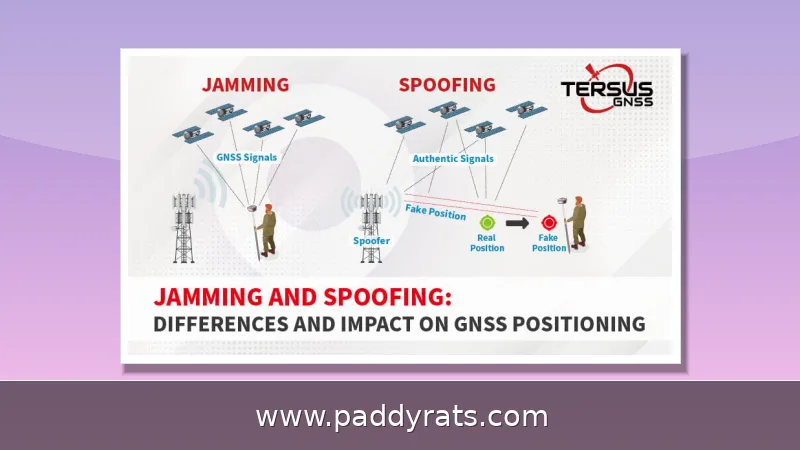
The core concept isn't hard to grasp, but actually defeating a jammer is a different problem entirely. A jammer transmits on the same frequency the target is using, just at a higher power level than the legitimate transmitter, so the receiver ends up locking onto the jammer instead of the real signal. From there, jammers can go a few different routes: they might flood the channel with continuous noise, imitate the target waveform, or pulse on and off intermittently to corrupt specific data packets. One thing worth pointing out is that the interference clears up once the jammer stops transmitting, but that doesn't mean everything snaps back to normal right away. Second-order effects can linger, things like clock drift, schedule slip, and lost synchronization.
Jamming isn't always about shutting someone down. Sometimes it's intentional and defensive—what people call friendly jamming—used to keep data confidential and to support things like message authentication and access control. The trick is that the jamming signal gets generated by modulating random bits, so its spectrum ends up looking a whole lot like the actual data signal. That similarity is exactly the point: it makes the jamming traffic really hard to distinguish from the legitimate stuff.
Most jamming goes after the bands that everyday devices actually use. Cell phones operate on 700 MHz, 800 MHz, 900 MHz, 1800 MHz, 1900 MHz, and 2100 MHz; GPS sits at 1575 MHz; and WiFi runs at 2.4 GHz and 5 GHz. Something I ran into on my own bench stuck with me, though: a cheap 2.4 GHz noise source killed the link to a Traxxas RC car long before it got anywhere near a phone. It's a solid reminder that jamming is really about the band you're hitting, not the specific device sitting on the other end.
Jamming Techniques Compared: Noise, Deceptive, Barrage, and Spot
The technique you choose makes a real difference in how much you disrupt—and how much collateral damage you cause along the way. Barrage jamming spreads noise across a wide range of frequencies, so it can take down several channels at once, though it's less focused on any single one. Spot jamming, on the other hand, zeroes in on one specific frequency. That makes it more efficient, and it lets an operator isolate a particular device or link instead of blasting everything around it.
Noise jamming is the blunt-force approach: it simply drowns out the communication entirely. Deceptive jamming is a different game — it feeds the receiver misleading signals, so instead of cutting the link, it confuses whoever's on the other end. Protocol jamming goes after control channels specifically, which can quietly break how a system manages itself. And then there are reactive (or responsive) jammers, which are smarter about it: they listen first and only transmit when the target is actually active. That saves power, and just as importantly, it cuts down on the signature they leave behind.
When I’m comparing these approaches for actual deployments, the table below covers the trade-offs that come up most often.
| Technique | Behavior | Strength | Trade-off |
|---|---|---|---|
| Barrage | Noise across a wide frequency range | Hits multiple channels at once | Less focused, wastes power |
| Spot | Targets one specific frequency | Efficient and precise | Only affects that frequency |
| Noise | Continuous random energy | Fully blocks the channel | Easily noticed, high power draw |
| Deceptive | Sends false or spoofed signals | Confuses without full blockage | Requires knowledge of the waveform |
| Protocol / reactive | Attacks control channels, transmits on demand | Low signature, power efficient | Complex to build and tune |
Drone jammers are a good example of why narrow targeting matters. They're designed to hit only the frequencies drones use for control and video, so phones, WiFi, and everything else nearby keep working more or less as usual. Wideband or full-spectrum jammers do the opposite: they blanket a huge swath of spectrum all at once, which causes far more collateral interference — and a lot more irritated neighbors.
What Determines RF Jammer Range and Performance?
There's no single fixed range you can just look up on a spec sheet. What actually decides it is a combination of factors: output power, operating frequency, antenna performance, and the environment you're working in. More power will get you farther, sure, but a higher-gain, more directional antenna can accomplish the same thing. Frequency plays a role too—higher frequencies tend to fade out over shorter distances, while lower frequencies can reach much farther on the same amount of power.
Obstacles in the path, attenuation from building materials, and stronger competing signals will all shrink the effective interference area. So a jammer rated for 25 meters indoors might only manage 5 meters once a concrete wall is in the way—and that same unit can perform completely differently out in an open rural field.
Real hardware makes that performance gap pretty obvious. Take the HackRF One, for example—it's a popular software-defined radio, and it only puts out around 1 mW. That's fine for lab experiments or short-range testing, but it's nowhere near what an actual field jammer can do. Now look at something like KBR's PBJ-100 on the other end of the spectrum: a 100-watt unit with a 10 MHz timing reference and 2,500 BTU/h of cooling capacity. That last spec isn't there by accident, either—push that much RF energy and you're going to generate some serious heat.
Responsive designs trade raw power for efficiency. Phantom Technologies' RSJ470PL runs two hours of continuous operation per charge, keeps more than 150 meters between transmitter and receiver, and responds in roughly 10 milliseconds with adjustable settings. Broader RF jamming platforms cover 0.1 to 6.2 GHz with expandable RF modules and 360-degree detection and jamming, which is a very different product category from a handheld unit.
What Are the Technical and Regulatory Requirements for Jamming Devices?
Jamming equipment is not consumer electronics, and the technical requirements reflect that. Devices are intended for authorized use only, and output power must be controlled so that range stays within authorized limits. Operation is restricted to specified frequency ranges under applicable spectrum management rules.
Equipment also needs sufficient immunity to external interference to avoid unintended emissions, which is a real failure mode when cheap amplifiers are driven too hard and start splattering energy outside their assigned band.
Testing follows a predictable pattern. Emission measurement uses calibrated equipment. Spectrum analysis uses a spectrum analyzer or scanning receiver. Immunity testing is done by simulating interference or injecting test signals to see how the device behaves when the RF environment turns ugly.
Global anti-jamming demand reflects how seriously institutions take this. The anti-jamming industry was valued around USD 5.0 billion and is expected to more than double to USD 11.4 billion by 2033, while the signal jammer market itself was valued at $2.8 billion in 2025 and is projected to reach $5.6 billion by 2034, growing at an 8.1% CAGR according to Dataintelo. Both numbers point the same direction: jamming and anti-jamming are growing together.
How Do Spectrum Analyzers and Direction-Finding Detect Jammers?
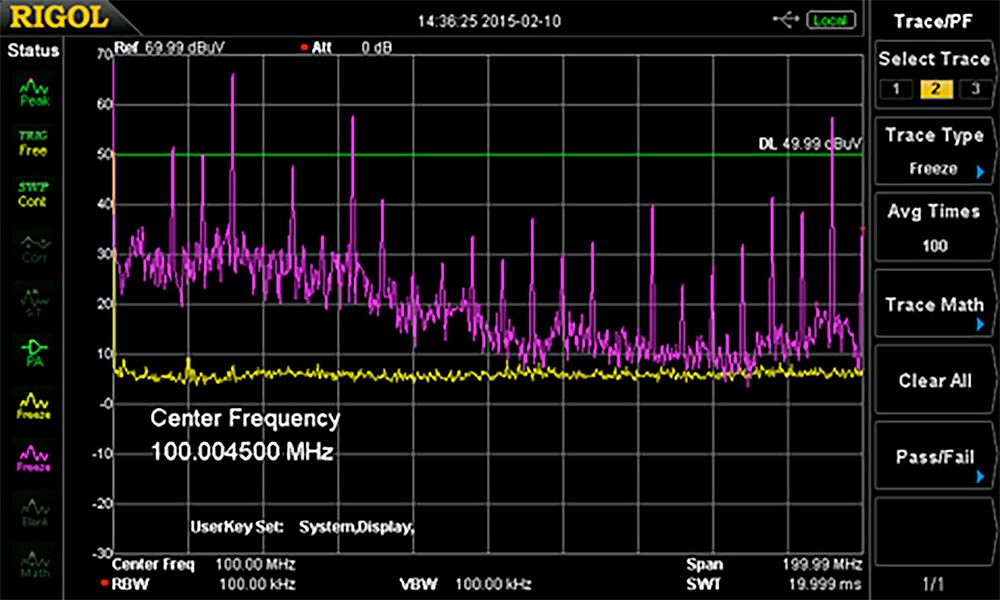
Detection starts with visibility. A spectrum analyzer or scanning receiver lets a technician observe operating frequencies and spectral characteristics, and a jammer has a signature: a raised noise floor, an unusually wide energy hump, or a signal that appears exactly where nothing should be transmitting.
Once a technician knows what to look for, the next step is location. Trained technicians locate jamming devices using spectrum analyzers combined with direction-finding equipment, which means walking or driving a bearing until the signal peaks. Because a jammer source can be small and highly mobile, attribution is genuinely difficult, and that is one of the reasons jamming incidents are so often unresolved.
Field troubleshooting is often simpler than people expect. Moving 10 to 20 feet away can escape localized jamming, and since many jammers only target certain device types, you may find one device still connected while another is dead. That asymmetry is a useful diagnostic clue.
I have also seen the opposite problem: accidental jamming. Users on the wrong frequency or pointed at the wrong satellite can jam friendly communications without any hostile intent, degrading signals and, depending on severity, frequency, and duration, even affecting spacecraft. The lesson is that spectrum discipline is a defense in itself.
Anti-Jammer Defenses: Beamforming, Filtering, and Signal Resilience
Defense against jamming is layered, and no single technique covers everything. Signal authentication confirms that a received signal actually comes from a trusted source, which directly counters deceptive jamming. Interference filtering cancels jammer noise so the receiver can still pull the legitimate signal out of the mess.
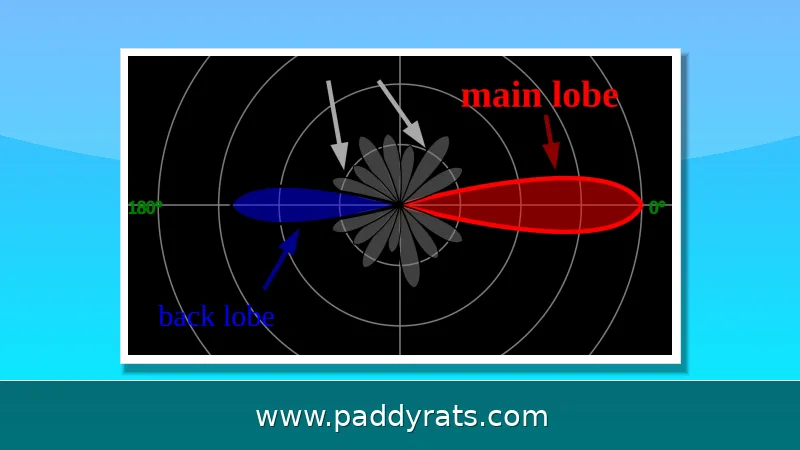
Signal resilience keeps systems online under attack rather than merely detecting the attack. Beamforming is the most elegant of these: it focuses antenna sensitivity on the good signal instead of only trying to block the bad one, which improves the link budget in the direction that matters.
For networked radios, spectrum dominance and low-probability-of-intercept, low-probability-of-detection (LPI/LPD) designs go further. Platforms such as Silvus Technologies' MANET radios and Doodle Labs' electronic warfare-oriented products use expanded spectrum range, radio-silent operation, and wake-on-wireless behavior to stay hard to find and hard to jam.
The practical takeaway from my own testing is that the best defense is usually a combination: authentication to reject fakes, filtering to survive noise, beamforming to keep the link, and enough frequency agility to move when a band becomes unusable. Any one of these alone leaves an obvious gap.
Legal, Regulatory, and EMI Standards for Jamming Equipment
Intentionally interfering with other people's communications is illegal in many jurisdictions and can cause serious disruption, including to emergency services and safety-of-life systems. Unauthorized possession or use of jamming equipment is unlawful, and enforcement does not require proof of malicious intent.
The U.S. Department of Homeland Security's Science and Technology Directorate has published jamming guidance that makes the compliance picture clear: use and testing must follow applicable laws and regulations, and authorized testing is performed by regulatory bodies rather than private parties.
Procurement matters too. Buyers in regulated industries increasingly look for vendors with mature quality and supply-chain controls, such as CMMC Level 2 certification and supply chains based in the U.S. and U.K. Spectrum Control, founded in 1963, is a useful reference point here: more than 70 years of experience, 20 product lines, roughly 1,100 employees, 13 locations, and more than 40 companies or product lines merged or absorbed over the years.
For anyone comparing commercial jammer listings, the compliance question should come before the spec sheet. A device that promises 25 meters of coverage for $699, or a 4G phone jammer at $520, may work exactly as advertised and still be illegal to operate where you live. This article is not legal advice, and anyone considering jamming or anti-jamming equipment should confirm local rules first.
How Does a Signal Jammer Work?
A jammer transmits RF noise or false signals on the same frequency as the target communication at higher power, so the receiver cannot decode the legitimate transmission. Common techniques include noise, deceptive, barrage, and spot jamming, and advanced models may use protocol jamming against control channels. The interference is generally reversible once the jammer stops transmitting.
What Factors Affect RF Jammer Range?
Effective distance depends on output power, operating frequency, antenna performance, and environmental conditions. Higher power and higher-gain directional antennas extend range. Higher frequencies tend to propagate shorter distances, and obstacles, building attenuation, or strong competing signals reduce the effective interference area. This is why real-world range often falls well short of advertised numbers.
How Can Jamming Be Detected and Countered?
Trained technicians can locate jamming devices using spectrum analyzers and direction-finding equipment, often by tracking a raised noise floor or an unexpected signal. Anti-jammer devices use signal authentication, interference filtering, and signal resilience. Beamforming focuses antenna sensitivity on the legitimate signal instead of only blocking bad signals, which keeps the link alive under attack.
Is Using a Signal Jammer Legal?
Intentionally interfering with others' communications is illegal in many jurisdictions and can seriously disrupt communication systems. Jamming equipment use and testing must comply with applicable laws and regulations, and unauthorized possession or use is unlawful. Authorized testing is performed by regulatory bodies. Always check local rules before buying or operating any jamming or anti-jamming equipment.
Frequently Asked Questions
How does a signal jammer work?
A jammer transmits RF noise or false signals on the same frequency as the target communication at higher power, so the receiver cannot decode the legitimate transmission. Techniques include noise, deceptive, barrage, and spot jamming, and advanced models may use protocol jamming on control channels. The interference is usually reversible once the jammer stops transmitting.
What factors affect RF jammer range?
Effective distance depends on output power, operating frequency, antenna performance, and environmental conditions. Higher power and higher-gain directional antennas extend range, while higher frequencies tend to propagate shorter distances. Obstacles, building attenuation, and strong competing signals reduce the effective interference area, so real-world range often falls short of advertised figures.
How can jamming be detected and countered?
Trained technicians can locate jamming devices using spectrum analyzers and direction-finding equipment. Anti-jammer devices use signal authentication, interference filtering, and signal resilience. Beamforming focuses antenna sensitivity on the legitimate signal instead of just blocking bad signals, which helps keep the link alive during an attack.
Is using a signal jammer legal?
Intentionally interfering with others' communications is illegal in many jurisdictions and can seriously disrupt communication systems. Jamming equipment use and testing must comply with applicable laws and regulations, and unauthorized possession or use is unlawful. Authorized testing is performed by regulatory bodies, so confirm local rules before buying or operating any such equipment.