Remote control jammers flood the 315 MHz, 433 MHz, and 868 MHz bands with RF noise so RC cars, drones, alarms, and garage doors lose their link. Here is how RC and IR jammers work, what they cost, and why the FCC says operating one is illegal.
What Is a Remote Control Signal Jammer?
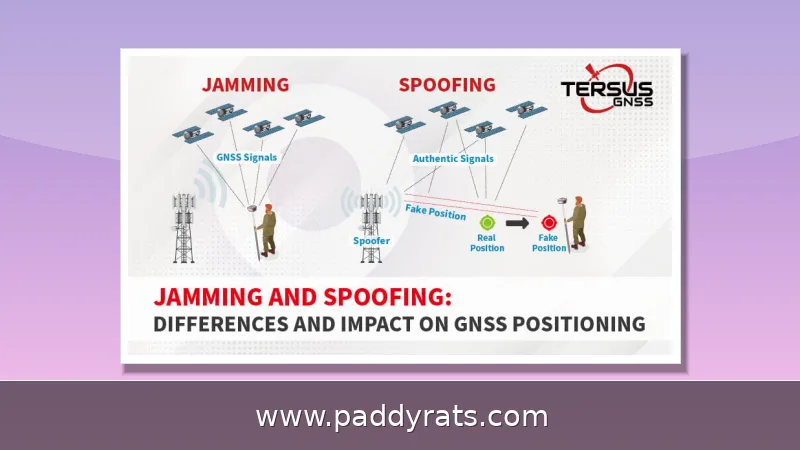
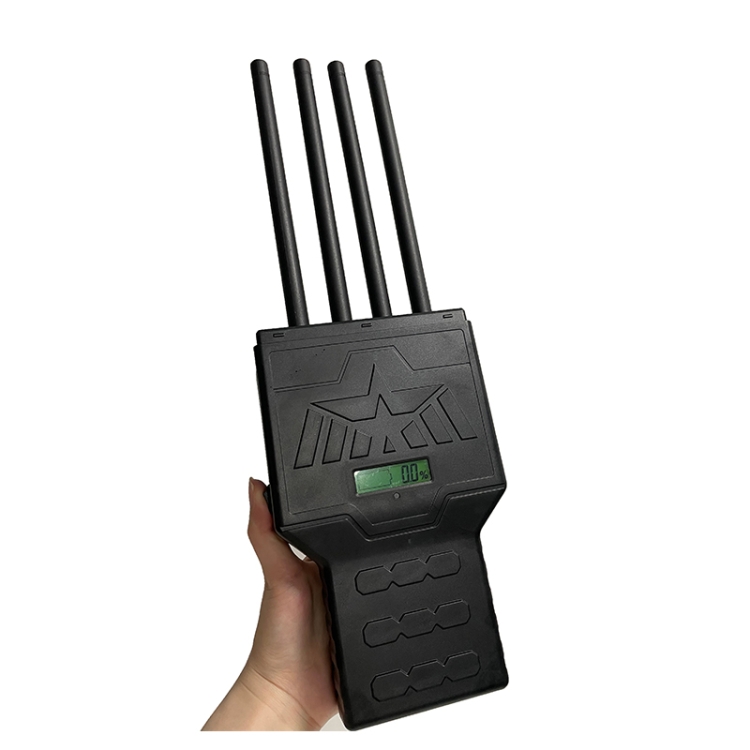
A remote control signal jammer is basically a transmitter that deliberately floods a wireless band with noise, drowning out the weaker signal a receiver is trying to pick up from a legitimate remote. You've probably seen the effect without knowing the cause: an RC car that suddenly stops responding, a garage door that ignores its clicker, or a TV that won't change channels while someone stands nearby holding a small black box. The category itself is broad, covering handheld RF blockers, infrared (IR) remote jammers, and high-power rack-mounted units built for RCIED and bomb-jamming work. When people search for these devices, they tend to have four things on their minds: which frequencies they hit, how far they reach, what they cost, and whether it's actually legal to own one.
"Remote control jammer" is kind of a catch-all term. Vendors slap it on gear built for hobby RC bands, but they also use it for responsive jammers—units that listen to a spectrum first and only fire off a transmission once they've classified something as a threat. Either way, the underlying physics is the same: you pump enough noise into a band that the receiver's signal-to-noise ratio falls apart. Once you grasp that one idea, most spec sheets start making sense—whether you're looking at a $570 two-antenna box or a 190W anti-drone unit rated for 1,600 meters.
How Do RC and IR Jammers Work?
A radio jammer doesn't hack or decode anything. Instead, it floods a specific RF band with enough energy that the receiver can no longer tell the weak remote signal apart from the noise around it. The jammer never needs to know what the remote is actually transmitting. All it does is push the ambient RF level above the receiver's sensitivity threshold across the target band, which effectively buries the intended signal. That's also why how far a jammer actually reaches has as much to do with the receiver's design, its antenna gain, and the local terrain as it does with raw wattage.
IR remote jammers go after a totally different layer. No radio involved—they just flood the room with infrared pulses at 38 kHz, which happens to be the carrier frequency most consumer IR remotes rely on. The TV's IR receiver ends up drowning in that constant stream of pulses, so it can't pick out the actual data frame coming from your remote, and your button presses basically go nowhere. For DIY builds, a 555 timer is the go-to part for generating that 38 kHz square wave, which is exactly why the classic "555 timer TV remote jammer" project keeps popping up in electronics tutorials.
Responsive jammers are a smarter breed. Instead of blasting noise all the time, they listen to a predefined spectrum and analyze the RF environment in real time. Only when a threat gets classified do they transmit white noise, and even then just for a few milliseconds before switching back to reception mode. Since the scan happens fast enough, these units can still disrupt DTMF-initiated RCIEDs without sitting on the air continuously, which keeps the interference footprint smaller and makes them harder to detect.
Common Frequencies and Ranges for Remote Control Jammers
Remote control jammers usually go after the same handful of frequencies: 315 MHz, 433 MHz, 868 MHz, 2400–2500 MHz, and 5500–5900 MHz. A basic portable unit might only block 315 MHz and 433 MHz, but still reach up to 100 meters, while multi-band models can take on RC, WiFi, GPS, and UHF all at once. If you're wondering why those first two bands come up so often, it's because they do most of the heavy lifting for cheap remotes, garage door openers, and alarm fobs in both the US and Europe. That's exactly why a two-antenna portable covering just 315 and 433 MHz is the typical starter product you'll see for sale.
Range is where the marketing claims and real-world physics start to pull apart. Take a portable 2-antenna jammer rated for 315 MHz and 433 MHz: it covers up to 100 m, which works out to about a 50 m radius, pulls roughly 240 mA, and runs off a DC9V alkaline battery inside a 200 x 60 x 25 mm case. Move up to a 150W 315/433/868 MHz unit and vendors will tell you it reaches 800 m, while a 190W anti-drone RC/GPS/FPV jammer is listed at up to 1,600 m. Just keep in mind that those numbers assume clean line-of-sight and a receiver that's cooperating, so they're really best-case ceilings, not promises.
Here's a quick rundown of the frequency bands and typical ranges you'll see across current vendor listings.
Frequencies, Power, and Range at a Glance
| Band | Typical Use | Vendor-Listed Range |
|---|---|---|
| 315 MHz | US garage doors, alarm fobs, cheap RC toys | Up to 100 m (portable) to 800 m (150W) |
| 433 MHz | EU/Asia remotes, sensors, RC cars | Up to 100 m (portable) to 800 m (150W) |
| 868 MHz | European alarms and smart-home devices | Covered by multi-band units, up to 800 m |
| 2400-2500 MHz | Drone control, WiFi, Bluetooth | Up to 1,600 m on high-power anti-drone units |
| 5500-5900 MHz | FPV video and 5.8 GHz drone links | Up to 1,600 m on 190W class units |
Treat that table as a jumping-off point rather than a final spec sheet. Across the models listed, output power spans roughly 16W to 1,050W, and antenna counts run anywhere from 2 to 24 — and whether those antennas are internal or external makes a real difference in the effective pattern. Range isn't just about wattage, either. Obstacles, antenna gain, receiver sensitivity, and how far the drone is from its controller all push the number around. That's exactly why two units with the same power rating can act completely differently in a parking garage versus an open field.
Portable Remote Control Jammer Specifications and Pricing
Pricing for RC jammers spans a wide arc. Jammers4u lists RC jammers from $570 to $7,300, including a 150W 315/433/868 MHz unit up to 800 m and a 190W anti-drone RC/GPS/FPV jammer up to 1600 m. At the professional end, Phantom Technologies' RSJ470PL is a responsive jammer with 150W total output, 30W maximum per band, 1W minimum per band, and 1 dB power control steps. Its response time is about 10 ms, with an adjustable jamming cycle from 100 ms to 10 seconds, roughly 2 hours of battery operation, a Tx-Rx distance of more than 150 m, and a 15 kg chassis.
The RSJ470PL's receiver side is equally specific: 20-520 MHz coverage, -132 dBm sensitivity, AM/FM/CW demodulation, IF bandwidth from 15 KHz to 2 MHz, 4000-channel memory scan, and a minimum channel spacing of 10 KHz. Those numbers matter because a responsive jammer is only as good as its ability to hear and classify a threat before transmitting. Lower-cost portable units skip that layer entirely and simply transmit continuously, which is cheaper but far more conspicuous and more likely to disrupt unintended devices.
For buyers comparing options, the trade-off is consistent: battery-powered portability versus coverage. A handheld two-antenna blocker is easy to carry and cheap to run, but a 15 kg rack unit with programmable power steps covers far more spectrum. The market itself reflects that demand. The Signal Jammer Market was valued at USD 913.05 million in 2025 and is expected to reach USD 1209.32 million, while a separate forecast cites USD 1.08 billion in growth at a 5.66% CAGR between 2023 and 2028.
DIY TV and IR Remote Jammer Projects
Home-built IR jammers are the most accessible entry point because they involve no RF licensing questions and only a handful of parts. The standard approach places a 555 timer on a small board, wires the supporting components, and either builds the circuit into a spare remote housing or leaves it as a standalone box. When switched on, a single button press sends a continuous stream of IR pulses that corrupts the data coming from normal remotes, blocking TVs, stereos, and other IR-controlled devices.
Published step-by-step guides, including the well-known 555 timer TV remote jammer tutorial, list the exact components and setup steps for a 38 kHz IR circuit. Instructables hosts both a four-step TV remote jammer build with pictures and a three-step IR remote control jammer, and video walkthroughs of similar projects have circulated for years. The appeal is obvious: low cost, non-destructive, and reversible. The limitation is equally obvious: an IR jammer only affects line-of-sight infrared remotes. It does nothing to a 433 MHz garage door or a 2.4 GHz drone link.
Responsive Jammers and RCIED Protection
Responsive jammers exist because continuous jamming is blunt and noisy. A responsive unit listens to a predefined spectrum, analyzes the RF atmosphere in real time, and transmits white noise for several milliseconds when a threat is classified, then returns to reception mode. That listen-then-transmit cycle is what lets it stay quiet most of the time while still reacting fast enough to interrupt a trigger signal. Scanning is fast enough to jam DTMF-based initiated RCIEDs, which is the core use case in convoy protection and bomb-jamming deployments.
The performance envelope of these systems is defined by response time, power control granularity, and receiver sensitivity rather than raw wattage alone. The RSJ470PL, for example, pairs a 150W transmitter with a 20-520 MHz receiver rated to -132 dBm, which is how it can classify a weak threat signal before committing power. For anyone comparing a $570 portable blocker to a professional responsive jammer, the difference is not just range; it is whether the device can decide when not to transmit.
Risks, Compliance, and Limitations
In the United States, the FCC states plainly that jammers are illegal to operate. Interference can prevent 911 calls or emergency alerts, which is why enforcement actions target illegal use and penalties can include fines and equipment seizure. The FCC's Jammer Enforcement page is actively maintained and updated regularly, and the agency's position has not softened as the market has grown. Importing, marketing, or selling jammers to US consumers carries its own exposure.
Beyond legality, jamming can disrupt wireless security systems, remote sensing, and ordinary communications in ways the operator never intended. A device aimed at a garage door band can also knock out nearby alarm sensors, key fobs, and telemetry links. Because jamming range is not determined by output power alone, real-world effects are hard to predict even for experienced users. Vendors and white papers from the industry, including Centsys' write-up on the truth about signal jamming, acknowledge that these tools are inherently indiscriminate.
A related question is detection. If you need to locate an active jammer, a multi-spectrum frequency reader is the standard tool, with a typical detection range of about 20 feet. Cell phone jammers can also block drone control signals, and the indicators include a sudden drop in satellite count to zero, with jamming ranges up to 30 m and equipment costs between $10,000 and $20,000. None of that changes the underlying legal picture: in the US, operating any of these devices is prohibited.
How Far Can a Signal Jammer Work?
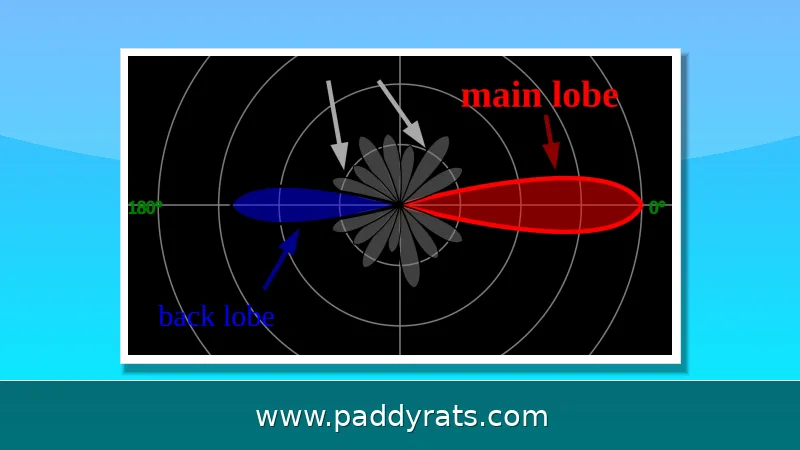
The honest answer is that range depends on output power, terrain obstacles, and the distance between the drone and its controller. A portable 315/433 MHz unit may be quoted at 100 m, a 150W multi-band model at 800 m, and a 190W anti-drone system at 1,600 m, but each figure assumes favorable conditions. Buildings, trees, hills, and even body positioning can cut effective range dramatically, while a sensitive receiver with a directional antenna can hold a link longer than a cheap one.
Power alone does not settle the question either. Antenna type, band, and whether the jammer transmits continuously or responsively all matter. A responsive jammer that transmits only when a threat appears may deliver a shorter average duty cycle yet still break a link because it hits the exact moment that matters. That is why professional buyers evaluate receiver sensitivity, response time, and power control steps alongside wattage, and why a spec-sheet comparison between a handheld blocker and a rack-mounted unit is rarely apples to apples.
Are Signal Jammers Legal in the United States?
In the United States, the FCC states that jammers are illegal to operate. Interference can prevent 911 calls or emergency alerts, and enforcement actions target illegal use. Penalties can include significant fines, equipment seizure, and further legal action. The FCC's Jammer Enforcement page is updated regularly, and the agency's position applies to RC jammers, cell phone jammers, GPS jammers, and WiFi jammers alike. Owning or importing a jammer for resale to US consumers also carries legal risk, so buyers should treat any consumer listing as a compliance red flag.
Frequently Asked Questions
What frequencies do remote control jammers block?
Remote control jammers typically target common RC bands: 315 MHz, 433 MHz, 868 MHz, 2400-2500 MHz, and 5500-5900 MHz. Some portable models jam 315 MHz and 433 MHz up to 100 meters, while multi-band units cover RC, WiFi, GPS, and UHF in one device.
How does a remote control jammer work?
A jammer transmits enough RF energy in the target band so receivers can no longer pick out the weaker remote signal. Responsive jammers listen first, classify a threat, then transmit white noise for milliseconds before returning to monitoring mode.
Can I build a TV remote jammer at home?
Yes. DIY guides use a 555 timer to emit a 38 kHz IR signal that corrupts data from normal IR remotes. The circuit blocks TV, stereo, or other IR devices by flooding the receiver with pulses, and component lists are published in step-by-step tutorials.
Are signal jammers legal?
In the United States, the FCC states that jammers are illegal to operate. Interference can prevent 911 calls or emergency alerts. Enforcement actions target illegal use, and penalties can include fines and equipment seizure.