Police frequency jammers flood the same radio bands your phone, GPS, or drone uses, overpowering the original signal with a denial-of-service attack. Here is how the hardware works, how far it reaches, and why federal law still bars almost everyone from switching one on.
What Is a Signal Jammer and How Does It Work?
The FCC defines a signal jammer as a transmitter built to block, jam, or deliberately interfere with authorized radio communications. It doesn't intercept or decode anything—it simply talks over the conversation. Unauthorized use is treated as both a civil and criminal matter, and penalties can range from seizure of the equipment to fines and even prison time. That's the core takeaway: the same hardware sold as a privacy gadget is, in the federal government's view, an interference device.
Fundamentally, jamming is a denial-of-service attack that plays out over the airwaves. A cell phone jammer transmits on the very same frequencies a carrier uses, so the handset suddenly picks up two signals fighting for the same channel. As Cellbusters engineers put it, a phone can't tell two signals on the same frequency apart, so it latches onto the stronger one while the weaker one simply cancels out. One detail worth noting: the jamming hits the downlink, meaning the tower-to-phone leg of the connection. That's why a jammed phone just shows no signal bars rather than displaying some kind of error. From the user's side, nothing looks broken — the phone quietly loses its grip on the network. It's a subtle kind of failure, and that subtlety is exactly what makes jamming so disruptive in the real world.
Phantom Technologies makes essentially the same argument about remotely controlled receivers, just aimed at a slightly different target. The jammer radiates a specific signal that blocks coded commands from getting through, so the receiver never executes the instructions it was given. Meanwhile, devices outside the protected area keep functioning as if nothing happened — that containment is what keeps the effect from spilling over into everything nearby. Some units go a step further and transmit specially coded signals that deceive GSM receivers outright, preventing them from connecting to a base station at all. The method shifts depending on the device in question, but the underlying goal stays the same: overwhelm a legitimate link at the signal level, all without ever physically touching or damaging the device itself.
How Police Frequency Jammers Disrupt Radio Signals
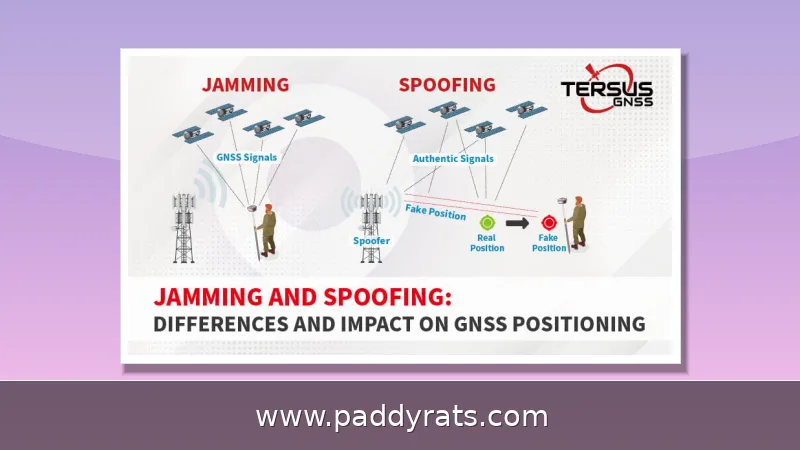
A police frequency jammer doesn't need to overpower a cell tower, a GPS satellite, or a drone's control link at the source. It only has to win at the receiver. The device pushes out RF energy on the same bands its targets depend on — cellular voice and data, GPS, WiFi, and the control channels that keep drones in the air — and because a receiver sizes up signals by how strong they are right where it sits, a jammer nearby running at modest power can easily drown out a distant transmitter blasting away at full legal wattage. Think of two people talking at once: whoever's louder in the room wins, no matter how far off the quieter one is standing. That's how a box small enough to rest on a desk can kill every bar on a phone in a room while the tower a mile away keeps humming along, completely unaware anything's wrong. It also explains why jamming is so hard to catch from the outside — the network looks fine, the tower is fine, and the only thing that's actually changed is what the handset can hear.
What a jammer actually does depends a lot on which signal it's going after. Knock out cellular service, for example, and you also knock out 911 calls — which is the main reason the FCC comes down so hard on civilian jamming. Disrupt GPS and you mess with navigation and timing for drones and vehicles alike. Target a drone's command link and the aircraft might just hover in place, fly back to where it launched, or simply land, depending on how its firmware is set up to handle a lost signal. Federal guidance is pretty clear on one point: detection has to come before mitigation, meaning operators should confirm an intrusion is really happening before they transmit anything back.
Radar jammers don't work at all like the cell and WiFi blockers I went over above. Instead of cutting off a two-way link between a phone and a tower, an active radar jammer throws out its own RF energy to mess with the police radar guns that read Doppler shift — that's the frequency change a gun uses to figure out how fast you're going. The ones that actually perform well run several antennas, one for each radar band, and they're typically hidden behind the grille so the emissions blend into the front of the car. That said, the active radar jammers sold back in the 2000s were mostly expensive and didn't really work, and passive radar scramblers are a total scam — they do nothing but take your money. Unless some independent test proves otherwise, I'd call any consumer radar jammer listing pure marketing fiction.
Frequency Bands and Interference Ranges for Law Enforcement Jammers
Civilian radio traffic occupies a huge stretch of spectrum — about 20 MHz to 6000 MHz — and each band within that range behaves a little differently. The low end, roughly 20 to 100 MHz, is where broadcasting lives. These signals tend to bend around obstacles and push through walls, which is why they can cover more ground at lower power. The middle bands, around 100 to 500 MHz, carry remote control and two-way communication signals, while the 700 to 5000 MHz range handles 2G, 3G, 4G, 5G, WiFi, and GPS. Higher frequencies can pack in more data, but they lose range faster and don't handle physical barriers very well. That basic physics shapes how far law enforcement jammers can realistically interfere in the field, since a jammer isn't just fighting the target signal's strength — it's also fighting whatever sits between the transmitter and the receiver.
If you want a realistic sense of how far a jammer's reach actually extends, controlled tests are about as good a starting point as you'll get — and the results vary quite a bit depending on what kind of signal you're dealing with.
Are Signal Jammers Legal for Law Enforcement Agencies?
In the U.S., selling, advertising, distributing, or operating a cell signal jammer is against the law—and that ban hits police departments just as hard as it hits regular consumers. The reasoning here is fairly straightforward. The FCC has been clear that jamming equipment puts critical public safety communications at serious risk: it can block 911 calls from going through and can disrupt the radio channels officers rely on in the field. The legal foundation for this isn't anything new, either. The Communications Act of 1934 already prohibits interference with authorized radio broadcasts, and regulators and courts have read that language broadly ever since. So what does that look like in practice? There's no exception based on location—not for a business trying to silence phones in a conference room, not for a classroom, not for your own house, and not for a vehicle. Where you are doesn't change whether it's a violation; it's the act of jamming itself that creates liability.
Local police departments can't just decide to jam signals on their own — that authority simply doesn't exist at the local level. It belongs to the federal government, and even there it's narrow. Federal agencies may be permitted to jam in certain limited situations, but only under strict rules. Think of it as a small exception, not a free pass to mess with the airwaves whenever they feel like it. Most of the pressure to loosen these rules has come from inside the corrections system. State lawmakers have been pushing to legalize jamming inside prisons and jails, largely because contraband cell phones keep finding their way to inmates. What's interesting is that cell phone signal detectors are already legal and widely used in correctional facilities, so the real question is whether to go one step further — from simply spotting illegal phone use to actively blocking it. A few other countries have looked at similar exceptions. Brazil, New Zealand, and Sweden have all considered carve-outs for correctional facilities. The UK went even further: since 2012, law enforcement, intelligence agencies, and jails there have used signal jammers under tight regulation.
Drone jammers are a whole different ballgame. Yes, the SAFER SKIES Act lets authorized federal agencies operate them legally, but that doesn't mean the FCC just looks the other way—its restrictions still apply, and detection has to come first before anyone can even think about mitigation. At the state level, things are getting even stricter. California's SB 701, introduced back in October 2025, would make it a crime to manufacture, import, market, purchase, sell, or operate a signal jammer unless it's authorized. If anything, that tells you legislatures are heading toward tighter rules, not looser ones.
Penalties and Enforcement Against Unauthorized Jamming
Enforcement is not theoretical. U.S. Customs and Border Protection recorded roughly an 830% increase in seizures of signal jammers as of June 2025, according to the Department of Homeland Security, and the same agency warned in September 2025 that jammers may interfere with public safety communications, leaving responders without vital communications and situational awareness. Those two data points explain why interdiction focuses on imports and sales, not just on operators caught in the act.
The penalty stack for unauthorized use is steep. Cellbusters reports fines up to $11,000, seizure of unlawful equipment, and criminal sanctions including imprisonment. The FCC adds civil penalties and equipment forfeiture on top of criminal exposure. For a retailer or importer, marketing a device is itself a violation, so listing a jammer for sale can trigger action before anyone ever powers it on.
Market data shows why regulators stay busy. The signal jammer market reached $2.8 billion in 2025 and is projected to hit $5.6 billion by 2034 at an 8.1% compound annual growth rate, per Signal Jammer Market Research Report 2034. Within that, law enforcement held 22.0% of the market in 2025, about USD 0.63 billion, forecast to grow at 6.9% as demand shifts toward portable and integrated counter-jamming systems.
How to Detect a Signal Jammer and What to Do
Dropped service is the first sign, but it is not proof. Faulty equipment, physical obstructions, and lawful devices sharing the same frequencies all produce identical symptoms, which is why attribution takes more than a dead signal bar. Spectrum analyzers can detect jammers by analyzing frequencies, though they are not commonly available and require specialized knowledge. Apps that claim to detect jamming are largely unproven, and I would not rely on one in any situation that matters.
The Department of Homeland Security's practical advice is refreshingly low-tech: go around a corner or behind a vehicle. Jamming is still a radio signal, so physical barriers block or weaken it. WiFi jamming shows up as bad signal quality, disconnections, high latency or packet loss, and reduced bandwidth, while wired Ethernet connections keep working throughout. Cellular jamming shows up as loss of service across multiple devices at once, often with fluctuating signal strength.
Detection hardware is maturing alongside the threat. The GP-Probe Nano, announced in March 2026, is a pocket GPS jammer detector built for police use, and it targets a jammer footprint that can create a detectable RF bubble up to 500 meters across. For anyone evaluating countermeasures, the sequence is always the same: confirm the interference, locate its source, then decide whether to relocate, escalate, or hand the case to federal authorities who actually hold jamming authority.
Products and Hardware in the Counter-Jamming Market
The commercial side of this market spans consumer gadgets and professional-grade countermeasures, and the price spread is wide. Jammer Master's catalog illustrates the range, from a portable 5G mobile phone signal jammer at $856.99 to a built-in directional antenna drone UAV jammer at $2,399.99. A handheld GPS jammer that blocks GPS, WiFi, and cellular runs $777.89, and an FM radio, cell phone, and WiFi 6E unit lists at $1,250.00.
Names that come up repeatedly in this space include Cellbusters, Phantom Technologies, Jammer Master, Wilson Amplifiers, Post Alarm, Loch.io, Airsight, and the Scorpion Ultimate Ka Radar Jammer. Sheriff Noah Robinson is among the law enforcement voices cited in coverage of contraband phone problems inside facilities. Buyers should read every listing with the FCC's definition in mind: if a device blocks, jams, or willfully interferes with authorized radio communications, marketing it in the U.S. is already a violation regardless of the intended use case.
Frequently Asked Questions
How do police signal jammers work?
Police frequency jammers transmit radio frequency signals on the same bands as target devices, overpowering the original signal. A cell phone receiving two signals on one frequency picks the stronger one, so the weaker cancels out. This denial-of-service attack blocks downlink reception, leaving devices with no visible signal bars.
Are signal jammers legal for law enforcement?
In the United States, jamming equipment is illegal to operate, market, or sell under federal law, and local law enforcement lacks independent authority to use it. Federal law enforcement agencies may be authorized in limited exceptions under strict guidelines. Some countries, like the United Kingdom, have employed jammers since 2012 under strict regulation.
What is the range of a police frequency jammer?
Interference range varies by signal type. In controlled tests, broadcast radio and remote control signals are jammed at roughly 50 to 200 meters. GPS positioning for UAVs is disrupted beyond 1500 meters, while UAV data and image transmission is affected between 300 and 500 meters. Mobile phone jamming depends on base station distance and signal strength.
Why are cell phone jammers illegal?
Cell phone jammers overpower cellular signals and frequencies, blocking 911 emergency calls and interfering with public safety communications and law enforcement radio. Radio frequencies are protected by the Communications Act of 1934. Violations can bring fines up to $11,000, equipment seizure, and criminal sanctions including imprisonment.