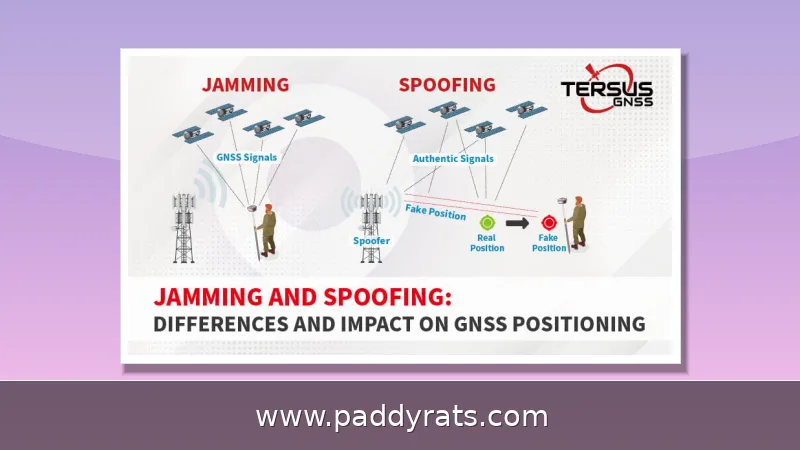
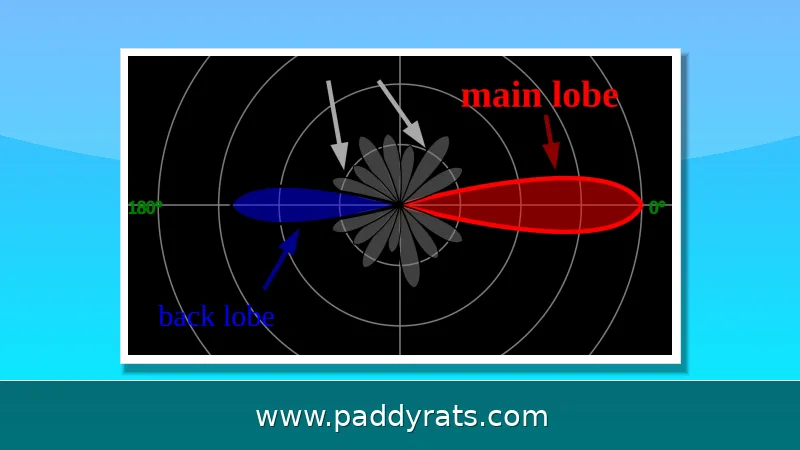
Signal jammers flood licensed radio bands with noise to knock phones, Wi-Fi, GPS, and drones offline, and the hardware behind them ranges from a $30 pocket blocker to a 300W prison unit. I break down how jamming works, the specs that matter, market data, detection tips, and why the FCC bans them outright.
What Is a Signal Jammer and How Does It Work?
A signal jammer is essentially an RF transmitter that floods a given frequency band with noise, broadcasting at a higher power than the signal it's trying to overpower. Think of it as a denial-of-service attack aimed at the cell tower: your phone can't complete its handshake with the network, so "No Signal" pops up on the screen and both voice and data drop out. I've watched a pocket-sized unit kill four bars of LTE in under ten seconds, and the phone immediately kicks into constant search mode, which drains the battery in a hurry.
The basics really aren't that complicated. A jammer floods a specific band with white noise or sharp pulses, and once that happens, your phone can't separate the real tower signal from all the interference. Cheaper models only take out one frequency, but that's usually enough to fool a device into thinking there's no signal at all. And because jamming is just another radio signal at the end of the day, physical obstacles like cars, buildings, and dense materials can block or weaken it. So where you place the thing matters just as much as how much power it puts out.
What Types of Signal Jammers Exist: Cellular, Wi-Fi, GPS, RF, and Drone?
Signal jamming is a much broader field than the phrase "phone blocker" suggests, and the range of names people use says a lot about how many different jobs these devices actually do. Ask around and you'll hear cell jammer, mobile phone jammer, signal blocker, GPS jammer, text stopper, mobile network jammer, cell phone blocker, RF jammer, drone jammer, UAV FPV drone jammer, anti-drone jammer, prison jammer, or Wi-Fi jammer — and each term usually points to a specific frequency band or purpose. A GPS jammer, for instance, goes after satellite navigation signals, while a Wi-Fi jammer concentrates on 2.4 GHz and 5 GHz traffic. A prison jammer is built to cover a whole facility, and an anti-drone jammer targets the control links that UAVs depend on. Multi-band hardware simply houses several transmitters in one unit, so a single device can take down multiple protocols at once. That's why a 6-channel prison jammer can hit several frequencies simultaneously, and why 8-channel vehicle jammers and 8-band car jammers keep showing up in buying guides.
Consumer-grade jammers sit at the bottom of the power ladder, and their range reflects that. Wilson Amplifiers notes that these units typically cover no more than 30 square feet, while portable civilian cellphone jammers generally reach only about 5 to 10 meters. That's fine for a single room, the inside of a car, or a small bubble of personal space—but not much else. Move up to institutional hardware, though, and the numbers jump quickly. A 300W prison jammer can blanket a large area, and 6-channel prison jammers hit multiple frequencies at once, making it harder for inmates to simply switch to another band. The vehicle market has its own go-to picks: the 8-channel vehicle jammer and the 8-band car jammer show up most often in buying guides, multi-band setups designed to keep up with a moving target.
| Jammer class | Typical range | Channels / bands |
|---|---|---|
| Consumer unit | Up to ~30 sq ft (Wilson Amplifiers) | Usually single-band |
| Portable civilian cellphone jammer | ~5–10 m radius | Often limited to one or a few bands |
| Prison jammer (300W) | Large area | 6-channel models target several frequencies at once |
| Vehicle jammer | Mobile coverage around the vehicle | 8-channel / 8-band models common in buying guides |
Which Specifications Actually Matter: Frequency Range, Power Output, and Coverage?
When you're comparing jammers, four specs really determine whether a unit performs in the real world or just looks good on paper: frequency coverage, transmit power, channel count, and cooling. Power output tends to get all the attention, and honestly, that makes sense—it drives range and effectiveness, since more watts usually means the noise travels farther and can overwhelm signals across a wider area. But that extra power isn't free. A higher-wattage unit pulls more energy and generates more heat, which is why cheap high-power models often burn out early instead of holding up over time. In practice, it's the cooling design, not the wattage number alone, that decides whether a device survives daily use. Channel count deserves just as much weight, since multi-channel units—6-channel or 8-channel—can hit several frequency bands at once instead of blocking only one. And here's the counterintuitive part: in dense urban environments, a lower-output device may actually be the smarter pick. Ambient signal strength is already high and crowded there, so a shorter-range unit can often get the job done without overkill.
If you're trying to cover modern networks that hop between GSM, 3G, 4G, and 5G, multi-channel devices like 6-channel and 8-channel models are really the practical way to go—they hit several frequencies at once instead of always playing catch-up. The table below pulls together the bands and specs buyers tend to compare, so think of it as a checklist rather than a recommendation. And keep in mind, operating any of these devices is illegal in the US.
What PCB Technology and Hardware Sit Inside a Signal Jammer?
If you take apart a typical jammer, you won't find anything exotic inside—just a handful of core building blocks. A voltage-controlled oscillator generates the raw RF signal, a power amplifier stage pushes it high enough to drown out nearby cell traffic, band filters keep that energy within the intended frequencies, and an antenna array radiates it outward. All of it sits on a printed circuit board, and how that board is designed matters more than most buyers realize. Custom PCB design, careful material selection, advanced manufacturing techniques, and rigorous quality assurance and testing all feed directly into performance and reliability. A big reason comes down to impedance matching: when the board doesn't properly match the amplifier to the antenna path, power that should be radiating outward turns into heat instead. That wastes output, forces the amplifier to work harder, and shortens its life—which is exactly why the amplifier is usually the first component to die in budget hardware.
Intelligent jamming takes this a step further. It combines hardware and software to block radio events in a specific band on the downlink connection, which is possible thanks to software-defined radio. A 2023 MDPI paper by C Capotă and coauthors described exactly this kind of approach for LTE using SDR, and Ericsson Technology Review has documented how 5G networks can detect, localize, and mitigate jamming attacks through enhanced RAN resilience. In a way, that sums up the whole arms race: smarter radios on both sides of the same spectrum.
How Big Is the Signal Jammer Market and Who Is Buying?
Market research firms can't seem to settle on one number for the signal jammer market, but they mostly agree on where it's headed. Technavio projects the global market will grow by USD 1.08 billion between 2023 and 2028, a steady 5.66% CAGR. Dataintelo is more optimistic, valuing the market at $2.8 billion in 2025 and expecting it to double to $5.6 billion by 2034 at an 8.1% CAGR. Honestly, that kind of gap isn't surprising for a niche industry with loose regulation, where plenty of sales slip through gray-market channels that are hard to track. So what's driving the demand? A 2023 Tech Insights report recorded growth above 40%, and a zdworlds report found that roughly 70% of users buy jammers for privacy reasons. Basically, it's a small but restless market, and the people fueling it aren't out to cause trouble — they just want a say in who can reach them.
| Source | Market Value / Growth | Time Frame |
|---|---|---|
| Technavio | +USD 1.08 billion at 5.66% CAGR | 2023–2028 |
| Dataintelo | $2.8 billion rising to $5.6 billion at 8.1% CAGR | 2025–2034 |
| Tech Insights | Demand growth above 40% | 2023 |
| zdworlds | ~70% of users cite privacy concerns | — |
Buyer behavior is where the data gets uncomfortable. Roughly 65% of buyers regret not doing enough research on jammer details beforehand, which tracks with how many people order a device before checking whether it is legal where they live. Since 2021, US Customs and Border Protection has seen a roughly 830% increase in signal jammer seizures, a clear sign that enforcement is catching up with demand at the border. I would read those seizure numbers as the single most important data point for anyone shopping this category.
Are Signal Jammers Legal in the US, EU, and Other Regions?
No. In the United States, selling, advertising, distributing, or operating a cell signal jammer is against the law. The FCC is explicit on this point: federal law prohibits the operation, marketing, or sale of any jamming equipment that interferes with authorized radio communications, and that covers cellular, PCS, police radar, and GPS signals alike. What surprises a lot of people is that there are no exceptions carved out for businesses, classrooms, private residences, or vehicles — the ban applies across the board, no matter how reasonable the intended use might seem. The legal foundation here is not new. The Communications Act of 1934 already outlawed interference with authorized radio broadcasts, and jamming enforcement has been built on that framework ever since. The penalties are steep, too: operating a cellular jammer can draw fines of up to $112,000, plus the possibility of prison time.
Other jurisdictions take an equally hard line, even if the penalties land differently. In Malaysia, operating a jammer can cost you up to RM500,000 in fines or land you in jail for as long as five years — a clear signal that regulators there treat interference with public networks as a serious offense. France offers a more telling case study: cinemas and theaters were once permitted to jam cell signals so audiences would stop texting during films, but that carve-out was short-lived. By 2012, the country had banned jammers outright, a useful reminder that temporary exceptions tend to collapse once public safety agencies weigh in and point out the risks to emergency communications. The table below compares the main enforcement regimes at a glance.
| Region | Penalty / Status |
|---|---|
| United States | Fines up to $112,000 plus possible prison time; sale, marketing, and operation prohibited by the FCC |
| Malaysia | Fines up to RM500,000 or up to five years in jail |
| France | Briefly allowed in cinemas and theaters; completely banned since 2012 |
How Do You Detect a Signal Jammer and What Should You Do?
Detection is less about downloading a gadget and more about recognizing patterns. If several devices in the same spot suddenly lose service — even though coverage there is normally strong — that's a red flag. You might also see the signal bars jump around erratically, Wi-Fi drop out while a wired Ethernet connection keeps humming along just fine, or a connection that stays up but crawls with high latency and packet loss. Those clues together point to interference far more reliably than any single symptom. As for the apps that claim to sniff out jammers, treat them with skepticism. Most are unproven, and they need a working signal to do their job at all — which is a contradiction when the signal itself is what's being jammed.
Once you suspect jamming, the practical response is to physically locate the device, which often looks like a walkie-talkie, a cell phone, or a wireless router sitting where it does not belong. Switching frequency may work depending on how sophisticated the jammer is, and relocating is the most reliable fix for a consumer. Report suspected illegal jamming to law enforcement or file a complaint with the FCC. One point worth repeating: a signal booster amplifies an existing signal and cannot overcome a jammer, so any jammer is effectively also a signal booster jammer.
What Are the Pros, Cons, and Public Safety Risks of Jammers?
Proponents argue jammers are needed where cell phone etiquette fails: schools, theaters, vehicles, and quiet train rides. The counterargument is stronger. Jammers block not only voice and text but also GPS, Wi-Fi, and police radar, and according to DHS they interfere with public safety communications, potentially leaving first responders without vital communications and situational awareness. They can also prevent emergency calls to 911, which is the risk regulators cite most often.
If you are choosing hardware anyway, weigh frequency range, power output, coverage area, environment, budget, and legal restrictions, and test in your own environment where permitted. Dr. Mark Thompson of Jamming Solutions Inc. has been quoted on matching a jammer to the target band rather than buying on wattage alone, and telecom expert John Reyes has been quoted on privacy protection as the main consumer motivation. The Signal Jammer (thesignaljammer.com) holds a 4-star rating from 26 Trustpilot reviews, which is a small sample but typical of how thin review coverage is in this niche.
What Is the Bottom Line on Signal Jammer Technology?
The technology is mature, cheap, and widely available, which is exactly why the legal exposure is so severe. A jammer is an RF denial-of-service tool, nothing more, and its effectiveness depends on band coverage, power, and placement rather than brand marketing. The market data from Technavio, Dataintelo, and Tech Insights all point to continued growth, while CBP seizure figures and FCC enforcement point to rising risk for buyers.
My take after reviewing the specs, the PCB literature, and the enforcement record is that the only defensible consumer use case is understanding the threat, not deploying it. If your signal drops suspiciously, document the pattern, check your wired connection, and escalate to the FCC or local law enforcement rather than buying countermeasures. This article is informational and does not constitute legal or investment advice.
Frequently Asked Questions
How does a signal jammer actually work?
A jammer is an RF transmitter that broadcasts noise on the same frequency band as the target device but at higher power. This denial-of-service attack drowns out the tower signal, so the phone cannot handshake with the network and shows No Signal. The handset then enters constant search mode, draining its battery rapidly.
Are signal jammers legal in the United States?
No. Selling, advertising, distributing, or operating cell signal jammers is illegal in the US and much of the world. The FCC cites risks to public safety communications and 911 calls, and the Communications Act of 1934 outlaws interference with authorized radio broadcasts. Fines can reach $112,000 plus prison time, with no exemptions for homes, schools, or vehicles.
Can a signal jammer block a cell phone signal booster?
Yes. A jammer interferes with a signal booster because boosters amplify an existing signal, and if that signal is blocked, the booster has nothing to work with. Any signal jammer is effectively also a signal booster jammer, which is why booster vendors publish jammer FAQs warning customers that amplification cannot defeat active interference.
How can I tell if a signal jammer is nearby?
Common signs include dropped service on multiple devices in areas with normally good coverage, erratic signal fluctuations, and Wi-Fi disconnections while wired Ethernet devices keep working. High latency and packet loss are also typical. Apps claiming to detect jammers are largely unproven and need a working signal, so pattern observation beats software.