Anti-drone signal jammers flood the radio links drones use for control, video and navigation, forcing a fail-safe response. Here is how the technology works, which frequencies it targets, and who is actually allowed to press the button at a US airport.
What Is an Anti-Drone Signal Jammer and How Does It Work?
An anti-drone jammer is really just an RF transmitter that talks over the link between a drone and the person flying it. It blasts a strong signal on the same frequencies the drone depends on for command, control, video, and navigation, drowning out the back-and-forth between the two. Once that link breaks, the drone usually drops into a fail-safe mode: it either heads back to its launch point, hovers in place, or descends and lands. The catch is that jamming doesn't take over the aircraft — it just wipes out the pilot's ability to control it. That's why people in the counter-UAS world call it a non-kinetic or soft-kill countermeasure, rather than a way to actually capture a drone.
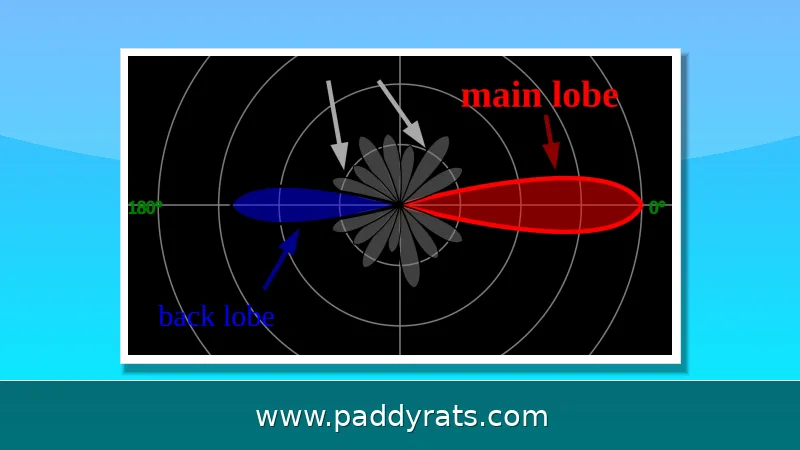
Handheld targeting jammers send out a cone of RF energy that usually falls somewhere between 40 and 90 degrees, though a few vendors claim their beams are much tighter—closer to 15 or 30 degrees. The problem is that anything else sitting inside that cone gets swept up too. At an airport, that becomes a genuine headache, since terminal Wi-Fi, baggage tracking systems, and passengers' cell service are all crammed into the same RF space. Smart jamming takes a different approach. Rather than blanketing a wide area, it relies on directional antennas to focus energy directly on the detected target, and it only jams the specific bands that the identified drone is actually using. That does a lot to reduce collateral interference, but whether it works at all comes down to how accurate the detection and identification steps ahead of it really are.
Here's the bottom line: a jammer by itself is a pretty blunt tool. It only gets precise once you pair it with sensors. After going through a pile of vendor spec sheets myself, I've noticed that what really separates a $2,000 handheld unit from a fixed installation usually isn't the amplifier—it's the targeting logic and the detection layer feeding into it. Take that layer away, and an airport operator is basically just broadcasting noise and hoping the right aircraft absorbs it.
Which Frequency Bands Do Airport Drone Jammers Target?
An anti-drone jammer isn't built to knock out one frequency and call it a day. These are multi-band transmitters, and every band on the list is there for a reason — each one matches up with a specific radio link that consumer and commercial drones depend on while they're in the air. Command-and-control signals, live video feeds, and satellite navigation all travel on different parts of the spectrum, so a jammer that only covers one of them leaves the rest wide open. That's why counter-UAS procurement documents and vendor spec sheets often read more like frequency shopping lists than single-number specs. The table below breaks down the bands that show up most often in those documents and what each one usually carries.
| Frequency Band | What It Typically Carries |
|---|---|
| 433 MHz | Low-power control links on some consumer drones and remote accessories |
| 900 MHz | Long-range command-and-control links on many consumer and commercial models |
| 1.2 GHz | Video downlinks and certain control channels, common on FPV and industrial drones |
| 1.5 GHz | GNSS navigation signals, including GPS, GLONASS, Galileo, and BeiDou |
| 2.4 GHz | Primary command-and-control and video link for the majority of consumer drones |
| 5.8 GHz | Higher-bandwidth video and control links, often used as an alternative to 2.4 GHz |
| 4G / 5G | Cellular links used by drones that stream video or extend range over mobile networks |
| Frequency Band | Typical Use on a Drone | Why It Is Jammed |
|---|---|---|
| 433 MHz | Low-cost and DIY control links, telemetry | Disrupts hobbyist and improvised airframes |
| 900 MHz | Long-range command and control | Cuts the operator link at distance |
| 1.2 GHz and 1.5 GHz | Analog and digital video, telemetry | Blinds the pilot's video feed |
| 2.4 GHz and 5.8 GHz | Primary command-and-control and video | Core bands for most consumer drones |
| 4G and 5G cellular | Networked and beyond-visual-line-of-sight flight | Blocks cellular-linked operation |
| GNSS (GPS, GLONASS, Galileo, BeiDou) | Satellite navigation and geofencing | Prevents position hold and return-to-home |
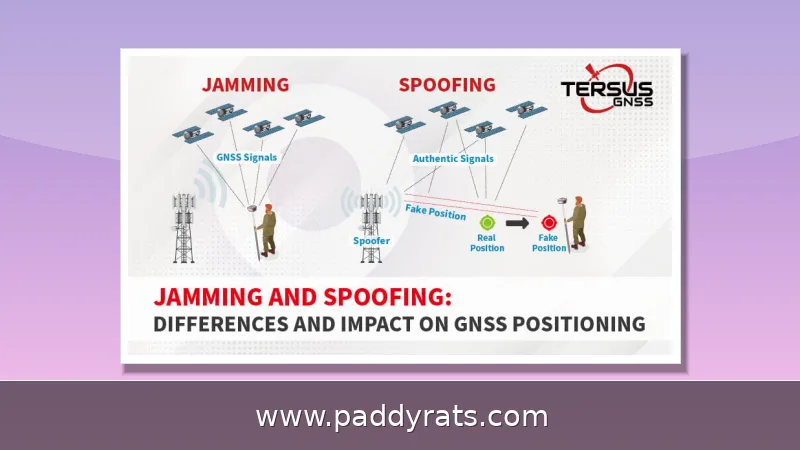
The GNSS row is worth a closer look, since that's where the spoofing debate really begins. Jammers and spoofers both target a drone's navigation, but they pull in opposite directions. A jammer just buries the satellite signal in noise, so the drone loses its position fix and defaults to whatever fail-safe behavior it's programmed with. A spoofer, on the other hand, sends out a counterfeit signal that mimics the real one — and if that fake signal comes in stronger than the legitimate satellite transmission, the drone may lock onto it and accept it as genuine. Both mess with navigation, but they're very different tools, legally and technically, and spoofing comes with its own set of risks. What makes it so tough to defend against goes back to how GPS was designed: satellite signals can't carry standard encryption or certificates, so a receiver has no reliable way to tell a fake signal from a real one. That leaves drone makers and defenders with few clean options for authentication, which is exactly what makes spoofing such a thorny problem.
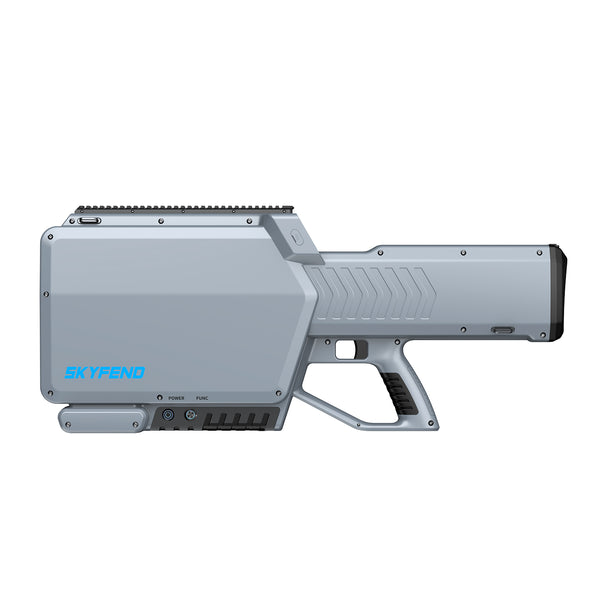
Those bands show up in real hardware in pretty telling ways. Take the counter-drone guns on the market today: one four-band model claims it can take down over 95% of the drones out there. The Skyfend Hunter AFA100 is spec'd with a 3,000-meter jamming range, full 400 MHz to 6 GHz coverage, and a 3.5-inch touchscreen so you can adjust settings on the fly. Airsight's Smart and Autonomous Jammer advertises 360-degree coverage out to 1.9 miles, which makes sense for a fixed installation that has to watch every approach path at once. The DedroneDefender 2 goes the opposite direction, favoring precision over raw range—it targets beyond 300 meters inside a tight 20-degree cone, pairs broad-spectrum jamming with GNSS jamming, and can neutralize several drones at the same time. So the trade-off across all of them is clear enough: wide coverage versus focused, selective targeting. One caveat worth repeating—every one of those numbers comes straight from the vendors, so treat them as claimed specs, not independently verified results.
Who Can Legally Operate a Drone Jammer in the United States?
The Communications Act of 1934 (47 U.S.C. 301, 302a, and 333) is where the FCC gets its authority on this, and the rule itself is pretty blunt: operating, marketing, or selling any device designed to block, jam, or interfere with authorized radio communications is illegal. That's not some obscure technicality, either — it's the line between a legitimate counter-UAS program and a federal case. Cross it, and you're facing fines of up to $112,500 per incident, plus the possibility of criminal prosecution. So when airport security directors finally ask the obvious question — why can't we just jam drones out of our own airspace? — this is the statute they run straight into. For private parties, the answer is a flat no, no matter how serious the drone threat looks on paper.
| Who | Legal Authority to Jam |
|---|---|
| Department of Defense / military installations | Authorized (Title 10; expanded by JIATF-401 guidance, January 2026) |
| Department of Homeland Security (including CBP and Secret Service) | Authorized |
| Department of Justice (including the FBI) | Authorized |
| Department of Energy (nuclear facility protection) | Authorized |
| Coast Guard (maritime security) | Authorized |
| State and local law enforcement | Authorized under the SAFER SKIES Act (FY2026 NDAA), after training at the FBI's National Counter-UAS Training Center in Huntsville, Alabama |
| Correctional facility security agencies | Authorized if they meet federal certification requirements |
| Agencies protecting NSSEs and SEAR-rated events (e.g., FIFA World Cup 2026) | Authorized |
| Private companies, including critical infrastructure operators | Not authorized unless acting under direct federal authority |
| Individual property owners | Not authorized |
| Private security firms | Not authorized unless contracted by an authorized agency |
Right now, federal law already authorizes a specific set of agencies to jam drones. The Department of Defense and military installations fall under Title 10 authority, which JIATF-401 guidance expanded back in January 2026. Then there's the Department of Homeland Security, including CBP and the Secret Service, along with the Department of Justice (the FBI among them), the Department of Energy for nuclear facility protection, and the Coast Guard for maritime security. The main thing to remember is that we're talking about federal authorities here — this isn't some blanket permission that can simply be passed down to a landlord or an airport terminal operator.
The SAFER SKIES Act, which got folded into the FY2026 National Defense Authorization Act, is a genuine turning point in terms of who's actually allowed to take action against drones. It opens the door for three specific groups: state and local law enforcement agencies (though only after their personnel complete training at the FBI's National Counter-UAS Training Center in Huntsville, Alabama), correctional facility security agencies that meet federal certification requirements, and agencies tasked with protecting National Special Security Events and SEAR-rated events, which includes the FIFA World Cup 2026. If you work at an agency near an airport, this is probably the biggest shift you've seen in years. Until now, that authority sat almost entirely with federal departments, so if a local police department spotted a drone drifting toward a runway, their legal options basically amounted to making a phone call. The new law pushes mitigation authority down to the local level, which should mean faster response times and fewer handoffs when something actually happens. That said, it's not an open invitation for just anyone. The training and certification requirements are what keep the gate closed, and agencies that skip them — or private entities hoping to ride the coattails of the new rules — still sit outside the authorized circle.
Private companies aren't on that list — and yes, that includes critical infrastructure operators, even though airports and power plants are exactly the kinds of places you'd think would need this gear most. Unless a private entity is acting under direct federal authority, it can't legally jam. The same restriction applies to individual property owners and to private security firms, unless an authorized agency has formally contracted them to do the work. The FEMA C-UAS Grant Program reinforces that boundary: grant funds can't be spent on weapons, and mitigation equipment is set aside for certified law enforcement personnel only. So if your airport is privately owned and you're not operating under some kind of federal umbrella, the honest answer is that jamming isn't really on the table. Your practical path forward is detection and reporting — flagging drone activity to the agencies that do hold mitigation authority, rather than trying to knock the drone down yourself.
Why Detection Must Come Before Mitigation at Airports
Jamming alone is not enough for airport drone defense, and the reason is structural rather than technical. A jammer is a blunt instrument: it floods the radio link between a drone and its operator with noise, which means it can only cancel the pilot's control, never assume it. Once that link breaks, the drone simply falls back on whatever its firmware was programmed to do — return to its launch point, hover in place, or descend and land on the spot. None of those outcomes tells you who was flying it or why. The gaps run deeper. A drone flying a pre-programmed route without GPS is largely immune to jamming, since there is no live signal to drown out. Jamming also does nothing to locate the pilot, so the person behind the incursion walks away unidentified. And because a jammer transmits across the same bands consumer devices rely on, it can knock out nearby cell service and even block 9-1-1 calls. Every one of those limitations points to the same conclusion: you need to know what is flying, where it came from and where it is going before you decide whether to transmit.
Detection also determines whether jamming can work at all. Picture the drone as a listener in a noisy room: the jammer is the background racket, and the pilot's command link is the voice the drone is trying to hear. If that voice arrives loud and clear, the drone simply keeps decoding it and flies on as if nothing happened — jamming fails. Two things drive that outcome. First, the strength of the pilot's signal shrinks as the drone flies farther from the controller. Second, the jammer's punch grows stronger the closer the drone gets to the antenna. These forces pull in opposite directions, which means the geometry of the engagement — where the drone is, where the operator is, and where the jammer sits — matters as much as raw wattage. A drone hovering just past the fence line may be trivial to disrupt. That same drone two miles out on final approach, with a clean line of sight to its operator, may shrug off the interference entirely.
| Factor | Effect on Jamming Success |
|---|---|
| Pilot signal strength at the drone | Stronger signal = drone can still decode commands = jamming fails |
| Distance from pilot to drone | Signal weakens with distance, making jamming easier |
| Distance from jammer to drone | Jamming effect increases as the drone gets closer |
| Engagement geometry | Position of drone, operator, and jammer matters as much as wattage |
| Example: drone at fence line | Easy to disrupt |
| Example: drone two miles out on final approach | May not be disruptable |
The market numbers tell the story here. According to market research cited in industry coverage, the drone signal jamming detection market was valued at $2.8 billion in 2025 and is projected to reach $7.6 billion by 2034, representing an 11.7% compound annual growth rate. That is serious money, and it is worth asking where it is actually going. The answer is not jammers alone. If jamming were the whole business, the growth curve would look very different, because a jammer is a relatively simple device and the legal barriers to selling one in the United States are steep. What is really expanding is the sensing, tracking and identification layer — the radar, RF detection, acoustic sensors and camera systems that spot a drone, classify it, and follow it long enough to establish a clear picture of what it is doing. That layer matters because it is what makes any later mitigation decision defensible. Before an airport or an authorized agency can justify interfering with a drone's signal, it needs a record: what was detected, when, where it was heading, and what evidence supports that conclusion. Detection systems produce exactly that record. Jammers do not. So the spending surge reflects a broader shift in how airports and agencies think about counter-UAS — not as a single gadget you point at the sky, but as a layered process that starts with knowing what is up there in the first place.
There's also a documentation angle that matters in the real world, and it's easy to overlook when the conversation keeps circling back to hardware. More Airprox reports for near misses with drones exist than drone breaches of airport boundaries, which tells you that most incidents are close calls rather than full incursions into controlled airspace. That distinction has real consequences for how an airport builds its case for action. Every near miss that gets detected, time-stamped, and logged becomes part of a record — a pattern of repeated close calls that shows where the risk actually concentrates, how often it occurs, and which flightpaths or hours are most exposed. Over time, that evidence base is what an airport needs to justify any future mitigation authority, whether that means requesting federal support, pursuing new legal permissions, or simply making the argument to regulators that the threat is persistent rather than theoretical. And it accomplishes all of this without transmitting a single watt of jamming power, which keeps the airport firmly on the right side of federal law while it gathers the proof it will eventually need.
Why Airport Geometry Makes Jamming Hard
Airports are, in a word, hostile to radio-frequency coverage. Their boundaries sprawl across thousands of acres, and they rarely follow anything resembling a neat rectangle — runways, taxiways, terminals, cargo aprons, and perimeter roads all push the fence line into odd, elongated shapes. That geometry forces a hard choice: a single fixed omnidirectional jammer wastes most of its energy on empty ground, while a directional unit only watches one slice of the compass at a time. In practice, covering the whole property often means installing multiple fixed jammers, each with its own blind spots and dead zones. Targeting jammers can fill those gaps or back up the fixed installations, but they come with a catch — someone has to point them. A security or police quick reaction force may end up crisscrossing the airport to get into position, and a drone closing on a runway at 50 mph does not wait for that drive.
Flightpaths compound the problem in a way that is easy to underestimate. Approach and departure corridors stretch well beyond the airport's perimeter fence, often for miles, so a drone encounter is just as likely to happen over a public road, a strip mall, or a residential neighborhood as it is over the airfield itself. That changes the calculation for anyone trying to jam the drone. A directional jammer concentrates its RF energy into a cone, and anything inside that cone gets hit — not just the drone. In practice, that means cell service, Wi-Fi, and other licensed communications in the neighborhoods and business districts sitting under the flightpath can be disrupted, and that includes the possibility of blocking 9-1-1 calls from the ground. This is not a theoretical concern. It is the reason federal authorities treat mitigation as a controlled activity rather than a routine security tool, and why the decision to jam near an airport is weighed against the risk of taking out the very communications the public depends on.
Control is the third constraint, and it's the one that tends to get overlooked in planning meetings. Jamming doesn't take over the drone — it only severs the link between the aircraft and whoever is flying it. Once that link drops, the drone falls back on its own fail-safe logic: it may return to its launch point, hover in place, or simply descend and land wherever it happens to be. That last option is what keeps airport security planners up at night. A drone that touches down on an active taxiway, or drifts down into a terminal approach zone, hasn't been neutralized at all — it's just been converted from a flying problem into a grounded one, sitting in a spot where nobody can safely reach it and where it may still be armed, recording, or rigged to detonate. So any airport counter-UAS plan has to answer a question that comes after the signal drops: who physically goes out to secure, inspect, and remove the aircraft? In practice, that answer usually involves a quick reaction force and a pre-agreed incident command structure, with roles assigned before anything ever crosses the perimeter fence.
Put all of this together and you start to see why a serious airport counter-UAS program is built in layers rather than around a single gadget. Detection, identification, tracking, legal review and physical response all have to line up before anyone even thinks about switching on a transmitter — and in plenty of jurisdictions, that transmitter never gets switched on at all, because the airport simply isn't on the short list of agencies the FCC allows to jam. That ordering isn't bureaucratic fussiness. A jammer doesn't tell you what it's hitting or where the pilot is standing, so if you fire it off before you've confirmed the target, you've just blinded yourself along with everyone else in the cone. The airports that handle drone incidents best, then, are the ones that treat jamming as one branch of a decision tree — something you reach for when detection has already done its job — rather than as the whole decision tree itself.
| Stage | What Happens | Why It Comes First |
|---|---|---|
| Detection & identification | Confirm a drone is present and what type it is | A jammer can't distinguish a drone from nearby cellphones or Wi-Fi |
| Tracking | Follow the flight path and locate the operator | Jamming doesn't locate the pilot or the flightpath |
| Legal review | Verify the agency has jamming authority | Private companies and individuals are not authorized |
| Physical response | Position a quick reaction force or use other mitigation | Jamming may only force a return, hover, or landing |
| Jamming (if ever) | Transmitter engaged as one option among several | Ineffective if pilot/GPS signals still reach the drone |
Stationary vs Portable vs Vehicle-Mounted Jamming Options
Counter-UAS hardware generally comes in three form factors, and picking the right one comes down to how much range you need, how fast you need to deploy, and whether you have a permanent power source on site. Portable jammers are the smallest of the group: compact, easy to carry, and operated with little more than a push of a button. Their range is limited, but that trade-off is exactly why security personnel like them — when a drone appears over a fence line, you want a response you can hold in your hand, not a system you have to boot up. Stationary jammers sit at the other end of the spectrum. They run at higher power output and cover much larger areas, which is why they tend to be permanently installed at government buildings, airports, and prisons where the protected footprint never moves. Vehicle-mounted jammers split the difference, trading a fixed location for mobility that suits military, border, and security UAV defense, where power availability and the freedom to reposition are far less constrained.
| Type | Range and Power | Best Fit | Main Tradeoff |
|---|---|---|---|
| Portable | Short range, battery powered | Patrol officers, quick response | Limited coverage, narrow cone |
| Stationary | High power, wide area | Fixed sites, perimeters | Cost, siting, collateral RF |
| Vehicle-mounted | High power, mobile platform | Military, border, mobile defense | Availability, trained crews |
When you start shopping around, the spec sheets all seem to top out at roughly the same place. Commercially available jammers have a maximum jamming range of up to 2km of coverage, and on paper that reads like a lot of protection. Then you mentally overlay it on an actual airport and the number shrinks fast. Perimeter fences at major fields run for miles, and the approach and departure corridors stretch even farther, so a single off-the-shelf unit covers a small slice of the problem at best. That mismatch is why serious procurement discussions tend to stall the moment someone asks, “Okay, but where does this one box actually sit?” From there, the conversation shifts away from product pages and toward the harder questions — which sensors feed the system, what command-and-control software ties it together, and who holds the legal authority to pull the trigger.
My own view, after comparing spec sheets across these categories, is that buyers overweight range and underweight integration. A 2km jammer that cannot tell a delivery drone from a police helicopter is a liability. A shorter-range system tied into a reliable detection network and a clear legal authority chain is an asset. The specifications that matter most are the ones that describe what the system will not transmit at, not the ones that describe how far it can reach.
What Are the Disadvantages of Drone Jamming?
The limitations list is long enough that it should be read before any procurement decision. Drone jamming is illegal in most countries, including the United States, for anyone outside the authorized federal and newly empowered state and local categories. It is less effective against drones pre-programmed to fly a certain path without GPS, which are precisely the airframes a determined adversary would choose. It does not allow positive control over targets, so you cannot redirect a drone to a safe landing zone. It does not locate the pilot or the flightpath, so the operator walks away. And it disrupts other nearby communication signals such as cellphones, which in an airport environment can mean interfering with passenger calls and emergency dialing.
There is also an evidentiary gap. Jamming produces no arrest, no registration number and no forensic trail pointing back to an operator. Detection systems, by contrast, can record the drone's RF signature, flight track and launch point, which is what prosecutors and regulators actually need. That asymmetry explains why the detection segment of the market is growing faster than the mitigation segment in most forecasts.
For airport operators, the practical conclusion is that jamming is a last-resort tool inside a larger program. The program should include RF detection, radar or electro-optical confirmation, coordination with local law enforcement, a documented escalation path, and a clear understanding of which agency holds the authority to transmit. Anything less is a compliance risk dressed up as security.
This article is not investment advice and does not recommend any security vendor or publicly traded company mentioned in the counter-UAS supply chain. Figures cited reflect vendor claims and published market research as of the dates noted.
Key Terms in Airport Counter-UAS Jamming
Terminology in this field is inconsistent across vendors and agencies, which creates confusion during procurement. Drone jammer, drone jammer gun, anti-drone jammer, RF jammer, counter-UAS jamming, C-UAS, drone blocker, GPS blocker and GPS spoofer are often used interchangeably in marketing material even when they describe different capabilities. Electronic jamming and RF jamming both refer to the transmission of interfering radio energy, while non-kinetic soft-kill countermeasures is the umbrella term for any disruption method that does not physically destroy the aircraft.
The distinction that matters most in practice is between jamming and spoofing. A jammer overwhelms a signal; a spoofer replaces it with a counterfeit. A spoofer can gain control and pilot the drone, access camera feed and flight data, which makes it a far more invasive capability. Spoofers are less effective against drones not using GPS and do not locate the pilot either, so neither approach solves the attribution problem on its own. When you read a vendor page, check which of these terms the product actually implements before comparing specifications.
Frequently Asked Questions
How does an anti-drone signal jammer work at an airport?
A drone jammer is a radio frequency transmitter that overwhelms the communication link between a drone and its operator. By broadcasting a powerful signal on the same frequencies the drone uses for command, control, video and navigation, it forces the drone into a fail-safe mode such as return-to-home, hover or landing. It does not take over control of the aircraft.
Are drone jammers legal in the United States?
No, not for private parties. Under the Communications Act of 1934 (47 U.S.C. 301, 302a, 333), the FCC prohibits operating, marketing or selling devices that block or interfere with authorized radio communications. Violations carry fines up to $112,500 per incident and potential criminal prosecution. Only authorized federal entities, and certain state and local agencies under the SAFER SKIES Act, may operate them.
What frequencies do drone jammers target?
Common bands include 433 MHz and 900 MHz for commercial and DIY control systems, 1.2 GHz and 1.5 GHz for video and telemetry, 2.4 GHz and 5.8 GHz for primary command-and-control, plus GNSS bands covering GPS, GLONASS, Galileo and BeiDou to disrupt satellite navigation. Some systems also target 4G and 5G cellular links used for networked flight.
Why is jamming alone not enough for airport drone defense?
Jamming does not take over control of a drone; it only negates the pilot's control, and the drone may return home, hover or land. Jammers are also less effective against pre-programmed drones flying without GPS, do not locate the pilot, and can disrupt nearby communications including 9-1-1 calls, so detection must come before mitigation.