A portable drone signal jammer gun is a rifle-style counter-UAS device that floods drone control, video and navigation bands with electromagnetic noise. Here is how it works, what it covers, which models exist, and why US civilians cannot legally operate one.
What Is a Portable Drone Signal Jammer Gun?
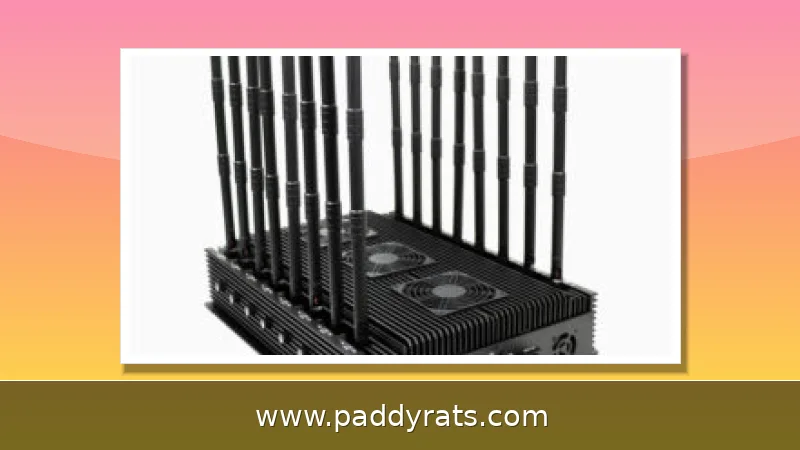
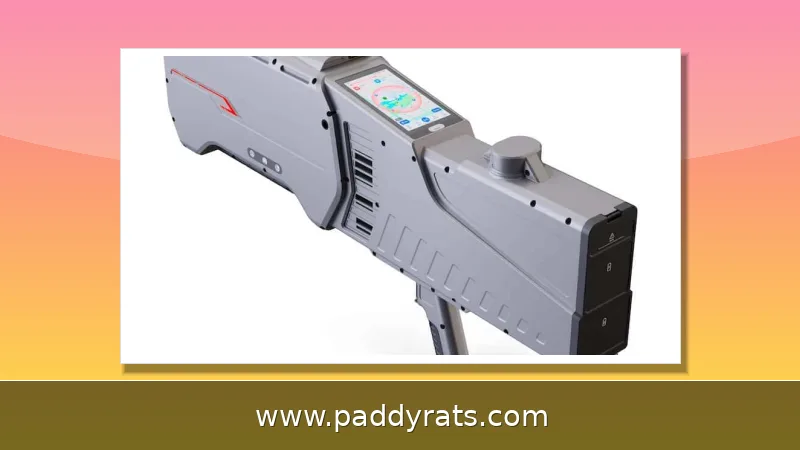
A portable drone signal jammer gun is a non-kinetic counter-UAS device that looks like a rifle or pistol. Rather than firing projectiles, it sends out targeted electromagnetic signals to disrupt unauthorized drones. You'll also see it called a drone jammer gun, anti-drone gun, anti-drone jammer rifle, drone gun, handheld anti-drone jammer, UAV radio blocker, C-UAS jammer, or RF jammer. One device that's easy to confuse with it is the GNSS spoofer — a spoofer hijacks radio signals to take control of a drone, while a jammer just drowns those signals in noise.
Here's the thing: a drone in flight isn't really a self-contained aircraft — it's the far end of a radio link. The pilot's transmitter sends command and control inputs, video and telemetry stream back over the downlink, and satellite navigation keeps the whole thing oriented in space. Break any one of those threads and the aircraft is essentially blind, deaf, or both. That reliance on radio is the single biggest vulnerability of any consumer or commercial drone, and it's exactly what a portable drone signal jammer gun goes after. Cut the control link and the pilot loses the aircraft; cut the navigation link and the drone no longer knows where "home" is. No surprise, then, that these devices sit at the center of the counter-drone market. It's also why buyers tend to ask about frequencies, range, weight, and legal exposure before anything else — those four questions decide whether a given unit is a practical tool or an expensive paperweight.
How Does a Drone Jammer Gun Work?
The basic idea is pretty simple. The jammer pushes out electromagnetic noise on the exact same radio frequencies the drone relies on for command, control, video, and navigation. Once that noise hits, it drowns out the incoming signal, and the drone's receiver can't tell real instructions apart from the interference anymore. What happens next depends on how the drone's firmware is set up and which links get hit.
When a drone loses its control link but still has a solid GPS fix, its onboard failsafe usually kicks in and it flies back to where it took off—the point of origin the operator recorded at launch. That's the default behavior for most consumer and commercial models, and it's exactly why jamming only the control link can sometimes send an intruding drone straight back to the person flying it. If you jam GPS as well, though, the drone has no reliable way to navigate home, so it typically just hovers in place or lands wherever it is. That outcome is actually useful for security teams, since a grounded drone can be recovered and examined for forensic investigation—serial numbers, flight logs, payload, and other evidence that might identify who sent it. Range matters too. Heavy-duty jammers can work from almost a mile away, and their effectiveness increases as the pilot's remote gets farther from the drone. The reason is simple: at longer distances, the drone's received control signal is already weaker, so it takes less jamming power to overwhelm it and break the link.
Today's systems take things a step further with what's called smart jamming. Instead of blasting energy in all directions, directional antennas concentrate it right at the target, and the operator can pick which frequency bands to hit rather than flooding the entire spectrum. Most drone transceivers run on 1.2 GHz, 1.3 GHz, 2.4 GHz, or 5.8 GHz, while satellite navigation sits somewhere between 1164 MHz and 1610 MHz.
A real mitigation workflow usually doesn’t kick off with jamming—it kicks off with watching. Dedrone breaks down its DedroneDefender 2 process into three steps. First, sensors pick up a drone inside the protected airspace. Next, DedroneTracker.AI comes in and gives you the full picture: what the drone is, plus tracking data, so operators know exactly what they’re dealing with and where it’s going. Only after that does the precision jammer actually fire, at step three, to bring down the unauthorized aircraft. That sequence isn’t just a formality. If you just blast RF energy without knowing what you’re hitting, you burn power, you risk stepping on friendly signals, and you’ll have nothing on record afterward. In any responsible setup, detection has to come first—because you can’t legally or safely take out a target you haven’t positively identified.
Key Frequency Bands and Technical Specifications
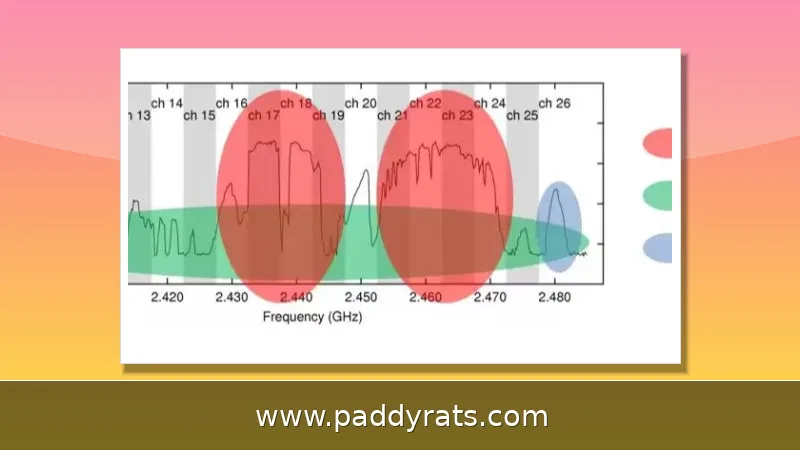
Drone jammer guns don't just blast random noise across the airwaves—they zero in on specific slices of the radio spectrum, and the two that matter most are 2.4 GHz and 5.8 GHz. Both sit within the ISM bands (industrial, scientific, and medical), which are public frequencies that everyday devices like Wi-Fi routers and cordless phones use freely. That's exactly why drone manufacturers build around them—and also why jammers can disrupt those signals without interfering with manned aircraft, broadcast radio, or cell phone traffic. Most drone control links run on 2.4 GHz because it's cheap, widely supported, and travels reasonably well over distance. The 5.8 GHz band, on the other hand, offers wider bandwidth, which makes it a better fit for video feeds and newer drones that need to push more data through. Most handheld jammer guns cover the full 2.4 GHz to 5.8 GHz range, with an average effective radius of about 200 to 1,000 meters—though that number shifts depending on power output and real-world conditions. And the signal doesn't just spray everywhere. It projects a cone roughly 15 to 30 degrees wide, kind of like a flashlight beam, so whoever's holding it has to aim carefully and hold steady. Point too far off target and the drone just keeps flying, completely unaffected.
Most setups rely on a handful of standard bands: 433 MHz, 900 MHz, 1.2 GHz, 1.5 GHz, 2.4 GHz and 5.8 GHz, which handle control and video feeds, along with GNSS frequencies like GPS L1 at 1575.42 MHz, plus GLONASS, Galileo and BeiDou. A few models throw in 5.2 GHz or 400 MHz on top of that. Here's the trade-off, though: high-power jammers can blanket wide swaths of spectrum, but they also punch out communications dead zones around them. That's why portable jammers tend to be the smarter pick anywhere people actually live and work.
| Model | Bands / Power | Range | Weight / Runtime |
|---|---|---|---|
| NQDefense ND-BD004 | 0.3-2.5 GHz, 1.52-1.62 GHz, 2.4-2.48 GHz, 5.725-5.85 GHz | 1.5 km up to 2 km | 3.5 kg with battery; 1.5 hr working, 10 hr standby |
| Jammer Master JM029 | 120-160 W total, 10-30 W per band, 6-8 bands | 500-2000 m | 3.8 kg; 30-60 min battery life |
| Skywing SPS110 | 100 W total, 868 MHz and others | Commercial drones and FPVs | 4 kg; 30 min jamming time |
| Hinaray handheld | 14.4 VDC lithium-ion | 1500-1800 m | 7.3 kg (16 lbs) with two batteries; 2 hr+ |
| DedroneDefender 2 | Broad-spectrum and GNSS, GPS L-bands | Beyond 300 m | 20-degree targeting cone |
The ND-BD004 from NQDefense shows just how granular these spec sheets can get. We're talking interference-to-signal ratio under 10:1, a jamming response time of 3 seconds or less, azimuth and elevation both at plus or minus 30 degrees, a body measuring 550 x 300 x 100 mm, and an operating temperature range of -25C to +55C. Keep in mind these numbers come straight from the manufacturer, so treat them as vendor claims rather than independently verified benchmarks.
Portable Jammer Guns vs. Spoofers vs. Kinetic Interceptors
When people start shopping for counter-drone gear, they usually narrow it down to four main approaches, and honestly, the trade-offs between them are what end up deciding the purchase. RF jammers are the ones that get attention first: they work instantly, you can carry them around, and nothing physical falls out of the sky. The downside is they aren't picky about what they hit. They can spill over into nearby spectrum like cellular and GPS signals, they only work if you've got a clear line of sight to the drone, and for civilians in the US, using one is flat-out illegal. GNSS spoofers go about it completely differently. Instead of burying the drone's signal in noise, they're more surgical than jamming and cause far less collateral RF mess, which is why they look attractive in sensitive settings. But that precision isn't cheap or simple. Spoofers are technically complicated, usually need to be tied into a detection system to function reliably, and sit under strict regulatory oversight.
Detection-only systems are the most permissive option on the counter-drone spectrum. Because they only listen — picking up radio signatures, flight paths and telemetry — they emit nothing themselves, so they are fully legal for private use, carry no interference risk, and scale easily across a campus or industrial site by adding more sensors. The trade-off is that they stop at awareness: no matter how early the alert comes, the drone keeps flying. Kinetic solutions sit at the opposite extreme. Net-firing drones and lasers physically intercept a target, so there is no RF concern at all. But hardware and certification costs are high, safety approval is mandatory, and both approaches struggle indoors or in dense urban airspace where an errant net or beam creates its own hazard. Fortem Technologies draws the same line within the RF category itself: jammers broadcast noise, while spoofers hijack radio signals to take control. Jamming is blunt and immediate; spoofing is more surgical but demands integration with a detection system and faces tighter regulation.
| Approach | Pros | Cons |
|---|---|---|
| RF jammer | Immediate, portable, no debris | Hits nearby spectrum, needs line-of-sight, illegal for civilians |
| GNSS spoofer | Selective, low collateral RF impact | Complex, needs detection integration, heavily regulated |
| Detection-only | Legal, no interference, scalable | No neutralization, alerts only |
| Kinetic interceptor | Physical interception, no RF issues | High cost, certification, limited urban use |
The real trade-off here comes down to power, and it cuts both ways. A high-power jammer can saturate wide frequency ranges, which makes it far more effective at shutting down a drone—but that same brute force is exactly what makes it dangerous. It can wipe out nearby cellular, Wi-Fi, and GPS signals for everyone in the area, creating communications dead zones that might affect first responders, air traffic, or ordinary residents. That’s why these heavy-duty units are effectively reserved for wartime use, where collateral spectrum damage is an acceptable cost. Portable jammers sit at the opposite end: their lower output makes them safer and suitable for inhabited areas like prisons, stadiums, or corporate campuses, since the interference stays relatively contained. The catch is that lower power can also make them hard to put to practical use against a determined operator, especially as the pilot’s remote gets further from the drone and the control link becomes harder to overwhelm. In short, every deployment decision is a balancing act between stopping the drone and not taking down everything else around it—more power buys more range and reliability, but at the price of safety and precision.
Who Can Legally Operate a Drone Jammer Gun?
In the United States, private citizens simply cannot legally operate a drone jammer gun. The reason comes down to radio spectrum law: under the Communications Act of 1934 (47 U.S.C. 301, 302a, and 333), the FCC prohibits operating, marketing, or selling RF jamming equipment, and that ban covers handheld anti-drone devices just as much as it covers a basement-built cell phone jammer. The penalties are steep—fines can reach $112,500 per incident, and violators may also face criminal prosecution. In practice, that means only authorized government and law enforcement entities are permitted to operate these devices, and even they must do so within strict agency guidelines.
That legal line explains why consumer-facing sellers often market devices as detection tools or describe jamming capability in vague terms. If you are evaluating counter-drone protection for a private site in the US, the compliant path is detection, tracking and coordination with local law enforcement, not buying a jammer rifle. Rules differ in other countries, so check local telecom authority guidance before assuming any device is permitted.
For enterprise and government buyers, the relevant questions are different: whether the system integrates with an existing detection platform, whether it can target specific bands, and whether it creates collateral interference. Airsight's Smart and Autonomous Jammer, for example, offers 360-degree defense coverage out to 1.9 miles, manual and automatic activation, mounting on fixed positions, tripods or vehicles, and integration with the AirGuard detection platform.
Real-World Models and Their Specs
The market spans budget handhelds to integrated defense platforms. On the retail side, Jammer Store lists a Spectrum handheld wide range drone jammer at $2,250.00, the Altron-4 4-band 35W jammer at $840.00, the Drone Killer 6 120Watt at $2,100.00, the Drone Killer 8 150Watt at $2,700.00, the PDJ-4075 backpack 5-band at $7,600.00, and the DJ-3017 4-band 82W at $2,185.00. Prices and availability change, so treat these as listed reference points.
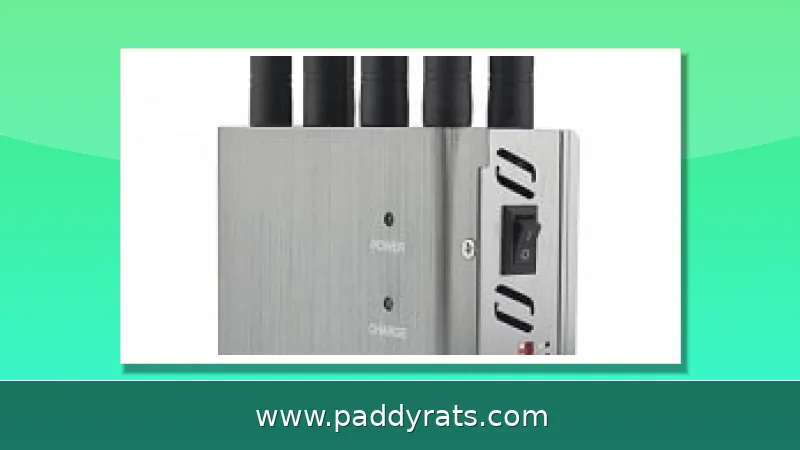
Jammer Master's Drone Jammer Gun JM029 sells for $5,200.00 with 120-160W total power, 10-30W per band, a 12dBi directional antenna, 500-2000 meter coverage, 6 to 8 frequency bands, a replaceable 25.2V 4800mAh battery, 30-60 minutes of battery life, two cooling fans, a 480 x 250 x 86 mm body, 3.8 kg weight, a 1-year warranty and 30-day returns. It ships in three configurations: JM029-A (400M+900M+1.2G+1.5G+2.4G+5.8G, 6 bands), JM029-B (5.2G+900M+1.2G+1.5G+2.4G+5.8G, 6 bands) and JM029-C (400M+900M+1.2G+1.5G+2.4G+5.8G+5.2G+1.4G, 8 bands).
Other notable units include the Skywing SPS110 at 795 x 100 x 304 mm and 4 kg with a 100W total power output, azimuth field of view of plus or minus 15 degrees and pitch of plus or minus 10 degrees; the Hinaray handheld at 7.3 kg with a 1500-1800 meter range; and the NQDefense ND-BD004 with its 3-second effective jamming time.
Higher-end options include SkyfendHunter AFA100, an all-in-one detection and jamming unit with a 3000 m jamming range, 400MHz-6GHz full-band coverage and a 3.5-inch touchscreen; the Phantom EAGLE 108 with a range up to 4 km; DroneGun Tactical with two-hand operation, wide ISM bands and GNSS; the DJM-022 with a range up to 2 km that blocks GPS, BeiDou, GLONASS, Galileo and ISM 2.4G/5.8G; and the NTA-016 with 360-degree omnidirectional coverage.
Autelpilot's guide also covers the PDJ-4075 backpack 5-band with a 1000 meter range and the EOTXWRJ02 single-channel modular unit covering 1.5G, 2.4G, 5.8G and 900MHz with a 1000-1500 meter range and IP65 waterproofing. Spec sheets vary widely in how they define range, so compare power output, antenna gain and beam width rather than headline distance alone.
What Should Buyers and Site Operators Know Before Deploying?
Start with the environment. A 15 to 30 degree cone means a handheld jammer must be aimed, and a drone moving laterally can slip outside the beam. Buildings, terrain and RF congestion all shrink effective range. Vendor figures such as 1.5 km or 2000 meters are typically measured in open conditions, so plan for less in a dense urban site.
Second, understand collateral effects. Jamming 2.4 GHz and 5.8 GHz can disrupt Wi-Fi, and jamming GNSS bands can interfere with legitimate GPS users nearby. That is precisely why regulators treat these devices as restricted equipment. Detection-first architectures, like the Dedrone three-step process, reduce the risk of unnecessary emissions by confirming a threat before acting.
Third, document everything. For government and law enforcement users, logging detection events, operator identity, duration of jamming and outcome supports both legal defensibility and post-incident review. For private site owners, the equivalent discipline is a written counter-drone policy that routes incidents to the proper authority instead of attempting self-help jamming.
How does a portable drone signal jammer gun work?
It is a radio frequency transmitter that broadcasts electromagnetic noise on the same bands a drone uses for command, control, video and navigation. This overwhelms the link to the operator, forcing the drone into fail-safe mode: return to launch point, hover, or land. If GPS is also jammed, the drone usually cannot navigate home.
Are drone jammer guns legal for private citizens in the US?
No. Under the Communications Act of 1934 (47 U.S.C. 301, 302a, 333), the FCC prohibits operating, marketing or selling RF jamming equipment. Violations carry fines up to $112,500 per incident and possible criminal prosecution. Only authorized government and law enforcement entities may operate them. Private sites should rely on detection and coordination with authorities instead.
What frequency bands do portable drone jammer guns cover?
Common bands include 433 MHz, 900 MHz, 1.2 GHz, 1.5 GHz, 2.4 GHz and 5.8 GHz for control and video, plus GNSS bands such as GPS L1 (1575.42 MHz), GLONASS, Galileo and BeiDou. Some models add 5.2 GHz or 400 MHz. The most common drone control frequency is Wi-Fi 2.4 GHz, while 5.8 GHz offers wider bandwidth.
What is the effective jamming range of a handheld drone jammer gun?
Ranges vary by model and environment. Examples include the ND-BD004 at 1.5 km up to 2 km, the JM029 at 500-2000 meters, the SPS110 at 100W total power, and the DedroneDefender 2 at over 300 meters. Range depends on signal strength and drone-to-operator distance, and is usually shorter in cluttered urban settings.
Frequently Asked Questions
How does a portable drone signal jammer gun work?
It is a radio frequency transmitter that broadcasts electromagnetic noise on the same bands a drone uses for command, control, video and navigation. This overwhelms the link to the operator, forcing the drone into fail-safe mode: return to launch point, hover, or land. If GPS is also jammed, the drone usually cannot navigate home.
Are drone jammer guns legal for private citizens in the US?
No. Under the Communications Act of 1934 (47 U.S.C. 301, 302a, 333), the FCC prohibits operating, marketing or selling RF jamming equipment. Violations carry fines up to $112,500 per incident and possible criminal prosecution. Only authorized government and law enforcement entities may operate them. Private sites should rely on detection and coordination with authorities instead.
What frequency bands do portable drone jammer guns cover?
Common bands include 433 MHz, 900 MHz, 1.2 GHz, 1.5 GHz, 2.4 GHz and 5.8 GHz for control and video, plus GNSS bands such as GPS L1 (1575.42 MHz), GLONASS, Galileo and BeiDou. Some models add 5.2 GHz or 400 MHz. The most common drone control frequency is Wi-Fi 2.4 GHz, while 5.8 GHz offers wider bandwidth.
What is the effective jamming range of a handheld drone jammer gun?
Ranges vary by model and environment. Examples include the ND-BD004 at 1.5 km up to 2 km, the JM029 at 500-2000 meters, the SPS110 at 100W total power, and the DedroneDefender 2 at over 300 meters. Range depends on signal strength and drone-to-operator distance, and is usually shorter in cluttered urban settings.