The signal jammer market is splitting into two very different stories: a multi-billion-dollar defense and counter-drone business, and a fast-commoditizing commercial RF device trade. Here is how the numbers, the technology, and the buying patterns actually line up.
What Is the Signal Jammer Market and How Big Is It?
When I started following RF denial equipment, the market barely registered outside broader electronic warfare coverage. Not anymore. Ask different analysts and you'll get wildly different numbers—anywhere from around $900 million to $5 billion for the global signal jammer market today. That gap matters. It suggests vendors, researchers, and buyers aren't even talking about the same product category.
The wide spread in signal jammer market estimates doesn't mean somebody got the math wrong. It usually comes down to scope — what each research firm decides to count as part of the market. Some analysts limit their figures to dedicated jamming hardware sold to militaries and government agencies, which keeps the numbers relatively tight. Others cast a much wider net, folding in cell phone signal jammers, GPS jammers, IED bomb jammers, drone jammers, and the broader counter-UAV system stack that surrounds them. A third group goes further still, including RF amplifiers, antennas, and software-defined radio components — gear that supports jamming missions but isn't a jammer on its own. Because these definitions vary so much from report to report, two studies can describe the same market and still land billions of dollars apart. So if you're benchmarking vendors or comparing suppliers, it pays to check what a report actually includes before you quote a number in a procurement memo.
How Big Is the Signal Jammer Market by the Numbers?
The table below pulls together the published forecasts I find most citable, and I've kept each one tied to its original base year instead of restating every figure on one common timeline. That's a deliberate choice. Normalizing the numbers would smooth over exactly what makes this market worth watching: the estimates disagree, and they disagree by a lot. At the low end sits Reanin, which puts 2025 at roughly $913.05 million and projects only a 4.1% CAGR through 2032. At the high end, a LinkedIn report claims 12.9% growth across 2026–2033. Those two rates can't both describe the same market. The spread reflects real differences in scope — whether counter-UAV systems, IED bomb jammers, and RF-cyber takeover tools get counted as signal jammers or filed under electronic warfare — plus varying base years and regional coverage. Reading the forecasts side by side, rather than one at a time, gives you a clearer sense of the plausible range.
| Source | Base Year Value | Forecast Value | CAGR |
|---|---|---|---|
| Fortune Business Insights | $4.98 billion (2026) | $9.27 billion by 2034 | 8.1% |
| The Business Research Company | $1.97 billion (2024); $2.16 billion (2025) | $3.08 billion by 2029 | 9.6% (2024–2025); 9.2% (to 2029) |
| Research and Markets (Signal Jammer Market Report 2026) | $2.16 billion (2025); $2.37 billion (2026) | $3.36 billion by 2030 | 9.4% (2025–2026); 9.1% (to 2030) |
| Research and Markets (Wireless Signal Jammer Market Report 2026) | $2.1 billion (2025); $2.35 billion (2026) | $3.64 billion by 2030 | 11.8% (2025–2026); 11.5% (to 2030) |
| Coherent Market Insights | $1.8 billion (2026) | $3.6 billion by 2033 | 10.4% |
| Strategic Market Research | $2.85 billion (2025) | $4.64 billion by 2032 | 7.2% |
| Reanin | $913.05 million (2025) | $1.21 billion by 2032 | 4.1% |
| Statifacts | About $3.8 billion (2025) | $6.7 billion by 2035 | 5.8% |
| Technavio | — | Increase of USD 1.08 billion (2023–2028) | 5.66% |
| Technavio (earlier report) | — | Growth of USD 983.92 million (2022–2027) | 5.43% |
| LinkedIn report | — | — | 12.9% (2026–2033); small signal jammer segment 4% (2026–2033) |
| Source | Base figure | Forecast figure | Reported CAGR |
|---|---|---|---|
| Fortune Business Insights | $4.98B (2026) | $9.27B (2034) | 8.1% |
| The Business Research Company | $2.16B (2025) | $3.08B (2029) | 9.2% |
| Research and Markets (Signal Jammer) | $2.37B (2026) | $3.36B (2030) | 9.1% |
| Research and Markets (Wireless Signal Jammer) | $2.35B (2026) | $3.64B (2030) | 11.5% |
| Coherent Market Insights | $1.8B (2026) | $3.6B (2033) | 10.4% |
| Strategic Market Research | $2.85B (2025) | $4.64B (2032) | 7.2% |
| Reanin | $913.05M (2025) | $1.21B (2032) | 4.1% |
| Statifacts | ~$3.8B (2025) | $6.7B (2035) | 5.8% |
Here's how I read the table: the mid-single-digit forecasts are probably only counting a narrower slice of traditional jamming hardware. The double-digit ones, by contrast, seem to be picking up counter-drone and adaptive multi-band systems — and that's where the real procurement money is headed. Take The Business Research Company's 2024-to-2025 step, from $1.97 billion to $2.16 billion at 9.6%. That's one of the cleaner year-over-year data points we have, and it lines up nicely with the 9.4% figure Research and Markets used for the 2025-to-2026 transition.
A separate LinkedIn analysis puts the market CAGR at 12.9% for 2026–2033, while the small signal jammer segment grows at just about 4% over that same stretch. That gap is worth a second look. It points to a market splitting into two distinct businesses: compact, consumer-grade jammers, which act like a slow-growth commodity with limited pricing power, and military- and infrastructure-grade systems, where the real compounding happens. Most of the high single-digit and low double-digit headline growth rates in market forecasts come from the defense, government, and critical infrastructure side of demand, not from cheap portable units sold at retail. For buyers and analysts, the lesson is simple: one blended CAGR can mask sharply different trajectories underneath.
How Do Signal Jammers Work?
At its most basic, a signal jammer is just an electronic device that broadcasts on the same frequency as whatever it's trying to block. The receiver on the other end doesn't go silent — instead, it picks up a stronger, competing signal sitting right on top of the one it's expecting, which either degrades the connection or kills it altogether. That's really the entire mechanism, and it's why jamming gets classified as denial rather than interception. Nothing is decoded, stored, or eavesdropped on; the link is simply overpowered by raw RF energy. Picture two people trying to hold a conversation while someone else shouts over them — the message isn't stolen, it just can't get through. This distinction actually matters in the field, since a jammer never has to crack encryption or know what the traffic contains. All it needs is enough power on the right frequency. That's why noise jamming, pulse jamming, and directed energy methods can take down cellular, Wi-Fi, GPS, and radio links within a given range without ever touching the underlying data.
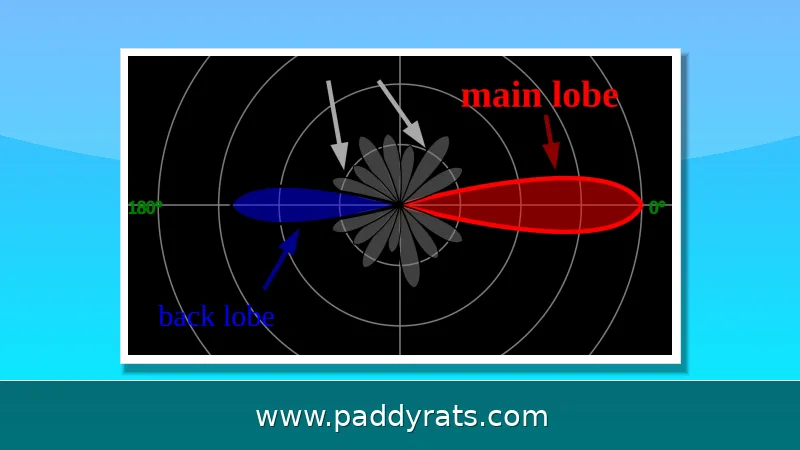
In reality, a jammer doesn't have to overpower a network across the whole spectrum. It just needs to transmit on the same frequencies the target device is using — cellular, Wi-Fi, GPS, or land mobile radio — and stay within a set radius. That's exactly why effective range and band coverage can differ so much from one unit to the next. The core techniques themselves are nothing new: noise jamming floods a channel with random energy, pulse jamming sends out short bursts that break synchronization without a continuous signal, and directed energy methods focus power on a specific target or direction. What's actually changed is the circuitry and software running underneath. Frequency hopping and spread spectrum designs let a jammer keep up with a target that's constantly switching channels, while multi-band adaptive systems extend that ability across several bands at once — so a device can't just hop to a frequency the jammer isn't watching and slip away. That adaptability explains a lot about why modern jammers are judged less on raw power output and more on how fast and precisely they can track a moving target.
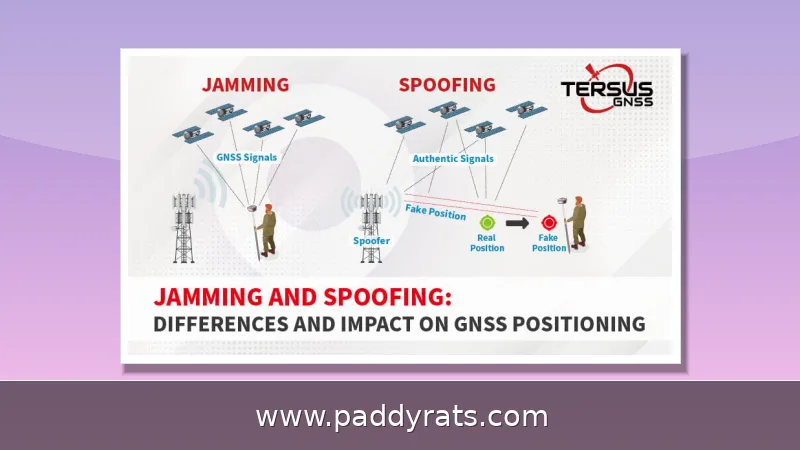
DRFM doesn't get nearly the attention it deserves. The concept itself isn't complicated: a digital radio frequency memory module picks up an incoming RF signal, captures it, saves a digital copy, and re-broadcasts that copy with almost no distortion. Since the return looks like a real echo instead of random static, the targeted radar or receiver ends up seeing coherent false targets — and that's a far trickier problem to handle than plain noise jamming. RF-cyber takeover takes a different route altogether. It pairs RF detection with a cyber intrusion path, so rather than just forcing an unauthorized drone out of the sky, the operator might be able to send it commands and seize control. That difference really matters in settings where a crash could do damage, like crowded public spaces or critical infrastructure sites. These days, both techniques turn up in counter-UAV system designs, and taken together they show where jamming technology is headed: away from brute power and toward disruption that's smarter and more selective.
Which Trends Are Shaping the Signal Jammer Market?
Three trends come up in every briefing I sit through. The first is counter-UAV and anti-drone demand, which has turned into the single strongest growth driver — cheap drones created a threat that legacy air defense was never priced to handle. The second is that buyers keep consolidating around multi-band adaptive jamming systems instead of single-purpose boxes. It just makes more sense: one platform that covers control, video, and GNSS links is easier to field and sustain than four separate units.
Third, there is a clear pull toward compact, energy-efficient hardware. Reanin's survey work found that around 66% of stakeholders prioritize compact, energy-efficient models, and roughly 64% of enterprises prefer custom-built jammer systems over off-the-shelf products. That preference for customization is a structural problem for commodity vendors: it rewards engineering depth, not volume.
The demand-side numbers reinforce that same picture. Reanin’s findings show that roughly 68% of secure installations now rely on signal jammers, while close to 61% of overall demand originates from military, government, and private facilities. That split matters because it tells you who is actually signing the purchase orders: not individual consumers, but institutions with procurement budgets, compliance requirements, and multi-year deployment plans. When nearly seven in ten secure sites already field jamming equipment, the technology has clearly moved past the pilot stage and into standard practice for sensitive facilities. Put another way, this remains an institutional market that some reports nonetheless price as if it were a consumer one — a mismatch worth keeping in mind when comparing headline market values across research firms.
What Types of Signal Jammers Exist?
Segmentation in this market is unusually messy because vendors describe the same box three different ways. The cleanest way to sort it is by form factor, frequency coverage, application, technology, and channel. Portable signal jammers dominate device type with roughly 45% share because they deploy fast and need almost no infrastructure; fixed jammers are the fastest-growing device segment, driven by permanent installations at prisons, exam centers, and critical sites.
| Category | Segments | Notable pattern |
|---|---|---|
| Product type | Portable, handheld, fixed, vehicle-mounted, mobile, walkie talkie | Portable leads at ~45%; fixed grows fastest |
| Frequency band | GSM, CDMA, 3G/4G LTE, Wi-Fi, GPS, multi-band, wideband, single-band | Multi-band leads; wideband grows fastest |
| Application | Military and defense, law enforcement, corrections, exam centers, government, enterprise, residential | Government and defense largest; commercial fastest-growing |
| Technology | Analog and digital | Digital enables adaptive and DRFM-based designs |
| Channel | Direct sales, online retail, distributors | Direct sales dominate defense procurement |
When you sort signal jammers by frequency type, one pattern jumps out right away: multi-band jammers do the heavy lifting, and wideband jammers are the subsegment growing fastest of all. Single-band jammers haven't disappeared, but their role is now more of a steady niche, since a unit locked to one frequency can only do so much when targets hop across bands or switch protocols mid-operation. The analog-versus-digital split tells a similar story. Analog units remain cheap to build, so they still move in price-sensitive residential and small-commercial settings, where the goal is simply to drown out a signal. Digital architectures cost more, but they allow adaptive, software-defined behavior, so jammers can sense their RF environment, adjust power and frequency on the fly, and avoid interfering with friendly communications. That is precisely why the specification sheets in this category are getting interesting, with MIMO, SDR and DRFM capabilities now showing up as selling points rather than exotic extras.
| Frequency Type | Market Position | Notes |
|---|---|---|
| Multi-band | Leads by frequency type | Covers several bands in one unit; preferred where targets change frequency or protocol |
| Wideband | Fastest-growing subsegment | Broad coverage appeals to buyers facing varied or unknown threats |
| Single-band | Stable but limited share | Low cost, but constrained against frequency-hopping or multi-protocol targets |
What Do Real Signal Jammer Specifications Look Like?
Specifications matter more than marketing in this category, because a jammer that cannot cover the right band at the right power is just an expensive heater. Military signal jammer weight typically runs 10 to 50 kg depending on model and capabilities. Vehicle-mounted jammer effective range reaches up to 5 km. Advanced jammer power output tops out around 100 W in the systems I have seen documented.
| Parameter | Typical value |
|---|---|
| Military jammer weight | 10 to 50 kg, model dependent |
| Vehicle-mounted effective range | Up to 5 km |
| Advanced power output | Up to 100 W |
| Handheld drone locator coverage | 100 to 6000 MHz, 1 to 2 km range |
| DroneGun Mk4 weight | About 3.2 kg, multi-band handheld |
Two product launches are worth knowing because they define the current handheld benchmark. DroneShield's DroneGun Mk4 launched in April 2023, a handheld jammer weighing about 3.2 kg with one-handed operation and multi-band disruption of control, video, and GNSS links. D-Fend Solutions' EnforceAir2 launched in August 2023 with a man-portable backpack option and MIMO plus SDR hardware inside, which is a good example of software-defined radio moving from lab language into field kit.
Which Regions and Applications Lead Demand?
North America leads the signal jammer market today, largely on the back of U.S. defense spending and a dense critical-infrastructure footprint. Asia Pacific shows the fastest CAGR, driven by India and China, where both military modernization and domestic security spending have accelerated. Europe sits in the middle, with demand shaped heavily by prison contraband enforcement and border security programs.
On the application side, government and defense hold the largest share, while commercial is the fastest-growing subsegment. That commercial growth is not just airports and stadiums. It includes correctional institutions, examination centers, and private industrial sites that want to stop unauthorized wireless activity inside a controlled perimeter.
A concrete example of how defense demand converts into contracts: in January 2025, the U.S. Navy partnered with Northrop Grumman under a $39.7 million contract covering signal jammer systems and Next Generation Jammer programs. Deals like that are why the upper end of the market forecast range keeps getting revised upward even when consumer-grade sales flatten.
Who Are the Leading Signal Jammer Companies?
The vendor list splits cleanly into defense primes, specialist counter-drone firms, and low-cost hardware suppliers, mostly based in China. The primes bring systems integration and program office relationships. The specialists bring speed and product focus. The low-cost suppliers bring price, and often regulatory risk for the buyer.
| Tier | Examples | What they bring |
|---|---|---|
| Defense primes | Lockheed Martin, Northrop Grumman, BAE Systems, Thales, L3Harris, Leonardo, Raytheon, Israel Aerospace Industries, Saab, Rohde and Schwarz, Rafael | Integration, certification, program scale |
| Counter-drone specialists | DroneShield, D-Fend Solutions, Hensoldt, Kvertus, Phantom Technologies, Sigint Technology | Focused C-UAS products and fast iteration |
| Component and RF suppliers | QP Microwave (Spain), SPX Corporation, HSS Development, Endoacustica Europe | RF amplifiers, DC to 50 GHz, ITAR-free options |
| Low-cost hardware suppliers | Zhejiang Zhongdeng Electronics, Shenzhen Al Asar Tech, Shenzhen Jinyatong Technology, Shenzhen Ruicen Technology, Mctech Technology | Vehicle-mounted and handheld units at aggressive pricing |
One detail I always flag to buyers: Shenzhen Jinyatong Technology markets a handheld drone locator and detector covering 100 to 6000 MHz with a 1 to 2 km range, and QP Microwave in Spain sells RF amplifiers from DC to 50 GHz that are ITAR-free and ISO 9001 certified. Those two examples show how the supply chain now spans both cheap Chinese hardware and export-control-friendly European components. Regulation and risk sit right on top of that supply chain, which is why procurement teams should treat compliance review as part of the technical evaluation, not a paperwork afterthought.
Frequently Asked Questions
How big is the signal jammer market?
Estimates vary widely by research firm. The Business Research Company put the market at $2.16 billion in 2025, growing to $2.37 billion in 2026, while other reports cite figures from roughly $913.05 million to $4.98 billion depending on scope and methodology. The spread reflects whether counter-drone, GPS, and component revenue is counted.
What is driving signal jammer market growth?
Growth is driven by rising security and privacy concerns, geopolitical tensions, military and defense spending, counter-UAV and anti-drone demand, critical infrastructure protection, and the spread of smartphones and wireless devices in public and controlled environments. Reanin found about 61% of demand comes from military, government, and private facilities.
What are the main types of signal jammers?
Common types include portable, handheld, fixed, and vehicle-mounted jammers. By frequency they cover GSM, CDMA, 3G/4G LTE, Wi-Fi, GPS, and multi-band systems. Portable jammers dominate device-type share at around 45%, while multi-band jammers lead by frequency type and wideband units are the fastest-growing subsegment.
How do signal jammers work?
Signal jammers are electronic devices that transmit on the same frequency as the devices being blocked, causing interference and denial of service. They disrupt cellular, Wi-Fi, GPS, and radio communications within a specified range, and newer systems use multi-band adaptive jamming plus DRFM and RF-cyber takeover techniques.