An anti-drone signal jammer is an RF transmitter that floods the radio links a drone uses for control, video, and navigation, forcing it to hover, land, or fly home. Here is how jamming works, which frequencies it targets, how far it reaches, and why US law bans civilian use.
What Is an Anti-Drone Signal Jammer?
An anti-drone signal jammer is basically a radio frequency transmitter that drowns out the link between a drone and whoever's flying it. It puts out electromagnetic noise on the same frequencies the drone relies on for command, control, video, and navigation — which means the aircraft can't hear its pilot or its satellites anymore. Once it loses those valid signals, most consumer drones drop into a fail-safe mode: they'll either head back to the launch point, hover in place, or descend and land. Older or custom-built drones, though, might just fall right out of the sky.
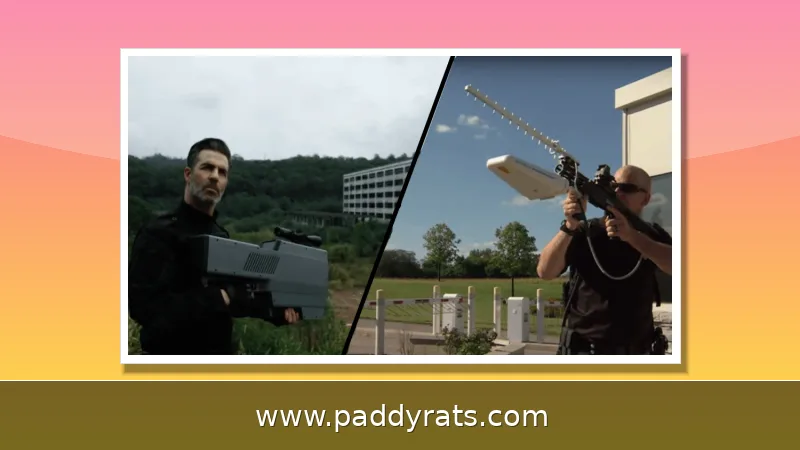
This device has a lot of names. You might hear it called a drone jammer, a drone jammer gun, a drone signal jammer, an RF jammer, a UAV blocker, a drone blocker, a drone scrambler, a drone disruptor, a counter-UAS (CUAS) jammer, a GPS blocker, a GNSS jammer, or a non-kinetic soft-kill counter-UAS system. All of these terms point to the same basic concept, even though the hardware itself can look very different, ranging from a handheld rifle-style unit to a fixed high-power installation. What sets a jammer apart from a kinetic counter-drone weapon comes down to one thing: nothing gets physically destroyed. The link is simply made unusable.
How Does a Drone Jammer Work?
Jamming itself breaks down into three steps, and the first two usually fall to a separate detection system. Step one is detection: radar, RF sensors, acoustic sensors, or cameras pick up that something is flying where it shouldn't be. Step two is tracking, which locks onto the drone's position and movement so the jammer knows where to aim. Step three is the actual jamming, where the transmitter goes to work.
At that point, the operator has to pick a mode. RF jamming cuts off the control link between the pilot and the drone. GNSS jamming goes after GPS and other satellite navigation systems, so the drone loses its position fix. WiFi jamming, meanwhile, interferes with drones that rely on WiFi networks to fly. In practice, most commercial systems combine several of these at once, since a drone that loses only its GPS may still be flyable, but one that loses both control and navigation doesn't have many options left.
Which Frequencies Do Anti-Drone Jammers Target?
The frequencies a jammer goes after aren't random — they're determined by whatever bands drones actually operate on. Hobby setups and industrial control links tend to sit around 433 MHz and 900 MHz, while video feeds and telemetry usually travel over 1.2 GHz and 1.5 GHz. But the real hot zone is 2.4 GHz and 5.8 GHz, since those are the main command-and-control bands for DJI drones and most other commercial models. On top of all that, jammers also hit GNSS bands — GPS, GLONASS, Galileo, and BeiDou included.
Within those GNSS bands, the specific numbers actually matter. GPS L1 comes in at 1.575 GHz, while L2 sits down at 1.227 GHz, and GNSS satellites overall occupy the range between 1164 MHz and 1610 MHz. Here's the thing, though: satellite signals reach the ground incredibly weak, which makes them one of the easiest things for a jammer to overpower. That's exactly why GPS denial tends to be the first thing a drone operator notices going wrong.
Directional vs Omnidirectional Jamming: What's the Difference?
The type of antenna you pick affects both how far the jammer reaches and what else it messes with along the way. A directional antenna concentrates its energy into a tight beam, kind of like a flashlight — so you get longer range and less interference with nearby equipment. An omnidirectional antenna, on the other hand, sends signal out in every direction, forming a protective bubble around a fixed spot. The downside is shorter coverage and more stray RF floating around. It's really the same trade-off you run into with any RF planning: focus your power and you gain distance, spread it out and you cover more ground.
Then there's the question of technique. Broadband jamming blasts high-power noise across a wide frequency range, while spot jamming zeroes in on a single band. Barrage jamming mixes the two, hitting multiple frequencies at the same time. Which one you pick really comes down to how much you know about your target. If you're dealing with a drone that sticks to one known band, spot jamming will do the trick. But if the target is unknown or hops between frequencies, you'll probably need to go broadband or barrage.
Drone Jammer vs Drone Spoofer: Key Differences
Jammers and spoofers tend to get lumped together in these discussions, but they actually do opposite things. A jammer floods the airwaves with noise, drowning out the radio signal until it becomes unintelligible. The drone loses its link, and that triggers its automatic safety features. A spoofer works differently: instead of drowning the signal, it sends out a compatible signal strong enough to take the legitimate one's place. That lets it hijack control of the drone or feed it false GPS coordinates to send it somewhere else entirely. So if you want the short version, jamming overwhelms while spoofing overrides.
That distinction actually matters when you look at the outcome. Jamming usually produces predictable behavior, since the failsafe logic is baked right into the firmware. Spoofing, on the other hand, can be quieter and more precise, but you need to know the target's protocols, and pulling it off against encrypted links is a whole lot harder. In counter-UAS literature, both methods sit under the soft-kill umbrella, right alongside other non-kinetic approaches that stop a drone without physically damaging it.
How Far Can a Drone Jammer Reach? Real-World Ranges
Published range figures vary enormously, and vendors rarely state their test conditions. The table below summarizes the ranges most commonly cited across counter-UAS vendor material and RF engineering references. Treat every number as an optimistic ceiling rather than a guaranteed working distance.
| Form Factor | Typical Reported Range | Notes |
|---|---|---|
| Handheld jammer | 0.5 to 2 km | Rifle-style or pistol-grip units |
| Fixed or stationary | 3 to 5 km | Rooftop, tower, or mast installations |
| Vehicle-mounted | 5 km or more | Mobile patrol and convoy protection |
| Military-grade | 10 km or more | High-power systems such as the R-330ZH Zhitel |
One vendor cites jamming up to 4 km in radius, another advertises 360-degree coverage out to 1.9 miles, and the average jamming radius of anti-drone jammers at different power levels is often quoted as 200 to 3000 meters. Environment decides how much of that survives contact with reality. Urban buildings and rough terrain can cut range by 30 to 50 percent, and since people can typically see drones from only 200 to 300 meters away, visual range and jamming range are very different measurements.
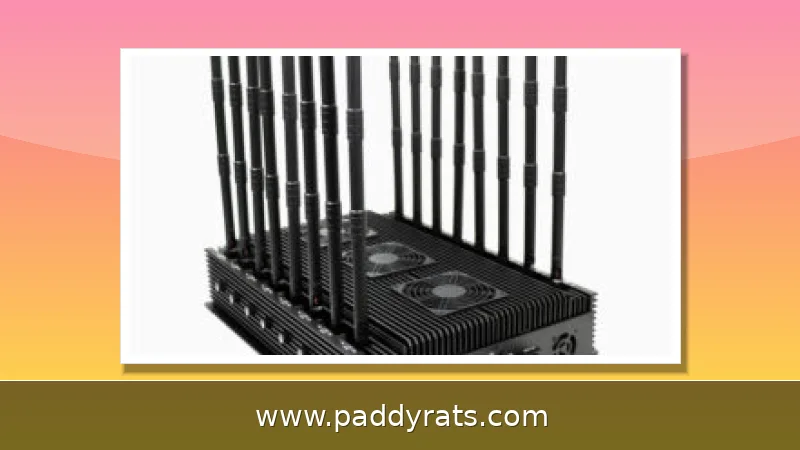
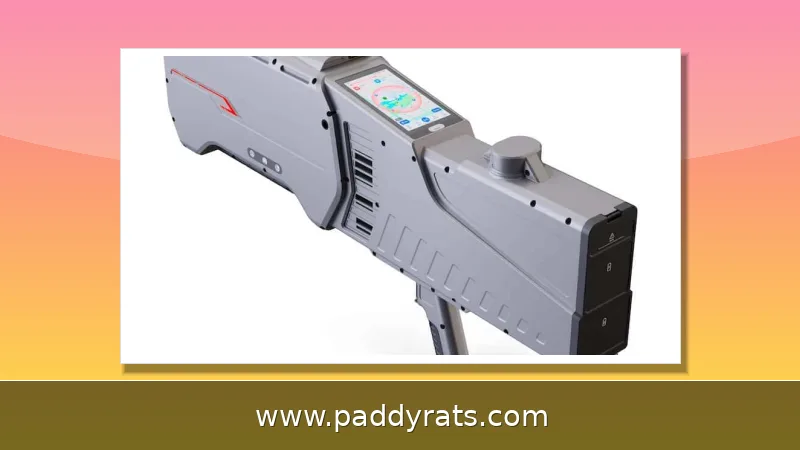
Form factor follows mission. The market includes handheld rifle-style drone jammer guns, backpack units, stationary rooftop or tower installations, vehicle-mounted systems, and fixed high-power systems such as the Argus-5000 and SkyHunter-4M/P. Portable examples include the Volnorez backpack jammer and the RP-377 vehicle-mounted jammer. Higher power generally means more range, but also more heat, more power draw, and more interference risk for everything else nearby.
What Happens to a Drone After It Is Jammed?
Most consumer drones activate a failsafe when the control link drops: they hover for a set period, then autonomously return to the takeoff point or descend and land. That behavior is a feature, not a bug, and it is exactly why jamming is considered a soft-kill method rather than a destructive one. The drone is not damaged; it is simply deprived of instructions.
There is a second effect that defenders care about. Because the drone's telemetry and video may still be transmitting, jamming can help an operator track the aircraft back to its pilot, turning a defensive action into an intelligence-gathering one. Not every outcome is tidy, though. Some drones may crash erratically when they lose navigation mid-flight, which is one reason jamming near people, roads, or airports carries real risk.
Why Frequency Hopping Makes Jamming Harder
Most current consumer drones use frequency hopping spread spectrum (FHSS), rapidly switching between many frequencies in a pattern only the drone and controller know. A simple single-frequency jammer is largely ineffective against that, because the link spends only a fraction of a millisecond on any one channel. Disrupting FHSS requires broadband noise across the entire 2.4 GHz or 5.8 GHz band, which increases power needs and collateral interference.
Military systems go further, using true random number generators for unpredictable hopping sequences that are far harder to follow or predict. On the receiving side, counter-jamming methods include Controlled Reception Pattern Antennas (CRPA), which nullify interference by steering reception away from the jammer; multi-frequency GNSS receivers that use GPS, Galileo, GLONASS, and BeiDou for redundancy; Inertial Navigation Systems (INS) as a backup; sensor fusion that combines GPS with cameras, radar, or LiDAR; and signal anomaly detection that alerts operators. Doodle Labs' Sense technology, for example, monitors in-band interference and automatically switches channels or frequency bands.
Are Drone Jammers Legal for Civilians in the US?
No. In the United States, the FCC prohibits civilians from operating, marketing, selling, or importing RF jamming equipment. The legal foundation is the Communications Act of 1934. Section 301 (47 U.S.C. 301) requires operators of radio transmitters to be licensed; Section 302(b) prohibits manufacturing or selling jamming equipment; and Section 333 prohibits interference with licensed or government stations. The statute also bars willful or malicious interference with authorized radio communications.
Penalties are not symbolic. Violations carry fines up to $112,500 per incident, equipment seizure, and criminal prosecution including imprisonment. Critically, these restrictions apply even on your own property, so a homeowner cannot lawfully jam a drone hovering over their backyard. Similar restrictions exist in the UK and most other countries, which is why legal counter-drone deployments in the US tend to sit with federal agencies rather than private citizens.
Can You Legally Buy an Anti-Drone Jammer?
Buying is as restricted as operating. Because Section 302(b) covers manufacturing and selling, and the FCC bans importation and marketing, a civilian cannot lawfully purchase a jammer for personal use, even from an overseas vendor. Devices sold openly online as "signal blockers" or "drone scramblers" are typically marketed in violation of those rules, and possession can invite enforcement action rather than protection.
For legitimate counter-drone needs, the practical path runs through detection rather than jamming. RF sensors, radar, acoustic arrays, and cameras can alert a facility to unauthorized drone activity without transmitting on protected bands. Organizations that genuinely require jamming capability generally work through authorized government channels, where licensed operation and coordination with regulators are part of the process.
The Bottom Line on Anti-Drone Signal Jammers
An anti-drone signal jammer is a powerful but blunt tool. It works by drowning out the control, video, and navigation links a drone depends on, and it can reach from a few hundred meters for a handheld unit to 10 km or more for military-grade systems. Its effectiveness depends on matching the right frequencies, choosing directional or omnidirectional coverage, and accepting that frequency hopping and GNSS hardening make the job harder every year.
The legal picture is equally clear: in the US, civilian operation, sale, and import of jammers are prohibited, with fines up to $112,500 per incident and possible criminal prosecution. That combination, real capability plus near-total civilian prohibition, is why counter-drone work is dominated by detection-first strategies and government-authorized deployments rather than consumer hardware.
Frequently Asked Questions
What is an anti-drone signal jammer?
It is a device that transmits strong electromagnetic noise on the same radio frequencies a drone uses for command, video, and navigation. This overwhelms the drone's receiver, breaking the control link or GPS fix and forcing the drone to land, hover, or return to its launch point.
What frequencies do anti-drone jammers block?
Common targets include 433 MHz and 900 MHz for commercial and DIY control links, 1.2 GHz and 1.5 GHz for video and telemetry, 2.4 GHz and 5.8 GHz for DJI and most commercial command-and-control, plus GNSS bands such as GPS, GLONASS, Galileo, and BeiDou.
How far can a drone jammer reach?
Reported ranges vary widely. Handheld units cover roughly 0.5 to 2 km, fixed or stationary systems 3 to 5 km, vehicle-mounted units 5 km or more, and military-grade systems 10 km or more. Average jamming radius is often cited as 200 to 3000 meters depending on power and environment.
Are drone jammers legal for civilians?
No. In the United States, the FCC prohibits civilians from operating, marketing, selling, or importing RF jamming equipment under the Communications Act of 1934. Violations can bring fines up to $112,500 per incident, equipment seizure, and criminal prosecution including imprisonment. Similar restrictions apply in the UK and most countries.