A jammer device floods the same radio frequencies your phone, GPS, or Wi-Fi relies on, creating a local dead zone. Here is how jamming works, what it costs, what the law says, and how anti-jamming protection fights back.
What Is a Jammer Device and What Does It Block?
A jammer device—also known as a signal jammer, signal blocker, RF jammer, or signal scrambler—is an RF transmitter designed to deliberately interfere with authorized radio communications. Rather than listening in or decoding traffic, it just floods the airwaves with noise until the intended receiver can't pull a usable signal out of the static. That's why security researchers call jamming a denial-of-service attack instead of an eavesdropping technique: nothing gets intercepted, but the link still goes dead.
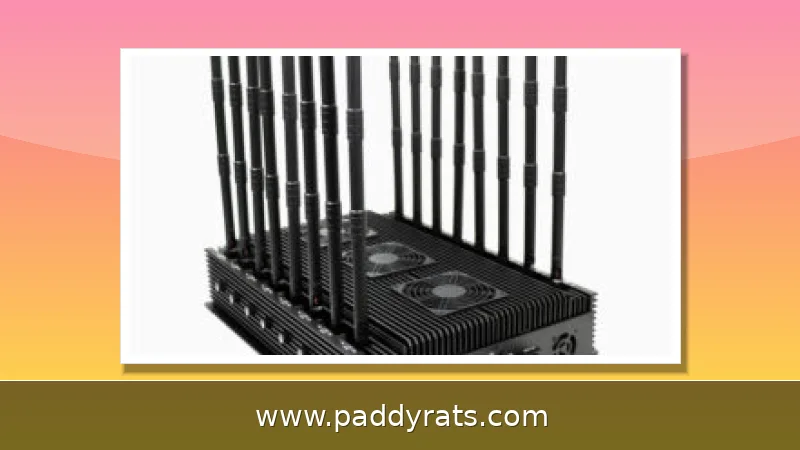
These devices show up in just about every form you can imagine — pocket-sized boxes, rack-mounted units, systems bolted onto vehicles — which is exactly why the Department of Homeland Security's Science and Technology Directorate put out a set of sample images back in September 2025 to help people spot them. The giveaway is pretty straightforward: your service dies in a place where coverage is usually solid. So if a few phones drop at the same time, a router freezes up, or a GPS unit can't get a fix under a wide-open sky, it's fair to suspect jamming.
How Does a Signal Jammer Work?
A signal jammer works by broadcasting RF noise right on the frequencies that the target device is tuned to pick up. Cell towers, satellites, and Wi-Fi access points all send out fairly weak signals by the time they reach a receiver, so even a nearby transmitter pushing just a few watts on the same band is enough to drown them out. Technically, this comes down to a drop in the signal-to-noise ratio — the signal you actually want is still there, it's just buried under all that interference.
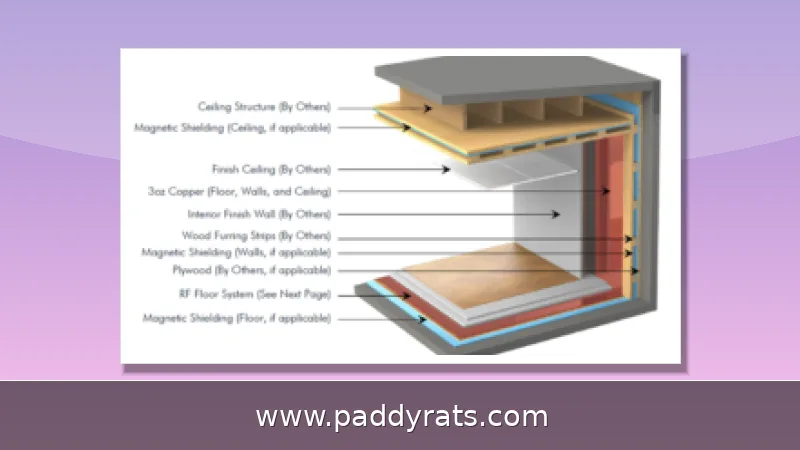
The jamming waveform itself is just random noise, and that's exactly what makes it so tough to filter out. Basic units simply blast noise across a band, but more advanced models pull off protocol-aware jamming—they go after control channels, the signaling paths a phone uses to register with the network and set up calls. And a Faraday cage, basically a conductive enclosure that shuts out external radio waves, is the crudest and most complete version of that same idea.
When it comes to the bands these devices target, the list is pretty well established. Cell phone jammers usually go after 700 MHz, 800 MHz, 900 MHz, 1800 MHz, 1900 MHz, and 2100 MHz. GPS is a single frequency at 1575 MHz, and Wi-Fi operates on 2.4 GHz and 5 GHz. Drone jammers cast a wider net: they cover 433 MHz and 900 MHz for control links, 1.2 GHz and 1.5 GHz for video and telemetry, and 2.4 GHz and 5.8 GHz for the command-and-control channels that DJI and most commercial drones rely on. On top of that, they also hit the GNSS bands — GPS, GLONASS, Galileo, and BeiDou.
It's worth drawing a clear line between jamming and spoofing, since people tend to mix them up. GPS jamming floods the GPS frequency with RF noise, which stops the receiver from picking up satellite data at all, so it has nothing to work with and can't figure out a location. GPS spoofing works differently: it broadcasts signals that imitate real satellites, fooling the receiver into calculating a position that isn't actually where it is. In short, jamming disrupts, while spoofing deceives. The countermeasures aren't the same either, which explains why anti-jamming procurement these days often calls for both interference detection and spoofing detection.
Types of Jammers: Cell Phone, GPS, Wi-Fi, and Drone
The market breaks down into a few main categories. Cell phone jammers—sometimes sold under names like mobile phone blockers or text blockers—go after the cellular bands, and they're the classic device you hear about in classrooms, cars, and prison contraband busts. GPS jammers and GPS blockers target the 1575 MHz band and tend to be marketed as anti-tracking tools for vehicles. Wi-Fi and Bluetooth jammers operate on the 2.4 GHz and 5 GHz bands, while drone jammers stack several bands together to cut off both the control link and the video feed.
Drone countermeasures are worth a closer look, since this is the segment moving faster than any other. Consumer-grade drone jammers are already advertising jamming radii of 5 to 10 kilometers, with spoofing ranges that reach as far as 20 kilometers. Add full-band software-defined radio coverage from 300 MHz to 6000 MHz and an IP66 weather rating, and you've got a pretty capable piece of hardware for the price. Step up to higher-end systems like the Airsight Smart and Autonomous Jammer, and the claims get bigger still: 360-degree coverage out to 1.9 miles, both manual and automatic activation, and flexible mounting on fixed positions, tripods, or vehicles. It also integrates with the AirGuard detection platform, which makes it less of a standalone tool and more of a piece in a larger defense setup.
The table below breaks down the main categories, along with the bands they typically target and what they're used for.
| Jammer type | Typical bands | Common use case |
|---|---|---|
| Cell phone jammer | 700/800/900/1800/1900/2100 MHz | Blocking calls and texts in a defined area |
| GPS jammer / blocker | 1575 MHz | Defeating vehicle or asset tracking |
| Wi-Fi / Bluetooth jammer | 2.4 GHz, 5 GHz, 5.2/5.8 GHz | Cutting wireless data and peripherals |
| Drone jammer | 433/900 MHz, 1.2/1.5 GHz, 2.4/5.8 GHz, GNSS | Severing drone control, video, and navigation |
That difference in coverage matters a lot if you're the one trying to protect a site. One jammer hitting a single band is basically just an annoyance. But a multi-band drone jammer that also takes out GNSS? Now you're losing navigation, timing, and video all at once. That's the real reason critical infrastructure operators have started treating jamming as an availability risk instead of some technical curiosity.
Jammer Specifications, Power Levels, and Coverage Range
Specifications vary enormously, and price tracks power, band count, and antenna design. In the Jammer Master catalog, a 12-antenna desktop signal jammer lists at $749.99 and a 16-antenna unit at $1,088.99, while a 24-antenna portable 5G cellular jammer runs $1,150.00. Handheld models such as the 16-antenna mobile phone jammer rated for 25 meters sell for $699.00, and a mini cell phone jammer starts at $420.00. At the top end, a drone jammer gun is priced at $5,200.00 and a suitcase-style signal jammer at $2,659.99.
Jammer Store's featured lineup tells a similar story. The Colibri Y3 portable 2.4/5.8 Wi-Fi and Bluetooth mini jammer lists at $250.00, the GP5000 car anti-tracking GPS blocker at $119.99, the Albatross Pocket 3G (GPS) GSM jammer at $179.00, the Alligator 10-band 10W jammer at $720.00, the Stalker 5G 12-band portable at $850.00, and the HPJ1000-5G desktop unit at $999.00. The Stalker 5G covers 12 bands with a range up to 20 meters; the HPJ1000-5G pushes 70 watts and reaches up to 60 meters. Free DHL worldwide shipping applies on orders over $99, with a one-year warranty and dispatch within three days.
Power per band is the number that actually predicts performance. Blockers running 2 to 5 watts per frequency band are the most common class of wireless signal blocker and offer the best cost-effectiveness, according to Jammer Master. Heavier hardware scales up from there: the Sovsys JAMMER Dual-Force Vehicle runs on a 12VDC battery or 100-220VAC 50Hz external supply with average power consumption of 480W, and the Phantom Technologies Manpack Jammer MP808 offers a 40-meter jamming distance, VSWR protection, high-gain omni-directional antennas, a GUI for programming bands, and thermal protection.
| Model | Key spec | Price |
|---|---|---|
| Mini Cell Phone Jammer JM025 | Compact single-purpose unit | $420.00 |
| Handheld Mobile Phone Jammer JM018 | 16 antennas, 25 m range | $699.00 |
| Stalker 5G | 12 bands, up to 20 m | $850.00 |
| HPJ1000-5G | 70 W, up to 60 m | $999.00 |
| Drone Jammer Gun JM029 | Directional drone countermeasure | $5,200.00 |
The commercial picture behind these prices is large and growing. Technavio forecasts the signal jammer market will increase by USD 1.08 billion at a CAGR of 5.66% between 2023 and 2028, while a separate Dataintelo report values the market at $2.8 billion in 2025 and projects $5.6 billion by 2034 at an 8.1% CAGR. Whatever the exact figure, the direction is consistent, and so is the growth of the defensive side of the market.
Are Jammers Legal? FCC, UK, and Canada Rules
In the United States, the answer is a flat no. Under the Communications Act of 1934, the FCC prohibits operating, marketing, or selling devices that block authorized radio communications, and there are no exemptions for homes, businesses, classrooms, or vehicles. In a September 16, 2026 enforcement statement, the FCC reiterated that RF jammers are transmitters designed to block, jam, or otherwise willfully or maliciously interfere with authorized radio communications, and that it is unlawful to advertise, sell, distribute, import, or market RF jamming devices to non-federal entities in the United States. Penalties reach up to $112,500 per incident, with potential criminal prosecution.
Enforcement is not theoretical. U.S. Customs and Border Protection has seen roughly an 830% increase in signal jammer seizures since 2021, according to Post Alarm Systems in September 2025, which means a lot of imported units never reach the buyer. Canada applies comparable restrictions, and most other jurisdictions treat jamming as illegal because it interferes with licensed spectrum, emergency communications, and aviation and maritime safety systems.
The United Kingdom is approaching the problem from the resilience side. The UK government noted in April 2026 that one week of disruption to the country's positioning, navigation, and timing infrastructure could cost the economy up to £7.64 billion, and it ran a four-week call for evidence starting April 10, 2026 to examine the threat. That framing matters: jamming is no longer just a consumer gadget issue, it is a national infrastructure issue.
The damage is already measurable in the private sector. Resgrid cites Security Systems News reporting that signal jammers undermine 25% of commercial and public safety tracking systems in major U.S. and EU markets, costing an estimated $2.5 billion annually, and notes a 150% spike in search queries for "cheap anti jammer" since October 2025. Buyers are clearly looking for defense, not offense.
Anti-Jamming Devices and Protecting Your Systems
Anti-jamming is now the larger opportunity. Fortune Business Insights, cited by Resgrid, values the anti-jamming market at USD 5.43 billion in 2025 and projects it will reach USD 12.97 billion by 2034. The toolkit includes jammer detectors that flag sudden noise-floor spikes, multi-constellation GNSS receivers that can fall back to a clean signal, controlled reception pattern antennas that null out interference, and hardened timing sources for networks that cannot tolerate a GPS outage.
For most organizations, the first step is detection, not countermeasure. Jamming indicators include multiple phones losing service in areas with typically good radio or cell coverage, erratic signal fluctuations, Wi-Fi dropping near the router, high latency and packet loss, and reduced bandwidth. Wired Ethernet connections keep working through a radio attack because jammers only affect wireless devices, which is a useful diagnostic: if the wired link is fine and everything wireless is failing, you are probably looking at interference rather than a network fault.
A practical layered defense follows from that. Document normal signal baselines so anomalies stand out, keep critical links on wired or fiber paths where possible, use GNSS receivers that support multiple constellations and holdover clocks, and monitor for spoofing as well as jamming. Because the FCC bars private jamming outright, the only lawful posture for a U.S. business is protection and reporting, not retaliation in kind.
The economics reinforce the point. With jammers costing a few hundred dollars and disruption running into billions annually, the asymmetry favors attackers unless defenders invest in detection and resilient design. The 150% rise in anti-jammer searches suggests that message is landing. Note that pricing and product data cited here reflect vendor listings and third-party reports at the time of writing and can change; nothing in this article is investment advice.
Frequently Asked Questions
How does a jammer device work?
A jammer transmits radio frequency noise on the same frequencies a target device uses, such as cellular, GPS, or Wi-Fi bands. That noise overpowers the original signal and lowers the signal-to-noise ratio, so the device cannot send or receive data, creating a local dead zone around the transmitter.
Are signal jammers legal in the United States?
No. Under the Communications Act of 1934, the FCC prohibits operating, marketing, or selling devices that block authorized radio communications, with no exemptions for homes, businesses, classrooms, or vehicles. Violations carry fines up to $112,500 per incident and potential criminal prosecution, and CBP seizures of imported jammers have risen sharply since 2021.
What is the difference between GPS jamming and GPS spoofing?
GPS jamming emits radio frequency noise on the same frequency as GPS, preventing a device from receiving satellite data so it cannot determine location. GPS spoofing instead mimics real satellite signals, tricking the receiver into calculating a false position. In short, jamming disrupts the signal while spoofing deceives the receiver.
How can you tell if a jammer is being used nearby?
Signs include multiple phones losing service where reception is normally good, erratic signal fluctuations, Wi-Fi dropping near the router, high latency and packet loss, and reduced bandwidth. Wired Ethernet connections keep working because jammers only affect wireless devices, which helps distinguish jamming from an ordinary network outage.
What is the difference between jamming and spoofing?
Jamming emits RF noise on a frequency to prevent a receiver from getting any usable signal, so it disrupts communication or navigation. Spoofing broadcasts fake signals that mimic legitimate ones, such as GPS satellite data, tricking the receiver into calculating a false position. Jamming disrupts, while spoofing deceives, and their countermeasures differ.
How can you protect systems from jamming?
Start with detection by documenting normal signal baselines and watching for multiple devices losing service, high latency, or packet loss. Then layer defenses: keep critical links on wired or fiber paths, use multi-constellation GNSS receivers with holdover clocks, and deploy jammer detectors and controlled reception pattern antennas that null out interference.