Yes, signal jammers are illegal in schools. The FCC bans operating, selling, or marketing RF jammers with no school exception, and a Florida teacher's five-day suspension shows how enforcement works in practice.
Are signal jammers illegal in schools under federal law?
If you've ever wondered whether your kid's school is secretly blocking cell service, here's the short answer: doing that would put the school in violation of federal law. The FCC's Jammer Enforcement page is blunt about it — operating, marketing, selling, importing, distributing, or shipping RF jammers is illegal under federal law, full stop. There's no carve-out for schools, hospitals, or any other private institution. It's a blanket ban, not some gray area schools can argue their way around.
If you've ever watched this question bounce around parent forums — usually after some mysterious dead zone pops up in a hallway or classroom — you're definitely not alone. But the legal side of it isn't mysterious at all. The Ohio School Boards Association summed up the FCC's stance pretty bluntly: using a jammer violates the Communications Act of 1934, specifically 47 U.S.C. Sections 301, 302a, and 333. There's no gray area here. The same law covers the entire chain of commerce, too — manufacturing, importing, selling, or even advertising a jammer for sale is prohibited. And if you're hoping to find some kind of loophole, the law firm Smith, Gambrell & Russell throws in a caveat worth noting: only a few narrow exceptions exist, and they're reserved for government use, not school districts. In other words, a principal, a teacher, or a parent can't legally turn one on, and a vendor can't legally pitch one to them.
What the FCC says about operating, selling, and marketing jammers
The FCC is pretty blunt about this, and that's on purpose. In its own enforcement materials, the agency says flat out that using a cell jammer—or any similar device that deliberately blocks, jams, or interferes with authorized radio communications like cell phones, police radar, GPS, or Wi-Fi—violates federal law. Period. What catches a lot of people off guard is how far the ban reaches: it's not just about whoever presses the power button. Federal law also prohibits marketing, selling, importing, distributing, and shipping these devices, which means the whole commercial chain around a jammer is off-limits. And as the FCC sees it, there are no exceptions for schools, teachers, or anyone else who means well.
Wilson Amplifiers, a company that sells legal signal boosters rather than jammers, sums up the federal rule in blunt terms: selling, advertising, distributing, or operating a cell signal jammer is illegal in the United States — and in much of the rest of the world, too. That's worth sitting with for a second, because people constantly lump boosters and jammers together even though the two devices do opposite things. A booster is legal when it's registered with your carrier; it takes a weak but authorized signal and makes it usable. A jammer is never legal for ordinary consumers or schools; it wipes out the network entirely by transmitting interference on the same frequencies. So one device helps your phone hold onto a licensed signal, while the other deliberately erases that signal for everyone nearby.
| Device | What it does | Legal status (U.S.) |
|---|---|---|
| Signal booster | Amplifies a weak, authorized signal | Legal with carrier registration |
| Signal jammer | Overpowers the network with interference | Illegal to sell, advertise, distribute, or operate |
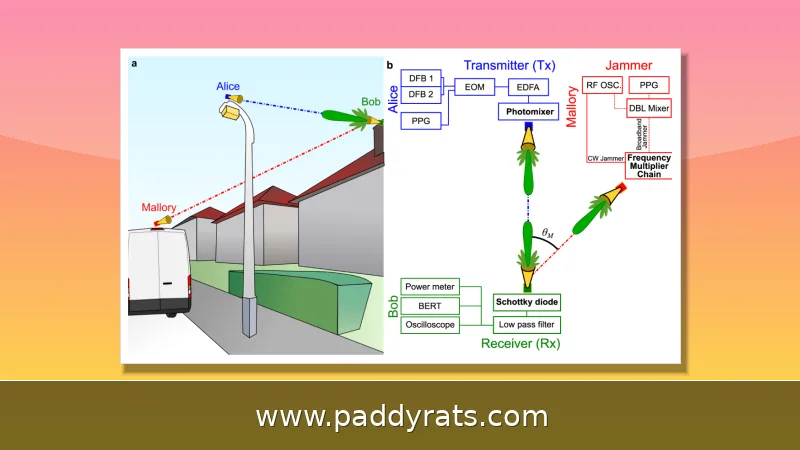
The enforcement logic starts to make a lot more sense once you understand how the tech actually works. A jammer doesn't politely ask a phone to disconnect. It just blasts a competing signal on the same frequencies your handset is already tuned to. Since the phone can't tell the fake signal from the real tower, it grabs whichever one is stronger—and that's usually the jammer, so the phone just loses service. In effect, it's a denial-of-service attack on licensed airwaves. What turns this into a federal issue is that the interference doesn't stay put. Radio signals don't care about property lines, so a device strong enough to silence phones in one classroom can spill into the next room, the hallway, or even nearby homes and streets, cutting off people who never agreed to be disconnected. And because that spectrum is licensed and regulated by the federal government, the FCC treats any deliberate interference with it as unauthorized use of federal territory—not a local call about classroom management.
The Florida teacher case: Dean Liptak and the five-day suspension
One of the most-cited real-world school jammer cases happened in Pasco County, Florida. Dean Liptak, a science teacher at Fivay High School, ran a cell phone jammer in his classroom for three days in a row, from March 31 to April 2, 2015. The district already had a policy requiring students to keep their phones off during class, so Liptak seems to have viewed the jammer as a way to enforce a rule that was already on the books. He later said he figured using a jammer was fine as long as he wasn't trying to do anything malicious. That reasoning didn't hold up. Verizon noticed interference on its network and filed a complaint, and Superintendent Kurt Browning suspended Liptak for five days, citing possible violations of federal law and the risk that jamming could cut off 911 calls.
Intent didn't matter in the end. Verizon filed a complaint about network interference, and Superintendent Kurt Browning suspended Liptak for five days, citing possible violations of federal law and the risk that jamming could cut off 911 calls. That second point is usually where the debate stops. A jammer can't tell the difference between a student scrolling social media and a parent trying to reach emergency services, and neither can the network. In Liptak's case, the interference was strong enough that a carrier noticed and complained — exactly the kind of attention no school wants. He later said he figured the device was fine to use as long as his intentions weren't malicious, but that's not how federal rules work. The FCC treats jamming as illegal no matter the intent, so a teacher trying to keep a class focused and someone deliberately trying to disrupt communications are breaking the same law.
What gets me about this whole thing is how mundane the motivation was. Dean Liptak wasn't running some shady operation out of a supply closet at Fivay High School — he was just a science teacher who got tired of phones distracting his students and figured a jammer was a simple solution. When Superintendent Kurt Browning suspended him for five days, he noted that Liptak had assumed his use was fine as long as he wasn't trying to cause harm. But that assumption is precisely why the FCC rule doesn't leave any room for an intent loophole. The real question was never whether Liptak meant any harm; it's whether he interfered with licensed communications that other people rely on — including the Verizon customers whose service got knocked out and anyone nearby who might have needed to call 911. In other words, good intentions don't get you off the hook when the airwaves themselves are regulated.
Penalties and fines for illegal jamming
The penalties aren't just symbolic, and they're definitely not a slap on the wrist. According to Cellbusters, you could be looking at fines of up to $11,000, seizure of the illegal equipment, and even criminal charges that can include jail time. That range is wide for a reason: the FCC can stack violations on top of each other. Operating a jammer without authorization, causing interference, and what the agency calls egregious conduct can each come with their own price tag, so one device can rack up a five-figure bill pretty quickly. And it's not just individuals who get hit — the FCC has gone after businesses too, which means a school, a vendor, or even an employee acting on their own could all find themselves in the crosshairs.
Ravi's Import Warehouse, Inc., a Dallas company, ended up in the FCC's crosshairs in a case that shows how seriously the agency treats jamming. On January 27, 2022, the FCC upheld a $22,000 fine against the company. The penalty was split three ways: $10,000 for operating a jammer without authorization, $7,000 for causing interference, and $5,000 for what the agency called egregious conduct. AT&T had filed the interference complaint, and the owner didn't even deny it — he admitted he was using a jammer to keep his employees off their phones while they were supposed to be working.
The pattern here is worth noting for anyone in a school or office setting: the fine structure punishes the interference itself separately from the unauthorized operation, and adds an extra hit for conduct the agency considers especially careless. A single classroom device can trigger all three categories at once, which is why the downside dwarfs whatever short-term quiet a jammer buys.
Why jammers are banned: 911, public safety, and the Communications Act of 1934
The Communications Act of 1934 is the foundation here, and it predates cell phones by decades. Its purpose was to keep the airwaves orderly and to protect licensed communications from interference, a principle that scaled cleanly from radio broadcasts to cellular networks. When the FCC says jamming violates Sections 301, 302a, and 333, it is applying that same framework to modern spectrum.
Public safety is the practical heart of the ban. Jammers interfere with police radar, GPS, and Wi-Fi in addition to cellular voice and data. In a school, that means a jammer could disrupt a 911 call from a student in crisis, interfere with emergency responders trying to reach the building, or knock out Wi-Fi that staff rely on for attendance and safety systems.
There is also a quieter cost: jammers do not respect property lines. A device powerful enough to cover one classroom can bleed into neighboring homes, streets, and businesses, which is precisely the kind of spillover the FCC exists to prevent. That is why the rule applies to schools and to everyone else, with government use carved out under strict conditions.
If schools do not jam phones, why is school cell service so bad?
Most reports of dead zones in schools have nothing to do with jamming. Wilson Connectivity notes that schools are not currently using cell jammers outside isolated incidents, and that maintaining cellular communications actually serves their safety and liability interests. A school that blocks calls is inviting exactly the kind of legal exposure the Florida case produced.
The real culprit is usually the building itself. Energy-efficient windows, foam-injected insulation, and metal construction, all common in LEED-certified schools, block incoming cell signal. As of 2022, roughly 5,000 K-12 schools in the United States were LEED-certified, according to Wilson Connectivity. Distance from the nearest cell tower and natural or manmade barriers compound the problem.
A Hacker News discussion captured this confusion well. One commenter described a school where internet outages hit at 7:10 AM while phone calls still worked and teacher phones were unaffected. Commenters pointed out that a jammer would not behave that way; a private cell tower or a filtering arrangement was the likelier explanation. The lesson is that bad signal and blocked signal are different problems with different causes.
How to tell whether a jammer is actually in use
Detection is harder than the app store suggests. Cellbusters notes that a dropped signal is the first sign, but faulty equipment, physical obstructions, and lawful devices operating on the same frequencies can produce identical symptoms. Apps claiming to detect jammers are largely unproven, and spectrum analyzers, while capable of spotting jamming, are not commonly available and require specialized knowledge to interpret.
Wilson Amplifiers is even more direct: without advanced military-level technology, it is virtually impossible for the average consumer to definitively detect a jammer. The most common symptom is dropped service, full stop. There is one useful physical clue, though. Jamming range is usually no more than about 30 square feet, so if walking to a different room or hallway restores your reception, that localized pattern is consistent with a small jammer.
If you suspect jamming, the practical steps are to contact your wireless network provider, which can see interference on its side of the network, and to file a complaint with the FCC. Law enforcement is also an option when emergency communications may be at risk. What you should not do is assume a jammer and confront school staff on that basis alone; the evidence bar is higher than a few dropped calls.
Legal alternatives schools can use instead of jammers
Schools that want to reduce phone use have lawful tools available. Signal-blocking pouches, which are passive and do not transmit anything, have been discussed in parent communities as a requirement for grades 6-12, with elementary schools sometimes having the option to require them. A pouch physically isolates the phone without touching the network, so it does not run afoul of the Communications Act.
Faraday cages work on the same passive principle and cannot be switched off, which makes them attractive for exam rooms and secure areas. Phone-free classroom policies, storage lockers, and enforcement by staff are the lowest-tech options and the ones most districts actually use. None of these approaches interferes with licensed spectrum, and none of them risks a 911 call.
It is worth separating school policy from international practice. Cellbusters notes that countries such as Brazil, New Zealand, and Sweden have considered exceptions for jamming technology in correctional facilities. In the United Kingdom, law enforcement, intelligence agencies, and jails have employed signal jammers since 2012 under strict regulation. Cell phone signal detectors, as opposed to jammers, are legal and common in US correctional facilities. Those are narrow, government-supervised contexts, not a template for a classroom.
The bottom line for schools, teachers, and parents
The legal answer is unambiguous: signal jammers are illegal in schools under federal law, and the FCC enforces that rule against individuals as well as businesses. The Communications Act of 1934, reinforced by 47 U.S.C. Sections 301, 302a, and 333, leaves no room for a well-intentioned classroom exception. Fines can reach $11,000 or more per case, equipment can be seized, and criminal sanctions including imprisonment are on the table.
For teachers frustrated by phones, the risk calculus is brutal. A five-day suspension, as in the Pasco County case, is a mild outcome compared with what the FCC can impose directly. For parents, the more useful takeaway is that a dead zone in a school building is far more likely to be architecture than sabotage. If you genuinely suspect jamming, document the pattern, contact your carrier, and let the FCC handle the technical investigation.
This article is for general information only and is not legal advice. If you are dealing with a specific school or workplace situation, consult a qualified attorney familiar with FCC regulations.
Frequently Asked Questions
Are signal jammers illegal in schools in the United States?
Yes. The FCC states that operating, marketing, selling, importing, distributing, or shipping RF jammers violates federal law, with no exceptions for schools. Jamming is banned under the Communications Act of 1934 because it can block 911 and public safety communications, and the agency enforces the rule against individuals as well as businesses.
What happened when a Florida teacher used a cell phone jammer in class?
Science teacher Dean Liptak used a jammer at Fivay High School in Pasco County, Florida, from March 31 to April 2, 2015. Verizon complained about network interference, and superintendent Kurt Browning suspended him for five days, citing possible federal law violations and the risk to 911 calls.
What penalties can a jammer user face in the US?
Cellbusters reports fines of up to $11,000, seizure of the unlawful equipment, and criminal sanctions including imprisonment. In one FCC case, Ravi's Import Warehouse in Dallas, Texas, was fined $22,000, upheld on January 27, 2022, split between unauthorized operation, causing interference, and egregious conduct.
If schools do not jam phones, why is cell service so bad in some school buildings?
Energy-efficient windows, foam-injected insulation, and metal construction common in LEED-certified schools block incoming cell signal. Distance from the nearest cell tower and natural or manmade barriers can also weaken coverage. As of 2022, about 5,000 K-12 schools were LEED-certified, so this is a widespread architectural issue rather than jamming.
What are the penalties for using a signal jammer in the United States?
Penalties can include fines up to $11,000 per violation, seizure of the equipment, and criminal sanctions that may include imprisonment. In one FCC case, Ravi's Import Warehouse received a $22,000 fine covering unauthorized operation, interference, and egregious conduct, showing that multiple penalties can stack quickly.