Signal jammers are illegal to sell or operate in the US, yet they keep showing up in burglaries and seizures. Here is what they actually look like, how they work, and how to spot one nearby.
What Does a Signal Jammer Look Like? Common Forms and Disguises
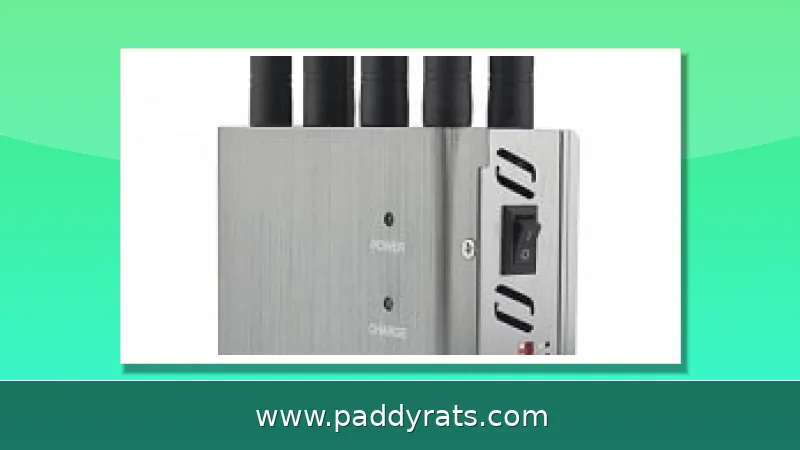
Most people picture something straight out of a spy movie, but in reality, a signal jammer is pretty unremarkable. The classic version looks like a walkie-talkie—one or more stubby antennas sticking up, a hard plastic body, and a simple power switch. Others are designed to pass as a cell phone or a wireless router, right down to the blinking status LEDs that make them blend in with normal networking gear. Since staying unnoticed is the whole point, manufacturers go out of their way to copy everyday objects instead of building some sci-fi-looking gadget.
Portable jammers are small enough to slip into a jacket pocket or a glove box, which is exactly why they keep turning up in vehicle break-ins and retail theft cases. Fixed jammers sit at the opposite end of the spectrum: bigger desktop boxes, sometimes rack-mountable, with a handful of antennas sticking out the back and a metal chassis that gets warm after it's been running for a while. Then there's the middle ground that makes them hardest to catch—units deliberately disguised as everyday objects. A smoke detector on the ceiling, a power strip tucked behind a desk, or a clock radio on a nightstand can all be jammers in disguise. That's the detail that really matters when you're trying to figure out whether one is sitting in the room with you.
How Signal Jammers Work: Denial-of-Service on Radio Frequencies
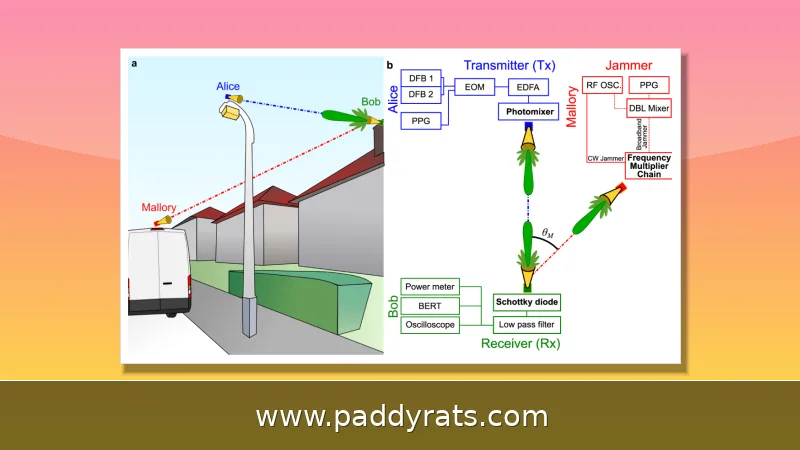
A jammer doesn't hack, crack, or break into anything at all. It just transmits a stronger signal on the same radio frequency the target device is using, drowning out the original signal so the receiver can't decode it anymore. You can think of it as a denial-of-service attack carried out over the air instead of across a network. The trick works because wireless protocols rest on one basic assumption: the strongest signal in a given channel has to be the legitimate one, so devices naturally lock onto it. Less sophisticated jammers only block a single frequency band, which is often enough to trick a phone into thinking no network exists at all.
How well a jammer actually works depends on a few practical things: its output power, how far away the target device is, what physical obstacles sit in between, and how strong the original signal was to begin with. A low-power device tucked inside a concrete building might barely reach a few rooms, since walls and reinforced floors soak up RF energy fast. A high-power model out in the open, on the other hand, can blanket a much larger area with interference. As for what they can take down, jammers can go after cellular networks like 2G, 3G, 4G, and 5G, WiFi and Bluetooth at 2.4 GHz and 5 GHz, GPS and tracking systems, and radio communications in the VHF and UHF bands. Multi-band devices handle several of these at once, which is why they're usually the go-to choice when someone needs wide coverage instead of blocking just one frequency.
Types of Signal Jammers: Portable, Fixed, and Multi-Band
The market basically breaks down into three categories, and what separates them comes down to size, power, and how many frequencies a single unit can handle at once. Portable jammers are the small, battery-powered ones — compact enough to slip into a pocket or a car's glove box, and designed for temporary or mobile use. That convenience is exactly why they show up so often in criminal cases. Fixed jammers are the opposite: they're permanently installed, run at higher power, and cover a much wider area, which makes them a good fit for offices, secure facilities, and correctional settings where you need constant coverage. Multi-band jammers fall somewhere in the middle. Instead of targeting just one frequency, they juggle several at once, so a single unit can take down phones, WiFi, and GPS together. In practice, that middle ground is what makes them appealing to people who want flexibility without committing to a full desktop setup.
If you look at the retail prices posted by Jammer Store, you get a sense of just how broad the market is—everything from pocket-sized gadgets to desktop setups that cost about as much as a used car. The table below pulls together a few representative models along with the prices the retailer advertises. Keep in mind these are vendor claims, not independently verified performance benchmarks.
How Much Do Signal Jammers Cost?
| Model | Type | Listed Price |
|---|---|---|
| Colibri Y3 (2.4/5.8 GHz WiFi and Bluetooth mini jammer) | Portable | $250.00 |
| GP5000 Car Anti-Tracking GPS Blocker | Portable | $119.99 |
| Albatross Pocket 3G (GPS) GSM Jammer | Portable | $179.00 |
| Alligator 10-band Jammer (10W) | Multi-band | $720.00 |
| Stalker 5G 12-band Portable | Portable multi-band | $850.00 |
| Altron-4 4-band Jammer (35W) | Portable multi-band | $840.00 |
| HPJ1000-5G Desktop | Fixed | $999.00 |
| HPJ20-H All-Frequency Desktop (20 bands, 130-5900 MHz) | Fixed | $2,190.00 |
| Spectrum Handheld Wide-Range Drone Jammer | Portable | $2,250.00 |
The pricing here follows a pretty simple logic: the more bands, the more output power, and the wider the frequency sweep, the higher the number goes. That's why a $120 GPS blocker and a $2,250 handheld drone jammer aren't really in the same league — they're designed for completely different threat models, whether that's hiding a vehicle's location or knocking a drone out of the sky. A $250 mini WiFi/Bluetooth jammer, a $720 ten-band unit, and a $2,190 desktop model with 20 bands covering 130 to 5900 MHz each land at different spots along that same curve. One thing worth remembering, though: none of those price tags tells you anything about legality. In the US, selling, advertising, or operating these devices is illegal regardless of what a storefront happens to list.
Signs a Signal Jammer Is Active Nearby
Figuring out whether a jammer is nearby is almost always a matter of inference, not direct detection, because ordinary consumer devices just aren't designed to "see" interference in the first place. With WiFi, the clues usually show up as a cluster rather than a single symptom: signal quality falls off, devices keep dropping their connection, latency creeps up, packets go missing, and bandwidth shrinks. What makes this pattern telling is that it tends to hit several devices at once instead of just one. A single laptop that can't stay online usually means a hardware issue, but an entire household or office losing WiFi simultaneously points to something outside the network. The wired-connection test is probably the most reliable giveaway here. If your Ethernet line keeps working fine while every wireless device is struggling, that's a strong hint you're dealing with radio interference rather than an internet outage — the router is still doing its job, it's the airwaves around it that are the problem.
If a cell jammer is active nearby, you'll usually notice it in a very specific way: several phones in the same spot suddenly lose service all at once, the signal bars bounce around, and calls drop even in places where coverage is normally rock solid. That last part is key. If only one device is having trouble, it's almost certainly that device — a bad SIM, a dying battery, a carrier outage — and not a jammer. As for apps that claim to detect jammers, they're mostly unproven, and since they need a working signal to do anything, they can't confirm a thing during an active blackout. The most reliable sign isn't any single symptom but a pattern: multiple devices, one location, and wired connections that keep working just fine.
Are Signal Jammers Legal in the United States?
No. Under federal law, it is illegal to sell, advertise, distribute, or operate cell signal jammers in the United States, and many other countries take a similarly strict stance. The FCC frames this as a public safety matter rather than a technical one: jamming equipment can knock out the communications people rely on during emergencies, and it can prevent 9-1-1 calls from going through at all. The underlying prohibition traces back to the Communications Act of 1934, which outlaws interference with authorized radio broadcasts. What surprises a lot of people is how broad the ban is — there are no exemptions for business, classroom, residential, or vehicle use, so a store owner, a teacher, a homeowner, or a driver is subject to the same restrictions as anyone else.
Local law enforcement lacks independent authority to operate jamming equipment, though federal agencies may be authorized in specific instances. Enforcement is not theoretical. Since 2021, Customs and Border Protection has reported roughly an 830% increase in signal jammer seizures. Los Angeles leaders and law enforcement have warned about burglars using WiFi jammers to disable home cameras and alarms. In June, the Department of Homeland Security reported jamming devices used in Vermont bank robberies, and in California, jamming devices were recovered in an attempted jewelry store robbery in La Verne.
How to Protect Yourself Against Cell and WiFi Jammers
The practical goal is reducing how much you depend on a single wireless link. Use wired connections for critical systems such as security cameras, alarm panels, and home office equipment, since Ethernet keeps working when the airwaves are flooded. Keep a landline or a secondary communication method available, and make sure your alarm system has cellular and internet paths rather than relying on WiFi alone.
If you suspect jamming, contact law enforcement or file a complaint with the FCC. Relocating helps when possible, because moving away from the interference source may restore reception, especially with low-power portable devices. Document what you observed, including times, affected devices, and whether wired connections still worked, since that pattern is what investigators and regulators need. Do not attempt to build or deploy your own jammer in response, as that would create a separate violation.
Can You Build a Signal Jammer Yourself?
Circuit designs do circulate. A cell phone signal jammer circuit published by ElectronicsForU uses an RF amplifier, a voltage controlled oscillator, and a tuning circuit, with common components such as resistors, capacitors, transistors, and an inductor. The design is described as blocking UMTS, 3G, CDMA, GSM, and PHS signals. For anyone curious about RF engineering, the schematic is educational, but the finished device is not something you can legally operate.
That distinction matters. Understanding how a voltage controlled oscillator sweeps a band explains why a cheap single-frequency jammer can fool a phone into showing no service, and why multi-band units cost more. It also explains why jamming is hard to detect from the affected device alone. The knowledge is legitimate; building and running the hardware in the US is not.
Frequently Asked Questions
What does a signal jammer typically look like?
A signal jammer usually resembles a walkie-talkie, a cell phone, or a wireless router. Portable models are compact and handheld, while fixed jammers are larger desktop units with multiple antennas. Some are disguised as everyday objects such as smoke detectors or power strips to avoid detection.
How can I tell if a signal jammer is nearby?
Common signs include dropped calls, loss of service on multiple devices, WiFi disconnections, high latency, and reduced bandwidth. Wired connections still work normally. If several devices are affected in an area with usually good reception, a jammer may be present, since a single faulty device would not explain the pattern.
Are signal jammers legal to own or use?
No. In the United States and much of the world, it is illegal to sell, advertise, distribute, or operate cell signal jammers. The FCC prohibits jamming equipment that interferes with authorized radio communications, including cellular, GPS, and police radar, and there are no exemptions for business, classroom, residential, or vehicle use.
What frequencies do signal jammers block?
Jammers can target cellular networks including 2G, 3G, 4G, and 5G, WiFi and Bluetooth at 2.4 GHz and 5 GHz, GPS and tracking systems, and radio communications in the VHF and UHF bands. Multi-band devices can manage several of these frequencies simultaneously, which is why they cost more than single-band units.