Signal jammer seizures in the U.S. have surged roughly 830% since 2021, and WiFi jammers are now a real burglary tool. Here is how to read the symptoms, pick the right detector, and stay on the right side of federal law.
What Is a Signal Jammer and How Does It Work?
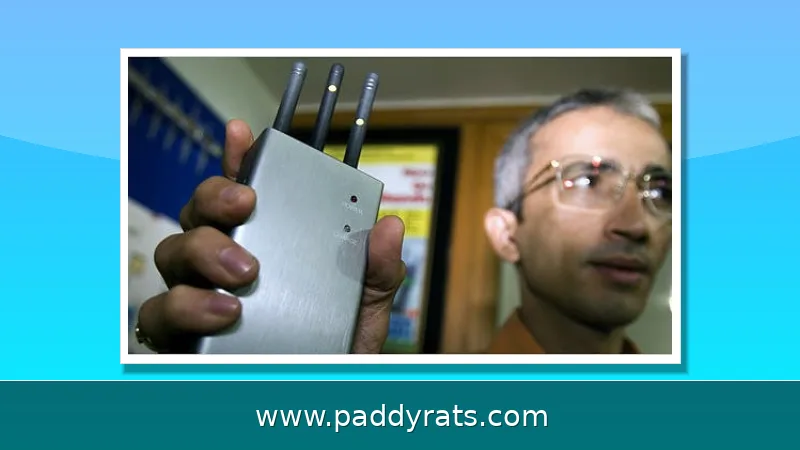
A signal jammer is essentially an RF transmitter that overpowers the frequencies your phone, WiFi router, GPS receiver, and Bluetooth devices depend on. Cell jammers send out electromagnetic signals on the same bands your phone uses to talk to a tower, so instead of a control channel, the handset just gets noise. WiFi jammers pull a similar move on 2.4 GHz and 5 GHz — the bands your local network runs on — pumping out enough RF to create digital noise that keeps wireless devices from reaching the router. You'll see this go by plenty of names: signal blocker, text stopper, GPS jammer, RF jamming, deauthentication attack, denial-of-service attack. Different labels, same basic trick.
The physics here isn't all that complicated, even if it feels that way when your phone suddenly goes dead. A jammer puts out an RF signal that's stronger than whatever's reaching you from the nearest cell tower, but on a similar frequency. Your phone is basically always hunting for the best connection, so it latches onto the stronger signal—and the tower's weaker one gets buried underneath it. Here's where people usually get confused: since jamming targets the downlink signal, the tower-to-phone direction, your phone doesn't show an error. You just get zero bars, as if you've wandered into some dead zone. For a jammer to pull this off reliably, it has to be loud, wide, and running most of the time—three requirements that, ironically, make the device stand out in ways its operator probably never thinks about. After all, that same loudness and persistence are exactly what let the right equipment pick it out from the background noise.
The range is smaller than most people think, and that single fact should change how you approach this whole issue. Wilson Amplifiers puts typical jamming coverage at around 30 square feet — roughly one room, or a parked car. Not a city block. So in practice, a jammer is a localized tool. Whoever's running one has to be close enough to your phone, router, or GPS receiver to overpower the legitimate signal, because the interference falls off fast with distance. That leads to two practical points. First, it explains why walking a few dozen feet away, or just stepping outside, can bring your bars back — you've moved out of the jammer's small cone of influence. Second, it tells you where to look: the source is almost always physically near you. Could be the next room, a neighboring apartment, or a car parked outside. It's also a good reality check. If your reception dies across an entire neighborhood at the same moment, a jammer is a much less likely explanation than a carrier outage, a downed tower, or some broader network problem. Those hit wide areas. Jammers only affect whatever falls inside their short reach.
How Common Is Jamming, and Why Does It Matter Now?
This is not some hypothetical threat. Since 2021, U.S. Customs and Border Protection has reported roughly an 830% jump in signal jammer seizures, and that number starts to make sense once you realize how cheap and easy these devices are to get. Over the past year, Los Angeles officials, law enforcement, and security experts have all warned about the same growing trend: burglars using WiFi jammers to knock out home cameras and alarms before breaking in. In June, the U.S. Department of Homeland Security reported that jamming devices were used in several Vermont bank robberies. And in La Verne, California, jamming equipment turned up after an attempted jewelry store robbery.
You start to notice the same story repeating: jammers pop up wherever someone wants to blind wireless security cameras, silence a GPS tracker, or cut off communications during a crime. And it's not just a big-city problem anymore. Since 2021, U.S. Customs and Border Protection has logged roughly an 830% jump in signal jammer seizures. Over the past year, Los Angeles officials, law enforcement, and security experts have all warned about burglars using WiFi jammers to hit homes. Then there were the several Vermont bank robberies involving these devices that the Department of Homeland Security reported in June, plus an attempted jewelry store robbery in La Verne, California. For homeowners and small businesses, the takeaway is uncomfortable but simple: if your camera system runs on WiFi alone, it has a single point of failure, and a thief with a $50 jammer can exploit it. A wired connection or cellular backup won't solve everything, but it closes off the easiest attack path. Spotting the symptoms below is your first chance to figure out something's wrong before it turns into a loss.
What Are the Common Signs a Jammer Is Operating Nearby?
The biggest giveaway is when several devices stop working at the same time. If your phone, your partner's phone on a different carrier, and the WiFi thermostat all act up within the same minute, then faulty equipment starts to look like a pretty weak explanation. Signal bars that jump erratically between full and none are another classic tell, since a jammer is essentially fighting the tower for control rather than just being out of range. You might also notice a faint high-pitched whine or buzzing sound from some jammers, but don't count on that—it's not reliable enough to depend on.
Physical observation still matters a lot, especially when your devices aren't giving you anything useful to go on. Watch for unauthorized box-like devices with an antenna—perched on a roof, tucked inside a building, or sitting in a parked car that just happens to face your property. For a jammer to work, it has to be loud, wide, and on most of the time, so the hardware itself is often not hidden very well. That said, don't jump to conclusions. A dropped connection can just as easily come from faulty equipment, routine network maintenance, physical obstructions like thick walls, lawful devices sharing the same frequencies, cell tower problems, or a plain device fault. Before you assume someone is jamming you, confirm that several devices are affected at once, and write down the exact time window. That way you have something concrete to hand to your carrier, law enforcement, or the FCC.
WiFi Jammer vs Cell Phone Jammer: How Do the Symptoms Differ?
WiFi jamming and cell phone jamming can look like the same problem when your screen goes dead — nothing loads, calls drop, and every wireless device you own seems to fall apart at once. But dig into the details and the two split in ways that actually matter. A WiFi jammer floods the 2.4 GHz and 5 GHz bands your router depends on, so your laptop, smart TV, and security cameras lose their connection even when you're standing right next to the router — meanwhile, anything wired in with an Ethernet cable keeps running like nothing happened. A cell jammer works differently: it targets the downlink signal coming from the tower, which is why your phone shows zero bars, or bars that bounce around wildly between full and nothing, usually across several phones of different models and carriers at once. Figuring out which pattern you're looking at narrows down the culprit pretty quickly. The table below sums up the symptoms I check first whenever a client calls about a dead network.
| Symptom | WiFi Jammer | Cell Phone Jammer |
|---|---|---|
| Signal behavior | WiFi strength drops or vanishes even near the router | No visible signal bars; bars fluctuate erratically |
| Connection pattern | Devices repeatedly disconnect and reconnect | Loss of service on multiple phones at once |
| Speed and latency | High latency, packet loss, reduced bandwidth | Calls and texts fail; data stalls |
| Wired devices | Ethernet connections keep working normally | Not applicable; jamming targets the tower link |
| Other wireless gear | Affected WiFi devices only | WiFi routers, Bluetooth, and other wireless devices also become unstable |
| Scope of impact | Wireless devices on the local network | Multiple phones of different models and carriers |
| Symptom | WiFi jammer | Cell phone jammer |
|---|---|---|
| Signal quality | WiFi strength drops or vanishes even next to the router | No service in an area with normally good reception |
| Connection behavior | Wireless devices repeatedly disconnect and reconnect | Bars jump erratically between full and none |
| Performance | High latency, packet loss, reduced bandwidth | Calls drop, texts fail, data stalls |
| Wired devices | Ethernet-connected devices keep working normally | Not applicable |
| Scope | All WiFi clients in range affected | Multiple phones of different models and carriers affected |
The simplest test is also the cheapest: see what's wired and what's wireless. Jammers only interfere with wireless transmissions—they flood the airwaves with noise, not the cables running through your walls—so anything connected via Ethernet should keep working normally while everything on WiFi falls apart. That gap tells you a lot. If your wired desktop still loads pages fine but your laptop, phone, and smart TV all choke at the exact same moment, you're probably looking at interference rather than an internet outage, a dying router, or a problem on your provider's end. With cell service, the pattern is wider. Pay attention to whether other wireless devices start acting up at the same time. When a WiFi router and Bluetooth peripherals—headphones, a mouse, a speaker—all misbehave together, that points toward wideband RF interference, not a tower issue tied to one carrier. A jammer strong enough to kill cell service often bleeds into neighboring bands, so that collateral damage becomes a signature all its own.
Which Detection Tools Actually Work?
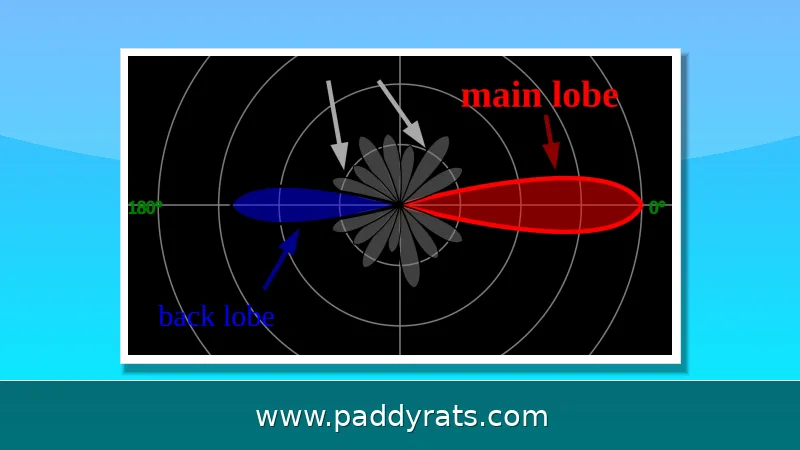
When you need to pinpoint a jammer rather than just suspect one, a spectrum analyzer is the professional-grade answer. These instruments sweep the radio spectrum and display every signal present as a trace on a waterfall plot, so a jammer shows up as a bright, unmistakable beacon that stands out from the surrounding noise floor. Attach a directional antenna — a Yagi, for instance — and you can walk the signal down to its source, watching the reading climb as you close in. The catch is that spectrum analyzers are not consumer products, and reading the display takes real skill: you need to know which spikes are normal (broadcast towers, Wi-Fi access points, garage openers) and which are not, which is why most people rent one along with a trained operator rather than buy their own. Software Defined Radio (SDR) is the affordable middle ground. A $20 RTL-SDR USB stick paired with free software can reveal suspicious bumps in the noise level, giving you a rough sense that something unusual is on the air. Step up to a HackRF One and you can turn it into a smart spectrum analyzer that learns what your RF environment normally looks like, then flags hidden noise that does not belong — a far more practical option for someone who wants to experiment without a lab budget.
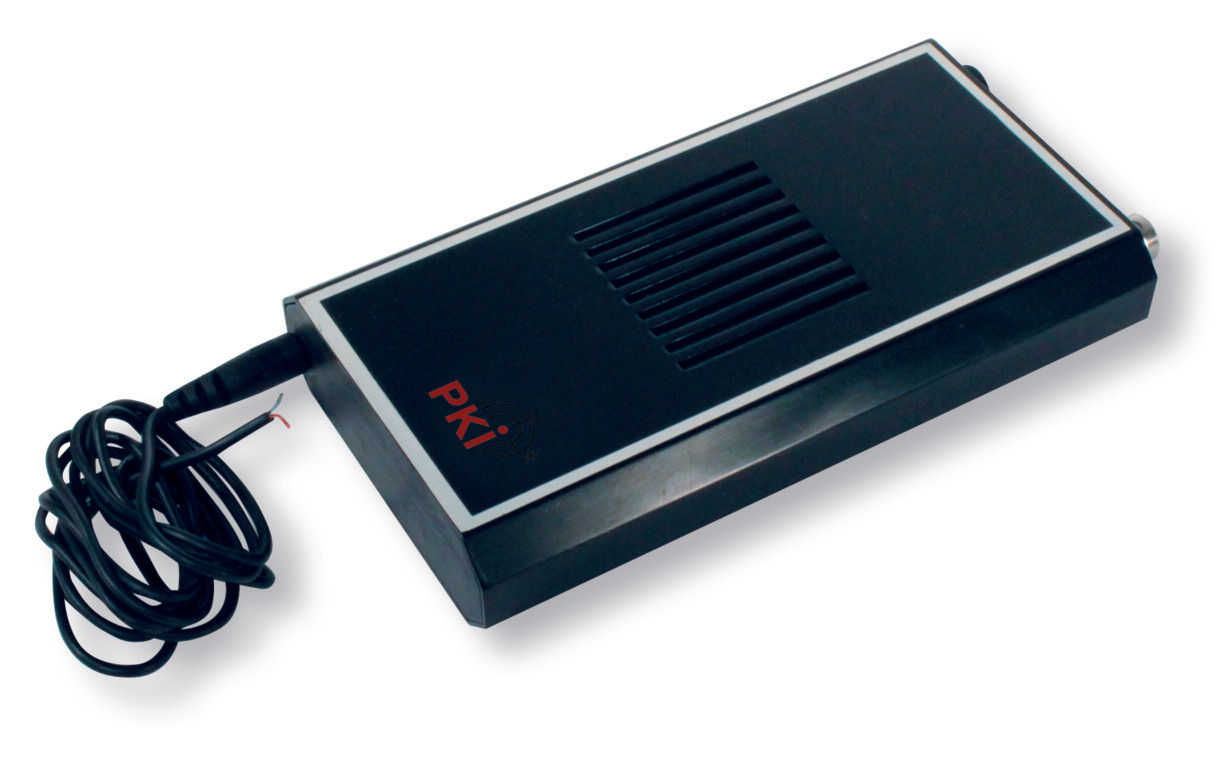
If you need to hunt for a jammer on the move, a wide band field strength meter hooked up to an antenna can do the trick from your car: as you drive, the meter's readings will spike when you get close to a source, and circling a parking lot or city block a few times lets you triangulate roughly where that source is hiding. That said, purpose-built commercial detectors take a lot of the guesswork out of this. Take the Digitpol GSM Jammer Detector, a wall- or pole-mounted, cloud-based module that keeps an eye out for 2G, 3G, 4G, and 5G jamming, GPS, GLONASS, and GALILEO interference, WiFi and Bluetooth jamming, and even IMSI catchers and rogue base stations. When it catches something, it can alert you by SMS, email, API, or portal. The unit is waterproof, runs on an internal 24-hour backup battery with an optional one-month rechargeable pack, and works in temperatures from -15C to +55C. It also supports a configurable siren output and lets you export logs as CSV and PDF, which is handy if you need to hand evidence to law enforcement or a carrier.
There is also a consumer-grade option worth knowing about. The Wi-Fi Jammer Detector is a small Ethernet-connected device that monitors WiFi and RF signals and alerts on nearby WiFi jammers, paired with an iOS app (Eye LLC, 30.6 MB, 4.8 rating). The important caveat is that the app alone will not detect jamming: the detector must be wired to the main router or switch, not to a wireless node, or it is monitoring the very link that is under attack. A concept called J911 points in the same direction, since phones closer to the jamming source see a higher jamming-to-noise ratio than phones farther away.
Why Do Apps Alone Usually Fail to Detect Jamming?
Apps that claim to detect signal jammers are largely unproven, and the reason is structural rather than a matter of bad coding. A detection app needs a working signal to compare against, and a jammer's whole job is to remove that baseline. If the phone cannot reach the tower or the access point, the app has nothing to measure, so it either reports nothing or reports a generic connection error. The Wi-Fi Jammer Detector app is honest about this: it only works alongside a separate Ethernet-connected detector device.
There is a second problem. Consumer phones do not expose raw RF data to third-party software, so an app can only infer from connection state, latency, and error rates, all of which have many innocent explanations. That is why I treat app-only claims as a red flag. If you want real confirmation, you need hardware that samples the spectrum directly, whether that is an SDR, a field strength meter, or a purpose-built detector wired into your network.
What Are the Legal and Safety Risks of Jamming?
In the United States, federal law prohibits operating, marketing, or selling jamming equipment that interferes with authorized radio communications, including cellular and PCS, police radar, and GPS. The FCC enforces this with fines that can reach up to $11,000 per violation, plus equipment seizure and criminal sanctions including imprisonment. There are no exemptions for businesses, classrooms, residences, or vehicles. The Communications Act of 1934 separately outlaws interference with authorized radio broadcasts, and local law enforcement lacks independent authority to run jamming gear, though federal agencies may be authorized in some instances.
The legal asymmetry is worth remembering: cell phone detectors are legal in the U.S., while jammers are not. Other countries have moved differently. Brazil, New Zealand, and Sweden have considered correctional-facility exceptions, and the UK has used jammers in law enforcement, intelligence, and prisons since 2012 under strict regulation. If you believe you are being jammed, contact your wireless network provider and law enforcement, or file a complaint with the FCC by selecting Interference and then Signal Jammers in the Phone Issues box. Relocating may restore reception given the short jamming range, but signal boosters do not stop jammers.
What Should You Do If You Suspect Jamming Right Now?
Start with the cheapest test: switch to a wired connection or move 50 to 100 feet away from where the problem begins. Because jamming range is usually no more than about 30 square feet, distance alone often restores service and confirms the diagnosis. Next, document everything. Note the exact times, which devices failed, which carriers were affected, and whether Ethernet devices kept working. That record is what turns a vague complaint into something a carrier or the FCC can act on.
Then escalate. Report the issue to your wireless provider so they can check for local tower problems, and file with the FCC if the pattern repeats. For property owners, the practical fix is redundancy: keep cameras and alarms on wired connections where possible, add a cellular backup path, and treat any single wireless link as a weak point. Jammers are illegal, but the people using them are counting on you never noticing until it is too late.
Frequently Asked Questions
How do you know if someone is using a signal jammer?
Losing cell or WiFi connection is an initial sign a jammer may be nearby. Stronger indicators include multiple phones on different carriers losing service at once, signal bars fluctuating rapidly, and wired Ethernet devices still working normally while wireless ones fail. Confirm several devices are affected before assuming jamming.
Can a phone app detect a signal jammer?
Apps claiming to detect signal jammers are largely unproven and require a working signal to function. The Wi-Fi Jammer Detector app only works with a separate Ethernet-connected detector device; the app alone will not detect jamming, because a phone cannot sample raw RF data directly.
What tools can detect a cell phone jammer?
A spectrum analyzer can reveal jamming signals, and a directional antenna can help locate the source. A wide band field strength meter connected to an antenna may also indicate a nearby jammer, and an SDR stick can show suspicious noise-level bumps. These tools are not consumer products and require skill to interpret.
Are signal jammers legal?
No. In the United States, federal law prohibits operating, marketing, or selling jamming equipment that interferes with authorized radio communications, including cellular, PCS, police radar, and GPS. There are no exemptions for businesses, classrooms, residences, or vehicles, and FCC fines can reach up to $11,000 plus equipment seizure.