Vehicle mounted signal jammers are mobile RF systems built to protect convoys, VIPs, and counter-IED teams by blanketing a wide frequency range with noise. Here is how they work, what the specs really mean, and where the law draws the line.
What Is a Vehicle Mounted Signal Jammer?
A vehicle mounted signal jammer is basically a mobile RF denial system—it moves with whatever it's protecting. Rather than covering a single room or building, it uses the vehicle's roof, mast, or body to push out interference across cellular, satellite, GPS, Wi-Fi, and two-way radio bands all at once. The idea is straightforward: cut off the clean signal that a remote trigger, tracker, or drone link needs to work.
"Vehicle mounted signal jammer" is really just an umbrella term, and the hardware it covers spans a huge range. On one end you've got military-grade convoy jammers like the L3Harris CREW Vehicle Receiver/Jammer (CVRJ), which was fielded during Operation Iraqi Freedom and Operation Enduring Freedom for counter-IED work. These are built to military standards, reprogrammable without any hardware changes, and designed to protect a moving column from remotely triggered roadside bombs. On the other end are the cheap GPS jammers that commercial fleet drivers and ordinary motorists sometimes pick up, hoping to hide their location from a dispatcher or a tracking app. That's where the legal trouble starts, because GPS interference is illegal in most places and can spill over into aviation and emergency services. Sitting between those two extremes is a whole vendor landscape — L3Harris, SESP, YTS Systems, Phantom Technologies, Alasartech, Tactical Supply Pakistan, SOVSYS, SRC Inc., and Stratign — each one aiming at a different mix of frequency coverage, output power, and price.
How Does a Vehicle Mounted Signal Jammer Work?
At its core, a vehicle mounted signal jammer does exactly what the name implies: it drowns out the radio conversation an attacker is trying to have. The system deliberately creates artificial radio interference. A transmitter produces high-frequency RF signals, and an antenna aims that energy at whichever bands you want knocked off the air. Every module inside the unit emits its own distinct noise signal, so what you get isn't a single tone but a thick wall of competing energy. Engineers like to describe the result as a firewall sitting between a remote transmitter and its receiver — the receiver picks up so much garbage that the command link never goes through. In counter-IED work, that broken link is everything: the jammer stops a radio-controlled improvised explosive device (RCIED) from ever getting its activation signal, which is exactly why these systems form the backbone of convoy protection and route clearance missions.
Signal generation in a vehicle mounted jammer isn't just about blasting static at whatever's nearby—it's a lot more calculated than that. Multi-VCO chains push a high sweep rate and high RF density, so the interference moves fast enough to keep up with frequency-agile radios. Behind that sweep sit PLL and DDS synthesized signal sources, which keep the output stable and repeatable from one burst to the next instead of letting it drift. Then FM hopping and sweep modulation spread the energy across the band, so a receiver can't just hop to a clean channel and get away. As for range, the math comes down to one simple relationship: average power per MHz equals total power divided by bandwidth. Squeeze that energy into a narrower band and you get longer range; go with barrage jamming and you spread the same energy wide, trading reach for coverage.
| Jamming Approach | Energy Distribution | Effect on Range | Effect on Coverage |
|---|---|---|---|
| Concentrated (narrowband) | High power per MHz | Longer range | Narrower band covered |
| Barrage (wideband) | Lower power per MHz | Shorter range | Wide band covered |
Modern protocols don't just sit there and take it. FHSS, DSSS, and proprietary digital waveforms are built to resist interference, which means a jammer has to ramp up RF density faster than the target link can adapt. That's really the whole reason sweep mode exists.
Key Specifications: Power, Frequency, and Range
Spec sheets in this category are a pain to compare, mainly because no two vendors seem to quote the same thing. One will advertise total RF power, another per-band power, a third just lists module counts, and a fourth gives you a shield radius measured under perfect conditions — open sky, no obstacles, weak target signal. So a 350 W kit and a 1,535 W unit aren't automatically 4x apart in real-world performance, since range really comes down to how that energy gets spread across bands. The table below gathers published figures from several systems, from the 30-amp L3Harris CVRJ all the way to the 1,800 W sweep mode on the YTS vehicle, so you can actually see how wide the spread runs in power, frequency coverage, range, weight, and power draw.
| System | Total RF Power | Frequency Coverage | Jamming Range | Weight | Power Draw / Source |
|---|---|---|---|---|---|
| L3Harris CVRJ | Not published (reprogrammable) | Not published (C-IED bands) | Not published | Approx. 69 lbs | Up to 30 A (listed 36 A, 22–30 V) |
| SESP JAMKIT | 350 W | Cellular, satellite, VHF/UHF, WLAN/WiFi/Bluetooth | Not published | Kit in one large or two smaller Pelican cases | Not published |
| YTS Systems Jammer Vehicle | Up to 1,800 W in sweep mode | 20 MHz – 6,000 MHz (26 bands) | Not published | 4x4 vehicle platform | Independent energy system up to 20 kW |
| Phantom Technologies RCJ1390LT-I | Up to 1,535 W | Up to 21 modules; cellular bands 5–200 W | 200–300 m (standard environment) | Approx. 140 kg | Not published |
| Alasartech AAT-JVIP-D14 | 1,265 W (14 channels) | 20 MHz – 6,000 MHz | 150–600 m (signal dependent) | Approx. 100 kg | Approx. 2,800 W; 110 AH/24–28 VDC or 220 VAC |
| Tactical Supply Pakistan (AT-505) | Up to 320 W | 20 MHz – 6,000 MHz (20 bands; seamless 8 MHz – 6,500 MHz) | 70 m+ (mobile), 500 m+ (drone control), 60 m (two-way radio), 100 m+ (unmanned vehicle remotes) | Not published | Below 1,300 W |
| JAMMER-STAR | Not published | 800 MHz – 3,000 MHz | 100–200 m radius | Not published (modular) | Battery or AC |
| SOVSYS Dual-Force Vehicle | Not published | Not published | Not published | Not published | Avg. 480 W; 12 VDC or 100–220 VAC |
| System | RF Output / Power Draw | Frequency Coverage | Jamming Range |
|---|---|---|---|
| L3Harris CREW CVRJ | Up to 30 A vehicle power (listing cites 36 A, 22-30 V) | Reprogrammable without hardware changes | Convoy protection envelope |
| SESP JAMKIT | 350 W total RF | Cellular, satellite, VHF/UHF, WLAN/Wi-Fi, Bluetooth | Kit-based, antenna dependent |
| YTS Systems Jammer Vehicle | Up to 1,800 W sweep; 20 KW independent energy | 20 MHz to 6,000 MHz, 26 bands | 360-degree omni coverage |
| Phantom RCJ1390LT-I | Up to 1,535 W | Up to 21 modules | 200 m to 300 m standard |
| Alasartech AAT-JVIP-D14 | 1,265 W RF; ~2,800 W draw | 20 MHz to 6,000 MHz, 14 channels | 150 m to 600 m |
| Tactical Supply AT-505 | 320 W RF; under 1,300 W draw | 20 MHz to 6,000 MHz, 20 bands, SDR-based | 70 m cellular; 500 m+ drone control |
Honestly, physical and environmental specs are what determine whether a jammer actually survives out in the field, not just on a spec sheet in some lab. Take the L3Harris CVRJ — it comes in at around 69 lbs and measures 13"H x 14"W x 19"D. That's small enough to fit into a vehicle bay without too much fuss, but still heavy enough that you can't just slap it in there with any old mounting hardware. Phantom's RCJ1390LT-I is a completely different beast: roughly 140 kg packed into a 500 x 430 x 176 mm chassis, with a rated operating range of 10C to +65C and 5% to 80% humidity. So it handles heat just fine, but don't expect it to be happy in serious cold. Alasartech's AAT-JVIP-D14 falls somewhere in the middle — about 100 kg, dimensions of 625 x 510 x 700 mm, and a wider -20C to +55C range with 5% to 90% humidity. That broader tolerance says a lot about where it's meant to be deployed, namely places with tougher climates. Then there's the JAMMER-STAR system, which goes narrower instead: 800 MHz to 3,000 MHz with a 100 to 200 meter radius. That setup makes more sense for smaller vehicles where every inch of space and every pound of weight actually matters.
| Model | Weight | Dimensions | Operating Temp | Humidity | Frequency / Range |
|---|---|---|---|---|---|
| L3Harris CVRJ | ~69 lbs | 13"H x 14"W x 19"D | — | — | — |
| Phantom RCJ1390LT-I | ~140 kg | 500 x 430 x 176 mm | 10C to +65C | 5% to 80% | — |
| Alasartech AAT-JVIP-D14 | ~100 kg | 625 x 510 x 700 mm | -20C to +55C | 5% to 90% | — |
| JAMMER-STAR | — | — | — | — | 800–3,000 MHz; 100–200 m radius |
Zoom out and you'll notice the specs don't stay in one place for long. Output power ranges from 320 W on the low end up to 1,535 W, and frequency coverage stretches from 20 MHz all the way to 6,000 MHz. Jamming range? Anywhere from 70 m to 600 m, depending on the unit and the conditions. Some systems pack as many as 21 modules, while operating temperatures hold steady between -20C and +65C. Then there's the weight question—it runs from a relatively manageable 69 lbs to a hefty 140 kg—and power draw, which spans 480 W to 2,800 W. For some market context, the global signal jammer market was valued at USD 4.61 billion in 2025, and it's projected to climb from USD 4.98 billion in 2026 toward USD 9.27 billion.
Convoy Protection and Counter-IED Applications
Convoy protection is where vehicle mounted jamming got its start, and it remains the mission that drives most of the design decisions you see in today's systems. The idea is straightforward: a convoy jammer travels with the lead or command vehicle and throws up a protective RF bubble around the whole column, so a remote triggerman hiding somewhere along the route can't push the signal that would arm an RCIED as the vehicles roll past. Two systems are treated as the reference designs in this space — L3Harris's CREW Vehicle Receiver/Jammer (CVRJ) and SRC Inc.'s AN/VLQ-12 CREW Duke. The CVRJ is a good example of how these units are built for real vehicles rather than clean lab benches: it pulls up to 30 amps of vehicle power, weighs roughly 69 pounds, and measures 13"H x 14"W x 19"D, yet it can be reprogrammed without any hardware changes, which matters when the threat evolves faster than a supply chain can move. Both systems were shaped by actual combat deployments — the CVRJ saw service in Operation Iraqi Freedom and Operation Enduring Freedom — so their specs reflect dust, heat, vibration, and the constant pressure to stay ahead of insurgent trigger designs rather than idealized test conditions.
Counter-IED work is what shapes these systems more than anything else. The threat set is broad and unpredictable: a trigger device might talk over VHF or UHF, ride a cellular network, or use a modified commercial remote that no one saw coming. That reality pushes designers toward wide, seamless coverage across many bands rather than deep power on just a few, since a gap anywhere in the spectrum is a gap an attacker can exploit. The second priority is agility. Threat waveforms evolve faster than procurement cycles can keep up with, so a jammer that needs new hardware every time the enemy changes frequency quickly becomes obsolete. Field reprogrammability solves that problem — operators can update the threat library on the spot, which is precisely why the CVRJ was built to be reprogrammed without any hardware changes.
VIP convoy protection jammers follow the same logic with different packaging. Alasartech's AAT-JVIP-D14, for example, offers full-band seamless shielding from 20 MHz to 6,000 MHz with 14 channels and a built-in 110AH/24-28VDC or 220VAC battery, plus VSWR, over-voltage, over-current, and over-temperature protection.
Drone and unmanned vehicle threats have pushed vehicle mounted jammers into a broader mission set than convoy escort alone. Alongside the familiar counter-IED role, crews now expect these systems to cut off the command links that keep UAVs and remote-controlled platforms flying. That is exactly where the Tactical Supply Pakistan unit fits: it is software-defined radio (SDR) based, so its behavior lives in firmware and software rather than fixed hardware, and the company positions it against several threat classes at once. According to the published figures, it interferes with mobile communication beyond 70 meters at an RSRP of -90 dBm, two-way civilian radios up to 60 meters, unmanned vehicle remotes over 100 meters, and drone control links beyond 500 meters. The spread in those distances is telling. A drone command link sitting at higher altitude and a stronger signal budget can be reached much farther out than a handheld radio hugging the ground, where terrain, buildings, and vehicle bodies eat into the jamming energy. In practice, that means a jammer vehicle can screen a moving convoy from a mix of threats without needing a separate system for each one, though the actual numbers will shift with the local RF environment.
GPS Jammers and Fleet Impact
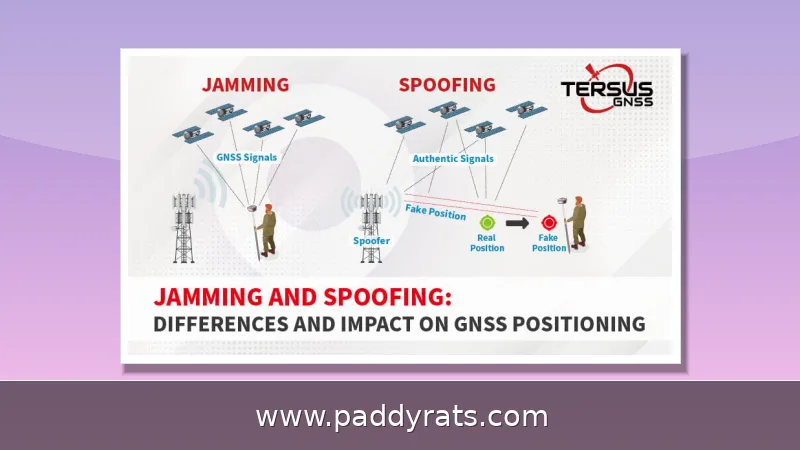
Commercial interest in vehicle mounted jammers usually centers on GPS, and that is the most legally dangerous use case. A GPS jammer or GPS blocker interferes with satellite positioning, which means it does not just hide one vehicle. It can degrade GPS-derived timing and positioning for every receiver in the area, including aviation, emergency services, and financial timing systems.
Fleet telematics is the other pressure point. Telematics jammers are marketed to drivers who want to defeat Verizon Connect-style tracking, mileage logging, or geofencing. From an operations standpoint, that breaks dispatch, safety scoring, and hours-of-service compliance, and it can void insurance coverage. From a regulatory standpoint, it is squarely illegal in the United States and Canada.
There is also a practical reliability problem. GPS jamming is easy to detect from the ground and from spectrum monitoring, and a jammer that stays on while parked becomes a beacon. In my experience reviewing these deployments, the operational cost almost always exceeds whatever privacy benefit the operator thought they were buying.
Are Vehicle Mounted Signal Jammers Legal?
In the United States and Canada, GPS jammers are illegal to operate, market, sell, or ship. The FCC states that unauthorized RF jammer users may face civil penalties, equipment seizure, and criminal sanctions. Making or selling a signal jammer in some jurisdictions can lead to up to five years in prison or an unlimited fine.
Government, military, and authorized law enforcement users operate under separate authority, which is why the CREW-family systems exist at all. For everyone else, the answer is no. There is no consumer exemption for "privacy," no carve-out for fleet vehicles, and no protection for importing a unit for personal use.
My practical advice for anyone evaluating this category: confirm the legal basis before you confirm the spec sheet. If a vendor cannot explain the authorization pathway in writing, that is the answer. Nothing in this article is legal advice, and the rules vary by country and change over time.
What Does It Take to Install and Operate One?
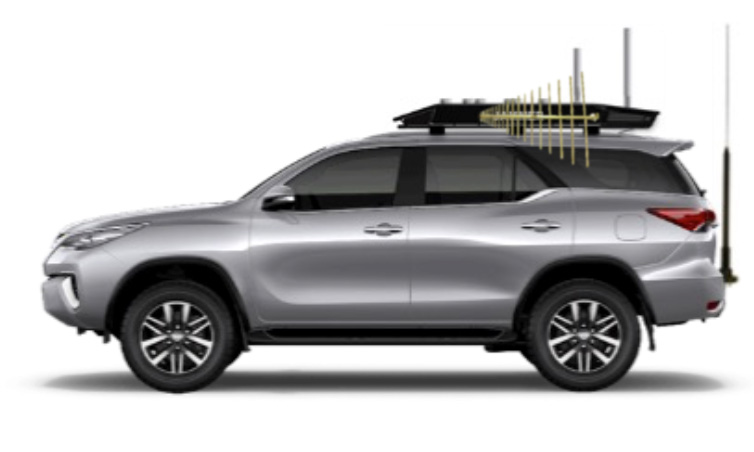
Installation follows a consistent pattern across platforms. Antennas mount on the vehicle roof or a mast for line-of-sight coverage, and the system connects to the vehicle battery or an external supply. A wired remote control panel lets the operator switch individual modules on and off, which is how you avoid jamming your own communications.
Mode selection is the second step. Operators choose sweep or barrage mode, spot mode, or an open communication window. Phantom's RCJ1390LT-I, for example, offers Sweep/Barrage, Spot with 4 of 10 pre-programmed frequencies, and an Open Communication Window with 6 pre-programmed options, with cellular band output adjustable from 5 W up to 200 W and remote start from 50 meters.
Power and thermal management decide whether the system survives a long mission. YTS Systems pairs its jammer vehicle with an independent energy system up to 20 KW and full climate control. Alasartech uses a systematic smart cooling system. SOVSYS's Dual-Force Vehicle runs on a 12VDC battery or 100-220VAC 50Hz external supply with average consumption around 480 W. Monitor battery level and supply status on the LCD panel, and keep the cooling path clear for continuous operation.
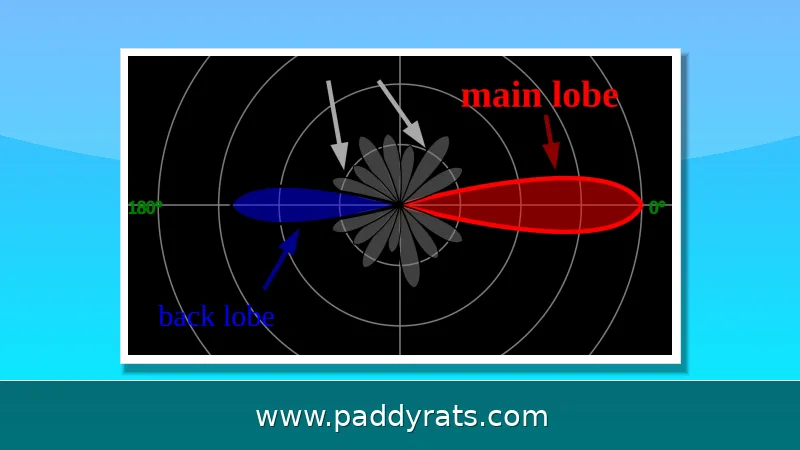
Antenna choice drives the coverage shape. SESP's JAMKIT ships with 5/8 high-gain omni-directional antennas and a wired remote in one large Pelican case or two smaller cases, while YTS uses omni-directional antennas for 360-degree protection. Omni coverage protects against threats from any direction, but it also means you cannot aim energy where you need it most.
What Are the Trade-Offs and Limitations?
The advantages are real: mobile high-power multi-band protection, modular construction that allows separate frequency control and future upgrades, omni-directional 360-degree coverage, independent battery banks and upgraded alternators for self-supporting energy, and heat evacuation systems that maintain thermal stability. Modularity is the most underrated of these, because it lets a unit grow as the threat evolves.
The limitations are equally real. Jamming radius depends on transmitter frequency, output power, distance to the receiver, and obstacles, so a 600-meter claim is a best case, not a guarantee. High power consumption strains vehicle electrical systems, and continuous operation demands serious cooling.
Legal restrictions remain the hardest constraint in many jurisdictions. A system that is legitimate for a military convoy is prohibited for a commercial fleet, and the hardware does not know the difference. Buyers should treat authorization as a design requirement, not an afterthought.
How Do You Compare Vehicle Mounted Jammer Systems?
Start with the threat, not the wattage. If the mission is RCIED defense, prioritize seamless wideband coverage and reprogrammability. If the mission is drone denial, prioritize the specific control bands and detection integration. If the mission is VIP protection, prioritize thermal management, battery independence, and a clean remote control interface.
Then compare the numbers that actually translate to performance: average power per MHz rather than headline total power, module count and per-band adjustability, antenna gain and pattern, and the environmental rating for your operating region. A 320 W SDR-based system and a 1,535 W modular system can produce very different results depending on how that energy is distributed.
Finally, verify the supply chain and support model. Field-reprogrammable firmware, spare modules, and documented protection features such as VSWR and over-temperature cutoffs matter more over a five-year deployment than a single impressive spec.
What Happens If You Put a Jammer in Your Car?
If the device transmits RF interference, you are operating an unauthorized jammer in most countries, including the United States and Canada, where GPS jammers are illegal to operate, market, sell, or ship. The FCC warns of civil penalties, equipment seizure, and criminal sanctions. Practically, you also degrade GPS and cellular service for nearby users, including emergency and aviation systems, and you risk your own vehicle's telematics and warranty coverage.
How Far Can a Signal Jammer Work?
Published ranges run from about 70 meters to 600 meters, but those figures assume favorable conditions. Phantom Technologies lists 200 m to 300 m for its RCJ1390LT-I at standard environment, while Alasartech quotes 150 m to 600 m depending on signal strength. Real range depends on output power, frequency, antenna gain, the strength of the target signal, and obstacles between the jammer and the receiver.
What Is the Purpose of a Jammer Vehicle?
A jammer vehicle exists to carry high-power multi-band RF denial equipment wherever protection is needed. Military and government users deploy them for convoy protection and counter-IED defense, denying remote triggers the signal they need to detonate an RCIED. VIP protection teams use them to shield movements, and some designs extend to drone control links and unmanned vehicle remotes.
How Do Radio Jammers Work?
Radio jammers transmit artificially created RF noise on the same bands a target receiver uses, raising the noise floor until the intended signal cannot be distinguished. Modules generate unique noise signals through multi-VCO chains and PLL or DDS synthesis, sweeping bands at high speed to raise RF density. That creates a firewall between the remote transmitter and its receiver, preventing the link from completing.
Do Modern Digital Radios Resist Jamming?
Yes, to a degree. FHSS, DSSS, and proprietary digital protocols are designed to resist interference by hopping frequencies or spreading energy across a wide band. That is why jammers rely on high sweep rates and high RF density rather than a single strong tone, and why barrage versus targeted jamming becomes a real tactical trade-off. Concentrated energy in a narrow band reaches farther, but wide coverage catches more threat waveforms.
Frequently Asked Questions
How does a vehicle mounted signal jammer work?
It transmits high-power radio frequency noise across targeted bands, creating a firewall between a remote transmitter and its receiver. Modules generate unique noise signals via multi-VCO chains and PLL/DDS synthesis, sweeping bands at high speed to raise RF density and prevent activation of radio-controlled improvised explosive devices.
What frequency range do vehicle mounted jammers cover?
Coverage varies by model. YTS Systems blocks 20 MHz to 6,000 MHz sequentially, including HF, VHF, UHF, SHF, cellular, satellite, GPS, and Wi-Fi. Tactical Supply Pakistan lists 20 MHz to 6,000 MHz across 20 RF channels, while the JAMMER-STAR system covers a narrower 800 MHz to 3,000 MHz.
What is the jamming range of a vehicle mounted jammer?
Range depends on output power, frequency, antenna gain, target signal strength, and obstacles. Phantom Technologies' RCJ1390LT-I jams 200 m to 300 m at standard environment. Alasartech's AAT-JVIP-D14 lists a shield range of 150 m to 600 m depending on signal strength, so treat published figures as best-case numbers.
Are vehicle mounted signal jammers legal?
In the United States and Canada, GPS jammers are illegal to operate, market, sell, or ship. The FCC states unauthorized RF jammer users may face civil penalties, equipment seizure, and criminal sanctions. Making or selling a signal jammer in some jurisdictions can lead to up to five years in prison or an unlimited fine.