A signal jammer deliberately disrupts the link between a wireless device and its signal source by transmitting interference on the same radio frequencies. Here is how jamming works, what it affects, and why it is illegal in the US.
What Is a Signal Jammer?
ريال القوّة: Signal jammers are the devices that intentionally interrupt and block communication between a device with its signal source, namely cell towers to mobiles. Specifically, jammers transmit on the same radio frequencies of a target device and security researchers consider it as denial-of-service attack. Originally developed for military and law enforcement use, the technology was largely targeted at countering cell phone-detonated explosives or preventing communications in hostage situations.
This hardware will be sold (or advertised) under many names: cell jammer, mobile phone jammer, signal blocker, GPS / GSM transmitter check-in and jamming antenna or RF chaser/stopper. They all speak to the same central concept — a transmitter that envelops some specific slice of radio spectrum with so much energy, that the message one wants cannot be passed.
Every wireless device works on a single frequency band, and that predictability is what makes it possible to jam. If you know what band a device was listening on, that noise can be blasted out into the same audible street and overwhelm your transmission entirely. The receiving device has no mechanism to distinguish between the legitimate signal and interference, so it simply decodes nothing of value.
How Does a Signal Jammer Work?
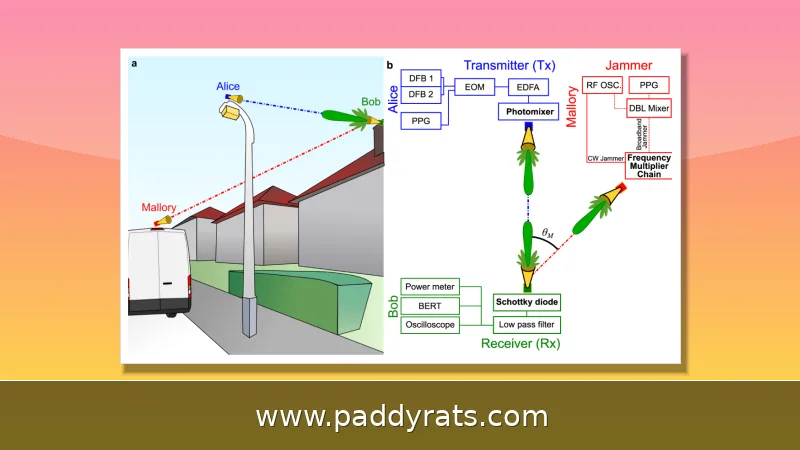
At its core, the idea behind jamming is pretty simple. A jammer zeroes in on the same frequency that a wireless device is using and blasts out a stronger, messier signal on that exact frequency. Once that happens, the receiving device can't tell the original signal apart from all the noise anymore, so the communication either gets choppy or cuts out completely.
You'll notice the effects pretty much right away: calls get dropped or blocked, WiFi won't connect, GPS tracking goes out, and radio communication turns unstable or cuts off entirely. For most everyday users, though, the giveaway is simpler than that—your phone shows a few bars, but the call just won't go through, or nothing loads even though the signal looks fine.
Effectiveness is not absolute, though. It varies with the output power, distance between the jammer and target devices, any physical objects such as walls or buildings in-between and specific type/strength of original signal. A low-power portable device may only be able to reach across a room, while high-powered systems can span large areas — one reason why these devices are so heavily controlled.
What Signals Can a Jammer Affect?
Jammers aren't just about phone calls. Anything wireless that runs on radio frequencies is fair game. Multi-band models can cover several frequency ranges at once, while the simpler ones stick to a single type of signal.
Common targets are cellular networks (2G, 3G, 4G and even some limited aspects of their technologies), WiFi & Bluetooth connections; GPS or other tracking systems along with radio communications like VHF/UHF. That range is part of why jamming isn't logged as, say a minor nuisance on par with blasting loud music — that spectrum carries emergency and law enforcement traffic.
The table below breaks down the main signal categories and what you'd typically notice when each one gets jammed.
| Signal type | Typical effect when jammed |
|---|---|
| Cellular (2G/3G/4G/5G) | Dropped calls, no data, no service |
| WiFi and Bluetooth | Connection failures, pairing drops |
| GPS and tracking | Loss of location and tracking data |
| Radio (VHF/UHF) | Unstable or interrupted voice traffic |
Since those affected bands overlap with navigation systems, payment terminals, and dispatch radios, a single jammer left running in the wrong spot can set off a chain reaction that reaches far past the phones it was originally meant to silence.
Main Types of Signal Jammers
Jammers come in two broad physical formats, and the choice usually comes down to how much coverage is needed and whether the installation can be permanent. Portable jammers are compact and easy to transport, which suits temporary operations, off-site meetings, and mobile environments where the protected area changes from day to day.
Fixed jammers are permanently installed systems with higher power and broader coverage. They are used in executive offices, conference rooms, and high-security facilities where continuous protection matters more than portability. Advanced signal control systems can even integrate with detection devices, so the jamming response is triggered only when an unauthorized transmission is identified.
When selecting a device, the relevant factors are the type of signal to manage, the size of the area to cover, mobility versus fixed installation, and the required level of coverage and performance. There is no single best jammer for every use case — a unit that works well in a boardroom may be useless across an open warehouse floor.
Jamming Techniques: Noise and Repeater Methods
Jamming techniques fall into two main categories: noise techniques and repeater techniques. Noise techniques simply overpower the target frequency with interference, while repeater techniques capture the incoming signal, alter it, and send it back out.
Spot jamming focuses all available power on a single frequency. It is effective against a narrow target but nearly useless against frequency-agile radar that hops between channels. Sweep jamming shifts full power from one frequency to another, jamming multiple frequencies in quick succession but never all at once. Barrage jamming covers multiple frequencies simultaneously with one jammer, which spreads the available power and reduces strength at any single frequency.
DRFM, or digital radio frequency memory, is a repeater technique that alters and re-transmits received radar energy. By changing the timing and character of the returned pulse, it can shift the range the radar reports and create false targets. Other designs include the deceptive jammer, the reactive jammer (sometimes called a CTS jammer), the pulse-noised jammer, the channel-hopping jammer, and the proactive jammer.
| Technique | How it works | Main limitation |
|---|---|---|
| Spot jamming | All power on one frequency | Fails against frequency-agile radar |
| Sweep jamming | Power hops across frequencies | Not simultaneous coverage |
| Barrage jamming | Multiple frequencies at once | Weaker signal per frequency |
| DRFM repeater | Alters and re-transmits radar energy | Complex and costly hardware |
Are Signal Jammers Legal?
It is illegal to sell, advertise, distribute, or operate cell signal jammers in the United States and much of the world. The FCC states that jamming equipment poses serious risks to critical public safety communications, can prevent 9-1-1 and other emergency calls, and interferes with law enforcement communications.
Radio frequencies are legally protected by The Communications Act of 1934, which outlaws interference with authorized radio broadcasts. That legal foundation is why enforcement actions target not only operators but also retailers and marketers who promote the devices.
Proponents argue jammers are needed where people struggle with cell phone etiquette — schools, theaters, vehicles, or quiet train rides. Professional scenarios cited include corporate environments and secure offices, conference rooms and private meetings, investigative and security operations, controlled communication environments, and drone blocking. Real-world examples range from protecting confidential meetings and preventing unauthorized recordings to controlling communication in sensitive areas and reducing interference in technical environments.
None of those arguments create a legal exemption for ordinary consumers in the US. Anyone considering a jammer for a workplace or facility should treat legal review as a prerequisite, not an afterthought.
Do Signal Jammers Interfere With Boosters?
Yes — a signal jammer will interfere with a cell phone signal booster. Boosters work by amplifying an existing signal, so if that signal is being blocked by a jammer, there is nothing meaningful left to amplify and the booster will not work.
This surprises people who assume two pieces of radio hardware will somehow cancel each other out. They do not. A cell signal amplifier is not an effective defense against jammers, and pairing the two devices typically produces the same dead service as running the jammer alone.
How Can You Detect a Signal Jammer?
The most common symptom is dropped service — calls that fail, data that stalls, or a phone that shows signal but cannot connect. Unfortunately, that symptom has many other causes, which makes jammer detection genuinely hard.
Apps claiming to detect jammers are largely unproven and require a working signal to function, which is a problem when the signal is what is being jammed. Without advanced military-level technology, it is virtually impossible for the average consumer to definitively detect a cell phone jammer.
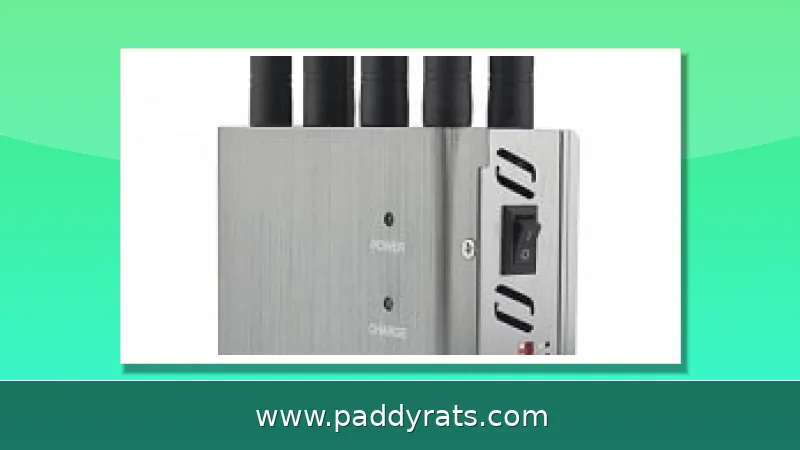
Physically, jammers usually look like a walkie-talkie, a cell phone, or a wireless router, so they blend into ordinary environments. Relocating may help, since the jamming range of consumer-grade units is usually no more than about 30 square feet. If you believe you are the victim of jamming, contact law enforcement or file a complaint with the FCC.
The risks of signal jamming extend well beyond inconvenience: disruption of communication, impact on emergency services, financial losses from disrupted payment processing, data interception, and threats to public safety systems including transportation and broadcasting. Protective strategies include monitoring network signals for unusual frequency levels and using an intrusion detection system (IDS).
Frequently Asked Questions
What is a signal jammer?
A signal jammer is a device that purposefully disrupts the connection between a device and its signal source, such as a cell tower and a mobile phone. It was originally developed for military and law enforcement use against threats like cell phone-triggered explosives and hostage situations, and it works by transmitting interference on the same frequencies the target device uses.
How does a signal jammer work?
A jammer transmits on the same radio frequencies used by the target device, creating interference that overwhelms the original signal. The receiving device can no longer distinguish the legitimate signal, causing dropped calls, WiFi failures, GPS loss, or interrupted radio communications. Effectiveness depends on output power, distance, physical obstacles, and the strength of the original signal.
Are signal jammers legal?
It is illegal to sell, advertise, distribute, or operate cell signal jammers in the United States and much of the world. The FCC says jamming equipment poses serious risks to public safety communications and can prevent emergency 9-1-1 calls. Radio frequencies are also protected under The Communications Act of 1934, which outlaws interference with authorized radio broadcasts.
What signals can a jammer affect?
Common targets include cellular networks (2G, 3G, 4G, 5G), WiFi and Bluetooth connections, GPS and tracking systems, and radio communications such as VHF and UHF. Some jammers target one signal type, while multi-band systems manage several frequencies at once. Because these bands carry emergency and navigation traffic, jamming can cause effects far beyond blocked phone calls.