Handheld GPS signal blockers are cheap, pocket-sized transmitters that drown out satellite signals on the L1 band, and they are behind a growing share of organized vehicle thefts. Here is how they work, how far they reach, and why using one is a federal crime in the US.
What Is a Handheld GPS Signal Blocker?
A handheld GPS signal blocker is a small, self-contained radio transmitter that broadcasts noise on the same frequencies GPS satellites use, hiding a vehicle, a package, or a person from anyone tracking them. Geotab, a fleet telematics company, described the device in July 2025 as a compact unit that conceals a location rather than destroying it. You'll see the same hardware sold under plenty of names: GPS jammer, GPS blocker, GPS signal jammer, telematics jammer, anti-tracking device, LoJack jammer, GNSS jammer, and scrambler. Most people searching for these devices really have just two questions — does the thing actually work, and is it legal to own one? Short answers: yes, within a short radius, and no in most of the world, the United States included.
The pricing tells you everything about why these things have taken off. Airpinpoint lists a basic plug-in GPS jammer at just $25 to $50 — pocket change compared to what a stolen car or a truckload of cargo is worth. When the barrier to entry is that low, it's no surprise the device went from hobbyist novelty to a standard item in a thief's toolkit. I've watched fleet operators start treating jammer alerts as just another part of the day rather than some rare, exotic event, and honestly, that says a lot about how normalized this hardware has become.
How Do GPS Jammers Work on the L1 Band?
GPS receivers rely on incredibly faint microwave signals coming down from satellites about 12,000 miles away. By the time those signals hit the Earth's surface, they're sitting at roughly -130 dBm — so weak that even a small amount of local noise can drown them out completely. A jammer takes advantage of that imbalance by broadcasting a stronger short-range RF signal on the same frequency, as Verizon Connect explained back in December 2025. The receiver just hears the loud local noise and loses its ability to pick out the satellite timing data it needs to calculate a position.
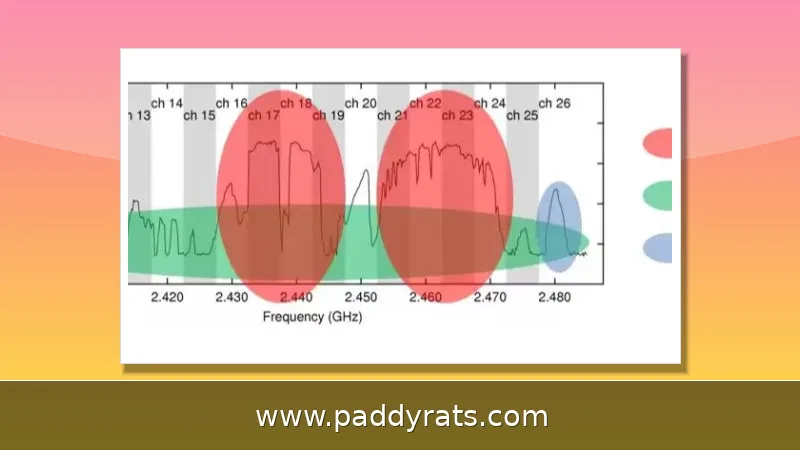
Frequency is really what decides everything here. Civilian GPS broadcasts at 1.575 GHz on the L1 band and 1.227 GHz on L2, and a GPS jammer goes after those bands specifically—it just pushes noise onto the same frequencies the satellites use, nothing else. What it doesn't do is transmit on 2.4 GHz, and that's precisely why a GPS blocker can't silence Bluetooth-based Find My tracking tags. Those tags live on a totally different slice of the spectrum, so they keep reporting in even while the GPS receiver next to them is sitting there blind. There's another layer to this, too. A receiver needs signals from at least four satellites at the same time, then runs time calculations and trilateration to lock down a position. Kill the band and you don't end up with a rough fix or a degraded one—you lose the fix altogether, because the math can't run without those signals.
A jammer doesn't make a vehicle invisible — it makes it loud. That's the counterintuitive point GPSPatron keeps hammering home: the same device that hides a car from its tracker also announces itself to anyone listening with the right gear, because the interference it puts out is itself a signal. In practice, a GPS jammer works by flooding the L1 band with noise, and that noise doesn't just disappear once it leaves the antenna. It radiates outward, and a sensitive detector can pick it up from much farther away than the jammer's own blocking range — GPSPatron puts detector range at up to 500 meters, well beyond the 10–50 meter dead zone a typical handheld unit creates. So the thief who blanks a tracker may also be painting a target on the vehicle for anyone scanning the spectrum. Scramblers add another wrinkle on top of that. According to Jammer Store, most of them don't separate signals at all — they just jam everything sitting inside a given frequency range instead of isolating GPS alone. That means a scrambler can take out other nearby devices sharing that spectrum, and it leaves behind a broader, messier interference signature that's even easier to spot. In other words, the tool built to defeat tracking tends to generate the very evidence that tracking systems and investigators use to find it.
Portable vs Vehicle vs Stationary GPS Jammers
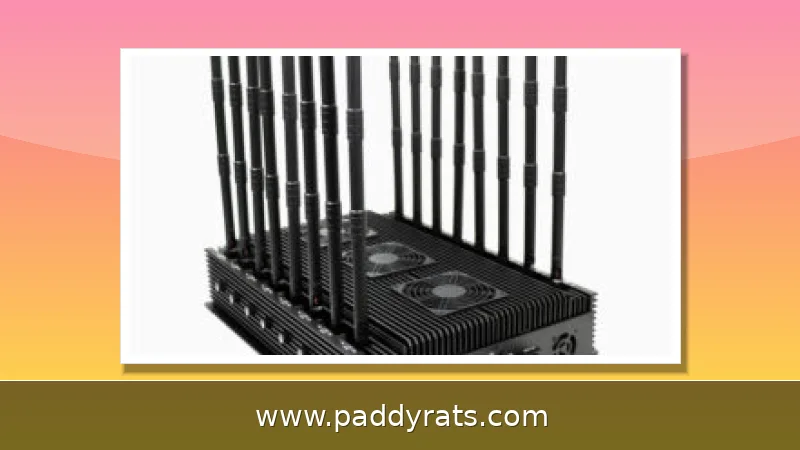
Not all jammers look or act the same, and the differences between form factors end up mattering way more than any marketing copy lets on. Airpinpoint breaks them into four practical categories, each shaped by how it gets power and how far it reaches. Portable battery units are the smallest of the group — pocket-sized, cordless, and usually good for just a few meters on the GPS L1 band. Cigarette-lighter plug-ins give up some of that portability in exchange for a bit more punch, covering roughly 10 to 50 meters, and sometimes hitting both L1 and L2. Hard-wired multi-band models stretch the range into the tens of meters while also knocking out cellular and Wi-Fi along with GPS, which explains why they tend to turn up in fleet-theft cases. Then there's the chirp jammer, which sweeps its signal across the band instead of parking on a single frequency. All of this is a good reminder that "handheld GPS blocker" covers a much wider spread of devices than most buyers assume before they start comparing specs.
| Type | Typical Range | Bands Targeted | Typical Use |
|---|---|---|---|
| Portable battery unit | A few meters | GPS L1 | Personal carry, small rooms |
| Cigarette-lighter plug-in | 10-50 meters | GPS L1, sometimes L2 | Vehicle concealment |
| Hard-wired multi-band | Tens of meters | GPS L1/L2 plus cellular and Wi-Fi | Fixed installations, cargo |
| Chirp jammer | Varies | Swept across the band | Defeating frequency-hopping receivers |
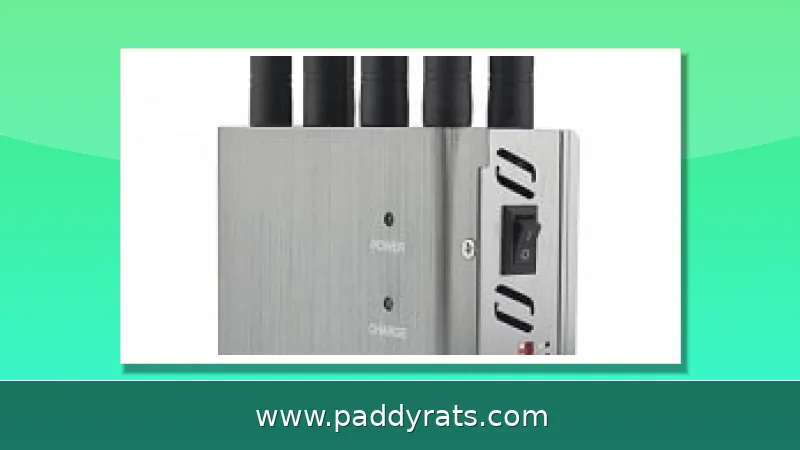
Portable GPS jammers are cordless and battery-powered, which makes them easy to carry and a natural fit for small rooms, a vehicle, or the outdoors, according to Jammer Master. But that convenience comes with a catch. A typical handheld jammer weighs around 1.5 kg, while desktop models are closer to 6 kg and can put out 30 to 110 watts. That gap says a lot about how these devices are designed: portable jammers trade raw power for mobility, and that trade-off is exactly why their effective range stays so short. You get something you can toss in a bag and turn on in seconds, but you lose the reach and staying power of a larger, fixed setup. In practice, that makes a handheld unit a close-range tool — good for taking on one specific tracker in one specific spot, not for blanketing a wide area.
| Type | Average Weight | Output Power | Typical Use |
|---|---|---|---|
| Portable / handheld | ~1.5 kg | Lower (battery-limited) | Small rooms, vehicles, outdoor use |
| Desktop / stationary | ~6 kg | 30–110 W | Fixed, higher-power localized coverage |
Typical Ranges, Power and Specifications
Range claims are all over the place, so it's worth separating actual physics from marketing hype. Most handheld jammers top out at 5 to 30 meters, which means they only do anything when they're sitting right next to the tracker. Geotab puts the interference radius of an active jammer at 16 to 33 feet. But GPSPatron reported in March 2026 that even a low-power jammer running just 10 to 20 milliwatts can drown out satellite signals across 250 to 300 meters, simply because the incoming signal is that faint. That gap comes down to a few practical things: where the antenna sits, the terrain, and whether the target receiver has a clear view of the sky.
If you look at actual product listings, the price range is all over the place. Jammer Store, for instance, sells the GP5000 car anti-tracking GPS blocker for $119.99, the GJ6 portable all-civil-bands GPS jammer for $395, and the APJ-16 portable all-in-one unit that covers 164 to 5900 MHz for $1,200. Then there's the Albatross Pocket 3G GSM jammer at $179 with a 5-meter range, while the Altron-4 four-band 35W unit goes for $840 and claims GPS coverage up to 500 meters. Over at Perfectjammer, you can pick up an 8-band handheld for $326.98 with a 40-meter radius and a 4000mAh battery, or a handheld GPS L1-L5 dual-band anti-tracking jammer for $118.96 with a 15-meter radius.
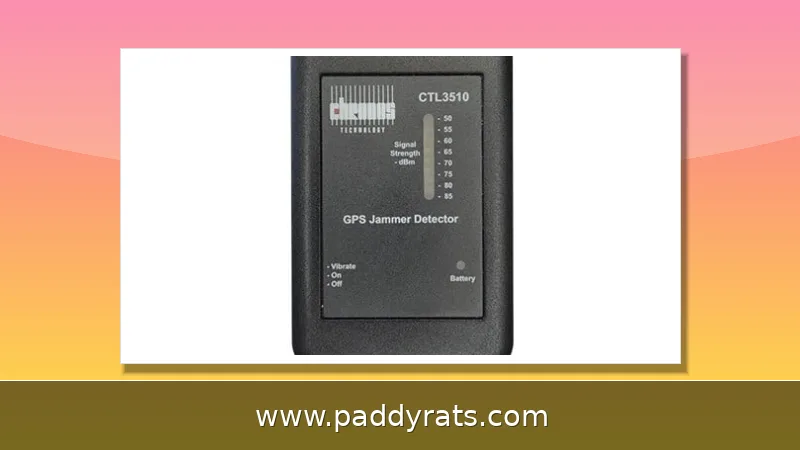
Detection hardware sits at the opposite end of the price curve from the cheap plug-in jammers themselves. NavtechGPS has partnered with Chronos Technology to bring GPS jammer detectors to the U.S. market, including the CTL3510-LOG Jammer Detector and Logger at $1,242 and the CTL3520 Directional GPS Jammer Detector and Locator at $2,539. Those prices buy real sensitivity: according to GPSPatron, a capable detector can pick up jamming activity from as far as 500 meters away, which is well beyond the reach of most handheld blockers. For something you can carry on your person, GPSPATRON's GP-Probe Nano L1 is a wearable GNSS interference detector that covers GPS, GLONASS, Galileo, and BeiDou on the L1 band. It alerts you three ways—vibration, an audible speaker, and a 36-LED power scale—and its battery lasts up to 30 days in detector mode or up to three months in logger mode. A USB Type-C connection links it to Android devices through the GPSPATRON Connect app, so you can review what it caught.
| Detector | Price | Key Specs |
|---|---|---|
| Chronos CTL3510-LOG Jammer Detector and Logger | $1,242 | Detection and logging; marketed in the US by NavtechGPS |
| Chronos CTL3520 Directional GPS Jammer Detector and Locator | $2,539 | Directional detection and location finding |
| GPSPATRON GP-Probe Nano L1 | — | Wearable; GPS, GLONASS, Galileo, BeiDou on L1; vibration, audible, and 36-LED alerts; up to 30 days (detector mode) or 3 months (logger mode); USB Type-C to Android via GPSPATRON Connect app; detection range up to 500 meters |
GPS Jamming vs Spoofing: What's the Difference?
Jamming and spoofing get talked about as if they were the same thing, but they attack a GPS receiver from opposite directions. Jamming is brute force: it floods the GPS frequency with noise until the receiver has nothing usable to work from, so the tracker simply goes dark. Geotab describes it as blocking the signal completely — no location, no update, just silence. Spoofing is subtler. Instead of drowning the signal, it impersonates it, feeding the receiver fake data that looks perfectly legitimate, so the device confidently reports a position that is simply wrong. That difference matters in practice. A jammed tracker tells you something is off, because the signal vanished. A spoofed tracker keeps reporting as if everything were fine, which makes the deception far harder to catch and far more dangerous for anyone depending on that data — dispatchers routing vehicles, insurers verifying claims, or recovery teams chasing a stolen car in the wrong direction.
The practical upshot is that jamming and spoofing call for two very different detection playbooks. A jammer gives itself away: it floods the GPS band with noise, so receivers show a rising noise floor and then lose satellite lock altogether, and a spectrum monitor or RF detector can pick up that telltale spike while it's happening. Spoofing is sneakier. The receiver keeps reporting a fix, the dashboard looks calm, and nothing seems wrong until the coordinates jump to some place the vehicle plainly isn't — or the timestamps and speed readings stop making sense. For fleet managers, that distinction flips the usual logic: a jammer alert is genuinely good news next to a silent spoof, because at least the interference is announcing itself. A spoof, by contrast, can hide in plain sight for hours, quietly feeding false positions while the vehicle keeps moving.
Who Uses GPS Jammers and Why?
The biggest customer for these devices isn't some privacy-obsessed driver — it's the organized vehicle thief. Law enforcement sources cited by the UK Government, as reported by GPSPatron, found that 80 to 85 percent of organized vehicle thefts now involve GPS jammers. The math behind that number is what makes it so ugly. A functioning tracker gives you a recovery rate of 90 to 95 percent; knock the tracker offline and that figure collapses to roughly 23 to 25 percent. In other words, a $30 device flips the odds on a $40,000 asset, and it does so in seconds. That's not a technical curiosity — it's a business model, which explains why jammers keep showing up in theft crews' toolkits alongside relay boxes and key programmers.
Beyond theft, jammers appear in privacy-motivated personal use, in cargo theft along logistics corridors, and occasionally in attempts to defeat court-ordered monitoring. Each case shares the same logic: whoever controls the RF environment controls the location record. The countermeasure side has grown accordingly, with anti-jam antennas such as the Tallysman by Calian CR8894SXF+ Anti-Jam Four Element CRPA and hardened receivers from vendors like LandAirSea that support multiple constellations and flag interference.
Do Portable GPS Blockers Actually Work?
Yes, in many cases. A GPS jammer can block real-time location and prevent tracking of an object or vehicle, which is precisely why theft rings use them. The caveat is proximity. Most handheld jammers have a range of only 5 to 30 meters, so they only work when placed close to the tracker. A blocker left in a glove compartment may do nothing to a tracker mounted under the rear bumper, while one taped next to the device will kill the fix immediately.
That proximity requirement shapes real-world tactics. A typical operation involves plugging the jammer into the automotive auxiliary power outlet, placing it close to the installed GPS tracker, and generating interference over a 16-to-33-foot radius, as Geotab describes. It also means jammers fail against trackers that record and forward data later, since the receiver can reacquire satellites once the noise stops. Jamming buys a window, not permanent invisibility.
Can GPS Jammers Be Detected?
Yes, and detection is getting cheaper and more portable. Spectrum monitoring and mobile direction finding systems can detect and locate GPS jammers. Analysts can also examine frequency spectra to determine how long interference lasted and what type of signal it was, which helps distinguish accidental interference from a deliberate attack. A sensitive detector can spot jamming activity at ranges up to 500 meters, per GPSPatron, well beyond the jammer's own useful radius.
That asymmetry favors the defender. A jammer must sit close to its target to work; a detector can notice it from much farther away. Historically patrol officers had no way to detect the jammer itself, which is why the device was so effective. Portable detectors now provide alerts, and directional locators can point enforcement toward the source. For fleet operators, the practical step is enabling jammer alerts in the telematics platform and treating them as a theft signal rather than a glitch.
Is It Legal to Use a GPS Jammer?
GPS jamming is illegal in many countries, including the United States, Canada, and the United Kingdom. In the US, the Communications Act of 1934 outlawed the marketing, sale, or use of GPS jammers, with fines up to $100,000 or more, imprisonment, and loss of equipment. The Federal Communications Commission enforces those rules, and importing a jammer for personal use carries the same exposure as operating one.
The legal risk extends to anyone in the supply chain, not just the end user. Retailers that ship jammers into the US, and buyers who order them, both fall within the statute's reach. For legitimate privacy concerns, the lawful alternatives are physical shielding, scheduled tracking windows, and consent-based monitoring arrangements. None of them carry criminal penalties. If a fleet manager suspects an employee is running a jammer, the correct response is to document the interference and hand it to law enforcement rather than to counter-jam, which would create a second violation.
How Accurate Is a Handheld GPS Device?
Under normal conditions, a handheld GPS device is generally accurate within 5 to 10 meters, or roughly 16 to 33 feet. That figure assumes a clear sky view and a healthy satellite lock. Accuracy degrades in urban canyons, dense forest, and indoor environments where signals reflect off surfaces or fail to reach the antenna. Multi-constellation receivers that combine GPS, GLONASS, Galileo, and BeiDou tend to hold a fix better than single-constellation units.
The accuracy number matters for interpreting jammer symptoms. A tracker that suddenly reports a position 50 meters off, or stops updating entirely, is showing a different failure mode than one that drifts gradually. Sudden loss of lock across multiple satellites is the classic jamming signature. Gradual drift usually points to atmospheric conditions or a weak antenna rather than deliberate interference.
How to Protect a Vehicle or Fleet from GPS Jamming
Protection starts with receiver quality. An advanced GPS receiver with multi-constellation support and built-in signal interference detection gives the best chance of noticing an attack, as LandAirSea recommends. Anti-jam antennas such as the Tallysman by Calian CR8894SXF+ Anti-Jam Four Element CRPA go further, using controlled reception pattern technology to reject interference from specific directions.
Layered defenses work better than any single device. Combine a hardened receiver with jammer alerts in the telematics platform, a covert secondary tracker in an unexpected location, and a detection sweep when alerts fire. Because a jammer must sit close to the tracker to work, hiding the tracker deeper inside the vehicle raises the attacker's required power and proximity, which in turn makes detection more likely.
Finally, treat every jammer alert as an active theft attempt. The recovery statistics are unforgiving: 90 to 95 percent with a working tracker versus roughly 23 to 25 percent without one. Speed of response is the variable that decides which side of that gap a stolen vehicle lands on.
Frequently Asked Questions
Do portable GPS blockers actually work?
Yes, in many cases. A GPS jammer can block real-time location and prevent tracking of an object or vehicle. However, most handheld jammers have a range of only 5 to 30 meters, so they only work when placed close to the tracker.
How does a GPS jammer work?
A GPS jammer broadcasts radio frequency noise on the same frequency as GPS, mainly the L1 band at 1575.42 MHz. This stronger short-range signal overpowers weak satellite signals arriving at about -130 dBm, so the receiver cannot compute a position.
Are GPS jammers legal?
GPS jamming is illegal in many countries including the US, Canada, and the UK. In the US, the Communications Act of 1934 outlawed marketing, sale, or use of GPS jammers, with fines up to $100,000 or more, imprisonment, and loss of equipment.
Can GPS jammers be detected?
Yes. Spectrum monitoring and mobile direction finding systems can detect and locate GPS jammers. Analysis of frequency spectra to determine interference duration and signal type can also indicate whether interference is accidental or deliberate.