Portable handheld signal jammers are battery-powered RF blockers that overpower cell, GPS, and WiFi signals within a short radius. I break down how they work, real specs and prices, and why the FCC says you cannot legally use or sell them in the US.
What Is a Portable Handheld Signal Jammer?
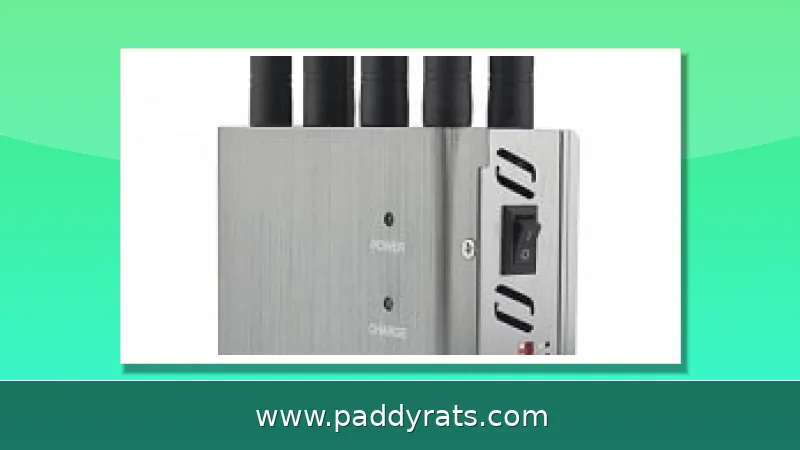
A portable handheld signal jammer is really just a small, battery-powered radio transmitter that deliberately floods the same frequencies your phone, GPS, and WiFi rely on. It doesn't listen in or decode anything — it simply drowns out the original signal, which security folks refer to as a denial-of-service attack on the airwaves. If you're trying to pick one out in the wild, the shape usually gives it away: these units are cordless, have built-in antennas, and typically look like a walkie-talkie, a bulky cell phone, or a small wireless router.
If you've ever browsed listings or forums for these gadgets, you've probably run into a dozen different names for the same thing—signal blocker, radio jamming device, cell phone jammer, mobile phone jammer, GPS jammer, WiFi jammer, text stopper, pocket jammer, handheld jammer, portable jammer. The naming is all over the place, but the concept behind it stays the same: each term describes a small device that transmits interference on licensed bands, which prevents nearby receivers from picking up the tower or satellite signals they depend on. That interference is deliberate, and it works because the jammer is essentially drowning out the frequencies that phones, GPS units, and WiFi equipment are trying to hear. And because the disruption stays local instead of knocking out an entire city, what most buyers actually care about isn't how sophisticated the hardware is—it's the range, the bands it covers, and whether using it is even legal. A unit that barely reaches a few meters and one that blankets a whole conference room can look nearly identical on the outside, which is exactly why paying close attention to the specs matters far more than believing whatever the listing promises.
How Does a Handheld Jammer Block Signals?
For jamming to actually work, three subcircuits have to cooperate: an RF amplifier, a voltage controlled oscillator, and a tuning circuit. The oscillator is really the starting point—it generates the interfering waveform in the first place, producing the noise that gets used against the target signal. From there, the tuning stage keeps that waveform locked onto the specific band you're trying to disrupt. That part matters a lot, because if the signal drifts off-frequency, the interference lands somewhere harmless and does nothing. The amplifier then boosts the signal until it's strong enough to drown out incoming transmissions at the receiver. On top of those three core blocks, a typical unit also carries an RF generator, extra signal amplification stages, transmission modules, and at least one antenna that ties the whole chain together. So in plain terms: the oscillator makes the noise, the tuner aims it, and the amplifier gives it enough muscle to override whatever a phone or GPS receiver is trying to hear.
The DIY versions you see in hobbyist write-ups are definitely rougher than anything you'd buy off the shelf, but the underlying logic is basically the same. Most of them start with a 555 timer, or a tuned circuit where capacitor C1 and inductor L1 act as the oscillator, generating a rough RF tone on whatever frequency you're targeting. From there, transistor Q1 amplifies that tone, and a coupling capacitor feeds it to the antenna. It's a pretty bare-bones chain, but it does produce real interference. Commercial handhelds take that same foundation and clean it up with better filtering and multiple channels, so each band stays isolated and the output doesn't drift. Higher-end models go a step further by using protocol jamming to knock out control channels instead of flooding the entire band, which means they need less power to get the same disruptive effect.
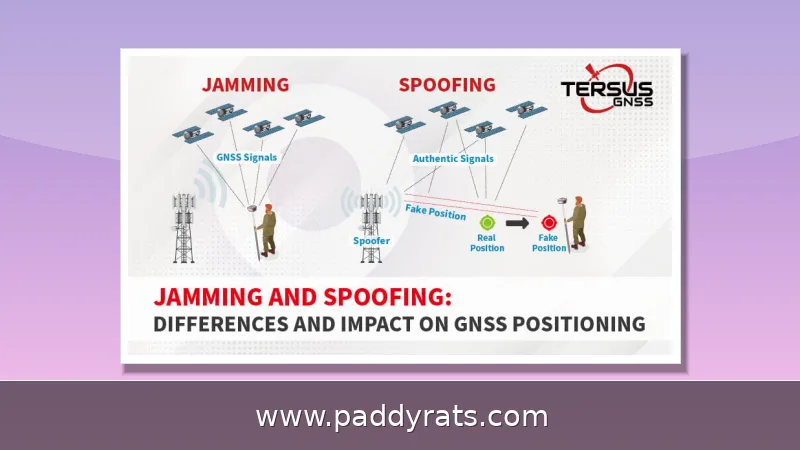
Think of it like a shouting match stretched out over miles. Your phone is trying to hear a cell tower that could be a mile away or more, and by the time that signal reaches you, it's basically a whisper. A handheld jammer doesn't need much power—it just has to be close. Park it right next to your phone and it broadcasts noise on the same frequency, and since its signal is way louder at that short distance, it completely drowns out the tower. If you've ever stood near one of these things, the symptoms are pretty obvious: calls drop mid-sentence, texts just sit there unsent, and data connections fall apart. GPS gets hit even harder. Satellite signals travel roughly 12,000 miles to reach your phone, so they show up incredibly weak—which is exactly why even a low-power, pocket-sized jammer can wipe out positioning for every device nearby.
Which Frequencies and Bands Can It Block?
What a handheld can actually block depends on the bands it was built for, and that list has gotten pretty long over the years. Older units kept things simple: 700MHz, 800MHz, 900MHz, 1800MHz, 1900MHz, and 2100MHz for cellular traffic, which is enough to cover most 2G through 4G calls and data. Newer models tack on 5G Sub-6GHz bands like n77, n78, and n79, so they can take down the latest networks too. GPS is a whole separate target, jammed at 1575MHz — that's the L1 band consumer receivers depend on. For short-range wireless, WiFi covers 2.4GHz and 5GHz, Bluetooth sits around 2400–2500MHz, and Wi-Fi 6E/7E stretches all the way up to 6GHz. Some product listings go even further, claiming coverage of LoRa, FM broadcast, LoJack, UHF/VHF, and XM radio. Wide-band or full-spectrum jammers bundle several of these together at once, while more advanced models use protocol jamming to hit control channels directly.
| Target | Frequency / Band |
|---|---|
| Cellular (2G–4G) | 700MHz, 800MHz, 900MHz, 1800MHz, 1900MHz, 2100MHz |
| 5G Sub-6GHz | n77, n78, n79 |
| GPS | 1575MHz (L1) |
| WiFi | 2.4GHz and 5GHz |
| Bluetooth | 2400–2500MHz |
| Wi-Fi 6E/7E | 6GHz |
| Other claimed coverage | LoRa, FM broadcast, LoJack, UHF/VHF, XM radio |
Most cheap handhelds only cover a band or two, but the wide-band models — the ones usually stamped with a "full-spectrum" label — fire on several frequencies at once, so one press can take out cellular, WiFi, and GPS together. That's why antenna count and band count are the specs sellers hype the hardest in their listings: each antenna typically handles one frequency range, so a 16-antenna unit is really 16 separate transmitters stuffed into a single housing and sharing one battery. More bands generally means broader coverage, but you pay for it with quicker battery drain and a steeper price. The table below pulls together the bands people ask about most, along with what each one actually affects in day-to-day use.
| Band / Frequency | What It Affects in Daily Use |
|---|---|
| 700 / 800 / 900 MHz | Older cellular voice and data, plus some public safety and trunked radio traffic |
| 1800 / 1900 / 2100 MHz | The core GSM, 3G, and 4G LTE bands most phones camp on |
| 5G Sub-6 GHz (n77 / n78 / n79) | Mid-band 5G, the workhorse layer for speed and citywide coverage |
| GPS 1575 MHz (L1) | Satellite positioning, navigation apps, and GPS-disciplined timing |
| WiFi 2.4 GHz / 5 GHz / 6 GHz (Wi-Fi 6E/7E) | Home and office networks, hotspots, and most wireless cameras |
| Bluetooth 2400–2500 MHz | Earbuds, wearables, keyboards, and short-range device pairing |
| LoRa, FM broadcast, LoJack, UHF/VHF, XM radio | Long-range IoT links, car radio, stolen-vehicle tracking, and two-way radio |
| Band | Typical Use | What Jamming Disrupts |
|---|---|---|
| 700-900MHz | LTE, older cellular | Calls, texts, mobile data |
| 1800-2100MHz | GSM, LTE, 5G Sub-6 | Voice and high-speed data |
| 1575MHz (L1) | GPS | Positioning and timing |
| 2.4GHz / 5GHz | WiFi, Bluetooth | Wireless networks, peripherals |
| 6GHz (Wi-Fi 6E/7E) | Newer WiFi | Modern high-band WiFi links |
Here's something most people don't realize: a signal jammer will interfere with a cell phone signal booster as well, so the booster can't simply cancel out the jamming. The reason is pretty straightforward — both devices are competing for the same slice of spectrum. A booster picks up a weak signal from a cell tower, amplifies it, and rebroadcasts it inside a building. A jammer, on the other hand, is flooding those exact frequencies with noise. So putting a booster in a jammed environment doesn't restore a clean signal; you're basically amplifying a channel that's already buried in interference. In practice, that usually amounts to a louder tug-of-war over the same frequencies, and the booster may even waste its gain trying to pull up a signal that isn't really there. The only fix that truly works is removing the interference source or moving outside its range.
Key Specs: Antennas, Output Power, and Range
When you pull up a spec sheet for a handheld jammer, three numbers tend to jump out first: antenna count, output power in watts, and blocking radius. Antenna count matters because each band generally needs its own antenna, so a 16-antenna unit can typically take on more frequencies at once than a 4-antenna model. Output power tells you how hard the device pushes its noise signal, and that directly shapes the third number, range. Most portable units cover somewhere between 10 and 30 meters, while low-power models handle only about 100-150 square meters with a 5-8 meter radius. Some higher-power handhelds, on the other hand, claim coverage of up to 40 meters, though that figure usually assumes open space and a clear line of sight. In practice, range shrinks once walls, terrain, and the distance between the target device and its tower come into play, which is why two jammers with identical wattage can perform very differently in a concrete office versus an open field.
| Spec | Typical Portable Range |
|---|---|
| Low-power models | 5-8 m radius; roughly 100-150 m² |
| Most portable units | 10-30 m |
| Higher-power handhelds | Up to 40 m (claimed, open space) |
If you want a quick sense of what these things actually cost, the listings from Jammer Master are a good place to start. Their JM024 handheld signal blocker, which covers 5G cellular, UAV, and GPS, goes for $825.00, while the JM009 portable jamming device runs $739.99 and the JM008 portable cell phone jammer comes in at $659.99. Step up to the 16-antenna JM002 and you're looking at $1,088.99, the handheld multi-purpose JM016 is priced at $899.00, and the JM018 — a handheld mobile phone jammer with 16 antennas rated for 25 meters — sells for $699.00.
Signaljammerphone lists a wide spread of hardware. The N-X16P is a 16-antenna, 18-band handheld with an LCD, the P-N31 is a 31-band full-spectrum unit for 5G Sub-6, Wi-Fi 6E/7E, and GPS L1-L5, and the J32V packs 32 bands, 30 antennas, and 32W of output. Smaller options include the WF-1 mini WiFi/Bluetooth jammer at 0.5W with a 10-meter range, the P-VN4 four-antenna video jammer covering 980-2500MHz up to 15 meters, and the P-N8P eight-antenna unit for 2G through 4G LTE, GPS, and WiFi.
Budget and specialty models round out the market. The P3 three-antenna 4G WiMAX unit reaches about 10 meters, the CM3 WiFi/Bluetooth jammer runs 5-20 meters on a 1.5-hour battery, the P-12PM is a 12-band 5G jammer at 37W with up to 40 meters of coverage, and the P-8XL blocks 2G/3G/4G/GPS/WiFi within 15 meters on a 2-hour battery. The GP-1 mini anti-tracking GPS blocker weighs 180 grams and covers 2-10 meters.
Telejammer's catalog shows how fast prices fall with fewer bands. A handheld 32-band jammer lists at $800, the portable 12-band 60W P12Mx at $800, the handheld 12-antenna 37W CP12 at $550, the 16-antenna N16D with LCD at $400, and the hidden 8-antenna pocket SN8 at just $80. Portable WiFi jammers run from $33 to $95, and Made-in-China lists a handheld three-channel 868/433/315 remote control car jammer at US$189.00-208.00 FOB. For reference, the CT-1016-5G 16-band antenna jammer ships with a main unit, power adapter, car charger, and 16 omni antennas, and its manual warns to keep it away from electronics when powered on while covering temperature ranges, battery recharging, and European and American frequency bands.
Portable vs Desktop Jammers: Trade-offs
Portability buys convenience and costs coverage. A handheld jammer fits in a bag, runs on internal batteries, and works in rooms without a 220V outlet, which is why it suits meetings, seminars, and temporary venues. A desktop or high-power rack unit typically covers a much larger area and can run continuously on mains power, but it is not something you carry around or deploy discreetly.
The table below captures the practical differences I see most often when comparing the two form factors.
| Factor | Portable Handheld | Desktop / High-Power |
|---|---|---|
| Coverage | 10-30m, up to 40m | Whole rooms or buildings |
| Power source | Internal battery | Mains AC |
| Portability | High, pocket or bag | Low, fixed install |
| Antennas | 3-32 built-in | Many, often external |
| Best for | Temporary, mobile use | Persistent coverage |
Detection is another limitation worth knowing. Average consumers cannot easily spot a jammer, and the usual symptom is simply dropped service. Because the effect is range-limited, walking away often restores reception. That is cold comfort if you need coverage in place, but it explains why handheld units are treated as local tools rather than area-wide infrastructure.
Common Applications and Use Cases
Vendors market handheld jammers for anti-eavesdropping, government and military communications security, healthcare facilities trying to prevent interference with medical equipment, workplaces handling sensitive information, classrooms, and homes. The common thread is a desire to control what nearby radios can transmit or receive, whether the concern is a leaked conversation, a ringing phone in a quiet room, or a device that should not be connecting out.
In practice, the legitimate deployments tend to be controlled environments where an organization owns the space and accepts responsibility for the interference. Portable units fit meetings, seminars, and venues without a 220V power source because the built-in battery removes the need for wiring. That flexibility is exactly what makes them attractive to buyers, and also what makes regulators nervous, since the same device that quiets a conference room can also silence a neighborhood's phones.
Is a Signal Jammer Legal in the United States?
No. The FCC warns that it is a violation of federal law to use, market, or sell jammers that intentionally block authorized radio communications such as cell phones, police radar, GPS, and WiFi. Consumers cannot legally use them in the United States, and retailers cannot lawfully sell them. Unauthorized users may face substantial civil penalties, seizure of illegal equipment, and criminal sanctions. The Communications Act of 1934 outlaws interference with authorized radio broadcasts, and that foundation still drives enforcement today.
Other countries take the issue just as seriously, though penalties differ. In Malaysia, offenders jamming cellular network frequencies on their premises can be fined a maximum of RM500,000 or jailed a maximum of five years, or both. Anyone researching these devices should treat legality as the first filter, not an afterthought, because the equipment itself can be confiscated and the penalties can dwarf the purchase price.
Market Size and Health Research Signals
The commercial side of this category is growing despite the legal cloud. Technavio forecasts the signal jammer market to increase by USD 1.08 billion at a CAGR of 5.66% between 2023 and 2028. Fortune Business Insights values the global signal jammer market at USD 4.61 billion in 2025, projected to grow from USD 4.98 billion in 2026 to USD 9.27 billion. Research and Markets values it at USD 2.37 billion in 2026, projected to reach USD 3.36 billion by 2030 at a 9.1% CAGR.
Health research adds another caution. A 2018 study by MB Shojaeifard on electromagnetic fields from mobile phone jammer exposure found mature rats showed significant differences in blood factors including RBC, platelet, hemoglobin, hematocrit, and MCV. The finding does not prove harm in humans, but it is a reminder that these devices emit real RF energy at close range. If you handle one, keep it away from electronics when powered on and treat it as an active transmitter rather than a passive gadget.
Do Signal Jammer Apps on a Phone Actually Work?
No. Dedicated jammers rely on an RF generator, amplification, transmission modules, and antennas. A smartphone app lacks these physical components, so it cannot emit the interfering radio frequencies needed to block cellular, WiFi, or GPS signals. Any app claiming to jam signals is either a prank, an ad vehicle, or something that simply toggles your own radios off.
That distinction matters when comparing products. The hardware specs that actually determine performance are antenna count, band coverage, output power in watts, and battery life. A 32-band handheld with 30 antennas is doing something a phone app fundamentally cannot, which is why the real market lives in physical devices with published specs and prices rather than app stores.
Frequently Asked Questions
How does a portable handheld signal jammer work?
It transmits radio frequency noise on the same bands used by phones, GPS, and WiFi, overpowering the original signals from towers and satellites. This denial-of-service effect stops nearby devices from sending or receiving calls, texts, and data within the jammer's limited radius.
What is the range of a handheld signal jammer?
Ranges vary widely by model. Low-power jammers cover roughly 5-8 meters or 100-150 square meters, while many portable units reach 10 to 30 meters. Higher-power handheld models with more antennas can extend coverage up to about 40 meters depending on conditions.
Are signal jammers legal in the United States?
No. The FCC states it is a violation of federal law to use, market, or sell devices that intentionally block authorized radio communications such as cell phones, GPS, and WiFi. Unauthorized users may face civil penalties, equipment seizure, and criminal sanctions.
Do signal jammer apps on a phone actually work?
No. Dedicated jammers rely on an RF generator, amplification, transmission modules, and antennas. A smartphone app lacks these physical components, so it cannot emit the interfering radio frequencies needed to block cellular, WiFi, or GPS signals.