Convoy jammers throw a wall of RF noise around a moving VIP motorcade, blocking the radio triggers used to detonate RCIEDs. Here is how the hardware works, what it covers, and where the legal lines sit.
What Is a Signal Jammer for VIP Protection?
A signal jammer for VIP protection is really just a vehicle-mounted RF transmitter that fills the spectrum around a moving motorcade with noise, cutting off any remote-controlled trigger inside that protective bubble from the signal it needs. It's not about disabling the bomb itself — the goal is to break the link that would set it off. An RCIED, or remotely controlled improvised explosive device, depends on a radio path between the person triggering it and the receiver, and jamming severs that path across the VHF and UHF bands, along with the GSM, extended GSM, CDMA, 3G, and Wi-Fi sub-bands that a lot of consumer triggers happen to rely on.
Functionally speaking, what you get is a firewall that moves with the convoy. Each jamming module broadcasts its own noise signature across the specific slice of spectrum it's been assigned, and because those slices deliberately overlap, there's no quiet gap left for a detonation signal to slip through. That overlap is basically the whole trick: a remotely controlled IED needs a clean channel to receive its command, so flooding every possible frequency with noise at once shuts that path down for good. Protection teams often describe the result as a protective bubble, or a firewall effect that travels with the convoy at road speed—which is also why the system keeps transmitting even when the vehicle is parked and waiting. It also explains why you'll see these units sold under so many different names: convoy jammers, bomb jammers, IED jammers, RCIED jammers, RF blockers, RF inhibitors. The label mostly comes down to the vendor and whatever terminology happens to show up in the procurement paperwork.
How Does a VIP Convoy Jammer Work?
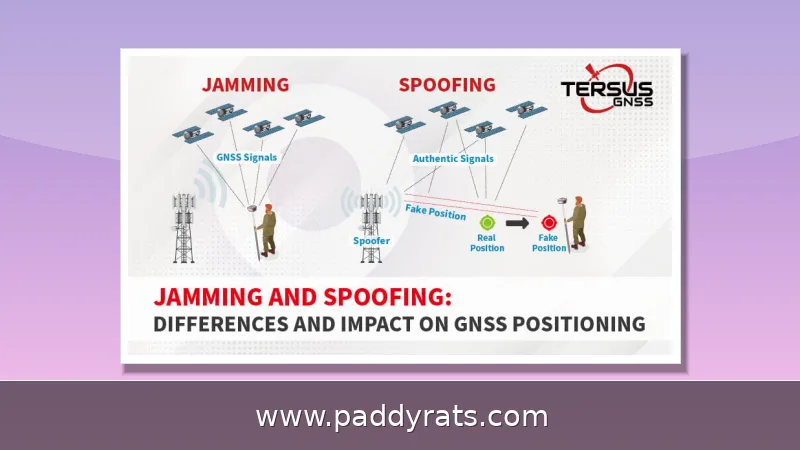
The basic idea sounds simple, but getting it to actually hold up in the field is a whole different story. A jammer floods one or more radio frequencies with noise, and anything else trying to use those frequencies just gets buried. Inside that protective bubble, a receiver hears a rising wall of noise instead of a clean command tone, so the trigger device never finishes its handshake and the RCIED simply doesn't fire. What really sets convoy systems apart is how they create that interference: each module puts out its own distinct noise signal, and together they form a continuous barrier between transmitter and receiver, not just a few scattered dead spots. That difference matters a lot, since an attacker only needs one gap to sneak a command through. By stacking overlapping noise across several bands at once, the system keeps that firewall intact even when the threat switches frequencies.
Raw power isn't the whole story — signal quality matters just as much. In the systems I've looked at, the jamming waveform comes from a multi-VCO chain, which is what produces a high sweeping rate and high RF density, so the noise sweeps across a band quickly and keeps cycling back through it. Beyond that, microprocessor PLL programming and mixed-signal modulation squeeze out as much efficiency as possible, which means more of the amplifier's output actually ends up where it can do something useful. How far you can jam ultimately comes down to four factors: the transmitter's frequency, the output power, the distance to the receiver, and whatever sits in between — buildings, terrain, even vehicle bodies, all of which absorb or reflect RF energy.
Frequency Bands and Jamming Range
Most of these systems get rated by their overall coverage rather than by any single channel. Take the YTS Jammer Vehicle: it sweeps sequentially from 20 MHz all the way up to 6,000 MHz, covering HF, VHF, UHF, SHF, cellular, satellite, GPS, and Wi-Fi along the way. It can push out up to 1,800 W across 26 bands, and it runs on an independent energy system rated as high as 20 kW. Then there's a separate RF jamming system built specifically for VIP motorcades, which throws up a protective shield of roughly 50 to 200 meters across VHF/UHF, 2G, 3G, 4G/LTE, 5G NR, Wi-Fi, and GPS bands.
The Phantom RCJ1390LT-I puts out around 1,535 W, but it doesn't spread that power evenly across the spectrum—and that's on purpose. The land-mobile and cellular bands get the lion's share, which makes sense, because those are the frequencies RCIED triggers and remote command links actually rely on. That's where the system needs its real punch. Slices like 135–174 MHz and 400–470 MHz each get 300 W, while 869–960 MHz and 1,805–1,880 MHz pull 200 W apiece. Then you look way up at 5,740–5,870 MHz and the allocation drops to just 10 W. That's basically a token amount—enough to nominally cover the band, but not much beyond that. The lopsided split tells you a lot about where the engineers expect the fight to happen.
| Frequency Band | Output Power |
|---|---|
| 20–80 MHz | 100 W |
| 135–174 MHz | 300 W |
| 245–246 MHz | 300 W |
| 247–270 MHz | 200 W |
| 315 MHz | 50 W |
| 433 MHz | 50 W |
| 400–470 MHz | 300 W |
| 869–960 MHz | 200 W |
| 1,805–1,880 MHz | 200 W |
| 2,110–2,170 MHz | 100 W |
| 2,400–2,485 MHz | 50 W |
| 5,740–5,870 MHz | 10 W |
Specifications and Comparable Parameters
| Frequency slice | Output power | Typical threat covered |
|---|---|---|
| 20-80 MHz | 100 W | HF and low-band remote links |
| 135-174 MHz | 300 W | VHF land mobile radio |
| 245-270 MHz | 500 W combined | Military and utility handhelds |
| 315 / 433 MHz | 50 W each | Consumer remote triggers |
| 400-470 MHz | 300 W | UHF radios and key fobs |
| 869-960 MHz | 200 W | GSM 900 uplink and downlink |
| 1,805-2,170 MHz | 300 W combined | GSM 1800, CDMA, 3G |
| 2,400-5,870 MHz | 60 W combined | Wi-Fi, cordless and SHF links |
If you want a sense of what a serious convoy jammer looks like on paper, the Phantom RCJ1390LT-I is a solid reference point. It puts out up to 1,535 watts and throws a protective jamming bubble somewhere between 200 and 300 meters around the vehicle. That footprint isn't set in stone, though—the actual radius depends on the transmitter frequency, output power, how far away the receiver is, and whatever physical obstacles happen to be in the way. So treat the quoted range as a working estimate, not a guarantee. The unit can hold as many as 21 modules and weighs around 140 kg, measuring 500 x 430 x 176 mm. Those numbers tell you a lot about how tightly packed these systems get once you cram multiple frequency bands into one chassis. Its environmental tolerance is impressively wide too: it keeps running from 10°C to +65°C and handles humidity between 5% and 80%, which matters whether the vehicle is sitting in a desert, parked on a tropical coast, or climbing through freezing highlands. One spec deserves a closer look, because it's the kind of thing that separates a professional-grade system from a crude one: cellular band output is adjustable anywhere from 5 W to 200 W. In a crowded city, blasting every band at full power is a great way to drown out the friendly radios, cellphones, and tracking links your own convoy relies on. Fine-grained power control lets the crew shape the jamming bubble to match the actual threat instead of blanketing everything in range.
Other systems basically do the same job, but each one trades off something different. Take the Slideshare 1804 car VIP protection unit: it pushes 1,360 W through 17 modules, sweeps from 20 MHz to 3,000 MHz, and gives you three operating modes to work with. Alasartech's VIP jammer goes wider, covering 20–6,000 MHz, and even its narrowest channel still handles 20–100 MHz at 100 W. Then there's the vehicle-mounted JAMMER STAR, which blocks 800 MHz to 3,000 MHz. That's a tighter range, sure, but it also means a lighter build — one aimed squarely at cellular and GPS threats instead of trying to sweep everything from HF all the way up through SHF.
Operating Modes: Sweep, Spot and Open Communication Window
Most convoy jamming systems give you three operating modes, and the one the crew selects really does change how the vehicles move and how the team talks to each other. Sweep mode, sometimes called barrage mode, blankets the entire band with an ultra-fast continuous sweep. Think of it as the safest default: when you don't know what the threat is, you cover everything and sort out the consequences later. The trade-off is that it's the hardest on your own radios, since friendly traffic gets caught in the same noise. Spot mode takes the opposite approach. Instead of flooding the spectrum, it zeroes in on up to four frequencies picked from about 10 pre-programmed options—handy when intel points to a specific type of trigger, such as a particular remote or cellular band. The third mode, Open Communication Window, comes with six pre-programmed options and is factory-changeable; it carves out a narrow gap the convoy's own radios can still use while the rest of the spectrum stays blocked. In practice, crews often start in sweep and switch to spot or a window profile once they have a clearer picture of the threat.
| Mode | What it does | Best used when |
|---|---|---|
| Sweep / Barrage | Covers the whole band with an ultra-fast continuous sweep | Threat type is unknown; safest default |
| Spot | Targets up to 4 frequencies chosen from about 10 pre-programmed options | Intel points to a specific trigger type |
| Open Communication Window | 6 pre-programmed options, factory-changeable; leaves a gap for friendly radios | Crew needs to keep talking while jamming continues |
The third mode is the one protection teams care about most: an open communication window with six pre-programmed options that the factory can change. This keeps a narrow slice of spectrum clean so the convoy's own radios, cell phones and command links keep working while everything else is drowned in noise. YTS lists sweep, GSM/cellular and selectable frequency band modes for its Jammer Vehicle. Coexistence filters let the jammer run alongside tactical radios without desensitizing them, which is the difference between a convoy that can talk and one that is simply deaf.
Vehicle Integration, Power and Antenna Placement
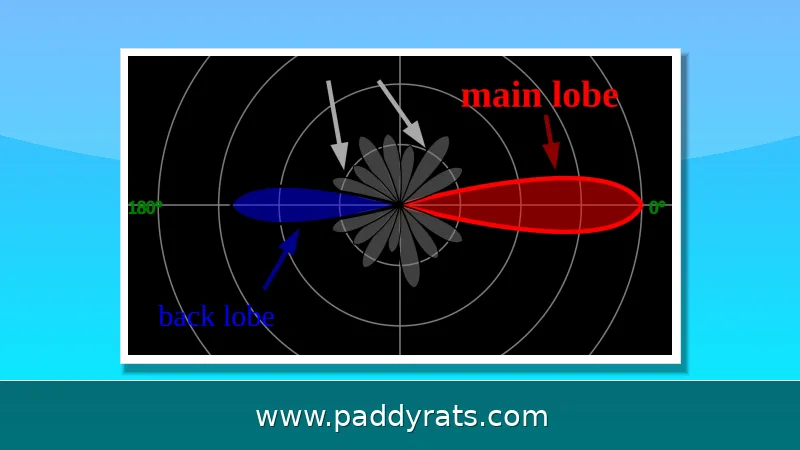
Antenna placement on a vehicle roof is not a cosmetic detail—it is one of the few installation choices that can quietly make or break an entire convoy protection setup. When antennas sit too close together or get tucked behind roof racks, light bars, or spare tires, the metal bodywork starts blocking the signal, and the modules begin interfering with one another. The result is uneven coverage with weak spots, and a gap in the protective bubble is exactly what an attacker with an RCIED needs. That is why installers usually spread omnidirectional antennas across the roof in a carefully spaced pattern, aiming for full 360-degree coverage around the vehicle. Mounting stability matters just as much over the long run, since vibration and wind load can loosen brackets over time, so checking that hardware should be a standard part of routine maintenance. Power is the other hard constraint. Jamming consumes serious current, so fleets typically rely on upgraded heavy-duty alternators that deliver 24 to 28 volts. On high-draw configurations, that alternator is paired with an independent energy system, which keeps the jamming modules fed without starving the vehicle's own electronics—navigation, communications, or engine control.
The operator interface is designed around the reality of a moving vehicle, where crews have to make decisions in seconds while the convoy is rolling. Everything runs through a ruggedized touch-screen console that keeps power levels, temperatures and active bands visible at a glance, so the operator can switch between pre-configured frequency profiles as the route changes — say, moving from an open highway into a dense urban corridor where different threats dominate. Maintenance is deliberately modular for the same reason: a damaged power amplifier module can be swapped out within minutes rather than taking the vehicle off the road, while high-frequency coaxial cables need regular inspection, active cooling vents must be kept clean, and antenna mounts should be checked for stability before every mission. A sophisticated heat evacuation system and full climate control keep the electronics alive in desert heat and freezing cold alike, which matters when the same vehicle may operate across wildly different climates.
GPS Jamming Detection as an Early Warning
GNSS bands such as GPS L1 at 1575.42 MHz are protected by international regulation, and only satellites may broadcast there. That single fact turns the GPS band into a clean tripwire: any ground-level signal detected in it is illegal interference by definition. Because detection in the GPS band can identify interference from a long distance, often further than the jammer's own effective radius, a protection team can get warning before the attack rather than during it.
Attackers usually power up their jammers only seconds or minutes before they strike, which means a detection system doesn't need to predict the future — it just needs to catch the interference fast enough to matter. That short lead time is still enough to abort a route, change course, or radio for backup, so the warning window is genuinely actionable. Watching cellular or radio bands for the same purpose is far messier, because legitimate traffic and false alarms swamp the picture and drown out any clear signal. The GPS band is different: GNSS frequencies like GPS L1 at 1575.42 MHz are reserved by international regulation for satellites only, so there are no legitimate ground transmitters to confuse the reading. Any ground-level signal there is, by definition, interference. That is exactly why tools such as GPSPATRON's GP-Probe Nano L1 exist — to sit on that band and watch for trouble. Professor David Last of the University of Bangor has long argued that GPS jamming detection belongs in the standard security stack, and the field evidence supports him.
Real-World Cases and Market Context
The threat is not theoretical. In Mexico, GPS jammers are used in 85% of cargo truck hijackings, and a truck robbery occurs roughly every five minutes. KwaZulu-Natal recorded 10 cash-in-transit heists in the last quarter of 2024, with gangs jamming GPS tracking and panic alarms before attacking with explosives and automatic weapons. In the UK, thieves used a GPS jammer to steal a Mercedes-Benz G63 AMG that was recovered only because it carried VHF-based tracking; investigators found four separate GPS jamming devices on a single stolen vehicle.
Market data reflects the demand. The signal jammer market was valued at $2.8 billion in 2025 and is projected to reach $5.6 billion by 2034 at an 8.1% CAGR, according to Dataintelo. At the low end, a basic car GPS blocker sells for as little as $3, while multi-band models run $300 to $1,700 and are sold on more than 100 websites. That asymmetry explains why GPS signals arrive at ground level at roughly -130 dBm: a cheap 10 dBm jammer can overpower them across 100 meters or more.
Is It Legal to Use a Signal Jammer for VIP Protection?
It is illegal to jam any radio signal in the United States. That applies to VIP protection details as much as to anyone else, and no security contract creates an exemption. Bomb, IED, RF and RCIED jamming devices are strictly regulated by the US Department of State under ITAR, Title 22 CFR Parts 120-130. An export license is required for any sale outside the United States, and sales require an End User Certificate identifying the ultimate buyer and use.
Vendors such as BEL, SESP, YTS Systems, Phantom Technologies, SecIntel, Prodefence and Tracker UK operate in a market where end-use documentation is part of the product. YTS Systems, which has roughly 35 years of experience and equipment used by Israeli government and security agencies, and SESP's JAMX convoy system fitted to a Hummer H2, are representative of the government and military channel rather than commercial retail. Buyers should assume that lawful deployment means a government end user, a documented export path and a compliance officer in the loop.
Comparison, Advantages and Deployment Scenarios
The advantages of a well-integrated convoy jammer come down to breadth and survivability: wide-range jamming spectrum, simultaneous blocking of multiple threat types, an open frequency window for inter-convoy communication, operator safe-radiation design, omnidirectional 360-degree antennas, full climate control, modular vehicle-mountable construction and MIL-STD compliance. Field-proven operation in conflict zones is the reference that procurement officers actually weigh.
Deployment scenarios extend well beyond a single VIP car. The same hardware family is used for military convoys, special police forces, bomb disposal teams, homeland security, anti-riot and law enforcement operations, prison facilities, airports, military bases, ports and border crossings. In each case the logic is identical: deny the radio link, keep your own link open, and detect jamming aimed at you before it becomes an ambush. The systems are expensive, regulated and heavy, but the alternative is a convoy that cannot hear the trigger coming.
Frequently Asked Questions
How does a signal jammer protect a VIP convoy?
A vehicle-mounted jammer transmits broadband noise across VHF/UHF, cellular, Wi-Fi, GPS and satellite bands, creating a protective firewall that blocks the radio triggers used to detonate RCIEDs. This shield typically spans 50 to 200 meters around the moving convoy, and it moves with the vehicles at road speed.
What frequency range do VIP protection jammers cover?
Many convoy jammers sweep from 20 MHz up to 6,000 MHz, covering HF, VHF, UHF, SHF, cellular networks, satellite phones, GPS and Wi-Fi. Some systems split this into 26 bands, while others use up to 21 modules, with output power concentrated in the land-mobile and cellular slices where RCIED triggers usually operate.
Can GPS jamming be detected before an attack on a VIP?
Yes. Attackers usually activate jammers seconds or minutes before an assault. Because the GPS band is protected and no ground transmitter is allowed there, any signal detected in the GNSS band is illegal interference, giving protection teams an early warning that can often be picked up beyond the jammer's own effective radius.
Is it legal to use a signal jammer for VIP protection?
It is illegal to jam any radio signal in the United States. Bomb, IED and RCIED jamming devices are strictly regulated by the US Department of State under ITAR, Title 22 CFR Parts 120-130, and an export license plus an End User Certificate is required for any sale outside the United States.