Specialty shops, general marketplaces and overseas suppliers all sell signal jammers, but in the US federal law bans their sale and operation. Here is where they are listed, what they cost, and what the rules actually say.
Where Can You Buy a Signal Jammer Online?
If you're searching for where to buy a signal jammer, you'll probably end up in one of two very different corners of the internet. On one side are specialty retailers that sell jamming hardware directly — names like Jammer Master, Jammer Store, Security Pro USA, Endoacustica, and Jammer Signal Blocker. On the other are big general marketplaces such as Amazon, eBay, Walmart, Alibaba, and Made-in-China, where jammers sit next to blocking pouches and signal detectors. That difference actually matters. The channel a seller uses says a lot about who they're trying to reach, whether it's a curious hobbyist or a law enforcement agency placing a purchase order.
Specialty shops like these usually act as both the manufacturer and the direct seller, which is part of their pitch. Jammer Store, for instance, calls itself a leading maker of cell phone signal jammers, blockers, and GPS and WiFi jamming equipment. Jammer Master runs an online store for cell phone, GPS, WiFi and drone jammers, throws in free worldwide shipping and a one-year warranty, and claims it used to be Amazon's bestselling signal jammer seller before going exclusive at JammerMaster.com, where you can use the 5% off code BLOCKER. Then there's Security Pro USA, which sells professional jammers to law enforcement and military buyers and even has a purchase-order and Net-30 agency desk at 1-800-264-8273. Endoacustica rounds things out with professional signal, radio frequency and microphone jammers, plus anti-drone detection and jamming gear.
If you'd rather shop on general marketplaces, the selection is thinner and less hardcore. Amazon, for instance, mostly lists passive stuff like signal blocking pouches, key fob protectors, and shielding solutions, along with hidden camera and RF signal detectors, instead of active jammers. Over on eBay, one cell phone signal jammer was listed at $23.24, marked down from $30.99, with $8.00 delivery from the United States. Walmart also keeps cell phone signal jammer and signal jammer device pages up. Then there's the wholesale route: Alibaba's supplier guide compares 16 verified manufacturers of portable jammers, covering manpack and handheld models, multi-band 2G-5G, WiFi and GPS units, and CE/ISO-certified lines.
If you want to see what's actually being manufactured, Chinese wholesale listings are a good place to start. Take Shenzhen Zhengjiangxintong Technology Co., Ltd. on Made-in-China, for example: they list a WiFi/GPS/5G remote control RF alarm jammer covering 915/315/433/868 frequencies for US$438–488, along with a 32-band handheld unit that blocks mobile phones, GPS, FM, Bluetooth, and WiFi 7. That said, these listings cater to distributors and integrators, not individual buyers, which helps explain why the gap between wholesale and retail pricing is so wide.
What Types of Signal Jammers Are Sold?
The catalog basically breaks down by form factor and by how many frequency bands a unit can cover. Handheld and portable models are what you'll see most often in consumer listings, since they're lighter and easier to move around. Desktop units, on the other hand, are built for fixed setups that need more power and a larger antenna array. Jammer Master notes that its portable jammers weigh about 1.5 kilograms on average — noticeably less than the desktop models — and that weight difference is usually the first practical trade-off buyers end up weighing.
Frequency coverage is the other big thing to look at. Basic models usually cover cell bands along with WiFi and GPS, while the pricier ones throw in walkie-talkie, LoJack, RC, and UAV frequencies too. Why does multi-band matter so much? Because a jammer can only knock out signals on the bands it actually transmits on. So if you're dealing with a drone link or a GPS tracker that sits somewhere else on the spectrum, a single-band device just won't reach it.
Here's a quick breakdown of how the main product categories stack up across the listings we looked at.
| Type | Typical bands | Weight | Listed price range |
|---|---|---|---|
| Handheld blocker | 5G cellular, UAV, GPS | Portable | $825.00 |
| Portable multi-band | Cellular, GPS, WiFi, RF | Portable | $739.99 |
| Portable phone jammer | Cellular, WiFi, GPS, walkie-talkie | Portable | $659.99 |
| 16-antenna jammer | Multiple frequencies | Portable | $1,088.99 |
| Desktop 5G jammer | Cellular, wireless, GPS, LoJack | Desktop | $1,839.99 |
| Desktop all-in-one | Full-band cellular, WiFi, GPS, LoJack | Desktop | $899.00 |
| Full-band desktop | Full band | Desktop | $1,365.99 |
Beyond those headline categories, Jammer Master also lists a portable 5G mobile phone jammer at $856.99, a handheld multi-purpose unit that jams 5G, WiFi, GPS, LoJack and RC at $899.00, and a mobile phone jammer that blocks phone, GPS, LoJack and walkie-talkie signals at $520.00. What this spread really tells you is that antenna count and band coverage push the price up more than the brand name ever does. It also shows that a 16-antenna portable can end up costing more than a full-band desktop model, which isn't exactly what most buyers expect going in.
How Does a Signal Jammer Work?
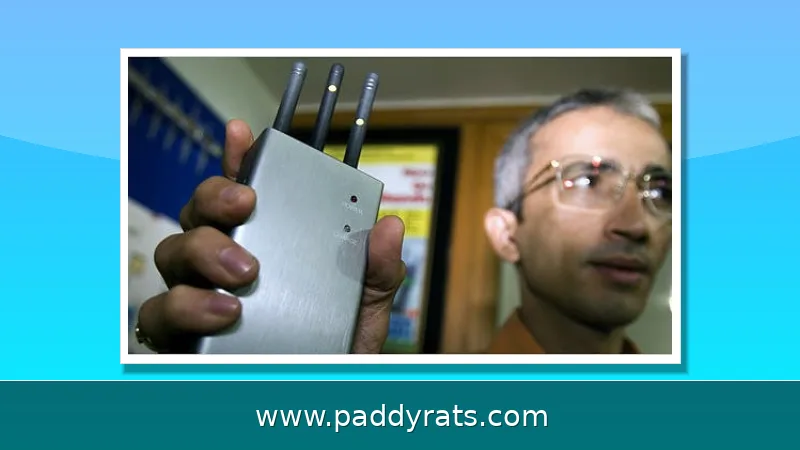
A signal jammer—sometimes called a radio jamming device or signal blocker—is an electronic device that interferes with wireless communication. It does this by transmitting radio waves on the same frequency band that phones, WiFi, Bluetooth, GPS, and UAVs use, which cuts off any device caught inside a certain radius. Jammer Master's definition lines up pretty well with how Jammer Store explains it: a frequency jammer runs on a radio signal, and when detectors pick up a signal, the jammer jams it—whether that's WiFi or GLONASS.
Every description I've seen boils down to the same basic setup. A jammer needs an RF generator to create the interfering signal, amplification mechanisms to push that signal up to a useful power level, transmission modules to route it where it needs to go, and antennas to actually send it out into the air. Wikipedia defines a mobile phone jammer as a device that deliberately transmits on the same radio frequencies your phone uses, which breaks the communication link. That's really the whole trick, and it applies just as well to Wi-Fi, GPS, Bluetooth, or any other wireless service you can think of.
The effect here is local and physical—there's no software involved. A YouTube video points out that jammers are sometimes called EMPs, since they generate a transient electromagnetic disturbance, and gpspatron.com's write-up of the GP-Probe Nano pocket GPS jammer detector puts the detectable RF bubble from a jammer at up to 500 meters. Of course, that radius depends on output power, antenna gain, and the surrounding environment, so treat manufacturer claims as best-case figures rather than guarantees.
This physical requirement is why software cannot substitute for hardware. Jammer Master states that jammer apps on iOS or Android lack the RF generator, amplification, transmission modules and antennas that dedicated hardware jammers use, so they cannot physically block signals despite their marketing claims. Anyone selling an app as a jammer is selling a placebo.
What Specs and Prices Should You Compare?
Buying guidance from the sellers themselves converges on a few checks. Jammer Master's consumer guide advises researching manufacturers' past projects and case studies, checking quality assurance and industry standards, reading genuine customer reviews, and choosing manufacturers that offer warranties and customer support. A DHGate signal jammer guide tells buyers to consider network types such as 2G, 3G, 4G, GSM and WiFi, confirm device compatibility, and check regulations and coverage area before buying.
Frequency matching is the spec most often skipped. A hewei-defense guide says jammers typically operate within specific frequency bands, so you should select one covering the frequencies relevant to your needs rather than buying the cheapest multi-band unit. If your concern is a GPS tracker on a specific band, a device that also jams WiFi and cellular may add cost and interference without solving your actual problem.
GPS jamming hardware is notably cheap at the low end. GPS World reported a widely available $33, 200mW GPS jammer for sale over the Internet, and gpspatron.com reports that for less than EUR 30 criminals can buy a cigarette-lighter-powered device that neutralizes standard GPS trackers. That price point explains why GPS interference shows up in theft and smuggling cases far more often than high-end multi-band jammers do.
On the supply side, the market is large enough that research firms track it separately. market.us projects the signal jammer market at about USD 8.70 billion by 2035 from USD 4.04 billion in 2025, an 8.70% CAGR. Dataintelo values it at $2.8 billion in 2025 and sees $5.6 billion by 2034 at 8.1% CAGR, while Strategic Market Research puts the global market at USD 2.85 billion in 2025 reaching USD 4.64 billion by 2032 at 7.2% CAGR. Research and Markets values it at USD 2.37 billion in 2026, reaching USD 3.36 billion by 2030 at 9.1% CAGR, Fortune Business Insights values it at USD 4.61 billion in 2025 growing from USD 4.98 billion in 2026 to USD 9.27 billion, and Technavio sells a signal jammer market report at $2,500 for single-user access with Excel data.
Is Buying a Signal Jammer Legal?
In the United States, the answer is straightforward and restrictive. The FCC's jammer enforcement page states that federal law prohibits the operation, marketing or sale of any type of jamming equipment. That covers the retail listings described above, which is why mainstream US marketplaces tend to carry passive blocking pouches and detectors rather than active transmitters, and why specialty sellers often operate offshore or target institutional buyers.
Rules differ by country, and a recent article on marketing.olymbec.com provides an overview of where jammers can be legally acquired and the compliance requirements governing them. Some jurisdictions allow limited use by government agencies, prisons or military units under specific authorization, while others ban civilian possession entirely. Buyers should check local regulations and compliance requirements before purchasing, since a device that is legal to import in one country may be illegal to operate in another.
The enforcement risk falls on buyers as well as sellers. Because jamming interferes with licensed spectrum, it can disrupt emergency calls, aviation and public safety communications, and regulators treat intentional interference as a serious violation rather than a paperwork issue. Even a low-power $33 GPS jammer plugged into a car outlet can trigger complaints from nearby users and attract attention from authorities.
For most readers, the practical takeaway is that the legal path is not a purchase at all. Privacy concerns are better addressed with blocking pouches, shielded boxes and RF detectors, which are widely sold on Amazon and similar platforms precisely because they do not transmit. If you need jamming capability for a legitimate institutional purpose, the route runs through authorized procurement channels such as Security Pro USA's agency desk, not a consumer checkout page.
How to Choose a Reliable Signal Jammer Supplier
If you are evaluating suppliers rather than buying immediately, start with documentation. Ask for past projects and case studies, quality assurance processes and industry certifications, and verify that reviews appear on independent platforms rather than only on the seller's own site. Alibaba's supplier guide highlights verified manufacturers with CE and ISO certifications, which gives a baseline for comparing factories that otherwise look identical in photos.
Match the supplier to your actual requirement. A distributor buying 32-band handheld units at US$438-488 from Made-in-China needs different assurances than an agency buying a desktop 5G unit at $1,839.99, and the warranty terms differ accordingly. Jammer Master advertises free worldwide shipping and a one-year warranty on its direct sales, which is a consumer-friendly posture, while Security Pro USA emphasizes purchase orders and Net-30 terms for agencies.
Finally, treat regulatory compliance as part of the supplier evaluation. A seller that cannot explain which frequency bands its devices transmit on, or that markets jammers as legal for anyone to use in the United States, is a liability rather than a bargain. The FCC's position on marketing and sale means the compliance burden runs through the entire chain, and a supplier with clear documentation is easier to work with if questions arise later.
Frequently Asked Questions
Where can you buy a signal jammer?
Specialty online stores such as Jammer Master, Jammer Store, Jammer Signal Blocker and Security Pro USA sell cell phone, WiFi, GPS and drone jammers, while marketplaces like Amazon, eBay and Walmart list jammers and blocking pouches. Suppliers also appear on Alibaba and Made-in-China, often at wholesale prices aimed at distributors rather than individual buyers.
Is it legal to buy and use a signal jammer?
In the United States, federal law prohibits the operation, marketing or sale of any type of jamming equipment, according to the FCC's jammer enforcement page. Buyers should check local regulations and compliance requirements before purchasing, since rules differ by country and some jurisdictions allow limited authorized use by government or institutional users only.
How does a signal jammer work?
A jammer emits radio waves on the same frequency band as the targeted signal, disrupting mobile phone, WiFi, Bluetooth, GPS or drone communications within a specific radius. Key components include an RF generator, signal amplification, transmission modules and antennas, and the effective range depends on output power, antenna gain and the surrounding environment.
Do signal jammer apps really work?
No. Jammer Master states that jammer apps on iOS or Android lack the RF generator, amplification, transmission modules and antennas that dedicated hardware jammers use, so they cannot physically block signals despite their claims. Blocking a radio signal requires transmitting on the same frequency, which a phone app cannot do.