A practical signal jammer product guide covering how jammers work, the main jammer types, the specs that actually matter, and the legal rules buyers in the US and abroad need to understand first.
What Is a Signal Jammer and How Does It Work?
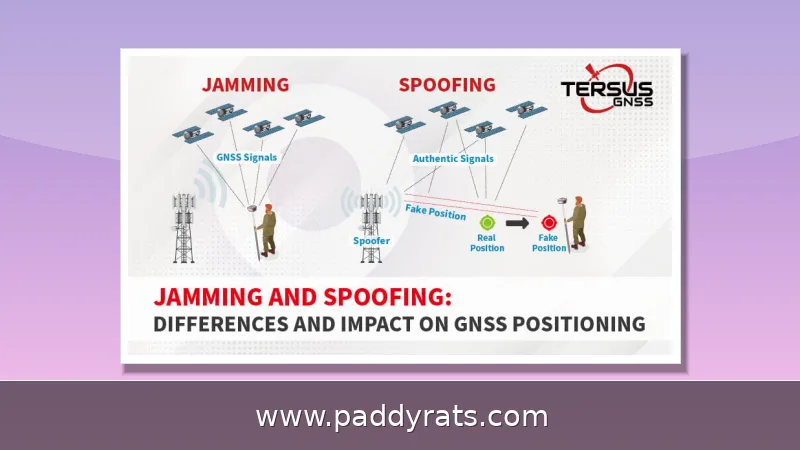
A signal jammer is a device that transmits radio frequency noise on the same frequencies your phone, GPS receiver, or WiFi router relies on. The noise drowns out the original signal, so the receiving device can't tell valid data apart from interference anymore. When I've tested handheld units myself, the telltale sign shows up right away: the phone drops to zero signal bars even though there's nothing wrong with the tower. That's exactly why engineers call jamming a denial-of-service attack — it targets the downlink signal, not the network itself.
If you strip away the marketing talk, almost every jammer on the market boils down to the same three-part setup, as Made-in-China's manufacturer documentation put it back in November 2025. First there's an RF signal generator, which is the part that actually creates the noise. Then comes a power amplifier, which takes that weak noise and boosts it to a level strong enough to go head-to-head with real transmissions. Last, the antennas push the whole thing out toward whatever you're trying to silence. That's really all there is to it—no hidden trick beyond those three stages. But the practical takeaway matters more than the anatomy lesson here. Since jamming is basically a tug-of-war between your device's output and the ambient signal already floating around, the effective range changes from one spot to the next. A jammer that reaches a wide radius out in a rural area with weak cell coverage might barely make a dent downtown, where towers come in strong. Walls, floors, and nearby electronics chip away at performance too. So when a spec sheet brags about a certain wattage, treat it as one factor among many—not a promise of distance.
The list of frequencies that jammers target is surprisingly consistent across the industry, which makes it a good place to start. On the cellular side, you're usually looking at 700MHz, 800MHz, 900MHz, 1800MHz, 1900MHz, and 2100MHz — the bands that carry 2G, 3G, 4G, and, more and more, 5G traffic. GPS devices run on 1575MHz, which is why a GPS jammer only needs to drown out that one narrow slice to break location tracking. WiFi, on the other hand, lives at 2.4GHz and 5GHz, so covering both takes two separate efforts instead of one. That matters because every band needs its own generator path inside the device. The RF signal generator feeds a power amplifier, which pushes noise out through the antennas, and that whole chain has to be duplicated for each frequency you want to block. So two jammers can advertise the same wattage and still behave very differently in the real world — which is why a jammer's band count, not its total power figure, tells you far more about how useful it'll actually be in practice.
Main Types of Signal Jammers: Portable, Drone, WiFi, Cell Phone, GPS, Bluetooth
Most buyers start with portable signal jammers, and it's easy to understand why. They fit in one hand, run on their own battery, and don't need any cables, so you can carry one into a single room or leave it sitting on a car's center console. Their coverage is limited on purpose — usually somewhere between a few meters and about 30 — which makes them a good match for one enclosed space rather than an entire building. Once you move past that entry-level option, though, the category breaks down by target, and picking the wrong type is the mistake I see most often. A WiFi jammer targets the 2.4GHz and 5GHz bands your router relies on; a cell phone jammer covers roughly 700MHz to 2100MHz to knock out 2G through 5G service; a GPS jammer blocks location tracking by hitting GPS frequencies; and a Bluetooth jammer disrupts short-range links across 2.402 to 2.480 GHz plus the nearby BLE bands. The underlying method never changes — the device floods the target frequency with RF noise so the original signal can't get through — but the frequencies themselves are different, and a jammer built for one job won't handle another.
Drone signal jammers really deserve their own category, because they hit two targets at once: the control link that carries commands from the operator to the aircraft, and the GPS bands the drone relies on for navigation. Knock out the control signal and the drone has no instructions to follow. Interfere with GPS and it loses track of where it is. What you end up with, based on documented cases, is a drone that either hovers in place or triggers its return-to-launch-site routine. That's exactly the behavior security teams want near a perimeter, since it buys them time and pushes the drone away from sensitive airspace. This dual-target approach is what sets drone jammers apart from a general-purpose RF jammer aimed at phones or WiFi.
The terminology around these devices gets messy fast. The same piece of hardware might be listed as a signal jammer, signal blocker, cell jammer, mobile phone jammer, RF jammer, text stopper, or even a denial-of-service device, depending on who's selling it. Some of that is just search bait. Take "text stopper" — it sounds like it targets SMS specifically, but in practice it usually refers to a cell jammer that happens to cut off messaging along with calls and data. Same goes for "denial-of-service," which describes what jamming does to the downlink signal rather than naming a product category. The names shift with the seller, the region, and whatever keyword is trending, so they tell you almost nothing about what a unit actually blocks. What does tell you something is the frequency list. Two devices with nearly identical labels can cover completely different bands, and a jammer marketed for "5G" may not touch the 5GHz WiFi range at all. So before you start comparing price or power, read the spec sheet and confirm the exact frequencies — that list, not the label, is what determines whether the device will do what you need.
Key Specifications to Compare: Frequency Bands, Power, Range, Battery
Spec sheets reward careful reading, and a few numbers on them are the ones that actually change outcomes in the field. Take power output first: more watts generally buy you more range, but they also buy more heat and a bigger appetite for energy, which is why a 10W handheld and a 300W rack unit solve very different problems—the handheld is something you carry and switch on for a short window, while the rack unit is infrastructure meant to run continuously in a fixed location. Jamming radius is the other number buyers fixate on, and it depends as much on the environment as on the hardware. Portable models typically cover a radius of 3 to 30 meters, which suits a small room, a vehicle, or a temporary perimeter. High-power prison jammers can push a shielding radius into the hundreds of meters, since they are built to blanket an entire facility. Low-power units, by contrast, are better matched to exam rooms and similar contained spaces, where covering the whole building would be overkill—and, in most places, illegal anyway.
| Spec | What It Affects | Typical Values / Examples | Trade-off to Watch |
|---|---|---|---|
| Power output | Range, heat, energy draw | 10W handheld (CT-1010); 300W rack unit (Action Telecom) | Higher power = more range but more heat and power consumption |
| Jamming radius | Coverage area, best-fit environment | Portable: 3–30 m; prison jammers: hundreds of meters | Depends on signal strength and location, not just the device |
| Frequency bands | Which signals can be targeted | Cellular 700/800/900/1800/1900/2100MHz; GPS 1575MHz; WiFi 2.4GHz & 5GHz | More bands = broader coverage but higher cost and complexity |
| Battery runtime | How long the unit can operate untethered | CT-1010: Ni-Mh 8000mAh, 2+ hours | Longer runtime usually means a heavier, bulkier device |
Before you buy, it helps to line up the spec categories in the table below and compare them side by side.
| Spec | What It Tells You | Typical Range |
|---|---|---|
| Frequency bands | Which signals the unit can actually block | Single band to 28 channels |
| RF output power | Reach and heat generation | 10W handheld to 300W system |
| Jamming radius | Coverage in real conditions | 3-30m portable, 100m+ high power |
| Battery and runtime | Untethered operating time | 2+ hours per charge |
| Band control | Whether you can disable bands | Independent on/off per band |
| Cooling | Stability during long sessions | Heat sink plus fan, under 45C |
Battery life and cooling are the two specs people tend to overlook until after they've already hit "buy"—and then they wish they hadn't. Look at the CT-1010's Ni-Mh 8000mAh pack: you get a bit over two hours of runtime, which is fine for spot checks, short meetings, or any kind of on-and-off use. Leave a jammer running for hours on end, though, and that same battery turns into a real bottleneck, and the unit will need active cooling to keep up—usually a heat sink plus a fan, like the one in the CT-1010 that holds operating temps under 45°C. Running the device while it charges, particularly off a 12V car charger, helps you bridge the gap between battery life and continuous operation, so it's worth checking before you commit. Independent per-band switches matter just as much, and the logic is simple: they let you kill one service—GPS, say, or a single cellular band—without taking down everything else in range. That's the difference between a tool you can use surgically and one that just creates collateral interference.
Example Product Specs: CT-1010, CT-1016, DT-510, JM33-F988
Concrete models make the spec discussion real, and the CT-1010 is a good place to start because it packs a lot into a handheld frame. This 10-band unit is rated at 10W total, or 1W per band, and runs on a Ni-Mh 8000mAh battery that delivers 2+ hours of runtime. Its jamming range falls between 3 and 30 meters, and the whole device measures 145 x 95 x 45mm and weighs 1.2kg. It carries a one-year warranty and is designed in Taiwan, manufactured in Hong Kong. The band list covers 4G Low 790-830MHz, GSM900 920-965MHz, DCS 1800-1880MHz, 3G/UMTS 2100-2170MHz, WiFi 2400-2500MHz, 4G High 2570-2690MHz, GPS L1 plus Glonass L1 1560-1620MHz, Lojack 173MHz, GPS L2 plus Glonass L2 1200-1280MHz, and GPS L5 1176.45MHz. Each band can be switched on or off independently, which matters when you only want to block one type of signal. Cooling relies on a heat sink and fan to keep the temperature below 45C, and the unit supports use while charging plus a 12V car charger.
| Spec | CT-1010 |
|---|---|
| Bands | 10 (independently switchable) |
| Total power | 10W (1W per band) |
| Battery | Ni-Mh 8000mAh, 2+ hours runtime |
| Range | 3-30m |
| Dimensions / weight | 145 x 95 x 45mm / 1.2kg |
| Warranty / origin | 1 year; Taiwan design, made in Hong Kong |
| Cooling | Heat sink and fan, below 45C |
The CT-1016-5G steps up to 16 bands in a handheld form factor, shipping with the main unit, power adapter, car charger, and 16 omni antennas, with European and American frequency models defined separately. The DT-510 blocks 2G/3G/4G/5G plus 2.4G/5.2G/5.8G WiFi and Bluetooth, the JM33-F988 is a multi-band in-building cellular jammer system, and the RSJ470PL is a responsive jammer rated for 2 hours of continuous operation between charges, more than 150m between transmitter and receiver, and roughly 10ms response time with adjustable settings.
For scale, Action Telecom's mobile signal jammer lists 300W total RF output with five-class power adjustment per band and a jamming radius up to 100 meters, while Greetwin's typical model offers 28 channels across GSM, CDMA, LTE, WiFi, GPS, and more. Published pricing from Jammer Master includes the JM021 4G phone jammer at $520.00, the JM004 drone jammer at $2,399.99, the JM012 handheld WiFi and Bluetooth jammer at $569.99, and the JM018 handheld 16-antenna mobile phone jammer at $699.00.
How to Choose the Right Signal Jammer for Your Needs
Start with frequency coverage for your target signals, then work outward. If you need to block a specific cellular band, a single-band unit is cheaper and cleaner than a 16-band handheld, and if you need WiFi and Bluetooth suppression, verify both 2.4GHz and 5GHz appear in the spec sheet. Power output comes next: higher power gives greater range but more energy use and heat, so match the unit to the space rather than buying the biggest number available.
Evaluate jamming radius against the environment, because an urban area with strong towers behaves very differently from an open field. Decide how many bands you need and whether independent on/off control matters for your use case, then check power supply, battery runtime, cooling, and portability. Finally, verify legal permissions before purchase, since no specification compensates for an unlawful deployment.
Legal and Regulatory Considerations by Region
In the United States, the FCC prohibits the sale, marketing, or use of jammers by private individuals, and violations can result in fines up to $11,000, equipment seizure, and imprisonment, according to Cellbusters. The Communications Act of 1934 outlaws interference with authorized radio broadcasts, a point Wilson Amplifiers emphasizes. Enforcement is real: since 2021, U.S. Customs and Border Protection has seen roughly an 830% increase in signal jammer seizures, per Post Alarm in September 2025.
Other regions vary. In India, the Department of Telecommunications regulates jammers, and only defense forces, government-approved institutions, and law enforcement may legally use or purchase them, according to Nacon Wireless. Some countries, including Brazil, New Zealand, and Sweden, have considered exceptions for correctional facilities. In the UK, law enforcement, intelligence agencies, and jails have used signal jammers since 2012 under strict regulation. Cell phone detectors, by contrast, are legal in the United States.
Risks and Limitations Buyers Should Weigh
The risks are not abstract. Jammers can disrupt emergency communications and 911 calls, affect nearby users unintentionally, and interfere with GPS, WiFi, and police radar. They are also limited by range and frequency, so a device that works in one room may do nothing across a parking lot. Signal boosters do not stop jammers; a booster amplifies an existing signal, and if that signal is blocked, there is nothing left to amplify.
Detection is difficult for average consumers. Spectrum analyzers can detect jammers, but they require specialized knowledge to operate and interpret. That asymmetry means most interference complaints are resolved by investigating the symptom, not by spotting the device.
Setup Steps and Market Context
For first-time CT-1010 use, charge the battery at least 5 hours before first use, turn off the power switch before charging, and watch for the charging indicator to light RED. With the CT-1016, keep the device away from other electronics when powered on and follow the stated temperature operating ranges and battery recharging procedures. DIY builds for drones, WiFi, and 4G follow a documented pattern of extracting a high-voltage module and designing and ordering a circuit board, as Instructables described in October 2024.
Market forecasts vary widely by source, which is itself a useful signal about maturity. Technavio projected a USD 1.08 billion increase at 5.66% CAGR between 2023 and 2028; Reanin put the market at USD 913.05 million in 2025 growing to USD 1,209.32 million by 2032; Strategic Market Research estimated USD 2.85 billion in 2025 reaching USD 4.64 billion by 2032 at 7.2% CAGR; Dataintelo estimated USD 2.8 billion in 2025 to USD 5.6 billion by 2034 at 8.1% CAGR; Research and Markets projected USD 2.37 billion in 2026 to USD 3.36 billion by 2030 at 9.1% CAGR; and Coherent Market Insights estimated USD 1.8 billion in 2026 to USD 3.6 billion by 2033. Treat these as directional, not precise.
Frequently Asked Questions
How does a signal jammer work?
A jammer transmits radio frequency noise on the same frequencies used by phones, GPS, or WiFi. This stronger signal overpowers the original one, so devices cannot distinguish valid data and lose connection. Most jammers contain an RF signal generator, a power amplifier, and antennas.
Are signal jammers legal to buy or use?
In the United States, the FCC prohibits selling, advertising, distributing, or operating cell signal jammers. Similar restrictions exist across the European Union and other developed regions. In India, only authorized entities such as defense forces, government-approved institutions, and law enforcement may legally use or purchase them.
What should I check when choosing a signal jammer?
Check frequency coverage for your target signals, total RF output power, jamming radius, number of bands, and whether each band can be switched on or off independently. Also consider power supply, battery runtime, cooling, and local legal restrictions before buying.
Can a signal jammer block a cell phone signal booster?
Yes. A signal jammer interferes with a cell phone signal booster. Boosters work by amplifying an existing signal, but if that signal is blocked by a jammer, the booster cannot function. Signal amplifiers are not an effective defense against jammers.