Vehicle-mounted RCIED jammers build a protective bubble around a convoy by blanking the radio triggers used to detonate roadside bombs. Here is how the systems work, what frequencies and power they run, and where the legal lines fall.
What Is Convoy Bomb Jamming Protection?
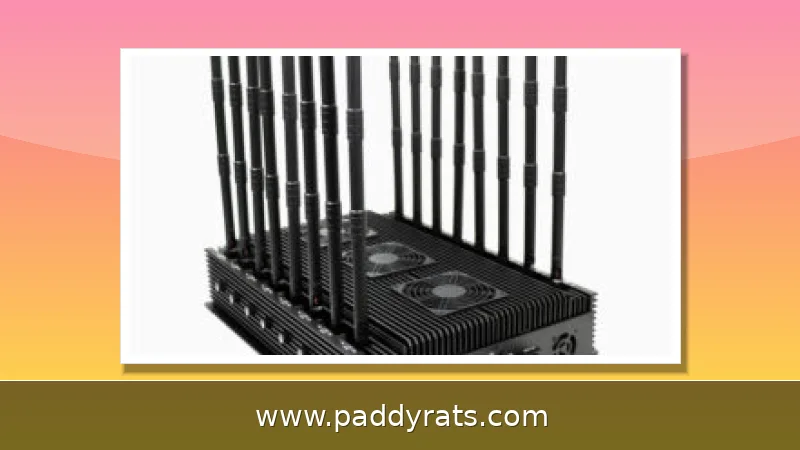
Convoy bomb jamming protection involves equipping vehicles with electronic countermeasures to jam the signal sent from a controller that tells radio-controlled improvised explosive devices—RCIED for short—to detonate. Instead of just armor, the convoy is shielded by its own shields: transmitters that saturate the trigger frequencies with noise, forming what operators refer to as a jamming bubble or firewall in front and behind outside column. The broader specs of these systems I have combed through consistently show the same pattern: broadband availability, maximum RF power output and antennas configured to provide a full 360 degrees of protection.
The threat model is specific. Usually, a roadside bomb contains a receiver tuned to fairly small bandwidth listening for the command from some kind of handheld radio, such as that in an alarm fob or cordless phone – sometimes even from satellites. If that command never comes, the device remains inert. The bomb is not disabled by jamming; the communication path to it is disrupted, which places this technique under the broader umbrella of electronic countermeasures (ECM).
When you're comparing vendors, terminology matters more than you'd think. You'll see RCIED jammer, IED jammer, bomb jammer, convoy jammer, and ECM thrown around almost interchangeably. What actually sets these systems apart comes down to four things: frequency coverage, total RF output, module count, and how the whole thing behaves while the convoy's own radios and phones are still trying to work. Those four variables are what determine whether you're looking at something that protects a two-vehicle detail or a full military shelter.
That also decouples jamming from detection. A jammer inhibits a signal; a detector prove that other is jamming. Of course, modern convoy protection layers both as well because criminals regularly turn on a GPS jammer prior to some ambush. That activation serves as the earliest warning indicator, and it can come a mere seconds ahead of when an attack on someone actually begins.
How Does a Convoy Jammer Defeat RCIED Threats?
A convoy jammer broadcasts a specific noise signal over the same frequencies that a remote trigger would use. The command beamed into the bomb is lost in noise floor, and so never registers as a valid order to detonate. Essentially, the jammer puts a firewall between transmitter and receiver, making this internal electronics ofthe bomb its weakest point.
The science of that sound is a bit stricter than it would seem. High sweeping rates and high RF density for the entire protected band are generated by chains of multi-VCO (voltage-controlled oscillator) sources, DDS synthesized or PLL. Instead of sitting on one frequency, the system runs across frequencies so rapidly that any trigger frequency is activated many times per second. That is what causes the protective bubble that spreads out from the transmitter, and broadband omni-directional antennas then spread all of that energy in every direction.
Modularity is the practical advantage. Each band usually just goes through its own module with independent on and off control so the operator can keep cellular links live while blanking VHF and UHF trigger bands. If a power amplifier module fails in the field, rather than abandoning their mission a crew trained for such eventualities will swap the unit. This is why modern systems will happily quote module counts and antenna counts as well, alongside raw wattage.
It is one thing to be blunt about the facts. Jamming radius is a function of the transmitter frequency, output power, distance to receiver and local obstacles (ie buildings/terrain and vehicle mass). 200 to 400 meters of protection in open ground does not translate into the same performance guaranteed when height is lost among dense urban canions. No spec sheet overrides physics.
What Frequency Bands and Output Power Do Convoy Jammers Use?
Coverage and wattage are the headline numbers that buyers compare — and there is a big gap between reality. The standard convoy-grade systems kick off at 20MHz and go up to a maximum of three gigahertz, but higher-end platforms that would nab satellite phones, Wi-Fi as well as other novel digital triggers stretch out to six GHz. Typical RF output usually is in the 1300 through 2000 watt range, with some vehicle platforms matching up electronics to a separate generator instead of using an alternator.
The table below pulls together representative specs that vendors like SESP, Phantom Technologies, PKI Electronic, and YTS Systems have published. Just keep in mind that these are manufacturer numbers, not results from independent lab testing, and that the total RF output reflects the sum across all bands, not what any single channel puts out.
| System | Frequency Coverage | Total RF Output | Notable Specs |
|---|---|---|---|
| SESP JAMX MK4 (Hummer H2) | 20MHz-3000MHz | 1585W | Independent 10,000W AC generator |
| SESP JAMX Military Shelter | 20MHz-3000MHz | Over 2000W | 33 separate frequency bands |
| Phantom RCJ1390LT-I | Convoy-grade bands | Up to 1535W | 200m to 300m jamming range |
| PKI 6975 | 20-6000MHz | Up to 1300W | 12 modules, up to 40 bands, 4500VA at +28VDC |
| YTS Jammer Vehicle | 20MHz-6000MHz | Up to 1800W | 26 bands, independent energy up to 20KW |
| PPT convoy system | 20-3000MHz | 1360W | 200-400m coverage, up to 150W per band |
Two things in that table stand out. First, look at the PKI 6975: a 200AH battery backup, an operating range of -35C to +65C, and a 970 x 600 x 470mm chassis weighing around 95 kilograms. Those numbers alone should tell you we're not talking about some bolt-on accessory you pick up at a hobby shop. Second, the YTS Jammer Vehicle sweeps 20MHz to 6000MHz sequentially and draws independent energy up to 20KW — which is a good reminder that peak system draw can end up far bigger than whatever RF output number gets printed on the spec sheet.
Broader coverage always carries a cost. Wideband systems block more threat types but draw more power and frequently require upgraded alternators, larger battery banks, or an onboard generator. Coexistence filters and open communication windows exist precisely to keep convoy radios and VIP cellular links active while the protective bubble stays up.
Sweep, Spot and Open Communication Modes Explained
Operators do not simply switch a jammer on and leave it. The mode determines how the RF energy is spent, and choosing wrong can either leave a gap in coverage or cut the convoy's own communications. Sweep mode, also called barrage jamming, jams the whole band with ultra-fast continuous sweeping. It is the default for unknown threats because it does not require prior intelligence about the trigger frequency.
Spot mode takes the opposite approach. It jams selected pre-programmed frequencies with concentrated power, which is useful when intelligence identifies a specific trigger type or when the operator wants to minimize interference with nearby civilian networks. The trade-off is obvious: if the threat is not on the list, spot mode will not stop it.
The open communication window is the feature that makes jamming usable in a real convoy. It carves out narrow slices of spectrum so internal radios, command links, and designated VIP cellular channels remain functional while the rest of the band is denied. Without it, a jammer would blind the very unit it protects.
Remote control rounds out the operating picture. Systems typically support wired control at the operator station plus remote start at distances up to roughly 50 meters, so a crew can activate the bubble before the lead vehicle enters a choke point. A ruggedized operator interface lets the crew switch frequency profiles quickly as the route changes from open highway to urban market street.
Vehicle Integration: Power, Antennas and Cooling
Integration is where convoy jammer projects succeed or fail. Mounting a multi-band transmitter means upgrading the vehicle's electrical system to support the load, whether through a 24-28V alternator feed, a dedicated battery bank, or an independent generator as used on the SESP JAMX MK4. Under-sizing that side of the build produces voltage sag, module dropouts, and shortened component life.
Antenna placement deserves the same discipline. Roof mounting avoids blockage from the vehicle body and reduces mutual interference between elements, which is why you see arrays of 10 to 12 antennas on purpose-built platforms. Smart active cooling keeps power amplifier modules within their thermal envelope, and cooling vents need to stay clear of armor, spare tires, and stowed gear.
Pre-mission checks are unglamorous and non-negotiable. Crews inspect coaxial cables, cooling vents, and antenna mounts daily before departure, because a loose connector can silently reduce effective coverage. Modular designs help here: if a band fails, the affected power amplifier module can be swapped in the field rather than sending the whole vehicle back to depot.
Armored vehicle options add physical protection on top of the electronic layer, and the two should be planned together. Armor changes weight, center of gravity, and airflow around roof-mounted antennas, so a build that treats jamming as an afterthought usually ends up with degraded RF performance and a vehicle that handles poorly under load.
GPS Jamming Detection as an Early Warning Layer
Detection is the layer most convoys add after they understand the threat timeline. Criminals typically activate a GPS jammer before an attack to blind tracking systems and create uncertainty about the vehicle's position. A portable GNSS jamming detector such as the GPSPATRON GP-Probe Nano L1 picks up the jammer's radio frequency signature and alerts the operator, often seconds before the physical assault begins.
The scale of the problem explains why this matters. GNSS interference incidents increased 220% between 2021 and 2024, and spoofing attacks surged 500% in 2024. Cheap jammers sell online for as little as $5, which puts the capability in almost anyone's hands. GPS jamming is involved in roughly 85% of cargo hijackings in high-risk regions, and in Puglia, Italy, 100% of documented truck diversions involved GPS jamming.
Regional data reinforces the pattern. In Mexico, about 85% of freight truck thefts involve GPS jammers, and the UK Sentinel project detected 50 to 450 GPS jamming incidents per day. That is why standard fleet tracking systems fail under jamming: they depend on the same GNSS signals the attacker is suppressing, so the dispatcher sees a frozen position rather than an alarm.
A dedicated detector solves that blind spot because it listens for the interference itself rather than relying on satellite lock. When the detector fires, the convoy has actionable warning and can change route, increase spacing, or escalate to the jamming posture. Detection does not replace the jammer; it tells the crew when to expect the fight.
What Are the Legal Limits on Convoy Jammers?
The legal position in the United States is unambiguous. It is illegal to jam any radio signal in the United States. Bomb jamming, IED jamming, RF jamming, and RCIED jamming devices are strictly regulated by the US Department of State under ITAR, 22 CFR Parts 120-130, and export licenses are required for shipments outside the USA. Sales require an End User Certificate.
That regulatory frame is why legitimate convoy protection work flows through government, military, and authorized defense channels rather than commercial retail. Vendors publish specifications openly, but procurement runs through export control review. Anyone marketing a consumer-grade bomb jammer online is either misrepresenting the product or operating outside the law.
Compliance also shapes technical choices. Coexistence filters and open communication windows are not just operational conveniences; they reflect the reality that a jammer affects every receiver in range, including friendly and civilian ones. Responsible deployments document frequency profiles, operating windows, and shutdown procedures.
Finally, remember that performance claims are conditional. Jamming radius depends on transmitter frequency, output power, distance to the receiver, and obstacles in the path. A manufacturer's 200 to 400 meter figure assumes favorable conditions, and no compliance review or spec sheet changes what the RF environment will actually allow on a given route.
Frequently Asked Questions
How does a convoy jammer protect vehicles from roadside bombs?
A convoy jammer broadcasts noise on the radio frequencies used by remote-controlled improvised explosive devices, creating a protective bubble or firewall around the convoy. This blocks the trigger signal from reaching the bomb's receiver, preventing remote detonation while vehicles move through dangerous areas.
What frequency range do convoy protection jammers cover?
Many convoy jammers cover 20MHz to 3000MHz, while some systems extend from 20MHz up to 6000MHz. This wide sweep targets HF, VHF, UHF, SHF, cellular networks, satellite phones, GPS and Wi-Fi, neutralizing both legacy analog and modern digital triggers.
What are the main operating modes of a convoy jammer?
Typical modes include sweep or barrage mode, which jams the whole frequency band with ultra-fast continuous sweeping; spot mode, which jams selected pre-programmed frequencies; and an open communication window that lets the convoy keep internal communications active while jamming is running.
Why is GPS jamming detection important for convoy protection?
Criminals often activate GPS jammers before attacking a convoy. A portable GNSS jamming detector picks up the jammer's radio frequency signature and alerts the operator, often seconds before the physical attack, turning jammer activation into the convoy's earliest threat indicator.