Smuggled signal jammers are surging at U.S. borders, and DHS warns they can knock out 911 calls, police radios, and aviation signals. Here is how the technology works, who may legally operate it, and what penalties illegal import and use now carry.
What Is a Signal Jammer and Why Does It Matter for Border Security?
A signal jammer does exactly what it sounds like: it floods radio frequencies with noise until legitimate transmissions can't get through. At the border, that matters a lot, since those same bands carry the radios, phones, and GPS links that agents, first responders, and aircraft depend on every day. Smuggling networks have caught on—a cheap, pocket-sized device can blind an entire patrol sector or cut off a victim's call for help. What used to be a niche counter-surveillance curiosity has become a mainstream border enforcement problem, and the numbers bear that out.
In June 2025, the Department of Homeland Security issued a warning that probably deserved more attention than it received: since 2021, U.S. Customs and Border Protection has recorded an 830% jump in seizures of Chinese-made signal jammers. That number matters a lot, because these devices aren't just contraband—they actually take out the radio frequencies that police, emergency responders, and even aircraft rely on. DHS laid out the consequences in blunt terms: blocked 911 calls, disrupted law enforcement operations, interference with critical infrastructure, and risks to civilian aviation. And this was no hypothetical. The agency pointed to a string of real cases—South American illegal aliens using jammers to cut off calls to police during home invasions and bank robberies across seven states, Texas law enforcement recovering a jammer while arresting an illegal alien from Chile, and a criminal who used one during a burglary.
Terminology really does matter here, whether you're digging through enforcement documents or just scrolling through product listings, because the same piece of hardware goes by a surprising number of names. Depending on the source, you might see it called a signal jammer, a signal blocker, an RF jammer, a GPS jammer, a cell jammer, a WiFi jammer, a drone jammer, jamming equipment, or simply radio frequency interference. From a legal standpoint, those labels aren't interchangeable, but in practice they almost always refer to the same physical device. A shopper typing "signal blocker" into a marketplace search bar and a CBP officer filing a seizure report for a "radio frequency interference device" could be talking about the exact same box, just from opposite ends of the supply chain. That vocabulary gap isn't just a fun fact, either. It's actually part of the reason these products circulate so easily online: sellers can dodge automated filters and platform bans by cycling through loosely defined terms, while investigators and customs paperwork stick to narrower statutory language. So if you're trying to follow the border-security debate, figuring out which term applies where is really the first step toward understanding what's actually being sold, seized, or banned.
How Do Signal Jammers Work Against Border Communications?
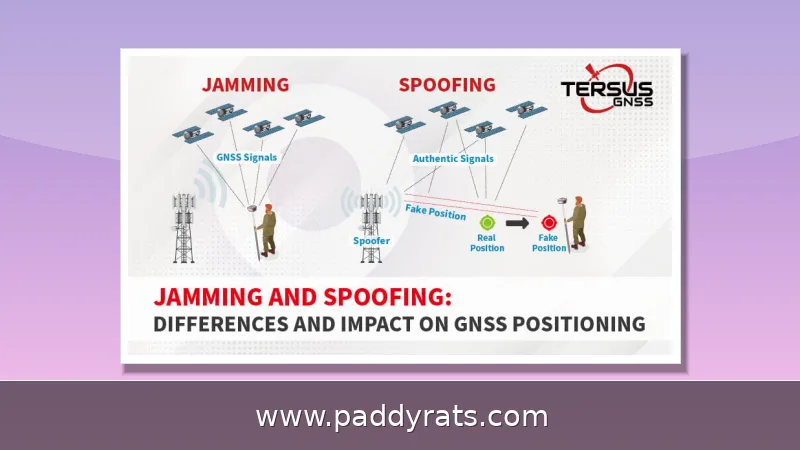
Every wireless link really boils down to three things: a frequency, a power level, and a signal-to-noise threshold. A jammer goes after that third one. It blasts noise or interference on the exact same frequencies the target device is using, drowning out the communication link until the receiver can't tell the real signal apart from all the garbage piled on top of it. Think of two people trying to carry on a conversation across a room while someone else holds a megaphone to their ears and cranks out static — the words are still being spoken, but they never arrive intact. That's the whole mechanism, and it's exactly why jamming gets misunderstood so often. It isn't hacking. There's no password to crack, no software flaw to exploit, no data to steal. The device just shouts louder than the conversation, and physics takes care of the rest.
How far a jammer reaches really comes down to two things: how much power it's pushing and how close it is to whatever it's trying to knock out. A little handheld blocker can wipe out cell service in one room or inside a car—plenty to keep someone from dialing 911. Scale that up to a vehicle-mounted system, though, and the same interference can blanket a much larger area, taking down phones, Wi-Fi, GPS, and other radio links along a whole stretch of border. But raw power isn't the whole picture. Jamming signals behave like any other radio wave: they get blocked, absorbed, or weakened by physical obstacles—vehicles, buildings, heavy metal. That's a big deal in border areas, where concrete walls, steel shipping containers, and packed dirt berms are pretty much everywhere. A jammer stashed inside a truck cab might never reach a patrol vehicle parked behind a concrete barrier—and yet it can still cut off a phone call from the back seat of that same truck, because the signal only needs a clear enough path to the device it's targeting.
Different targets call for different bands, and that's where the technical side actually becomes practical. Drone jammers, for instance, go after 433 MHz, 900 MHz, 1.2 GHz, 1.5 GHz, 2.4 GHz, and 5.8 GHz, along with the GNSS bands carrying GPS, GLONASS, Galileo, and BeiDou signals. Cell jammers work a bit differently: they cut the link between a handset and the cell towers nearby. WiFi jammers, by contrast, zero in on the 2.4 GHz and 5 GHz bands that handle most local wireless traffic. This frequency map matters because it's the first step toward detection. Pull up a GNSS jammer on a spectrum analyzer and it looks nothing like one aimed at a cell tower. The noise signature, the channels affected, the timing—they're all different. So when border teams know which band is being hit, they get a head start on figuring out what kind of device they're dealing with and where it's likely coming from.
What Does DHS Say About the 830% Increase in Jammer Seizures?
The DHS warning from June 2025 is probably the most straightforward public acknowledgment we've gotten that jammers have shifted from a hypothetical concern to something agencies are actually dealing with. The department says U.S. Customs and Border Protection has seen an 830% spike in seizures of Chinese-made signal jammers since 2021 — basically, the number of these devices showing up at the border has multiplied nearly nine times over in just a few years. What was once a rare catch every now and then has turned into a steady stream that has federal officials paying close attention. And DHS was careful to frame this as a public safety problem, not just a customs violation — which makes sense, because jammers do more than skirt import rules. They can cut off the exact communications people depend on in an emergency. The department called out the risks these devices create for emergency responders, law enforcement, critical infrastructure, and civilian aviation, making the point that the consequences go far beyond the border itself.
The incidents DHS cited deserve a closer look, because they show what this technology actually looks like in the hands of criminals, not in some lab demo. In seven states, South American illegal aliens used jammers to cut off calls to police during home invasions and bank robberies. Think about what that means: a victim tries to dial 911 and gets dead air instead of a dispatcher, at the exact moment help matters most. In Texas, law enforcement recovered a signal jammer while arresting an illegal alien from Chile, a case that turned a routine arrest into hard evidence of cross-border trafficking in jamming gear. Then there's the burglary case, where a criminal used a jammer, most likely to silence alarm system communications so he could slip inside undetected. Put these episodes side by side and a pattern emerges: jammers aren't exotic contraband anymore. They're practical tools, and criminals inside the United States are already using them.
This isn't just some abstract spectrum dispute buried in a policy paper. Every case has a real person on the other end: someone who grabbed their phone to call 911 and got dead air, a dispatcher who couldn't reach an officer over the radio, or an alarm panel that went silent before it ever pinged the monitoring center. DHS also pointed out something that makes the whole situation even stranger—signal jammers are banned for public use in China. So if ordinary citizens there can't legally own them, why are Chinese-made units flooding into the U.S. in growing numbers? The answer seems to come down to simple economics. Cheap production, easy online sales, and lax screening at the shipping point all add up, letting low-cost jamming hardware cross the border with barely any friction.
Which Frequencies and Technologies Are Targeted by Border Jammers?
Before you can even get into the legal side of border jamming, you have to understand it as a spectrum problem first. The frequency map is what shows you exactly what's at stake. The table below breaks down the main bands and explains what each one carries in a border security context.
| Band | Common Use | What Jamming Disrupts |
|---|---|---|
| 433 MHz | Remote controls, sensors, drones | Device commands and telemetry |
| 900 MHz | Industrial and drone links | Long-range control and data |
| 1.2 GHz / 1.5 GHz | Video and satellite links | Drone video, GNSS signals |
| 2.4 GHz / 5 GHz | WiFi, consumer drones | Wireless networks and drone control |
| 5.8 GHz | Drone video and control | Live video feeds |
| GNSS (GPS, GLONASS, Galileo, BeiDou) | Navigation and timing | Position, navigation, and timing |
Reading the table, the pattern is clear: the bands that carry consumer convenience also carry border operations. GNSS interference is especially dangerous because so much infrastructure depends on GPS timing, from cell towers to financial networks. A jammer aimed at a drone can also degrade navigation for aircraft and vehicles miles away, depending on power and terrain. That is why detection has to come before mitigation. If you cannot see which band is being hit, you cannot safely respond without disrupting emergency communications, aircraft, or wireless infrastructure that innocent people rely on.
What Hardware Exists, and What Can It Do?
On the commercial side, jamming hardware ranges from handheld blockers to full vehicle platforms. One representative product, the YTS Jammer Vehicle, is a 4x4 vehicle with a jamming system that blocks 20 MHz to 6,000 MHz, covering HF, VHF, UHF, SHF, cellular, satellite, GPS, and Wi-Fi. It delivers up to 1800 W across 26 bands and offers three modes: sweep, GSM/cellular, and selectable frequency bands. Omnidirectional antennas provide 360-degree protection, and independent energy can reach up to 20 KW.
Another example, the Airsight Smart and Autonomous Jammer, advertises 360-degree coverage out to 1.9 miles with manual and automatic activation, integrating with the AirGuard detection platform. The pairing of detection and jamming in one workflow is the key design idea: sensors identify a threat, and the jammer responds on the relevant band rather than blanketing everything.
These specifications matter for two reasons. First, they show how far the commercial market has moved beyond crude noise generators. Second, they illustrate why enforcement is difficult: a vehicle-mounted system can be parked, powered, and moved quickly, and its emissions may look like ordinary interference until someone correlates them with a specific incident. Buyers should understand that capability does not equal legality, and most of these systems are restricted to authorized government users in the United States.
Who Can Legally Operate Signal Jammers in the United States?
Federal law is blunt on this point. The Communications Act of 1934, specifically 47 U.S.C. 301, 302a, and 333, prohibits the operation, marketing, or sale of jamming devices. Federal law also bars private import, operation, marketing, or sale of any signal jamming equipment that interferes with law enforcement communications, GPS, or radar. That covers the vast majority of devices sold online, regardless of how they are advertised.
Authorized entities form a short list: the Department of Defense, DHS including CBP and the Secret Service, the Department of Justice including the FBI, the Department of Energy, and the Coast Guard. The SAFER SKIES Act, included in the FY2026 NDAA, extends authority to state and local law enforcement after training at the FBI National Counter-UAS Training Center in Huntsville, Alabama, to correctional facility security agencies, and to agencies protecting National Special Security Events.
Not authorized are private companies, individual property owners, and private security firms unless they are contracted by an authorized agency. This is the line most people miss. A homeowner who buys a jammer to stop porch pirates, or a private firm that deploys one to protect a warehouse, is committing a federal violation even if the intent is defensive. The legal test is not intent; it is whether the operator falls within an authorized category and follows federal procedures.
What Are the Penalties for Illegal Jammer Import and Use?
The FCC enforces jamming violations with fines up to $112,500 per incident, plus potential criminal prosecution. That per-incident structure matters because a single device used repeatedly, or a shipment containing multiple units, can multiply exposure quickly. Enforcement actions can also include seizure of the equipment, which is how CBP seizures become the leading indicator of the problem.
CBP has broad authority to search electronic devices at borders, and data obtained during those searches can be retained for up to 15 years. For anyone importing jamming equipment, that combination is significant: the device itself may be seized, and the associated records, shipping manifests, and communications may be retained for years and used in later proceedings.
The practical takeaway is that the risk is not limited to the moment of import. Marketing, selling, or operating a jammer inside the United States can trigger separate violations, and the FCC has a dedicated jammer enforcement program. If you are a business evaluating counter-drone or RF protection options, the safe path is to work through an authorized agency or a contractor engaged by one, and to document that authorization before any equipment is powered on.
What Are the Market Trends Behind Signal Jammers?
The commercial market is growing even as the legal market shrinks for private buyers. Strategic Market Research values the global signal jammer market at USD 2.85 billion in 2025, projected to reach USD 4.64 billion by 2032, a CAGR of 7.2%. Fortune Business Insights offers a steeper forecast, from USD 4.98 billion in 2026 to USD 9.27 billion by 2034, a CAGR of 8.1%. Technavio projects an increase of USD 1.08 billion at a CAGR of 5.66% between 2023 and 2028.
The spread between these forecasts reflects genuine uncertainty about how much demand comes from authorized government and military buyers versus illicit civilian use. Growth in counter-drone and critical infrastructure protection is legitimate and policy-driven. Growth in cheap consumer jammers is the part that shows up in CBP seizure statistics and DHS warnings.
For border security specifically, the market signal is mixed. Agencies need detection and selective jamming tools, and vendors are responding with integrated platforms. At the same time, the same supply chains that serve authorized buyers also feed the gray market. That dual-use reality is why enforcement, export controls, and vendor due diligence all matter at once.
What Are the Risks and Limitations of Border Jamming?
The most immediate risk is that jammers can prevent 911 calls and emergency alerts. A person in danger who cannot dial out, or an alert system that cannot reach the public, turns a criminal incident into a catastrophe. Interference with public safety communications can also leave responders without vital communications during the exact moments when coordination saves lives.
Jammers can disrupt alarm system communications, allowing intruders to enter undetected. They can interfere with aviation signals and GNSS timing that supports wireless infrastructure. And because jamming is indiscriminate within its band, it does not distinguish between a criminal's phone and a paramedic's radio.
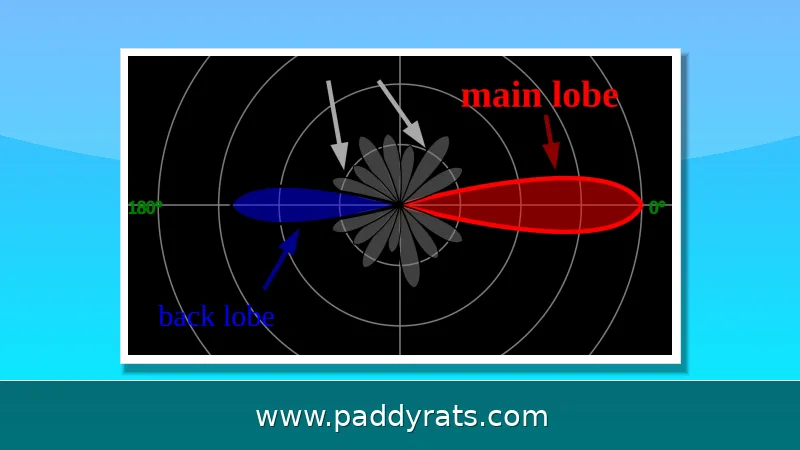
The operational limitation is equally important: detection must come before mitigation. Improper deployment can disrupt emergency communications, aircraft, and wireless infrastructure. Smart jamming systems address this with directional antennas and selective frequency targeting, and detection platforms cue jammers to specific threats rather than blanketing a region. Physical barriers can block or weaken jamming signals, which is one reason fixed sites are easier to protect than mobile patrols.
None of this is hypothetical for border agencies. The DHS warning and the seizure data show that jammers are already in criminal hands, and the response has to be precise. Blanket counter-jamming would create the same harm the criminals do. Selective, authorized, and well-documented operations are the only defensible approach.
How Can Border Agencies Detect and Counter Signal Jammers?
Detection is the foundation. Agencies use RF detection platforms to identify emissions, directional antennas to locate the source, and selective frequency targeting to respond on the right band. Smart jamming systems can focus energy on specific bands and integrate with sensors, so the response is proportional to the threat rather than a broad blackout.
The workflow typically runs from sensing to classification to action. A detection platform flags an anomaly, operators compare it against known device signatures, and a jammer is cued only if the threat is confirmed and the operator is authorized. This is why the Airsight and AirGuard style integration matters: pairing detection with response shortens the decision loop and reduces the chance of disrupting friendly communications.
For readers outside government, the practical guidance is to report suspected jamming rather than counter it. If your phone drops calls in the same location repeatedly, if your GPS fails in a pattern, or if your alarm panel loses contact, that pattern is worth documenting and reporting to the FCC or local law enforcement. The FCC maintains a jammer enforcement program, and complaints help build the case for action.
Finally, physical security still matters. Barriers, terrain, and building materials can weaken jamming signals, and hardened communications paths can preserve some connectivity. No single measure solves the problem, but layered detection, legal restraint, and rapid reporting are the realistic countermeasures available today. If your work involves RF protection, treat authorization as a prerequisite, not an afterthought. This article is for informational purposes and is not legal advice.
Frequently Asked Questions
How do signal jammers threaten border security?
Signal jammers disrupt radio frequency channels used by law enforcement, emergency response, and critical infrastructure. DHS warns they can block 911 calls, interfere with police operations, and threaten civilian aviation, especially when smuggled across borders and used by criminal groups.
Are signal jammers legal for border security use?
Federal law prohibits private import, operation, marketing, or sale of jamming equipment that interferes with authorized radio communications, including law enforcement, GPS, and radar. Only authorized government entities, such as DHS and CBP, may operate jammers under specific federal authority.
What is the 830% increase in signal jammer seizures?
U.S. Customs and Border Protection reported roughly an 830% increase in seizures of Chinese-manufactured signal jammers since 2021. DHS issued a warning that these smuggled devices pose a threat to public safety, law enforcement, and civilian aviation.
How can border agencies detect and counter signal jammers?
Detection must come before mitigation. Agencies use RF detection platforms, directional antennas, and selective frequency targeting. Smart jamming systems can focus energy on specific bands and integrate with sensors, but only authorized government entities may legally operate them.