Cell phone jammers flood the same radio frequencies your phone uses, drowning out tower signals with a stronger transmission. Here is how the technology works, what US law says about it, and how to tell when jamming is happening.
What Is a Cell Phone Jammer and How Does It Work?
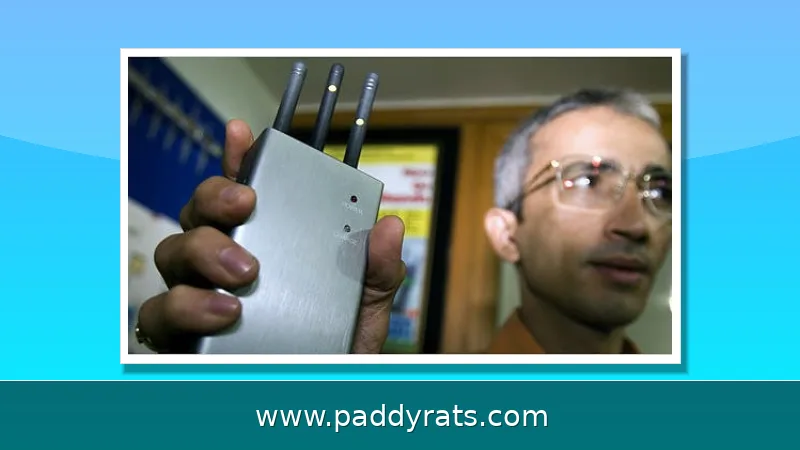
A cell phone jammer — also known as a blocker, signal jammer, cell jammer, or text stopper — is a device that deliberately transmits radio signals on the same frequencies mobile phones use, disrupting communication rather than carrying it. I once watched a bench test where a handheld unit wiped out every bar on three carriers at the same time, and honestly, the mechanism behind it is simpler than most people would guess.
At its core, jamming is really just a power contest. The jammer throws out a radiofrequency (RF) signal that's stronger than whatever is coming in from the nearest cell tower. Since your phone can't tell the two signals apart, it grabs the stronger one—and that means the weaker tower signal gets canceled out. This all happens on the downlink, so the handset never actually receives usable data from the tower. That's why you look at your screen and see zero signal bars.
Strictly speaking, this counts as a denial-of-service attack, except it's aimed at a radio link instead of a server. Cheaper jammers only knock out a single frequency band, which is often enough to trick a phone into thinking there's no network around at all. The more advanced units take a different approach: they use protocol-level jamming to go after the control channels—the signaling paths a phone relies on to register with the network and stay connected.
When you're comparing jammers, range and frequency coverage are the two specs that really matter. A portable jammer usually reaches about 30 feet, while bigger fixed units can hit up to a mile. That said, Wilson Amplifiers points out that in practice, indoor jamming range is often no more than roughly 30 square feet—walls, furniture, and building materials soak up RF energy fast, so the signal doesn't travel nearly as far as the box claims.
Which Frequencies and Bands Do Cell Phone Jammers Target?
Jammers are designed to target the exact bands that carriers and phones actually use, which means a device built for one market might do nothing at all in another. The table below breaks down the bands that show up most often, drawing from published jammer specs and standard cellular frequency allocations.
| Service | Frequency band | What it disrupts |
|---|---|---|
| Cellular (low band) | 700 MHz, 800 MHz, 900 MHz | Voice calls, SMS, rural and long-range coverage |
| Cellular (mid/high band) | 1800 MHz, 1900 MHz, 2100 MHz | LTE data, urban coverage, capacity layers |
| GPS | 1575 MHz | Navigation, timing, location services |
| WiFi | 2.4 GHz and 5 GHz | Local wireless data and VoIP apps |
| Other | Police radar, LoJack-type tracking | Speed measurement, stolen-vehicle recovery |
Wide-band jammers—sometimes called full-spectrum jammers—knock out several bands at once, and that's exactly why they're the ones you see confiscated most often in enforcement cases. Since GPS, WiFi, and even police radar can fall within the same sweep, it's rare for a jammer to take down only cell phones. That kind of spillover is a big reason regulators treat these devices as a public safety threat rather than just another consumer gadget.
Here's something a lot of people don't realize: a signal jammer will also take down a cell phone signal booster. Boosters do one job—they amplify a signal that's already there—so if that signal is being jammed, there's nothing to amplify. That means if you're using an amplifier to fix weak indoor coverage, don't count on it to protect you from jamming. In a sense, every signal jammer is also a signal booster jammer.
Are Cell Phone Jammers Legal? FCC Rules and Penalties
In the US, it's against the law to use, advertise, or sell any kind of jamming device that's built to mess with authorized radio communications. The FCC has made it clear: running a cell jammer is a federal offense. And they're not bluffing, either — the agency has handed down fines more than once to people and retailers caught importing or selling these devices.
The FCC says its main worry here is public safety. Jammers can mess with critical communications in a big way — they can block 911 and other emergency calls, and they can interfere with police radio traffic too. On top of that, radio frequencies are protected by law under the Communications Act of 1934, which makes it illegal to interfere with authorized radio broadcasts.
These penalties aren't just for show. If you use or sell a jammer in the US, you could be looking at fines of up to $11,000 per violation, plus seizure of the equipment and even criminal charges that can land you in prison. I've come across enforcement letters where repeat violations stacked up into six-figure totals, and that's exactly why most reputable electronics retailers won't touch these devices.
Detectors, on the other hand, fall on the legal side of things. You can legally use a cell phone detector in the United States even though jamming itself is banned, and that's exactly why schools, venues, and certain businesses rely on detectors to catch unauthorized transmissions instead of trying to block them. So if you're thinking about buying a jammer, the safest assumption is that using one is illegal pretty much anywhere in the country, aside from a few narrow government exceptions.
Prison Cell Phone Jamming: Debate and Exceptions
Correctional facilities are the one setting where jamming has serious policy momentum. Contraband phones smuggled into prisons have been used to run criminal operations from behind bars, and properly deployed, calibrated jamming is effective at preventing inmates from making calls, sending text messages, and using data-based services.
The limits are just as important as the capability. Jamming does not disable other features of a contraband phone, such as video recording and word processing, because those functions do not depend on a live network link. A seized phone can still hold evidence even when its radio is dead.
Cell phone signal detectors, by contrast, are legal and common inside correctional facilities, and they are often paired with jamming proposals. The FCC may allow prison cell phone jamming under certain conditions, and while jamming disrupts cellular signals and potentially WiFi or satellite frequencies, other phone features keep working.
Other countries have moved at different speeds. Brazil, New Zealand, and Sweden have considered exceptions for jamming technology in correctional facilities. In the United Kingdom, law enforcement agencies, intelligence agencies, and jails have employed signal jammers since 2012 under strict regulation. State lawmakers in the United States have been calling to legalize jamming technology in correctional facilities, though current federal use by law enforcement agencies is authorized only in limited exceptions.
Types of Jammers: Portable, Desktop, Drone, and WiFi
The market splits into a few recognizable form factors, and knowing them helps you understand what you might actually encounter. Portable cell phone jammers are pocket-sized and battery-powered, with short range. Desktop jammers are larger, plug into mains power, and cover a room or a small building. GPS jammers target navigation bands, GSM/GPS jammers combine cellular and satellite blocking, and 5G/WiFi jammers focus on data networks.
Specialty categories round out the catalog. Remote control jammers and UHF/VHF jammers target two-way radio links, drone jammers cut the control and video feeds used by quadcopters, LoJack and 4G jammers interfere with vehicle tracking, and spy cam jammers aim at covert wireless cameras. Military jammers sit at the top of the price and power scale, and bug detectors are sold alongside them as counter-surveillance gear rather than transmitters.
Retailers such as Jammer Store group these products into exactly those categories, and the listings make the trade-offs clear: more bands and more power mean higher cost, larger size, and a bigger legal footprint. A single-band portable unit might sell for the price of a midrange phone, while multi-band desktop hardware costs several times more.
My honest read after comparing specs is that the technical differences between budget and premium units matter far less than the legal exposure. In the US, every category above is unlawful to operate, market, or sell when it interferes with authorized radio communications, so the catalog is effectively a list of prohibited products for American buyers.
How to Detect a Cell Phone Jammer and What to Do
The most common symptom of jammer interference is dropped service: calls fail, texts stall, and data crawls or stops, often across multiple carriers at the same location. That said, bad network connections can also come from faulty equipment, physical obstructions, or lawful devices operating on the same frequencies, so a single dropped call proves nothing.
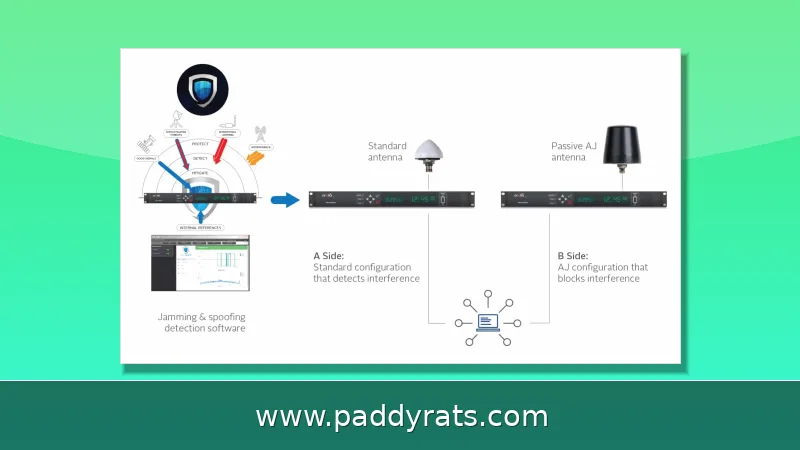
Apps claiming to detect signal jammers are largely unproven and need a working signal to function at all, which is a contradiction when the signal is being jammed. Without advanced military-level technology, it is virtually impossible for the average consumer to definitively detect a jammer. Spectrum analyzers can identify interference by analyzing frequencies and revealing anomalies, but they are not commonly available and require specialized knowledge to interpret.
If you suspect authorized communication is being jammed, start with the basics: contact your wireless network provider, consult your owner's manual, and search the internet for your device and model to rule out a hardware fault. If you suspect illegal activity, contact law enforcement or file a complaint with the FCC, and include times, locations, and affected carriers.
Stopping a jammer usually means finding it. The device may look like a walkie-talkie, a cell phone, or a wireless router, and it has to be physically located and disabled. Switching frequency may work depending on how sophisticated the jammer is, and relocating can help because range is limited. None of these are reliable fixes against a wide-band unit.
DIY and Technical: Inside a Jammer Circuit
A basic cell phone signal jammer circuit uses three subcircuits: an RF amplifier, a voltage controlled oscillator, and a tuning circuit. The supporting components are ordinary electronics staples, including resistors, capacitors, transistors, and inductors, which is part of why these designs circulate so widely online despite being illegal to build and operate in many countries.
The RF amplifier boosts the signal generated by the tuned circuit, and the amplified output travels to the antenna through a capacitor that blocks DC current while allowing AC to pass. The tuned circuit acts as an oscillator producing very high frequency with minimum damping, which is what lets a small board cover a narrow slice of spectrum efficiently.
Engineers evaluate performance with the jamming-to-signal ratio, a general equation that factors in jammer power, antenna gains, communication receiver bandwidth, and the ranges between transmitters and receivers. In plain terms, the closer the jammer and the wider its power advantage, the more completely it can drown out a tower.
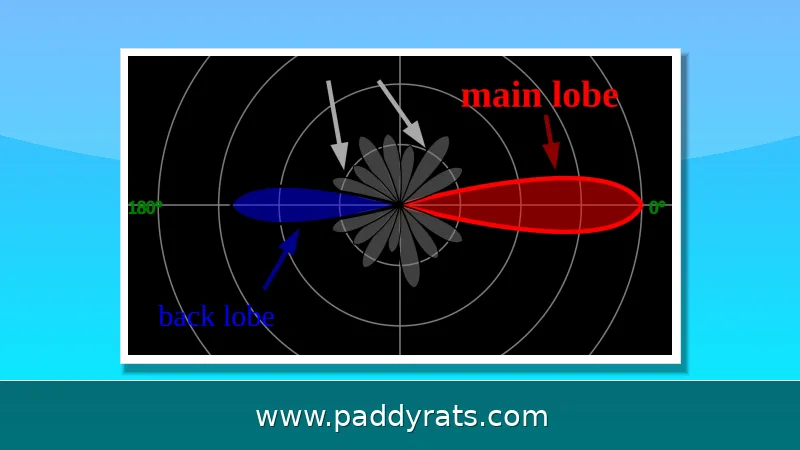
That math explains the practical limits too. Power drops with distance, antennas are directional, and buildings attenuate RF, so a device that works in an open parking lot may fail inside a concrete office. It also explains why jamming is a blunt instrument: the same energy that blocks a phone can block GPS, WiFi, and public safety radios nearby.
Key Takeaways on Jamming, Legality, and Detection
Cell phone jamming comes down to a power contest on shared radio frequencies, and the technology is neither mysterious nor especially precise. Jammers win by transmitting a stronger downlink signal than the nearest tower, which is why phones show no bars and calls fail, and why the same devices often knock out GPS, WiFi, and radar as collateral damage.
Legally, the picture in the United States is unambiguous. Operating, marketing, or selling jamming equipment that interferes with authorized radio communications violates federal law, with fines up to $11,000, equipment seizure, and possible imprisonment. Detectors are legal, boosters are not a defense, and detection apps are mostly unproven.
For most readers, the practical path is detection and reporting rather than countermeasures: document the outage, rule out hardware and obstructions, contact your carrier, and escalate to law enforcement or the FCC if you believe illegal jamming is happening. Prison and government exceptions exist, but they are narrow, tightly regulated, and not available to consumers.
I would treat any consumer listing promising a discreet blocker as a legal liability first and a gadget second. The physics is real, the enforcement is real, and the safest way to deal with interference is to identify it and hand it to the people authorized to act on it.
Frequently Asked Questions
How do cell phone jammers work?
Jammers emit a radiofrequency signal stronger than the nearest cell tower's signal on the same frequencies. The phone picks up the stronger signal, the weaker one cancels out, and the device shows no signal bars. This is a denial-of-service attack on the downlink, so the handset never receives usable data from the tower.
Are cell phone jammers legal in the United States?
No. It is illegal to operate, market, or sell jamming equipment in the US. The FCC cites risks to public safety and 911 calls, and the Communications Act of 1934 outlaws interference with authorized radio broadcasts. Penalties include fines of up to $11,000, equipment seizure, and imprisonment. Cell phone detectors, by contrast, are legal.
How can I detect a cell phone jammer?
The most common sign is dropped service, though faulty equipment or physical obstructions can cause this too. Detection apps are largely unproven and need a working signal. Spectrum analyzers can identify interference but are uncommon and require specialized knowledge. If you suspect illegal jamming, contact law enforcement or file an FCC complaint.
Does a cell phone jammer block a signal booster?
Yes. A jammer interferes with a signal booster because boosters amplify an existing signal, and a jammed signal cannot be amplified. Signal amplifiers are not an effective defense against jammers, which is why any signal jammer is also, in practice, a signal booster jammer.
How does a cell phone jammer actually block calls?
A jammer transmits a radio signal on the same frequencies your phone uses, but stronger than the signal from the nearest cell tower. Your phone locks onto the stronger signal and cannot receive usable data from the tower, so calls fail, texts stall, and the screen shows no signal bars. It is a power contest on the downlink.
Can I detect a cell phone jammer with an app?
Most apps claiming to detect jammers are unproven and need a working signal to function, which is impossible while jamming is active. Spectrum analyzers can identify interference but are not commonly available and require specialized knowledge. If you suspect illegal jamming, document times, locations, and affected carriers, then contact your carrier or file an FCC complaint.