Cheap RF jammers can blind wireless alarm sensors for the price of a dinner, and police reports from Minnesota to California show burglars are already using them. Here is how jamming actually works and which defenses, from hardwired sensors to FHSS and cellular backup, genuinely stop it.
What Is RF Jamming and How Does It Disable Security Sensors?
RF jamming isn't some kind of software hack — it's deliberate interference. An attacker blasts a strong signal on the same frequency your sensors use, and that signal completely drowns out the far weaker transmissions coming from door contacts, motion detectors, and glass-break sensors. Your hub just never hears the trip, so no alarm ever goes off. Nothing here relies on breaking encryption; it's simply the physics of sharing a spectrum. That's why even a well-built system can be silenced by someone who knows nothing about your panel or its codes.
The power imbalance here is honestly pretty brutal. A typical wireless alarm sensor puts out about 0.01 watts—10 milliwatts—while even a cheap consumer-grade jammer pushes 1 to 10 watts. So at the receiver, the attacker's signal can easily be 100 to 1,000 times stronger than the sensor's. As for how attackers actually run these attacks, there are a few common patterns: constant jamming, which just floods the air with continuous noise or fake frames; reactive jamming, which stays quiet until it detects a valid signal and only then kicks in; deceptive jamming, which feeds false data or control messages into the system; and random jamming, which fires off intermittently with no real pattern. Then there's the question of frequency targeting—some attackers go wide with barrage jamming across a broad band, others narrow in with spot jamming on a single band, and some use sweep jamming that hops rapidly across frequencies.
How Cheap Jammers Work: Power, Frequency Bands, and Attack Steps
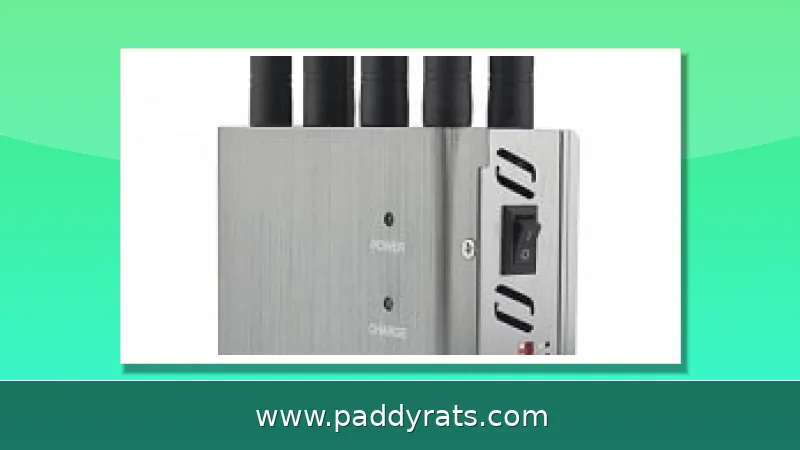
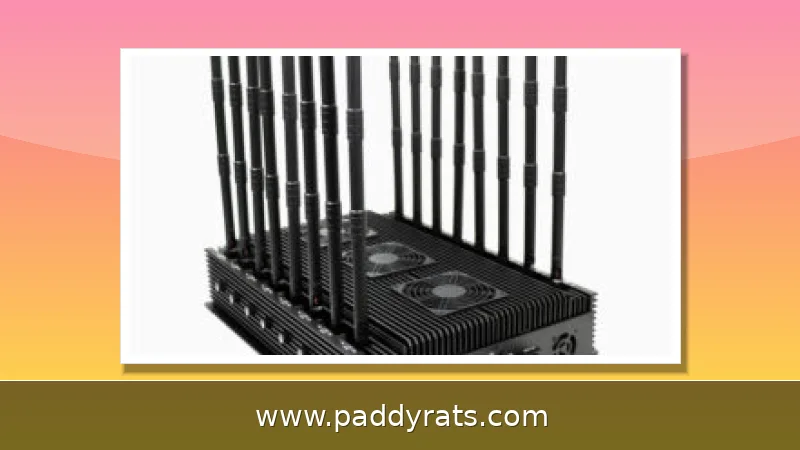
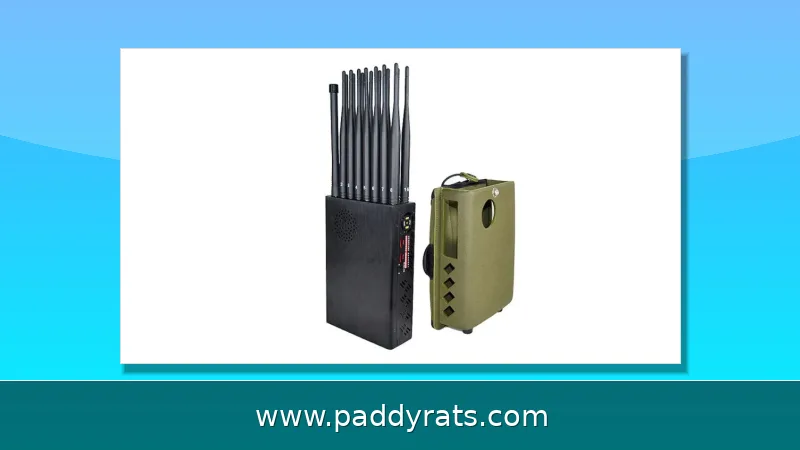
For somewhere between EUR 20 and EUR 80, you can buy a basic RF jammer built from just three components: a voltage-controlled oscillator, an amplifier, and a quarter-wave antenna. Sub-GHz models sweep the 700 to 1,000 MHz range, which covers the 868 MHz band that plenty of European alarm sensors rely on, while Wi-Fi band jammers sweep 2.4 to 2.5 GHz. Power output typically falls somewhere between 1 and 10 watts. And the attack itself? Almost insultingly simple: switch the jammer on, give it 30 to 60 seconds to confirm the signal's been suppressed, then break in. You don't need to know anything about the alarm system beforehand.
The real-world toll is easy to see. In Izmir, thieves hit a warehouse and walked off with EUR 18,000 worth of copper stock — the jammer that made it possible cost just EUR 40 and broadcast on 868 MHz. Security pros around the Mediterranean say jammer-assisted burglaries have climbed noticeably since 2022, especially in Turkey, Greece, and southern Italy, and customs officers in Turkey and Greece have been seizing far more RF jammers entering their countries in 2024 and 2025. Turkey by itself added roughly 180,000 new alarm systems in 2025, and most of them were wireless. Here's the catch: a lot of systems installed between 2018 and 2022 were built to keep a signal going, not to notice when someone is drowning it out — and that's precisely the gap attackers are exploiting.
| Jammer Type | Target Band | Typical Power | Cost Range |
|---|---|---|---|
| Sub-GHz handheld | 700-1,000 MHz | 1-10 W | EUR 20-80 |
| Wi-Fi band | 2.4-2.5 GHz | 1-10 W | EUR 20-80 |
| Camera-focused | 2.4 GHz / 5 GHz | Varies | USD 40-1,000 |
| Sensor transmit power | Same band | 0.01 W | n/a |
That table lays out the whole problem at a glance: the attacker's gear is 100 to 1,000 times more powerful than the sensor it's trying to silence, and it costs less than a single replacement sensor. Jammers aimed at home cameras go for about forty to a thousand US dollars online, depending on how much power you want. And this isn't just a lab experiment anymore — in 2024, police in Edina, Minnesota and Glendale, California put out public warnings after burglary crews used cheap jammers to blind Wi-Fi based security systems.
Can Burglars Really Jam a Wireless Security System?
Yes, and it happens more often than most homeowners realize. A cheap RF jammer floods the same frequency your sensors rely on with a stronger signal, effectively drowning out their transmissions so the hub never registers a trip. This isn't just a theory, either—Consumer Reports has covered it, and police in Edina, Minnesota and Glendale, California issued public warnings after burglary crews used jammers to blind Wi-Fi based systems. Here's the part that stings: Wi-Fi is a single point of failure. Take down that one radio link and your cameras, sensors, and notifications can all go dark at the exact same moment—right when you need them most.
This isn't just a home burglary issue, either. Latvia's telecom regulator logged 820 cases of satellite-signal interference in 2024, up from only 26 in 2022. And in April 2024, Finnair had to temporarily suspend flights to Tartu, Estonia, after two aircraft couldn't complete their GPS-based approaches. The same physics that blinds a door sensor can throw off navigation systems, which is exactly why regulators and aviation authorities now treat jamming as a critical infrastructure risk instead of some niche hobbyist trick. For homeowners, the takeaway is simple: if your system depends on a single crowded radio band, assume it's vulnerable by design.
Wired vs Wireless Sensors: Which Are Immune to Jamming?
If you want an alarm that's genuinely immune to jamming, hardwired sensors are really the only answer. A wired connection doesn't depend on a radio link at all, which means there's no signal for anyone to drown out and no shared spectrum to fight over. For devices that absolutely have to stay online, wiring is still the most dependable way to dodge Wi-Fi jamming. The catch is cost and flexibility: pulling cable through finished walls gets expensive fast, and retrofitting an older home can be a real headache. That's exactly why most modern installations end up as hybrids, with wired sensors guarding the perimeter and wireless ones covering the interior spots that are harder to reach.
When wiring just isn't an option, don't settle for plain wireless—go with wireless that's built to resist jamming. That means sensors using Frequency Hopping Spread Spectrum, like PowerG or DSC Neo, paired with jamming detection and cellular backup. For cameras in particular, a POE NVR is the better call, since power and data run over the same cable and there's no Wi-Fi link to attack at all. The whole idea here is redundancy. Leaning on a single point of failure like Wi-Fi doesn't cut it anymore; stack a few layers of backup across different radio technologies, and the attack gets complicated enough that most burglars won't bother.
Frequency Hopping Spread Spectrum and Encrypted Sensor Links
Frequency Hopping Spread Spectrum, or FHSS, divides the RF bandwidth into many channels and rapidly switches between them using an encrypted, time-synchronized sequence. Because the transmitter and receiver agree on the hopping pattern in advance, a jammer cannot predict where the signal will be next and cannot follow the changes fast enough to suppress it consistently. This is the single most effective wireless countermeasure short of running cable, and it is the reason PowerG and similar technologies are marketed as jam-resistant rather than merely wireless.
PowerG 915 MHz sensors hop between 50 channels from 912 MHz to 918 MHz, switching 64 times per second, with 128-bit AES encryption. The encryption key is generated at sensor enrollment, so an attacker cannot inject forged frames even if they briefly capture one. The combination matters: hopping defeats suppression, while encryption defeats spoofing and replay. A jammer that cannot follow the hops and cannot forge valid frames is reduced to blocking a fraction of transmissions, which the hub can detect as an anomaly rather than silently ignore.
Jamming Detection: Supervision Intervals, RSSI Monitoring, and Grade 2 Compliance
Detection is the layer most older systems lack entirely. Every Grade 2-compliant wireless alarm system requires the hub to verify communication with each sensor at regular intervals, a process called supervision. Under EN 50131-1:2018 clause 8.4.2, the maximum supervision interval is 200 seconds. That is a compliance floor, not a performance target, and a 200-second gap is plenty of time for a burglar to enter, grab valuables, and leave. Roombanker systems default to supervision intervals of 12 to 30 seconds, which tightens the window considerably.
RSSI monitoring goes further by watching signal strength and noise characteristics continuously rather than waiting for a scheduled check-in. It can detect jamming within 1 to 2 seconds, far faster than supervision-only approaches. Detection methods used in modern panels include a sudden drop in Packet Delivery Ratio, noise spikes in RSSI or signal strength, a rising Bad Packet Ratio, Carrier Sensing Time showing a channel that is constantly busy, irregular Packet Inter-Arrival Time, spectrum analysis tools, and machine learning models trained on interference signatures. Indicators of deliberate interference include simultaneous loss of multiple devices on the same band, an elevated noise floor on a spectrum analyzer, GPS receivers losing lock across all satellites, bursts of Wi-Fi deauthentication frames, and outages that correlate with a physical event such as a vehicle pulling into the driveway.
Layered Defense: Cellular Backup, DECT ULE, and Signal Repeaters
No single technology makes a system unjammable, so the practical strategy is layering. ADT uses DECT ULE, or Digital Enhanced Cordless Telecommunications Ultra Low Energy, which operates on its own frequency separate from crowded Wi-Fi bands, plus the ADT+ Base cellular backup that switches to a secure cellular connection if Wi-Fi goes down. That combination means an attacker must simultaneously jam the sensor band, the DECT ULE link, and the cellular path, which is far beyond the capability of a EUR 40 handheld device.
Other mitigation strategies worth deploying include frequency hopping, power control, directional antennas, channel switching, network redundancy, encryption and authentication, jammer localization, adaptive protocols, dual-band wireless devices, signal repeaters, and of course wired sensors. The goal is not perfection but cost imposition: every additional layer raises the attacker's required effort and the chance of detection. If the topic of this article involved investment or trading, a disclaimer would be appropriate, but it does not, so the practical advice stands on its own. In 2024, police warnings in Edina, Minnesota and Glendale, California showed that cheap jammers work against cheap defenses; layered radio technologies make them fail against well-designed ones.
What Should You Actually Do to Protect Your Sensors?
Start with an honest audit of your current system. If your sensors communicate on a single Wi-Fi band with no supervision monitoring, no RSSI detection, and no cellular backup, you are in the vulnerable category regardless of how much you paid for the cameras. Check whether your panel meets EN 50131-1:2018 clause 8.4.2 supervision requirements and whether your sensors support FHSS. If the answer is no, upgrading the sensor layer is usually cheaper than replacing the whole system, and it is the highest-impact change you can make.
Then add redundancy where it matters most. Put wired sensors on exterior doors and the primary entry path, use PowerG or DSC Neo jam-resistant sensors for interior zones, and make sure your alarm communicates over cellular as well as Wi-Fi. For cameras, move to a POE NVR so video never depends on a wireless link. Finally, test your detection: deliberately introduce interference on a test basis, or ask your installer to demonstrate how fast the panel reports a supervision failure or RSSI anomaly. A system that cannot tell you it is being jammed is only half a security system.
Frequently Asked Questions
Can burglars really jam a wireless security system?
Yes. A cheap RF jammer broadcasts a stronger signal on the same frequency your sensors use, drowning out sensor transmissions so the hub never receives a trip signal. Consumer Reports and police warnings in Edina, Minnesota and Glendale, California confirm burglary crews used jammers to blind Wi-Fi based systems.
What is the most effective way to protect sensors from jamming?
Hardwired sensors are immune to RF jamming because they do not rely on radio links. Where wiring is not feasible, use jam-resistant wireless sensors that employ Frequency Hopping Spread Spectrum, such as PowerG or DSC Neo, plus jamming detection and cellular backup for redundancy.
How does Frequency Hopping Spread Spectrum prevent RF jamming?
FHSS divides the RF bandwidth into many channels and rapidly switches between them using an encrypted, time-synchronized sequence. PowerG sensors hop between 50 channels from 912 MHz to 918 MHz, switching 64 times per second, so a jammer cannot follow the changes or suppress transmissions consistently.
How do alarm systems detect jamming?
Detection relies on supervision intervals, where the hub expects regular check-ins from each sensor, plus RSSI monitoring. Under EN 50131-1:2018 clause 8.4.2 the maximum supervision interval is 200 seconds, while RSSI monitoring can detect jamming within 1-2 seconds.
How does Frequency Hopping Spread Spectrum defeat jammers?
FHSS divides the RF bandwidth into many channels and rapidly switches between them using an encrypted, time-synchronized sequence. A jammer cannot predict or follow the hops fast enough to suppress transmissions consistently. PowerG, for example, hops between 50 channels 64 times per second with 128-bit AES encryption.
What should I check to see if my alarm is vulnerable to jamming?
Audit whether your sensors use a single Wi-Fi band with no supervision monitoring, no RSSI detection, and no cellular backup. Check if your panel meets EN 50131-1:2018 clause 8.4.2 supervision requirements and whether sensors support FHSS. If not, upgrading the sensor layer is the highest-impact change.