Illegal signal jammers are banned by federal law, and reporting one starts with knowing which agency handles your case. Here is exactly who to contact, what evidence to gather, and what penalties violators face.
Why Signal Jammers Are Illegal and Who Enforces the Rules
Federal law, specifically the Communications Act of 1934 (47 U.S.C. 301, 302a, and 333), bans operating, marketing, or selling any device built to block, jam, or interfere with authorized radio communications. That includes cellular and PCS signals, police radar, and GPS. And there's no exemption for a business, a classroom, your home, or your car. Local law enforcement can't just run jammers on their own either; only a narrow set of federal law enforcement exceptions applies.
In the United States, the FCC is the main agency that goes after illegal jamming, and it does so through its Enforcement Bureau. DHS and APCO have put out joint guidance telling first responders and public safety agencies to escalate interference right away rather than sit on it. Other countries have their own versions of this setup: ISED Canada, the Australian Communications and Media Authority, and in the UK, Ofcom along with the Department for Science, Innovation and Technology.
What Should You Do First If You Suspect Your Communications Are Being Jammed?
Before you file anything, rule out the more ordinary explanations. Start by contacting your wireless provider and going through the usual troubleshooting steps for your device and connection, following whatever the manufacturer and carrier recommend. A dead battery, a bad SIM card, a congested tower, or a router that just needs a reboot can all mimic interference, especially if the only thing you're going by is what the signal bars are doing.
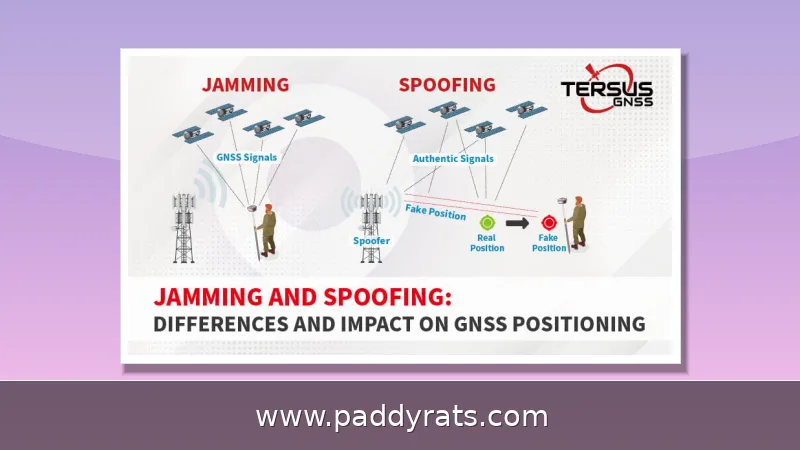
Cell phone jammers flood the air with an RF signal that's stronger than whatever your carrier's nearest tower is putting out on a similar frequency. Your phone grabs the louder signal, the weaker one gets drowned out, and the downlink falls apart — which is why you end up staring at zero bars. WiFi jammers do their thing on the 2.4 GHz and 5 GHz bands. GPS jamming is a bit different: it broadcasts on the same frequencies as legitimate GPS, just at higher power. Drone jammers are the busiest of the bunch, hitting 433 MHz, 900 MHz, 1.2 GHz, 1.5 GHz, 2.4 GHz, 5.8 GHz, and GNSS bands all at once to force a drone into a fail-safe return, a hover, or a landing.
If you've ruled out your own equipment and connection as the problem and still suspect a jammer is at work, write down what you noticed and then head to the reporting steps below. Jot down the time, the location, how long it lasted, and which services dropped — those details end up being the backbone of your complaint.
How Do You Report Illegal Jammer Usage to the FCC Step by Step?
If you're a consumer, you've basically got two ways to go. You can use the FCC's online complaint form at fcc.gov/complaints — once you're on the Consumer Complaint Center page, click the phone icon for "Phone Issues," then hit "Start Your Complaint With the FCC." Or you can just call 1-888-CALL-FCC (1-888-225-5322). Either option works whether you're filing a complaint or just submitting an inquiry, and both leave a paper trail the Enforcement Bureau can actually act on.
If the jamming is an emergency, call the FCC's 24/7 Operations Center right away at 202-418-1122. First responders and public safety agencies should report it there immediately, and they can also send an email to [email protected]. State, local, tribal, and territorial (SLTT) agencies have their own route: the FCC Public Safety Interference Complaint portal. Law enforcement, meanwhile, should file through the Enforcement Bureau's Public Safety Interference Portal, also known as PSIX-ESIX.
| Who you are | Where to report | Contact |
|---|---|---|
| Consumer | FCC online complaint form | fcc.gov/complaints or 1-888-225-5322 |
| Emergency RF jamming | FCC 24/7 Operations Center | 202-418-1122 |
| First responder / public safety | FCC Operations Center and email | 202-418-1122, [email protected] |
| SLTT agency | Public Safety Interference Complaint portal | FCC portal |
| Law enforcement | Enforcement Bureau PSIX-ESIX | PSIX-ESIX portal |
| Identified suspect | FCC complaint or hotline | fcc.gov/complaints or 1-888-225-5322 |
The APCO/FCC-DHS bulletin is pretty clear on this: if you've actually identified a suspect who's operating a jammer, that incident needs to go to the FCC, either through fcc.gov/complaints or by calling 1-888-CALL-FCC. The key word here is "identified." Giving investigators a name, a vehicle, or an address gives them something concrete to work with. A vague complaint like "my phone keeps dropping calls" doesn't, and it almost never goes anywhere.
What Evidence Should You Gather Before Filing a Complaint?
When you file a complaint, regulators are looking for patterns, not hunches. So jot down the date, time, and exact location of every incident, along with how long the outage lasted. It also helps to note which services dropped at the same time — calls, texts, mobile data, WiFi, GPS navigation. If unrelated networks all fail at once, that's a strong sign you're dealing with a jammer and not just a carrier glitch.
Save any screenshots you can grab—error messages, dropped-call logs, speed tests, that sort of thing. If you've got a device or app that tracks signal strength over time, hold onto that chart too. Photos of suspicious antennas, boxes, or rooftop gear can help, but only if you took them legally from a spot you're actually allowed to be in. Whatever you do, don't confront anyone or mess with the equipment yourself; your role here is just to document what you're seeing and hand it off.
For businesses, note the operational impact: lost transactions, failed deliveries, or safety incidents. Quantified harm carries more weight with the Enforcement Bureau than a general complaint, and it helps connect your report to the broader enforcement pattern regulators are already tracking.
How Can You Tell Whether a Jammer Is Actually Causing Your Signal Problems?
The signature of jamming is a sudden, localized, and repeatable loss of service. If your phone works everywhere except one block, one building, or one parking lot, and the failure happens at the same times each day, that pattern is suspicious. If the outage follows you across town, the problem is far more likely to be your handset, your SIM, or your carrier's coverage.
Cross-check with other people and other carriers. A jammer affects multiple devices and often multiple networks at once, while a dead zone usually hits one carrier hardest. GPS jamming shows up as a receiver that loses lock or reports a position far from where you actually are. WiFi jammers kill 2.4 GHz and 5 GHz connections while wired internet keeps working.
Drone operators see a different signature: a drone that suddenly returns to home, hovers, or lands on its own may be reacting to interference on 433 MHz, 900 MHz, 1.2 GHz, 1.5 GHz, 2.4 GHz, 5.8 GHz, or GNSS bands. Document the flight log and the time of the event, then report it through the same FCC channels.
How Do You Report Illegal Jammers Outside the United States?
In Canada, jammers are prohibited under sections 4, 9, 10, and 15.1 of the Radiocommunication Act. Subsection 4(4) bans installation, use, possession, manufacture, importation, distribution, lease, offer for sale, or sale, and subsection 9(1)(b) prohibits interference without a Ministerial Exemption. Report to ISED, and direct exemption questions to [email protected].
In Australia, report illegal equipment by calling the ACMA customer service center at 1300 850 115, or submit a complaint through ACMA's online enquiries or by email. In the United Kingdom, a government call for evidence issued on April 10, 2026 asked for views on radiofrequency jammers, the UK legal framework, the harms of illegal use and possession, the effectiveness of enforcement by Ofcom and the police, and legitimate uses. Responses were due by 11:59pm on Friday, May 8, 2026, and the contact address was [email protected].
The pattern is consistent across all three jurisdictions: jammers are treated as prohibited equipment, not consumer gadgets, and the fastest route to action is a report that names a location, a time, and an observable effect.
What Penalties and Enforcement Actions Apply to Illegal Jamming?
US penalties are severe. Violations can carry fines up to $112,500 per incident under the Communications Act, plus seizure of the unlawful equipment and criminal sanctions including imprisonment. In one widely cited case, the FCC fined a Texas warehouse business $22,000 for using a jammer to stop employee phone use: $10,000 for operating without an instrument of authorization, $7,000 for causing interference to authorized communications, and $5,000 for egregious conduct. The order was issued January 27, 2022 (In the Matter of Ravi's Import Warehouse, Inc., Dallas, Texas, FCC 22-10).
Marketing carries its own exposure. In May 2016, the FCC imposed a $34,912,500 fine on a Chinese electronics manufacturer and online retailer for marketing 285 models of signal jamming devices to US customers for more than two years. Consumer-facing guidance notes that use or marketing of a jammer may bring fines up to $11,000, equipment seizure, and criminal sanctions.
| Jurisdiction | Penalty range | Notes |
|---|---|---|
| United States | Up to $112,500 per incident | Seizure and possible imprisonment |
| United States (marketing) | $34,912,500 (2016 case) | 285 jammer models sold to US buyers |
| Canada (individual) | $25,000 first, $50,000 repeat | Radiocommunication Act |
| Canada (business) | $10 million first, $15 million repeat | Radiocommunication Act |
| Georgia | Felony, fines up to $10,000 | Bans manufacture, sale, possession, use |
| Indiana | Level 6 felony, upgradable to Level 5 | Class A misdemeanor for possession with intent |
State legislatures have moved too. Indiana Code 35-45-2-6, passed via Senate Bill 26, makes knowing or intentional use of a signal jamming device a Level 6 felony, elevatable to a Level 5 felony if used to disrupt critical infrastructure or public safety agency communications; possession with intent to use is a Class A criminal misdemeanor. Georgia's new law makes signal jamming a state-level felony, banning manufacture, sale, possession, and use, with felony charges and fines up to $10,000.
Enforcement pressure is rising because the problem is growing. Since 2021, Customs and Border Protection (CBP) has seen a roughly 830% increase in signal jammer seizures, and Los Angeles leaders and law enforcement have warned about burglars using WiFi jammers to disable home cameras and alarms. That trend is why a well-documented complaint matters: it feeds the pattern that drives seizures, fines, and prosecutions.
Quick Reference: Jammer Types and the Bands They Target
Knowing which band failed helps regulators match your report to a device type. The table below summarizes the common jammer categories and the frequencies they use.
| Jammer type | Target bands | Typical symptom |
|---|---|---|
| Cell phone jammer | Cellular and PCS downlink | No signal bars, dropped calls |
| WiFi jammer | 2.4 GHz and 5 GHz | Wireless drops, wired still works |
| GPS jammer | GPS frequencies | Lost lock or false position |
| Drone jammer | 433 MHz, 900 MHz, 1.2 GHz, 1.5 GHz, 2.4 GHz, 5.8 GHz, GNSS | Return-to-home, hover, or forced landing |
Use this table to describe your incident in plain terms when you file. Saying "my WiFi dropped on both 2.4 and 5 GHz while my wired connection stayed up" is far more actionable for the Enforcement Bureau than a general claim that something is interfering with your service.
Frequently Asked Questions
How do I report illegal signal jammer usage to the FCC?
Consumers can file a complaint or submit an inquiry through the FCC using the online complaint form at fcc.gov/complaints or by calling 1-888-CALL-FCC (1-888-225-5322). Law enforcement and public safety agencies should use the FCC Enforcement Bureau's Public Safety Interference Portal (PSIX-ESIX), and first responders can call the 24/7 Operations Center at 202-418-1122.
What should I do first if I think my communications are being jammed?
Contact your wireless provider first to investigate the issue, and troubleshoot your equipment and connectivity per the manufacturer's and service provider's recommendations. If equipment and connectivity are confirmed not to be the cause and you still believe a jammer is in use, you may file a complaint or submit an inquiry through the FCC.
Are signal jammers legal in the United States?
No. Federal law prohibits the operation, marketing, or sale of any jamming equipment that interferes with authorized radio communications, including cellular and PCS, police radar, and GPS. There are no exemptions for use within a business, classroom, residence, or vehicle, and local law enforcement agencies lack independent authority to use jamming equipment.
What penalties can result from using or marketing a jammer?
The use or marketing of a jammer in the United States may lead to substantial monetary penalties, seizure of the unlawful equipment, and criminal sanctions including imprisonment. In one FCC case, a Texas warehouse business was fined $22,000 for using a jammer to stop employee phone use.
What evidence should I gather before filing a jammer complaint?
Document the date, time, location, and duration of each incident, and note which services failed simultaneously, such as calls, texts, mobile data, WiFi, or GPS. Keep screenshots of error messages, dropped-call logs, and speed tests. Photographs of suspicious equipment are useful if taken lawfully. Do not confront anyone or tamper with equipment.