Cheap RF jammers now precede hijackings, vehicle thefts and cash-in-transit ambushes, so GNSS band monitoring has become a genuine early-warning tool. Here is how detection works, what the cases show, and what protection teams can deploy.
What Is GPS Jamming and How Does It Work?
GPS signals arrive at ground level near -130 dBm which is approximately one ten-billionth of a watt. That extreme vulnerability is the entire Achilles `heel: a low-cost jammer transmitting at only 10 dBm output power can overpower those transmissions from satellites over an area up to and above 100 meters radius. Jamming doesn’t damage the satellite, but overwhelms a receiver with radio energy on the same frequencies at far more power.
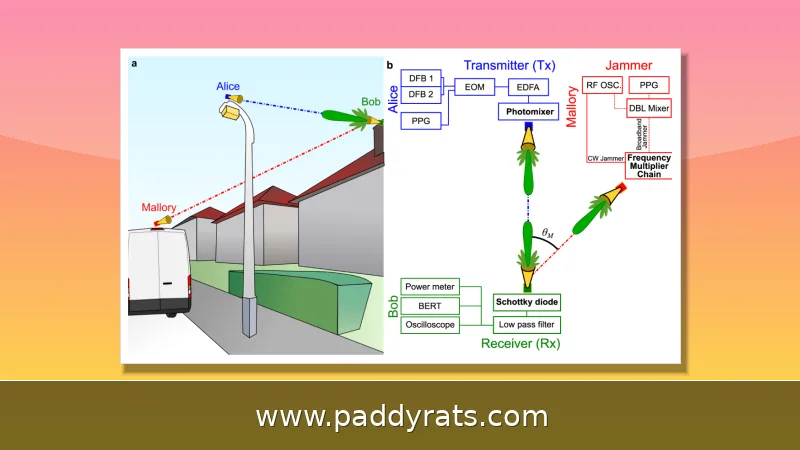
The mechanics matter for detection: there exists characteristic fingerprints that a jammer leaves on receivers. The out-of-band jamming—energy that lies outside the GNSS band itself—is driven into saturation at the antenna's low-noise amplifier, farthest front end of a very sensitive signal chain. That before-overload drives the amplifier into saturation and distorts the wanted signal causing an immediately C/N0, carrier-to-noise density which receivers are constantly reporting to crash downwards. Note that in-band jamming behaves differently: it lands directly on the satellite signals and hence is calculated via spectral overlap usually stated as Spectral Separation Coefficient. In fact, intentional jammers almost never remain stationary. Sweep across the band using linear chirping, hopping through frequencies so rapidly that they can jam GPS, Galileo, GLONASS and BeiDou simultaneously rather than just targeting a single constellation. Moreover, there is a legal side working for the defender: GNSS bands are protected by international regulation and no on-ground transmitter can transmit in those bands. That means ground-level signals in those frequencies are illegal interference by definition—and since a receiver can detect that energy long before the jammer cómpletely kills its own local environment, it is detectable from well outside the effective radius of any particular jammer.
Why Organized Crime Uses Jammers Before an Attack
In general, shortly before an physical attack, the attackers first activate their RF jammers — seconds or minutes to do so and that single operation kills GPS coordination cellular WiFi Bluetooth radio links at once. Now, map this on the ground: you lose a target in their tracking feed; an escort has dead comms; and any alarm that is silent but relies on some wireless path simply doesn't arrive. Since the blackout occurs just prior to the door being kicked in or truck boxed-in, after retort activation (which is typically step #1 at any swift tech enable operation jammers are first activated before all else). It is that timing which has made it useful to defenders. However, if a protection team has shoes on the ground and is able to see that interference as it happens they can gain seconds of precious time by switching over to their alternate backup comms., rerouting path or requesting support before any physical action takes place. To that end, a jammer alert is more than just a tech hiccup to check off; it can be one of the most valuable warning signs in advance for intervention watched by an entire protection team.
| Signal cut by a single RF jammer | What the protection team loses |
|---|---|
| GPS / GNSS | Vehicle and asset tracking, route monitoring, timing |
| Cellular | Voice calls, mobile data, SMS-based alarms |
| WiFi | Local device links, cameras, connected sensors |
| Bluetooth | Short-range trackers, hands-free gear, beacons |
| Radio | Two-way voice comms between convoy units |
The prices aren пребыs entendre, pris presque tout ce que vous devez savoir sur les raisons pour lesquelles cet иtractive proble прибцtbttb. Simply purchasing a car GPS blocker sometimes costs as little as $3, while the multi-band types crawl up to between $300 and $1,700, available on over 100 sites. An even more far-reaching report by the UK Government Office for Science detailed multi-band briefcase jammers with eight-channel designs intended to achieve complete RF isolation. Even spoofing hardware is inexpensive: a basic, single-frequency spoofing device costs about $150. You compare those figures with what one hijacked cargo truck or luxury vehicle can fetch, and the numbers practically do the math themselves. Disposable and deniable for a criminal crew—the device is easily affordable to leave behind, generic enough to fit in. For a convoy or cargo operator however, that same low-hanging tool of the trade is quite another thing altogether: in fact it is almost universally a pre-attack tell and one very often their first glimpse someone has opted to launch an assault.
That's why jamming detection today is works for next-gen route planning — sitting right alongside armored vehicles in the protection domain. It may seem strange to put a radio-monitoring rig in the same category as an armored SUV, but once you see how these crews actually work on site it makes sense. Consider the jammer, for example: in an ambush's earliest sixty seconds. It essentially jams the GPS signal that your tracker depends on and makes the vehicle disappear from the screen. It can disable panic buttons and radio links, so that the driver's mayday never gets through. And because dispatchers see nothing amiss at first, the police response is delayed – and minutes matter. It is not the robbery of the jamma itself. It is the first step, the stealthy footstep that evades tracking, drowns alarms and buys attackers time before a heist even occurs.
Real Cases: Mexico Cargo Hijackings, UK Vehicle Theft, South Africa Cash-in-Transit
A common pattern in case files In Mexico, the UK and South Africa, it's a common thread: the jammer fires before violence erupts. This is important, because it inverts the typical way we think about these devices. They are not random troublemaking or side effects of some larger operation — they are an opening play, a strategy to obscure tracking systems so that eyes on the screen lose track of your vehicle before anyone raises a weapon and forces open doors. Roughly 85% of cargo truck hijackings in Mexico feature jammers, and considering a robbery is committed every five minutes or so there, it's difficult to dismiss that overlap as coincidence. In the last quarter of 2024, KwaZulu-Natal province in South Africa recorded no fewer than ten cash-in-transit robberies involving explosives and automatic weapons. In theUK thieves have have rediscovered stolen vehicles later found with multiple jamming devices. The answer practically sings out: our timer is already ticking when a tracker goes dark.
In Mexico, GPS jammers turn up in about 85% of cargo truck hijackings — a number that hits harder once you realize a truck robbery happens roughly every five minutes somewhere in the country. That overlap isn't a coincidence. Hijackers usually flip on a cheap blocker right as the target slows down, cutting the GPS feed so dispatchers lose track of the vehicle just before the crew moves in. South Africa shows the same playbook from the cash-in-transit side: KwaZulu-Natal province recorded 10 heists in the last quarter of 2024 alone, and these weren't quiet smash-and-grabs. The attackers used explosives and automatic weapons, which tells you the crews were organized, well-funded, and ready to bring real force. In the UK, the pattern tilts more toward vehicle theft, and it's a good illustration of what happens once GPS goes dark. One stolen Mercedes-Benz G63 AMG was recovered through VHF tracking after its GPS cut out — proof that older, simpler tracking layers still pull their weight. What's more telling: four GPS jamming devices were found on a single stolen UK vehicle. One jammer is a tool. Four points to a prepared, repeat operation with backup built in.
| Country / Region | Case Detail | Key Figure |
|---|---|---|
| Mexico | Cargo truck hijackings using GPS jammers | 85% of hijackings; a truck robbery roughly every 5 minutes |
| South Africa (KwaZulu-Natal) | Cash-in-transit heists involving explosives and automatic weapons | 10 heists in Q4 2024 |
| United Kingdom | Stolen Mercedes-Benz G63 AMG recovered via VHF tracking after GPS failed; four jamming devices found on one stolen vehicle | 4 jammers on a single vehicle |
The pattern, of course, isn't confined to street-level larceny — either. A 2016 North Korean jamming campaign disrupted navigation of ships and aircraft in South Korea. In London, taxi and HGV drivers have deployed jammers to mask driving-hours violations while GPS outages have disrupted transaction timestamping at the London Stock Exchange. Rewind back to 2007, when a navy drill in San Diego cut off power to ATMs and emergency pagers—and it ultimately took three days for investigators find the interference was came from ships out at sea. In passings, workers in the Baltic Sea by Polish analysts logged GPS obstruction for as long as 84 hours — with sporadic occasions of up to seven an hour. On the other hand, there remain perennial hotspots in the Red Sea, Mediterranean coast and Gulf of Aden coasts (e.g. contributor #11 reported that 555 migrant deaths had occurred off Sudan) as well appearing in parts of Iran/Iraq (the Persian Gulf coastline). The common thread uniting these cases is that jamming does not stay neatly contained: it spills over borders, sectors and daily life ensuring early detection matters as a canary in the coal mine.
| Incident | Time | Impact |
|---|---|---|
| North Korea jamming against South Korea | 2016 | Ship and aircraft navigation affected |
| London taxi and HGV drivers using jammers | — | Driving-hours rules evaded; London Stock Exchange transaction timestamping hit by GPS outages |
| San Diego navy exercise | 2007 | ATMs and emergency pagers disrupted; took three days to trace back to ships |
| Baltic Sea interference (Polish research) | 2024 | 84 hours of GPS interference; some incidents lasting up to seven hours |
| Red Sea, Mediterranean, Gulf of Aden, Persian Gulf, Sudan coastline | Ongoing | Persistent jamming hotspots |
How Do You Detect GPS Jamming in the GNSS Band?
Detection works because the GNSS bands are legally silent at ground level. No terrestrial transmitter is allowed to broadcast there under international radio regulations, so the spectrum around GPS L1 at 1575.42 MHz—along with L2 and L5—should contain nothing but faint satellite signals arriving from orbit. That legal quiet is what makes jamming so easy to spot: any ground-level signal in those bands is, by definition, illegal interference, and a monitoring receiver can flag it from far beyond the jammer's effective radius. This is a sharp contrast with cellular or land-mobile radio bands, which are crowded with legitimate traffic and therefore hard to police. To put the physics in perspective, GPS signals reach the ground at roughly -130 dBm, about one ten-billionth of a watt, while a cheap jammer broadcasting at just 10 dBm can overpower them across 100 meters or more. Because the jammer is shouting into a band where nothing else is supposed to speak, even a distant sensor can hear it.
Practical detectors combine several measurements. A 256-point FFT spectral analysis of intermediate-frequency samples reveals energy where none should exist. AGC saturation analysis catches the front-end overload caused by nearby jammers. Cumulative averages and configurable thresholds, calibrated in jammer-free environments, keep false alarms manageable in busy RF neighborhoods. Machine learning adds another layer: one thesis returned an average 95.3% spoofed signal detection rate using SVM and Artificial Immune System frameworks.
For protection teams, the operational value is timing. A detector that fires the moment a chirp appears buys seconds to minutes of warning, enough to switch to alternate communications, divert a convoy or trigger a response before the physical attack starts.
GPS Jamming vs Spoofing: Key Differences
Jamming and spoofing are often lumped together, but they fail a receiver in opposite ways, and the countermeasures differ. Jamming overwhelms receivers with noise or interference on GPS frequencies, so they cannot compute a position at all. Spoofing mimics legitimate satellite signals to feed receivers false data, leading them astray while the device believes it is working normally.
That distinction shapes detection strategy. Jamming shows up as a sudden C/N0 collapse and AGC saturation, often across multiple constellations at once. Spoofing can look superficially healthy, which is why signal authentication, secure military signals and multi-constellation, multi-frequency receivers matter. A spoofed position may drift slowly, while a jammed receiver simply loses lock.
Criminals use both. Jamming is the blunt tool that blinds tracking during a hijacking; spoofing is the surgical tool that misdirects a vehicle, vessel or delivery without triggering an obvious alarm. Detection systems that only watch signal strength will miss spoofing entirely.
Detection Hardware and Spectrum Monitoring Tools
A mature detection stack combines dedicated GNSS monitoring hardware, spectrum monitoring with mobile direction finding, and software that correlates events across a fleet. Spectrum monitoring locates jammers physically; anti-jamming and anti-spoofing systems distinguish true signals; antenna and RF hardening protect the receiver itself.
The table below summarizes representative tools and capabilities referenced in industry and government sources.
| Tool or System | Primary Function | Notable Capability |
|---|---|---|
| GPSPATRON GP-Probe Nano L1 | GNSS band monitoring | Detects interference in the protected L1 band |
| CRFS RFeye receivers | Spectrum monitoring | Mobile direction finding to locate jammers |
| Safran Federal Systems BroadSim | Simulation and testing | Jamming and spoofing scenario generation |
| Trimble Maxwell technology | Receiver hardening | Improved anti-jamming performance |
| Swift Navigation STA9100 with IFM | Interference monitoring | Wideband interference detection |
| Geotab fleet telemetry | Fleet-level detection | Jamming events surfaced in vehicle data |
| gpsjam.org and Flightradar24 maps | Open-source situational awareness | Live maps updated every 6 hours |
Public and open-source layers complement commercial hardware. The USCG NAVCEN GUIDE Tool, the Stanford GNSS Interference Map, gpsjam.org and the Flightradar24 GPS jamming map give analysts a regional picture, while the FAA GPS/GNSS Interference Resource Guide covers aviation-specific guidance. Pairing these with on-vehicle detection gives both micro-level warning and macro-level context.
Countermeasures for Convoys, Cargo and Critical Infrastructure
Countermeasures fall into three layers: prevent, detect and continue operating. Prevention means antenna and RF hardening, secure military signals and signal authentication. Detection means GNSS band monitoring, spectrum direction finding and machine learning classifiers. Continuity means GPS holdover modules for timing, multi-constellation and multi-frequency receivers, and backup terrestrial or inertial navigation.
For VIP protection and convoy work, the practical playbook is to treat jammer activation as a trigger, not a technical footnote. Teams should define what happens when detection fires: switch to alternate comms, change route, increase spacing, and notify command. For cargo operators, jamming alerts tied to telematics can escalate a routine delivery into a live incident response.
Critical infrastructure faces a different calculus. Timing-dependent systems such as financial timestamping and telecom synchronization need holdover capability, because a brief outage can cascade. The 2007 San Diego incident, which disrupted ATMs and emergency pagers for three days before the source was identified, remains the clearest warning about how long attribution can take.
Legal Risk and Compliance: Is GPS Jamming Illegal?
GPS jamming is most often illegal. In the United States, the FCC enforces the Communications Act of 1934, which prohibits technology causing harmful interference, and it is illegal to buy or sell a GPS jamming device. Penalties can reach $100,000 or more in fines, plus imprisonment and loss of equipment.
Canada's Radiocommunication Act bans importing, making, distributing, selling, possessing and using jammers. The UK also prohibits the use of jamming equipment, though a 2019 Chronos Security Policy presentation described UK law as not robust enough for the scale of the problem.
For legitimate operators, the compliance takeaway is simple: detection and monitoring are legal and encouraged, while transmitting interference is not. Protection teams should document detection events, preserve logs for law enforcement, and avoid any equipment that actively transmits on protected GNSS bands.
What Detection Means for the Future of Protection Work
The direction of travel is clear. Detection is moving from specialist military equipment into fleet telematics, convoy protection kits and maritime monitoring, driven by how cheap and widespread jammers have become. Machine learning classifiers, multi-band monitoring and live interference maps are converging into a single early-warning picture.
The honest limitation is attribution. Identifying that interference exists is now routine; proving who caused it, and doing so fast enough to matter, remains hard, as the 2007 San Diego case showed. For organized crime investigations, the jammer event is best treated as an intelligence lead: a timestamped, geolocated signal that can be correlated with vehicle movements, seizures and known offenders.
Teams that build detection into their standard operating procedures, rather than treating it as an afterthought, will be the ones who see the attack coming.
Frequently Asked Questions
How do you detect GPS jamming?
Monitor the GNSS band, such as GPS L1 at 1575.42 MHz, where no ground transmitter is permitted. Any ground-level signal there is illegal interference, so a detector can flag it from far beyond the jammer's effective radius, unlike cellular or radio bands full of legitimate traffic. Practical systems combine FFT spectral analysis, AGC saturation checks and calibrated thresholds.
Why is GPS jamming a warning sign of organized crime?
Attackers typically activate RF jammers seconds or minutes before a physical assault, cutting GPS, cellular, WiFi, Bluetooth and radio links. Detecting that jamming gives protection teams an early warning, since jammer activation is usually the first technical action taken. In Mexico, jammers appear in 85% of cargo truck hijackings.
What is the difference between GPS jamming and spoofing?
Jamming overwhelms receivers with noise or interference on GPS frequencies, so they cannot compute a position. Spoofing mimics legitimate satellite signals to feed receivers false data, leading them astray. Jamming causes failure through interference; spoofing deceives with incorrect information. Detection therefore needs both signal-strength monitoring and signal authentication.
Is GPS jamming illegal?
GPS jamming is most often illegal. In the US, the FCC enforces the Communications Act of 1934, which prohibits technology causing harmful interference, and it is illegal to buy or sell a GPS jamming device. Canada's Radiocommunication Act bans importing, making, distributing, selling, possessing and using them. Penalties can reach $100,000 or more plus imprisonment.