Venue security teams want to know if they can legally buy and operate commercial drone blockers in the US. The short answer: jammers are illegal for private buyers, but detection and RF-cyber takeover are not.
Are Commercial Drone Blockers Legal to Buy for Venue Security?
Every time a rogue drone buzzes a stadium, someone asks me whether venue security can just buy a jammer and be done with it. The answer is still no. Under the Communications Act of 1934 — specifically 47 U.S.C. 301, 302a, and 333 — the FCC bans the operation, marketing, sale, importation, distribution, or shipment of any device built to block, jam, or interfere with authorized radio communications. And the agency is clear: there are no exceptions. Break the rule and you're looking at fines of up to $112,500 per incident, plus the possibility of criminal prosecution. So when a vendor pitches your venue a "drone blocker" or an anti-drone gun, that's not protection you're buying. It's a federal violation charged to your budget line.
How Drone Jammers Work and Which Frequencies They Target
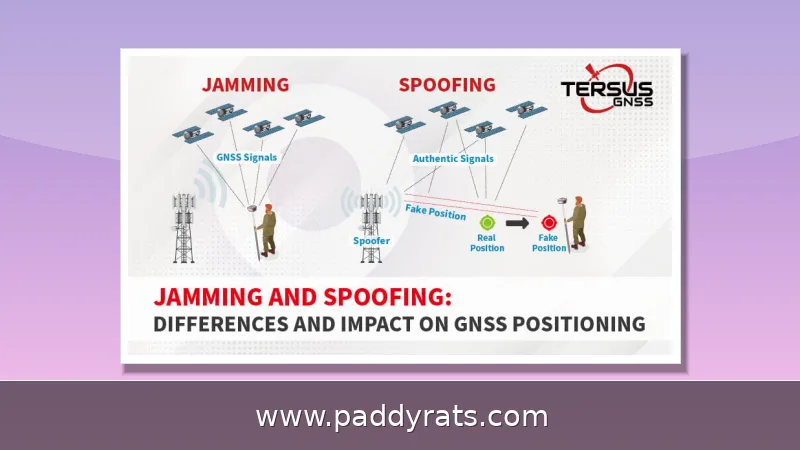
A drone jammer is basically an RF transmitter that drowns out the link between a drone and whoever's flying it. Once that signal gets crushed, the drone falls back on its fail-safe—returning to its launch point, hovering in place, or descending. Sounds pretty clean in theory, right? Then you look at the frequency bands these things actually hit, and it gets messy. Most commercial blockers go after 433 MHz and 900 MHz for control, 1.2 GHz and 1.5 GHz for video and telemetry, and 2.4 GHz and 5.8 GHz for the primary command-and-control links that DJI and just about every other commercial drone rely on. They also target GNSS bands—GPS, GLONASS, Galileo, and BeiDou.
The catch is that drones don't get those frequencies to themselves. The same bands carry Wi-Fi, Bluetooth, cell traffic, and the navigation signals aircraft rely on. A jammer has no way of telling which signal belongs to a drone and which belongs to a paramedic's radio, a card reader at the concession stand, or a plane's navigation system. It just drowns out everything in range.
| Target Band | Typical Use | Collateral Risk |
|---|---|---|
| 433 / 900 MHz | Drone control link | Industrial telemetry, alarms |
| 1.2 / 1.5 GHz | Video and telemetry | GNSS and satellite links |
| 2.4 / 5.8 GHz | Primary command-and-control | Wi-Fi, Bluetooth, venue IT |
| GNSS bands | Positioning | Aviation and emergency navigation |
That overlap is exactly why broad-spectrum jamming is basically a venue-wide outage waiting to happen. It can take down emergency communications, mess with aircraft systems, and disrupt wireless infrastructure—and yeah, it can knock your own broadcast and ticketing systems offline right along with everything else. The FCC's jammer enforcement page doesn't mince words about this: jamming isn't a security tool. It's an interference crime.
Who Can Legally Operate a Drone Jammer in the United States
The list of agencies that can legally mitigate drones is short, and private venues simply aren't on it. As things stand under federal law, that authority belongs to the Department of Defense and military installations, which operate under Title 10—something JIATF-401 guidance expanded back in January 2026. DHS has it too, including CBP and the Secret Service. So does DOJ, the FBI included, along with the Department of Energy for protecting nuclear facilities and the Coast Guard for maritime security.
Here's who can't: private companies, and that includes critical infrastructure operators, unless they're acting under direct federal authority. Individual property owners? Not authorized either. Same goes for private security firms, unless they've been contracted by an agency that actually holds that authority. That last part is where vendors tend to get creative with their reading. Getting hired by a police department for one specific event doesn't suddenly hand your guards a license to jam.
The FEMA C-UAS Grant Program makes that boundary pretty clear, too. It flat-out bans using grant money to buy weapons, and mitigation equipment is reserved for certified law enforcement only. So if a purchase order for a jammer ever shows up on your desk with grant funds attached, treat it as a compliance problem, not some kind of upgrade.
What the SAFER SKIES Act Changes for Venues and Private Security
The SAFER SKIES Act, which got folded into the FY2026 NDAA, marks the biggest expansion of counter-drone authority we've seen in years — and yet it still leaves private venue security out in the cold. Under the new law, state and local law enforcement can now take action against drones, along with correctional facility security agencies that meet federal certification requirements, plus agencies tasked with protecting National Special Security Events and SEAR-rated events like the FIFA World Cup 2026.
There's a catch, though: training is required first. Before state or local law enforcement can actually exercise mitigation authority, they have to complete training at the FBI's National Counter-UAS Training Center in Huntsville, Alabama. That requirement isn't just bureaucratic box-checking—it's there because mitigation, done wrong, is genuinely dangerous.
If you run a venue, the bottom line isn't about what you can buy—it's about who you can work with. Say your stadium is hosting a SEAR-rated event; the authority to take down a drone belongs to the protecting agency, not your security contractor. Private venue security teams still have no mitigation authority, and for civilians and private entities, interfering with an active drone is still a federal crime.
Separately, contractors should note that as of December 22, 2025, the American Security Drone Act prohibits operating UAS from covered foreign entities on federal contracts. That rule targets the drones you fly, not the ones you defend against, but it matters for any venue working federal events.
Detection vs Mitigation: Legal Options Venues Can Actually Deploy
Detection-only systems are generally legal for security use in most markets, and this is where venue budgets should go. Radar, passive RF receivers, audio sensors, and optical sensors identify and track drone activity without transmitting interference. Legal treatment differs by function: jamming and spoofing are regulated or prohibited for private use almost everywhere, while detection usually requires nothing more than ordinary business compliance.
49 U.S.C. 44801(5) defines a counter-UAS system as one capable of lawfully and safely disabling, disrupting, or seizing control of an unmanned aircraft. Detection-only systems are not covered by that definition, which is exactly why they sit on the legal side of the line. Detection must come before mitigation in any serious program, because you cannot escalate what you cannot see.
| Capability | Legal for Private Venues? | Notes |
|---|---|---|
| Radar, RF, audio, optical detection | Yes, generally | No transmission, no interference |
| Jamming | No | FCC prohibits sale and operation |
| Spoofing | No | Regulated or prohibited for private use |
| RF-cyber takeover | Yes, with care | Lands drone without jamming |
Non-jamming RF-cyber takeover is the emerging middle path. Systems such as D-Fend EnforceAir detect, locate, identify the pilot, and land the drone safely while authorized drones keep operating. That distinction matters during a live broadcast: you want the rogue aircraft down without taking the stadium's own wireless ecosystem with it.
Risks, Penalties, and Compliance Steps Before You Buy
The downside of getting this wrong is not theoretical. Fines run up to $112,500 per incident, criminal prosecution is on the table, and civil damages can follow. Shooting down a drone is also illegal under federal law. The FAA states that a private citizen shooting at any aircraft poses a safety hazard and can bring civil penalties and criminal charges.
Operationally, rogue drones over stadiums cause delays, stoppages, safety investigations, unauthorized streaming, and privacy concerns. Broad-spectrum jamming can disrupt critical communications, IT systems, and live broadcasts. Gun-like jamming devices risk spectator panic, and kinetic solutions risk injury from projectiles or falling debris.
| Step | Action |
|---|---|
| 1 | Formalize MOUs with local SLTT law enforcement |
| 2 | Adopt a detect-document-escalate response plan |
| 3 | Deploy detection-only systems |
| 4 | Avoid buying jammers, no matter the pitch |
| 5 | Monitor federal counter-UAS developments |
My advice to venue operators is to write the escalation path before you write the purchase order. Know which agency owns mitigation authority for your events, get the MOU signed, and train your team to document and hand off rather than intervene. That is the compliance posture that survives an FCC inquiry and a lawsuit, and it is the one your insurer will actually recognize.
Can private venue security legally buy and use a drone jammer?
No. Under the Communications Act of 1934, the FCC prohibits operating, marketing, or selling RF jamming equipment, with fines up to $112,500 per incident. Private security firms, venues, and individual property owners are not authorized unless they are contracted by an authorized government agency, and even then the authority stays with that agency rather than transferring to the contractor.
What does the SAFER SKIES Act change for counter-drone authority?
The SAFER SKIES Act, part of the FY2026 NDAA, newly authorizes state and local law enforcement, correctional agencies meeting federal certification, and agencies protecting National Special Security Events. It does not authorize private venues or private security firms. Authorized personnel must first complete training at the FBI's National Counter-UAS Training Center in Huntsville, Alabama.
Are drone detection systems legal for venues even if jammers are not?
Yes. Detection-only systems such as radar, RF sensors, audio, and optical sensors are generally legal for security use in most markets because they do not transmit interference. Legal treatment differs by function: jamming and spoofing are regulated or prohibited for private use almost everywhere, while detection typically falls under ordinary business compliance.
What should a venue do instead of jamming a rogue drone?
Venues should adopt a detect-document-escalate approach, formalize Memorandums of Understanding with local law enforcement, and use non-jamming mitigation such as RF-cyber takeover that lands drones safely without disrupting broadcasts or critical communications. Detection must come before mitigation, and the decision to interfere with an aircraft should always sit with an authorized agency.
Frequently Asked Questions
Can private venue security legally buy and use a drone jammer?
No. Under the Communications Act of 1934, the FCC prohibits operating, marketing, or selling RF jamming equipment, with fines up to $112,500 per incident. Private security firms, venues, and individual property owners are not authorized unless contracted by an authorized government agency, and the authority remains with that agency.
What does the SAFER SKIES Act change for counter-drone authority?
The SAFER SKIES Act, part of the FY2026 NDAA, newly authorizes state and local law enforcement, correctional agencies meeting federal certification, and agencies protecting National Special Security Events. It does not cover private venues or private security firms, and authorized personnel must complete training at the FBI's National Counter-UAS Training Center in Huntsville, Alabama.
Are drone detection systems legal for venues even if jammers are not?
Yes. Detection-only systems such as radar, RF sensors, audio, and optical sensors are generally legal for security use in most markets because they do not transmit interference. Legal treatment differs by function: jamming and spoofing are regulated or prohibited for private use almost everywhere, while detection usually falls under ordinary business compliance.
What should a venue do instead of jamming a rogue drone?
Venues should adopt a detect-document-escalate approach, formalize Memorandums of Understanding with local law enforcement, and use non-jamming mitigation such as RF-cyber takeover that lands drones safely without disrupting broadcasts or critical communications. Detection must come first, and interference decisions should stay with an authorized agency.