RF signal interference is unwanted energy that degrades radio communication, from dropped calls to contaminated radio astronomy data. Here is what causes it, how to hunt it down, and how to block it.
What Is RF Signal Interference and How Does It Work?
RF signal interference—RFI for short—is any unwanted signal or electrical energy that messes with a radio communication system. When that energy sits somewhere in the radio frequency spectrum, we call the broader phenomenon electromagnetic interference, or EMI, by the more specific name radio-frequency interference. The RF spectrum covers a huge stretch, from about 9 kHz all the way up to 300 GHz, and it's split into bands that each act a little differently. VLF spans 9 to 30 kHz, LF covers 30 to 300 kHz, MF goes from 300 kHz to 3 MHz, and HF runs 3 to 30 MHz. Above that you've got VHF at 30 to 300 MHz, UHF at 300 MHz to 3 GHz, SHF at 3 to 30 GHz, and finally EHF, which stretches from 30 to 300 GHz.
Interference isn't some new problem we invented. Radio-frequency interference, or RFI, has been around since the earliest days of telegraph and radio, back when operators first noticed that unwanted signals could quietly drown out the ones they were actually trying to hear. Back then the airwaves were mostly empty, so it only popped up here and there. What's different now is density. A single modern site can cram Wi-Fi, cellular, Bluetooth, GPS, and industrial sensors into the same few gigahertz of spectrum, and every device you add raises the odds that two signals will collide. It's basically a traffic jam in the air. On my own drive tests, the noise floor in dense urban blocks often sits several dB higher than what the exact same gear picks up out in rural areas, and that gap is almost entirely man-made. Simply put, the spectrum didn't get noisier on its own — we filled it up.
A simple mental model to remember is that every cable acts like both an antenna and a transmitter at the same time. One power cord can suck EMI into a device and then re-radiate it back with RF right out of the box. This is precisely why interference problems are notoriously difficult to eliminate, despite swapping out the radio. The wiring itself is still present, still functioning as an antenna, and can couple unwanted energy into and out of the solution. You might miss the root cause and until you fix cabling?
Intentional vs Unintentional RF Interference Sources
Once you begin breaking down the myriad causes of disruption to a radio link, they can be conveniently placed into 3 categories — natural, intentional and unintentional. Its natural RFI that no one interferes with. It manifests as thunderstorms, statics, solar flares, solar radio bursts and galactic radio noise; all this energy travelling from the atmoshere or sun (or further afield) that just arrives here when it wants. Since there is nothing you can switch off, best-practice regimes in industries such as radio astronomy and aviation regard it a permanent feature to be planned for rather than an issue that should or could go away. Observatories schedule observations and protect their sites against it; flight crews and controllers plan around it.
| Category | Examples | Controllable? |
|---|---|---|
| Natural | Thunderstorms, static electricity, solar flares, solar radio bursts, galactic radio noise, lightning | No — planned around |
| Intentional | Portable radios, baby monitors, cell phones, jamming | Yes — regulated or restricted |
| Unintentional | Computer monitors, ovens, electrical motors, devices with digital timing components (laptops, tablets) | Yes — mitigated by design |
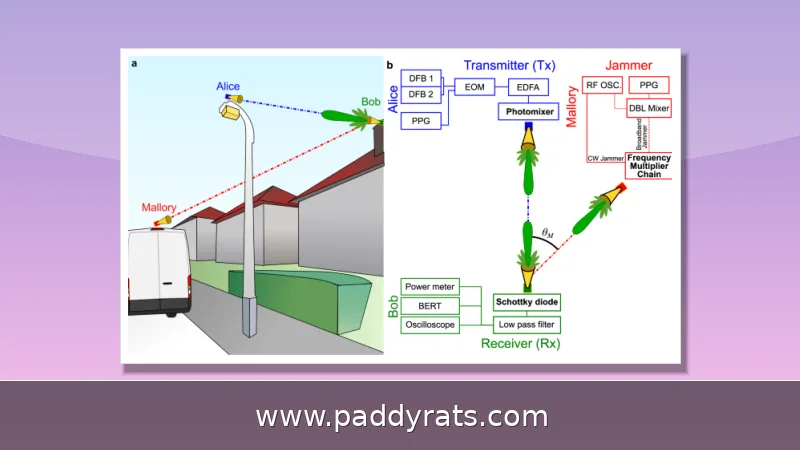
Intentional radiators are devices designed to send out messages intentionally, therefore they represent the clear cut half of man made interference: portable radios, baby monitors, cell phone and worst case situation jammers that directly swamp other signals. Unlike the unintentional radiators, these are more subtle troublemakers. Computer screens, ovens, electrical motors — even people (including laptops and tablets) all leak energy as a natural side-effect of the gadgets operating normally but never intended to transmit. Finishing off this list of man-made influences are out-of-band transmissions, radiation leaking from network antennas and cabling, as well as nearby networks that just so happen to be on the same frequencies.
Wireless networks are now the primary modern source of RF interference. Wi-Fi on the 2.4 GHz band is a particularly busy community: cordless phones, baby monitors, microwave ovens and Bluetooth all live in this same little slice of spectrum thus making congestion there both an endemic as well as accidental phenomenon. In other words, this interference isn't an occasional hiccup you can simply attribute to a single device with bad luck — it is hardwired into the very way these everyday items share our airwaves. Back to Conduction, Radiation: The first is equally important as the second. Power cords naturally propagate interference, and the cables themselves are both antennas transmitting and receiving RF energy meaning a noisy unit somewhere in one room can silently ruin a network at another location in your building.
Here's a quick comparison of how the main source types stack up in real-world situations.
How Does RF Interference Affect Networks, Devices, and Science?
The extent to which a network or device suffers from interference will depend on the strength of that interference and its duration. Essentially, in its very first phase the RFI raises a noise floor just high enough to desensitize the receiver; and since an inferior signal-to-noise ratio cannot help excessive order modulation (USM) because it can simply brute force over them with additional RF power on demand at all times. And that is when regular users begin to notice the day-to-day effects: dropped calls, crackling audio and lousy radio quality —let alone slow internet speeds or fuzzy TV. One of the very aspects that makes Wi-Fi easier to use – how it shares the air. Due to listen-before-talk principles, devices hold their packets until the channel clears; therefore when you have interference present your throughput collapses and connections drop even when signal strength looks perfectly fine on paper. Silent communication becomes impossible at too degrees of interference.
The most unrelenting example of this is radio astronomy. Because the cosmic signals come to us millions or billions of times weaker than a terrestrial communication signal, even modest interference can hide or tar this information originating from across time and space that took years of work on ground-based antennas to collect. However, if a single transmitter spills out of its allocated band near an observatory it can ruin a window for observation.
RF interference can have more than just a dropped Wi-Fi connection or odd streaming session. If the spectrum gets dirtier, as with any contamination, it soon damages systems that most people would not even consider. GPS receivers may not be able to maintain a positional fix, aviation communication links can deteriorate and break down altogether while medical devices miss or misinterpret signals, public safety radios fail at the worst possible time when responding to emergencies and automated manufacturing lines either shut down entirely or produce defect-prone output. Regardless, the fundamental problem is identical in each case: activity introduces energy into the system that raises base level noise floor thereby degrading signal-to-noise ratio; leaving a receiver attempting to differentiate desired signals from unwanted energy. This is why I think of interference not as a annoyance, but an operational risk. The price rarely shows up as a single cataclysmic event; it compounds, quietly through retransmission and more sluggish throughput to unplanned outages, crisis hours. In high-stakes scenarios, the cost can create significantly more dramatic outcomes than simply a lack of efficiency.
How to Detect RF Interference in Wireless Networks
Detection actually starts well before you ever power up a spectrum analyzer. The smart first move is to work through your system alarms, KPIs, and logs, because what you're really trying to do is separate genuine interference from a plain hardware failure. This step matters more than it sounds. A degrading amplifier and an external interferer can throw off eerily similar symptoms — the same dropped calls, the same sluggish throughput, the same complaints from users — so if you misread one as the other, you can burn days chasing the wrong culprit. Pulling the logs first gives you a baseline and a timeline, and that context often tells you whether the problem is internal or something bleeding in from outside. Get this triage right, and every later step in the hunt gets faster and cheaper.
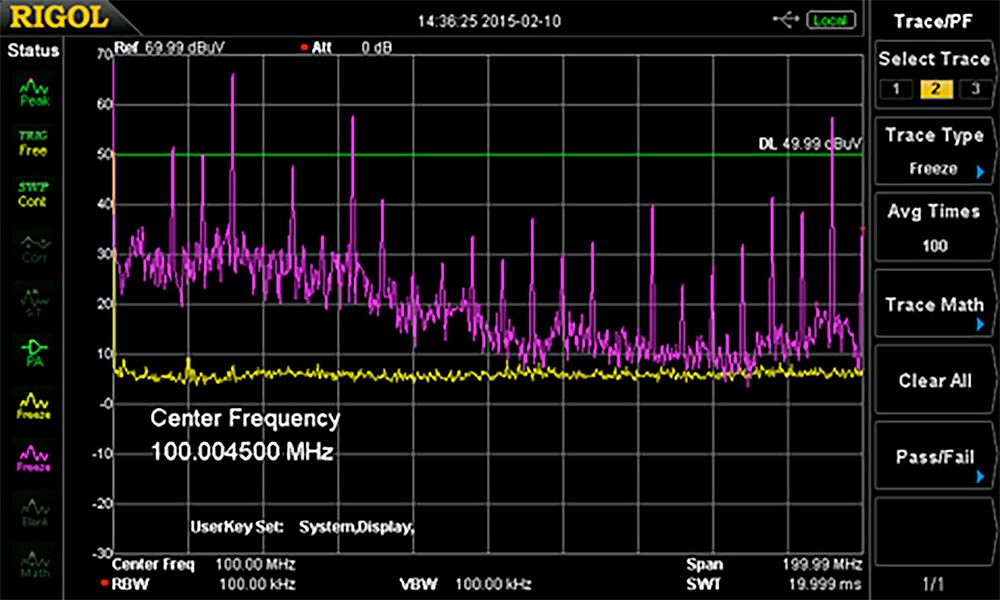
At the cell site, a spectrum analyzer tells you whether the problem is internal or external. A real-time spectrum analyzer with overlapping capture prevents missing transient signals that a swept analyzer would step right past. Persistent spectrum display uses color and brightness to show the probability of a signal appearing at a given frequency, which makes intermittent interferers visible as persistent traces rather than flickers.
From there, drive tests and manual direction finding map the interference across geography. Angle of Arrival (AOA) technology combined with directional antennas enables triangulation, turning a vague complaint into a physical location. RF sensors capture large volumes of data and process it at the edge, while software determines frequency, power, and location.
One caveat I have learned the hard way: a one-off site survey detects constant RFI but can easily miss intermittent signals. Proactive persistent monitoring raises the probability of intercept, which is the difference between finding a jammer and guessing at one.
RF Interference Hunting Techniques and Tools
The hardware matters as much as the method. AOA-capable analyzers let a single technician triangulate a source without a full drive-test crew, and sunlight-readable displays matter more than spec sheets suggest when you are standing on a rooftop at noon.
The table below compares three widely used interference-hunting platforms based on published specifications.
Shielding, Filtering, and Grounding: How to Block RFI
Mitigation follows a simple order: keep interference out, send what gets in to ground, and verify with monitoring. Shielding is the first line. Copper is highly effective, corrosion-resistant, and expensive. Aluminum is about 60% as conductive as copper, effective above 30 MHz, less expensive, and subject to corrosion. Steel works across a wide frequency range, comes in many forms, and may be tin-plated.
RFI filters suppress unwanted frequencies before they reach sensitive circuits, and proper grounding and bonding divert electromagnetic energy safely to ground. Antenna selection and positioning maximize signal strength while minimizing susceptibility, which is often cheaper than adding shielding after the fact.
For teams testing real devices, RF-shielded enclosures provide a controlled environment, but they need heat dissipation or the device under test will fail for thermal reasons and send you chasing the wrong problem. Regular monitoring and analysis close the loop, catching interference early enough that mitigation stays cheap.
In my experience, the most common mistake is treating shielding as a one-time install. Bonding straps corrode, enclosures get opened for service and never reseated properly, and filters age. A short annual re-verification sweep catches most of it.
RF Interference in Radio Astronomy and Critical Industries
The industries affected read like a list of everything modern life depends on: telecommunications, aerospace and aviation, military and government, electrical engineering, public safety, occupational safety, medical equipment, manufacturing, and non-commercial users such as amateur radio operators.
Radio astronomy deserves special mention. Transmitters operating near allocated bands can spill over into protected spectrum, and satellites are a prime threat because their emissions cross vast geographic areas. International agreement divides radio frequencies into bands for different uses, and transmitting is generally prohibited in radio astronomy bands for exactly this reason.
Public safety and medical environments add a human cost. A degraded radio link during an emergency response or a disrupted monitor in a hospital is not an inconvenience. That is why the CISA SAFECOM-NCSWIC RF Interference Best Practices Guidebook, published February 2, 2020, recommends training personnel to recognize and respond to RF interference rather than leaving it entirely to specialists.
Key terms worth knowing when you talk to vendors or read test reports include RFI, EMI, SNR, noise floor, jamming, spoofing, spurious emissions, harmonics, intermodulation, AOA, spectrum analyzer, MER, and dynamic range. The FCC also publishes a consumer guide covering interference with radio, TV, and cordless telephone signals, which is a reasonable starting point for non-engineers.
Regulations, Standards, and What to Do Next
Regulation sets the boundaries, but it does not solve interference for you. The international band allocation framework tells you where you may transmit; the FCC guide and the CISA guidebook tell you how to respond when something else does not respect those boundaries. Neither replaces a monitoring program.
A practical sequence for most teams: baseline your noise floor, deploy persistent monitoring, characterize any interferer with a real-time analyzer, triangulate with AOA or directional antennas, then mitigate with shielding, filtering, and grounding before re-testing. Document each step, because interference cases recur and the second occurrence is always faster when the first one was written down.
If you operate in aviation, public safety, healthcare, or radio astronomy, treat spectrum hygiene as a compliance issue rather than an engineering preference. The tools are mature and the methods are well documented; the gap is usually process, not technology.
How Do You Find the Source of RF Interference?
Technicians use a spectrum analyzer to identify and characterize the interfering frequency, then trace it with a directional antenna or Angle of Arrival technology. Collecting measurements from multiple locations allows triangulation of the source. Once located, the source can be shielded, filtered, relocated, or shut down, and the fix verified with a follow-up sweep. Persistent monitoring is what catches intermittent interferers that a single site survey would miss.
What Are the Effects of RF Interference on Networks and Devices?
RF interference reduces receiver sensitivity and lowers data rates. In practice that means dropped calls, degraded audio, pixelated TV signals, slower Wi-Fi, and in severe cases complete communication failure. Wi-Fi devices hold packets until interference subsides, so throughput drops even when signal bars look strong. GPS, aviation links, medical equipment, and radio astronomy are also affected, with astronomy especially vulnerable because cosmic signals are so much weaker than terrestrial ones.
How Can RF Interference Be Blocked or Mitigated?
Common mitigation methods include shielding with copper, aluminum, or steel enclosures, installing RFI filters, proper grounding and bonding, and choosing and positioning antennas carefully. Continuous spectrum monitoring detects interference early, before it becomes an outage. For device testing, RF-shielded enclosures provide a controlled environment, though they require heat dissipation. Most effective programs combine several methods rather than relying on any single fix.
What Causes RF Signal Interference?
RF interference comes from intentional radiators like cell phones, baby monitors, and jammers, and unintentional radiators such as computer monitors, ovens, and electrical motors. Natural sources include thunderstorms, static electricity, solar flares, and lightning. Cables can both radiate and pick up RF signals, and overlapping wireless networks in shared bands such as 2.4 GHz GHz remain one of the most common everyday causes.
Frequently Asked Questions
What causes RF signal interference?
RF interference comes from intentional radiators like cell phones, baby monitors, and jammers, and unintentional radiators such as computer monitors, ovens, and electrical motors. Natural sources include thunderstorms, static electricity, solar flares, and lightning. Cables can both radiate and pick up RF signals, and overlapping networks in shared bands are a leading everyday cause.
How do you find the source of RF interference?
Technicians use a spectrum analyzer to identify and characterize the interfering frequency, then trace it with a directional antenna or Angle of Arrival technology. Measurements collected from multiple locations allow triangulation of the source, which can then be eliminated. Persistent monitoring improves the odds of catching intermittent interferers that a one-time survey would miss.
How can RF interference be blocked or mitigated?
Common mitigation methods include shielding with copper, aluminum, or steel enclosures, installing RFI filters, proper grounding and bonding, choosing and positioning antennas carefully, and continuous spectrum monitoring to detect interference early. In practice, the most reliable results come from combining several of these methods and re-verifying performance after each change.
What are the effects of RF interference on networks and devices?
RF interference reduces receiver sensitivity, lowers data rates, causes dropped calls, degraded audio, pixelated TV signals, slower Wi-Fi, and can even cause complete communication failure. It also affects GPS, aviation, medical equipment, and radio astronomy, where cosmic signals are millions or billions of times weaker than terrestrial transmissions and easily masked.