Relay theft can empty your driveway in under two minutes, and it now drives a huge share of vehicle crime in the US and Canada. Here is how the attack works and the practical steps that actually slow thieves down.
What Is Keyless Car Entry Relay Theft?
Keyless car entry relay theft is how thieves steal a car without ever touching your keys. There's no broken window, no picked lock. Instead, two people work as a team, using radio hardware that fools your car into thinking the fob is right there next to it. So the doors unlock, the ignition authorizes, and the car drives off. According to industry data from Locksmiths.co.uk, the whole thing can take as little as 20 to 30 seconds. Police forces quoted by Admiral put it at under two minutes for a relay system to move a car.
And this isn't some rare, edge-case crime, either. Tracker, a UK vehicle tracking company, found that 92% of the cars it recovered in a single year had been taken without the keys — and back in 2017, 80% of all stolen and recovered cars were taken the same way. The pattern holds on this side of the Atlantic, too: the National Insurance Crime Bureau counted more than 850,000 cars stolen in the US in 2024, while NHTSA recorded over 650,000 vehicle thefts in 2025. Then there's research from Buckingham Insurance, published in October 2025, which puts keyless crime at nearly two-thirds of all car thefts. In other words, what started out as a clever workaround has become the go-to method for a huge share of thieves.
| Source | Finding | Time period |
|---|---|---|
| Tracker (UK vehicle tracking company) | 92% of cars it recovered were taken without the keys | A single year |
| Tracker | 80% of all stolen and recovered cars were taken without the keys | 2017 |
| National Insurance Crime Bureau | More than 850,000 cars stolen | 2024 |
| NHTSA | More than 650,000 vehicle thefts | 2025 |
| Buckingham Insurance | Keyless crime accounts for nearly two-thirds of all car thefts | October 2025 |
Keyless car crime has its own vocabulary, and the terms tend to blur together. You'll see the same offense called relay theft, relay attack, keyless entry theft, Passive Keyless Entry and Start (PKES) abuse, key emulation, or CAN bus theft. Strictly speaking, these labels aren't interchangeable, but they all come back to one weak point: the short-range radio link that lets your car and your fob communicate, whether it runs on RFID or on newer ultra-wideband (UWB) systems. If your car unlocks the moment you pull the handle with the fob still in your pocket, that convenience is the exact feature being exploited. In other words, any vehicle that recognizes a key without it ever leaving your pocket is a possible target, which is why these terms keep turning up side by side in theft reports and insurance claims.
How Does a Relay Attack Work on Keyless Cars?
A relay attack is basically a high-tech game of telephone played on your car. It intercepts and manipulates the signals between two devices so each one thinks the other is right there—when in fact they might be dozens of feet apart. Here's the thing about keyless cars: the vehicle never really goes to sleep. It keeps sending out a low-energy challenge, sort of like a radio-frequency roll call, searching for its fob. When your fob picks up that challenge, it replies with a coded answer. The car is set up to accept that code only when it comes from a short distance away—roughly a few feet—which is exactly what makes the system so convenient. You walk up, the doors unlock, you press a button, and the engine starts. A relay attack goes after that distance check rather than trying to crack the encryption itself. Instead of breaking the code, thieves fool the car into believing the key is close by using two linked signal boosters to extend the fob's range. What the system reads as proximity is really just a gap that's been bridged electronically.
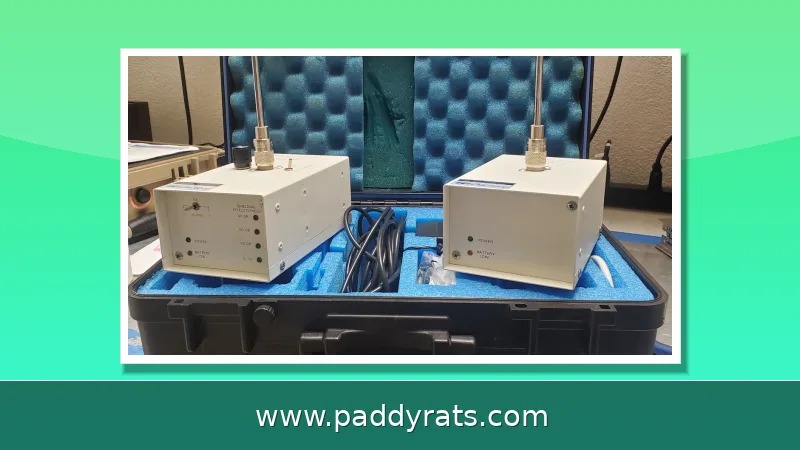
A relay attack takes two devices working as a pair, which is why you'll sometimes hear it called the "two-box" or "two-man" method. The first device sits near your key fob — maybe just outside your front wall, maybe in a store aisle where your key is tucked in a jacket or bag — and quietly picks up the fob's faint reply. The second device waits next to the car and rebroadcasts that same reply. As far as the car is concerned, nothing seems off: it receives a valid code and decides the key is a foot or two away. The doors unlock, and the push-button start fires right up. The owner never presses a button and has no idea anything happened until the car is gone. That's also why the whole thing is so fast — police say thieves can steal a car in under two minutes with a relay system, and some keyless thefts are reported to take just 20–30 seconds (Locksmiths.co.uk). No smashed windows, no forced ignition, and often no alarm at all.
The scenarios are usually painfully ordinary, and that's part of what makes relay theft work so well. In a driveway attack, one thief stands near your house and grabs the fob signal from inside while you're asleep, and a partner waits by the car to pick it up. A parking lot setup is just as simple: one thief follows you into a store with a booster, while the other stays with the vehicle. The equipment bridges the gap between your key and your car, tricking the system into thinking the fob is right there. And this isn't some theoretical weakness. Back in 2018, researchers at the University of Birmingham in the UK showed off a working relay attack on keyless entry systems, proving it could actually be done in the real world. That demo is a big reason manufacturers have spent the years since piling on countermeasures.
Which Cars and Key Fobs Are Most Vulnerable to Relay Theft?
Not all keyless cars are equally easy to steal. The technology is what ties them together: any vehicle with a keyless entry system can be targeted, regardless of brand, badge, or price. That said, some setups make a thief's job a lot simpler than others. Take older fobs that transmit nonstop, or ones that wake up the second they get bumped—say, when they're knocked against a table in the hallway. Those fobs give criminals a longer window to capture a usable code, and one code is all they need. Where you keep the fob matters just as much. A key dropped in a bowl by the front door, or hanging on a hook under a hallway window, is basically broadcasting to the street. From the driveway, a thief's relay device can pick up that signal and bridge it to an accomplice standing by the car—no need to ever step inside your home.
Carmakers have pushed back with two main defenses, both designed to break the relay chain before a thief can do anything with it. Ford, BMW, Mercedes-Benz, and Audi went with motion sensors in their keyless fobs, so the fob just stops transmitting codes once it's been sitting still for a while. That means a key left on a hallway table overnight goes silent and can't be relayed. Jaguar and Land Rover took a different approach, using ultra-wideband (UWB) radio in some newer models, which sends signals in a way that's much harder to intercept and copy. So far, the results look promising — Admiral's claims team has seen fewer relay theft claims as these technologies have spread. Even so, the insurer is quick to point out that thefts still happen, so neither defense should be treated as a guarantee.
| Manufacturer | Defense | How It Works |
|---|---|---|
| Ford, BMW, Mercedes-Benz, Audi | Motion sensors in keyless fobs | Fob stops sending codes after it has been still for a while |
| Jaguar, Land Rover | Ultra-wideband (UWB) radio in some newer models | Transmits in a way that is much harder to copy |
The table below pulls together the main risk factors and the defenses that help offset them, drawing on the manufacturer countermeasures and police guidance covered in the source material.
Practical Ways to Prevent Relay Theft at Home and Away
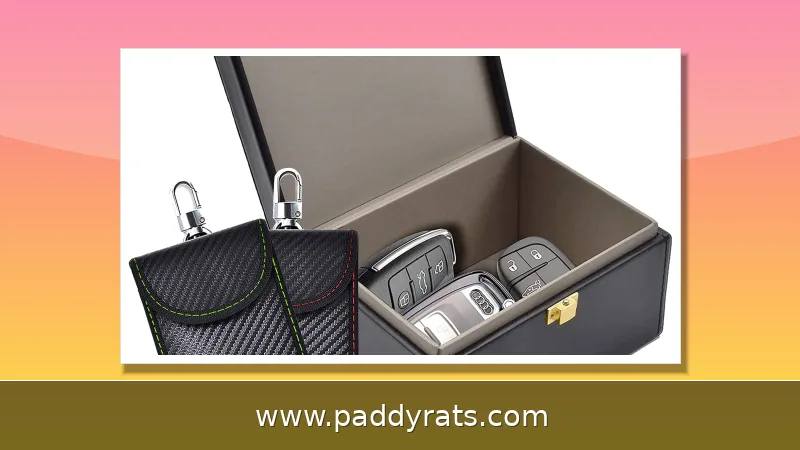
The single most effective habit is to put your fob to sleep whenever it is not in use. A Faraday bag or RFID signal-blocking pouch wraps the key in a conductive layer that traps the signal inside, so a thief standing on the other side of your wall has nothing to capture and amplify. Think of it as a tiny cage for the radio waves your fob constantly emits. Police and insurers also recommend keeping keys away from doors and windows, since a signal can travel from a hallway table or a kitchen counter right out to the driveway. If your car supports it, turn off the fob's wireless signal overnight, which stops it from broadcasting altogether. Check your owner's manual, because the procedure varies by model — some fobs use a button sequence, while others handle it automatically after the key sits still for a while.
Physical security still matters. A steering wheel lock or wheel clamp does not stop a relay attack, but it makes the car far less attractive to drive away quickly, and it buys time. Outdoor motion-detector lighting and CCTV cameras raise the risk for anyone loitering in your driveway. A ghost immobiliser, which requires a personal PIN sequence before the engine will start, blocks key cloning, signal jamming, and relay theft, though it costs more than a pouch.
There are also maintenance and parking habits worth building. If you bought the car second-hand and did not receive every key set, have the keys reprogrammed by the manufacturer or a qualified auto locksmith so no unknown fob can answer your car. Keep up with manufacturer security updates, whether they arrive over the car's system or through a dealer visit. Park in a garage when you can, or in a well-lit, high-traffic area near cameras. A simple metal tin or toolbox can also block
Frequently Asked Questions
What is keyless car relay theft?
Keyless car relay theft is a method criminals use to steal a vehicle without touching the keys. Two thieves work together with radio hardware that captures the key fob's signal from inside your home and rebroadcasts it beside the car. The vehicle believes the fob is nearby, so it unlocks and the engine starts. The whole process can take under two minutes.
Do Faraday bags actually stop relay attacks?
Yes. A Faraday bag or RFID-blocking pouch wraps the key in a conductive layer that stops its signal from escaping. With no signal to amplify, a thief outside your wall has nothing to relay to the car. Police and insurers recommend storing fobs in these pouches when they are not in use, especially overnight.
Which cars are most vulnerable to relay theft?
Any car with keyless entry can be targeted, but older fobs that transmit continuously or wake when moved are easier to defeat. Fobs stored near doors or windows also broadcast to the street. Newer models with motion-sensor fobs or ultra-wideband radio are harder to attack, though no system is completely immune.
What else can I do to prevent keyless car theft?
Keep keys away from doors and windows, and turn off the fob's wireless signal overnight if your car supports it. Add a steering wheel lock, motion lighting, and CCTV. Consider a ghost immobiliser for stronger protection. Park in a garage or a well-lit area, and have second-hand keys reprogrammed so no unknown fob can answer your car.