A faraday bag for keyless car theft prevention wraps your key fob in conductive fabric that blocks every wireless signal in or out, so relay attacks have nothing to amplify. Here is how the shielding works, what to buy, and how to test whether yours still protects your car.
What Is a Faraday Bag and How Does It Block Key Fob Signals?
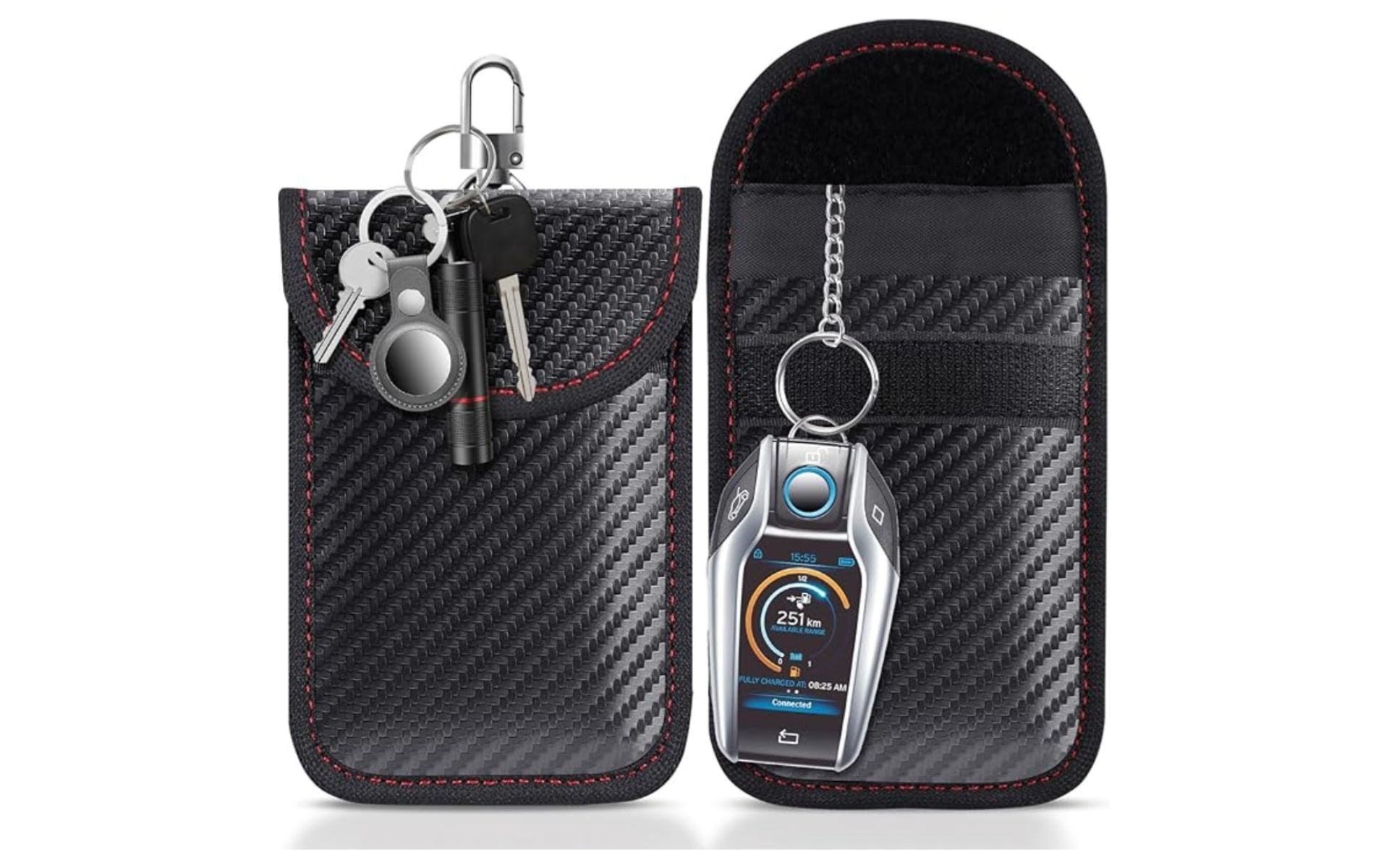
A Faraday bag is basically a small pouch lined with conductive material—usually a woven metal mesh—that wraps around your key fob and keeps electromagnetic signals from getting in or out. It's the same idea behind a Faraday cage: an enclosure that shuts out radio waves, Wi-Fi, GPS, RFID, NFC, Bluetooth, and 5G so nothing reaches the device inside. Drop your fob into a well-made pouch, and your car can't hear it anymore.
Here's why that matters: a modern key fob never truly goes to sleep. It keeps sending out a low-power wake-up signal so the car knows you're nearby and ready to unlock. Handy, sure — but it's also exactly what thieves count on. Shielding solves this by wrapping the fob in conductive fabric that blocks every wireless signal, in or out, which leaves a relay attack with nothing to amplify. That said, how well it works comes down to build quality and condition, so I always test a new bag before I trust it.
The terminology can get confusing pretty quickly, so it's worth sorting out the labels. Faraday bag, faraday pouch, faraday box, faraday cage, key fob protector, RFID signal blocking holder, signal blocker, anti-theft shielding cage, EMF shielding — you'll see all of these used almost interchangeably. Underneath the different names, though, they're describing the same physics: a conductive enclosure that interrupts radio frequencies and keeps criminals from detecting, cloning, or relaying your key. The form factor changes, but the shielding principle stays the same.
How Relay Attacks Steal Keyless Cars
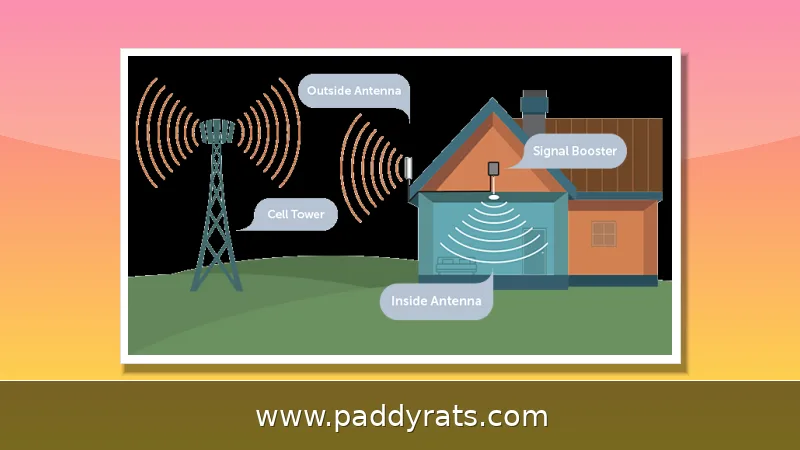
All a relay attack really takes is two thieves and a couple of cheap signal amplifiers. One of them stands by your front door, holding a device that catches the wake-up signal your fob is broadcasting from inside the house. The other one waits next to your car in the driveway with a receiver that rebroadcasts that same signal. The car thinks the key is sitting right there, so it unlocks and starts up. Nothing gets broken, no alarm goes off, and your key never even leaves the hallway.
This is often called the fastest-growing method of vehicle theft in the United States. One source claims a car gets stolen every 32 seconds here, and relay attacks on keyless entry are a big reason why. I've seen doorbell footage of a Mercedes vanish in under a minute this way. What gets me is that the owner didn't do anything wrong. The vulnerability is baked into the technology itself.
That is what makes a faraday pouch for car keys worth taking seriously. Once the fob is sealed inside the conductive fabric, the wake-up signal can't get out, which leaves the amplifier outside with nothing to pick up. The car stays locked, the engine stays off, and whoever was trying to steal it moves on to an easier target. Not many anti-theft products go after the actual attack method instead of just the symptom, but this one does.
Faraday Pouch vs Faraday Box: Which Fits Your Routine?
Choosing between a pouch and a box really comes down to where your keys spend most of their time. A pouch is the compact, portable option — small enough to slip into a pocket, purse, or glove compartment, and it usually holds just one fob. A box, on the other hand, is the sturdier choice for storage at home, and it can hold several keys at once; smaller sizes like 14x11x7.5cm fit around 5–8 car keys, while bigger boxes can accommodate up to 15. Personally, I keep a box by the front door for the family's keys and a pouch in my jacket for whenever I'm out and about.
Here's the catch with portability: bags built strictly for key fobs really are tiny, so don't expect to slip a phone or tablet inside one. If you'd rather get double duty out of your purchase, a few pouches out there are sized to hold a phone. The SIMKET option, for instance, fits phones up to 6.7 inches, while ONEVER and Simket bags take devices up to 21x12cm and still block GPS, WiFi, and RFID signals. Mission Darkness fob bags, on the other hand, stick to fob dimensions only.
The comparison below breaks down how the two formats stack up on capacity, portability, and price. Just keep in mind that faraday protection only works when you actually remember to put your fobs inside — so it comes down to your own discipline. A box makes that habit easy to keep up with at home, while a pouch lets you carry the same protection with you on the go.
| Feature | Faraday Pouch | Faraday Box |
|---|---|---|
| Typical capacity | 1 fob (some fit phones) | 5-8 keys, larger boxes fit 15 |
| Portability | Pocket, purse, glovebox | Home entryway or drawer |
| Build | Flexible fabric, folds closed | Rigid shell, hinged lid |
| Best for | Daily carry and travel | Household key storage |
| Typical price | About $10-$15 for a 2-pack | About $15-$30 depending on size |
What to Look For: Shielding Materials, Closures and Certifications
Build quality is what separates a bag that holds up for years from one that starts leaking signals within months. Take Mission Darkness: it uses 3-layer TitanRF Faraday Fabric and is certified to MIL-STD-188-125 and IEEE 299-2006, wrapped in a water-resistant ballistic nylon outer shell with dual paired seam construction. It blocks WiFi 2.4/5GHz, Bluetooth, 5G, GPS, RFID, and NFC, and comes as a 2-pack with one fob per bag. When you see that kind of certification language on the label, that's usually the clearest sign you're getting real shielding.
Mid-range options are still credible. Lanpard's pouch measures 3.15 x 4.5 inches with a carbon fiber texture outer and double military-grade RF shielding cloth, and it carries 57,000+ reviews at 4.5 stars while blocking WiFi, Bluetooth, GPS, RFID, NFC and key fob signals. TICONN's bag has a 3.5 x 5.0 inch footprint, a PU leather scuff-resistant exterior, and blocks RFID, NFC and the 315 to 868 MHz key fob bands for under $15 for a 2-pack.
If you want a rigid option, GoDark Vault uses 1/12 inch (2.1 mm) thick solid aluminum EMF shielding and blocks the 433.92 MHz band. Teskyer's 2-pack measures 4.7 x 3.25 inches, weighs 0.2 pounds, uses PU leather, and pairs a dual-pocket design with an inner shielded pocket for fobs and an outer pocket for ID, bank cards and metal keys at $11.99. Prices I have seen recently include Samfolk box sets at $16.99, $22.99 and $29.99, Lanpard at $9.99 and $13.99, a box plus 2 bags at $19.69, and a box fitting 15 keys at $14.99. As a rule, basic pouches run around $5-$10, larger or higher-quality versions cost more, and boxes usually start around $10 and rise with size and build quality.
How to Test Whether Your Faraday Bag Still Works
Testing takes two minutes and should be a habit, not a one-time check. The phone test is the simplest: put a mobile phone in the bag, close it properly, then try calling it or connecting via Bluetooth. If the phone still rings or pairs, the bag is not blocking properly. I do this with every new pouch before it goes anywhere near my keys.
The car key test is more direct. Place the fob inside, seal the bag, and stand next to the car. Try the lock and unlock buttons, and see whether the car detects the fob or responds at all. If the car reacts, the bag is not fully effective and should be replaced. Do this at home where you can watch the lights flash, not in a parking garage.
Bags fail for predictable reasons. Wear and tear from daily use, plus folding and rubbing that damage the internal metal lining of silver, nickel or copper, is the most common cause. Improper sealing when the bag is not securely closed or folded, physical damage such as tears, rips or tiny holes, and moisture or corrosion from sweat, water or chemicals all degrade performance. Cheap bags with less durable metals wear out faster, while dual paired seam construction helps prevent the leakage that kills cheaper bags within a year.
| Test | What to Do | Pass Result |
|---|---|---|
| Phone call | Seal phone inside, call it | No ring, call fails |
| Bluetooth | Seal phone inside, try pairing | Device not found |
| Key fob buttons | Seal fob, press lock/unlock by car | No response from car |
| Visual check | Inspect lining for tears or wear | No holes or exposed fabric |
DIY Faraday Cage and Other Anti-Theft Measures
You can build a working faraday cage at home with kitchen supplies. You need aluminum foil, or copper foil for better durability, a small pouch, envelope or ziplock bag, and optionally a fabric or leather outer pouch. Wrap the key completely in two to three layers of aluminum foil with no gaps, seal it inside the pouch or envelope with the opening fully closed, then place it in a soft fabric or leather bag to prevent tearing and wear on the foil. Finally, test by trying to lock or unlock the car while the key is inside.
The DIY route works, but it is a stopgap. Foil tears, compresses and loses conductivity with handling, so most people upgrade to a manufactured pouch or box within weeks. I keep a foil-wrapped spare in a drawer as a backup, but I do not rely on it for daily use.
Faraday bags are not a complete car security solution on their own and should complement other security measures. Some carmakers such as Land Rover, Audi and BMW include anti-theft features, but they are not completely foolproof. Pair shielding with a steering wheel lock, an aftermarket immobilizer, motion-sensing cameras and good parking habits. Faraday bags are completely legal to buy, own and use; they simply block signals to protect devices.
If you are shopping, the options below cover the range I see most often. The right pick depends on whether you need one fob protected or a whole household's worth.
| Product | Format | Notable Spec |
|---|---|---|
| Mission Darkness Faraday Bag for Keyfobs (2-Pack) | Pouch | 3-layer TitanRF fabric, MIL-STD-188-125, IEEE 299-2006 |
| Lanpard Faraday Pouch (2-Pack) | Pouch | 3.15 x 4.5 in, double military-grade RF cloth |
| TICONN 2PK Faraday Bag for Key Fob | Pouch | 3.5 x 5.0 in, blocks 315-868 MHz, under $15 |
| Teskyer 2 Pack | Pouch | 4.7 x 3.25 in, dual-pocket, $11.99 |
| GoDark Vault | Box | 2.1 mm solid aluminum, blocks 433.92 MHz |
| Samfolk Faraday Box with Faraday Bags | Box set | $16.99-$29.99 depending on size |
Frequently Asked Questions
Do faraday bags really work for car key fobs?
Yes. A faraday bag wraps the fob in conductive fabric that blocks wireless signals coming in or out, so a relay attack has nothing to amplify. Effectiveness depends on build quality and condition, so test yours with a phone or by trying the lock buttons while the fob is sealed inside before you rely on it.
How long does a faraday bag last before signal leaks through?
Performance degrades over time from wear and tear, folding and rubbing that damage the internal metal lining, improper sealing, tears or holes, and moisture or corrosion. Cheap bags with less durable metals wear out faster, while dual paired seam construction helps prevent the leakage that kills cheaper bags within a year.
Can I use a faraday bag as a phone privacy pouch too?
Some are sized for phones. The SIMKET pick fits phones up to 6.7 inches, and ONEVER and Simket bags accommodate phones up to 21x12cm while blocking GPS, WiFi and RFID. Key-fob-only bags such as Mission Darkness are genuinely small and will not fit a phone or tablet.
What is the difference between a faraday bag and a faraday box?
A pouch is compact and portable for pocket, purse or glove compartment carry, usually holding one fob. A box is a sturdier home storage option that can hold multiple keys, with sizes such as 14x11x7.5cm holding 5-8 car keys, or larger boxes fitting 15 keys.