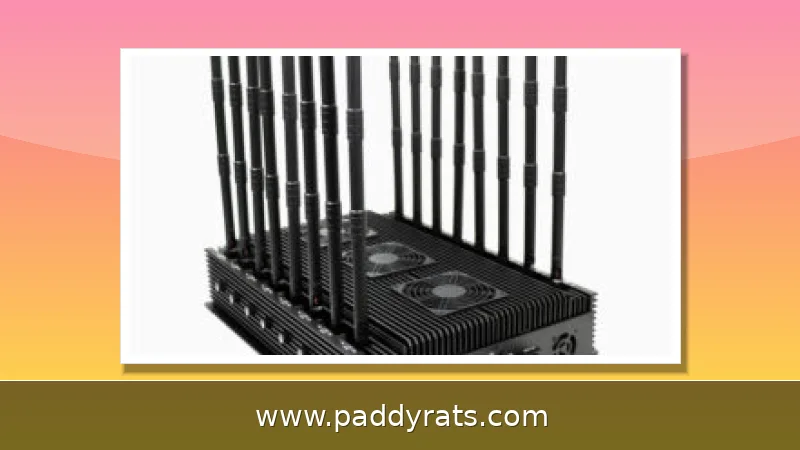
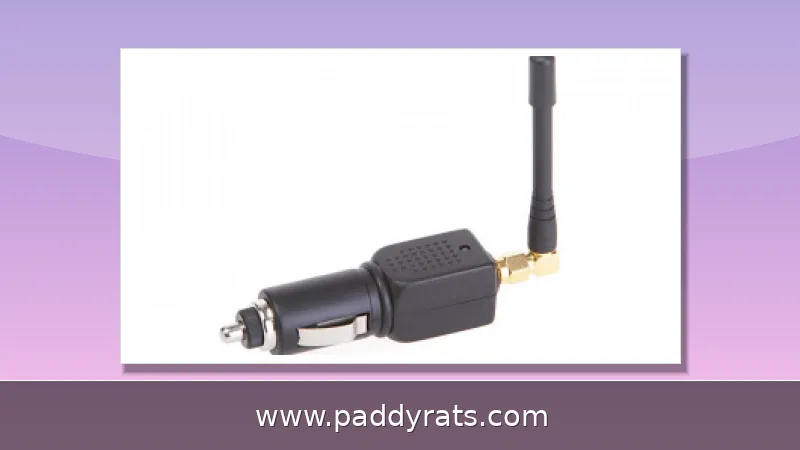
signal jammers now feature in a huge share of keyless car thefts across England and Wales, and the law is finally catching up. Here is how jamming and relay attacks actually work, what the 2025 UK ban means in 2026, and the defences that genuinely stop thieves.
What Is a Signal Jammer for Car Keyless Entry Theft?
Signal jammers for car keyless entry theft are pocket-sized radio signalling devices that send signals on the same frequency your remote control uses, thus preventing the lock command from ever reaching your vehicle. You hit the button, nothing makes an unusual sound and you walk away assuming that the doors are locked. In practice the car is still unlocked, and a thief simply needs to pull on the handle or get in and drive off without triggering an alarm. Police figures released in February 2025 indicated that, nationally for England and Wales, jammers were used in four of ten vehicle thefts — a figure rising to about six out of ten south-east London.
The devices are inexpensive, very easy to purchase on the Internet and usually disguised as everyday gadgets like Bluetooth speakers or power banks so there is nothing that suggests they might be a "car theft" device. "The jammer never actually contacts the car-- it transmits interference --so there are no scratches, broken glass or error codes left behind. This combination of low expense, easy to hide inside and zero breach is why jamming has become second only the relay attack which I will describe in a moment. In practice, someone could just stand 75 meters away and silently fill the radio spectrum—potentially filling an entire parking lot with signals—as unsuspecting owners walk off thinking their cars are locked.
How Does a Car Key Signal Jammer Work, and How Is It Different From a Relay Attack?
People tend to lump these two attacks together, and that's where a lot of the confusion comes from. They're not the same thing at all. A signal jammer doesn't copy anything — it just floods the airwaves with interference, drowning out the radio spectrum so your fob's low-power lock command never makes it to the car. You hit the button, hear nothing out of the ordinary, and walk off thinking the doors are locked when they're actually wide open. A relay attack flips that logic on its head: instead of blocking the signal, two thieves capture it and stretch it. One stands near your front door with a device that grabs the fob's transmission from inside the house, while the other holds a relay unit next to the car, which then acts as if the key were sitting right there. The car unlocks, starts, and drives away — no smashed window, no alarm. That mechanical difference matters more than it might seem. A Faraday pouch, for instance, is great at stopping a relay attack because it prevents the fob from transmitting at all. But it does nothing against a jammer, since that's targeting the car's receiver, not your key. By the same token, manually tugging the door handle confirms the lock actually engaged, which defeats a jammer — but that habit won't save you if a relay team has already cloned your fob's signal. Knowing which weakness each method exploits is the first step toward covering both.
| Method | What the device does | Car state | Typical time |
|---|---|---|---|
| Signal jamming | Floods the radio spectrum to block the lock command | Stays unlocked, alarm off | Seconds |
| Relay attack | Captures and extends the fob signal to the car | Unlocks and starts | Under 2 minutes |
| Key emulation | Impersonates the real key on the correct frequency | Unlocks and starts | Under 1 minute |
| CAN bus theft | Injects false commands via a weak point like the headlight | Immobiliser bypassed | Minutes |
| Rolling jam | Intercepts and jams the signal at the same time | Depends on the target | Seconds |
A relay attack is basically two thieves pulling off one invisible handshake. One stands near your front door with a device that grabs the faint signal your key fob is always sending out from inside the house. The other waits at the car and rebroadcasts that same signal right there. The car can't tell the difference — as far as it knows, the key is sitting in the driver's seat, so it unlocks and the engine starts. A jammer works the opposite way. Rather than copying the signal, it buries the lock command under a flood of radio interference, so the doors never lock at all and you walk away with no idea. And then there's the rolling jam attack, which mixes the two: hackers capture the transmitted code at the exact moment they jam it, which is why researchers see it as the hardest version to stop with software updates alone.
Keyless Car Theft Statistics and the 2025 UK Law Change
It's hard to overstate how big this problem has gotten, and the official numbers bear that out. The 2022–23 Crime Survey for England and Wales found that in 40% of vehicle thefts nationwide, the offender manipulated a signal from a remote locking device. In London, that figure rose to about 60%, so the capital is clearly carrying more than its fair share of these crimes. On top of that, more than 700,000 vehicles were broken into in the year covered by a February 2025 report — a reminder that not every theft involves a tow truck or a smashed window. Insurers have picked up on the trend as well: Admiral Insurance told the BBC in November 2025 that its claims data pointed to keyless models being involved in 60% to 70% of vehicle thefts over the past year. But the most sobering number may come from testing. A recent study found that 99% of keyless cars subjected to relay attack simulations were vulnerable, which suggests the technology itself — not just careless owners — is a big part of the story.
| Measure | Figure | Source / Period |
|---|---|---|
| Vehicle thefts involving signal manipulation (England and Wales) | 40% | Crime Survey for England and Wales, 2022–23 |
| Vehicle thefts involving signal manipulation (London) | Approximately 60% | Crime Survey for England and Wales, 2022–23 |
| Vehicles broken into | More than 700,000 | Reported February 2025 |
| Vehicle thefts involving keyless models | 60%–70% | Admiral Insurance claims data, reported November 2025 |
| Keyless cars vulnerable to relay attacks in testing | 99% | Recent study |
| Date | Milestone |
|---|---|
| 2006 | Relay theft first identified by the International Association of Auto Theft Investigators |
| 2010 | First unexplained keyless thefts recorded in the UK |
| 2012 | Relay thefts confirmed in the UK |
| 23 Feb 2025 | Crime and Policing Bill announced, covering jammer offences in England and Wales |
| 17 Nov 2025 | BBC report on £20k keyless theft devices published |
| 5 Dec 2025 | Admiral keyless theft guide updated |
In 2025, the regulatory landscape changed quite a bit. With the Crime and Policing Bill unveiled on 23 February 2025 for England and Wales, making or selling a signal jammer could face up to five years behind bars or an unlimited fine. More critically, the onus now is on whoever owns/wields a device with this capability to show that they had legitimate reason for having it. That gives way to the old excuse of simply claiming innocent possession, and that reversal matters. Jamming any signal is already illegal in the US, so to a degree that just means the UK is tightening its standards. In practice, however, enforcement is much easier said than done. Many of these devices are foreign-made and sold with imprecise, nonspecific descriptions, which makes tracking them difficult and prosecuting those who import the items harder still. The law thus functions presumably more as a disincentive than as an actual remedy.
Which Cars Are Most Vulnerable to Keyless Theft?
Vulnerability does not impact all cars equally. Almost half of all expensive car theft claims are for luxury cars, no surprise there: they maintain their value well and can easily be transported overseas to a new owner. Admiral, whose claims data focused on keyless models as a culpable party, told the BBC: "Almost 60%-70% of all thefts in the last year involved keyless vehicles. It boils down to the physics of matter. A fob that broadcasts a persistent low-power signal is vulnerable to having its transmission captured and replayed -- among the first victims of increasing sophistication in automotive hacking are older keyless systems based on simple radio frequency polling. This semi-documentary also explains why when a recent investigation tested relay attacks, it resulted in 99% of keyless cars being hacked.
| Risk Factor | Why It Matters |
|---|---|
| Luxury models | Nearly half of high-value theft claims; strong resale value and easy cross-border movement |
| Keyless entry | Admiral data suggests 60%–70% of thefts involved keyless models |
| Older RF polling systems | Constant low-power fob signal can be captured and replayed |
| Relay attack exposure | 99% of keyless cars tested in a recent study were vulnerable |
Car manufacturers haven't been sitting still, and their countermeasures target the two attacks we just described. Ford, BMW, Mercedes-Benz and Audi added motion sensors to their keyless fobs, so the fob simply stops transmitting once it has been sitting still for a short while — put your keys down on the hall table and they go quiet, which shuts down the classic at-the-door relay. Jaguar and Land Rover pushed things further by adopting ultra-wideband (UWB) radio technology in newer models; instead of just checking that a signal exists, UWB measures distance precisely enough to recognize a relayed signal and refuse it. The catch is that these fixes only protect the cars that have them. If your vehicle predates this generation of hardware — and plenty on the road today do — it's safest to assume it falls into the vulnerable group and to layer physical defences on top, from a Faraday pouch to a steering wheel lock.
| Brand | Countermeasure | How It Defeats the Attack |
|---|---|---|
| Ford, BMW, Mercedes-Benz, Audi | Motion sensors in keyless fobs | Fob stops transmitting after it has been stationary for a short period, defeating the at-the-door relay |
| Jaguar, Land Rover | Ultra-wideband (UWB) radio technology in newer models | Measures distance precisely enough to reject a relayed signal |
Thieves can also program a brand-new key in as little as 13 seconds using OBD CAN bus compatible devices, which means a car can go from locked to gone while the owner is still inside a store. Police say relay systems let thieves steal a car in under two minutes, and some sources put the figure under 60 seconds. CAN bus theft skips keyless entry altogether: thieves reach the car's computer through a weak spot such as the headlight, then insert false commands that disable the immobiliser. That is why software updates and aftermarket immobilisers matter as much as fob hygiene, since no amount of careful key storage will stop an attack that never touches the key signal in the first place.
How to Protect Your Car: Faraday Pouches and Other Defences
A Faraday pouch is the single most effective low-cost defence against relay theft. The pouch is lined with a metallic mesh that blocks radio signals, so the fob cannot be interrogated from outside your home. Store the key fob inside it, and put spare keys and any smart devices that might bridge the signal in similar blockers. The test is simple: place the key in the pouch, walk to the car, and try the handle. If the car does not unlock, the pouch is doing its job. If it unlocks, the pouch is worn or fake and should be replaced.
| Defence | Stops jamming | Stops relay | Notes |
|---|---|---|---|
| Faraday pouch | No | Yes | Test it regularly; replace when worn |
| Manual lock check | Yes | No | Always pull the handle before walking away |
| Fob signal off overnight | No | Yes | Only on models that support it |
| Steering or pedal lock | Yes | Yes | Physical deterrent, slows thieves |
| Ghost immobiliser | Yes | Yes | Blocks cloning, jamming and relay |
| Motion-sensor lighting and CCTV | Partly | Partly | Deters, and captures evidence |
Beyond the pouch, build layers. Keep keys away from doors, windows and letterboxes, and store them deep inside the home rather than on a hallway hook. Turn off the fob's signal overnight if your model supports it. Manually check the doors are locked before walking away, because that single habit defeats every jammer on the market. Add steering wheel locks, pedal locks, gear shift locks or wheel clamps, and consider an aftermarket or ghost immobiliser that stops key cloning, signal jamming and relay theft in one system.
Park in well-lit, secure areas and use driveway bollards and gates where you can. Fit outdoor motion detector lighting and CCTV. If you bought the car second-hand, get the keys reprogrammed so any unknown fob is wiped. Keep vehicle software updated to close security loopholes, and report suspected key jamming to the police, because patterns of reports are what drive enforcement. None of these steps is glamorous, but stacked together they make your car a harder target than the one three streets away.
Are Signal Jammers Illegal in the UK and the US?
In England and Wales, the Crime and Policing Bill announced on 23 February 2025 made it an offence to make or sell a signal jammer, with penalties of up to five years in prison or an unlimited fine. The design of the offence is notable: possession requires proof of a legitimate purpose, so the onus sits with the person holding the device rather than with the prosecution. That is a deliberate reversal of the usual burden, aimed at the grey market in cheap jammers sold as generic electronics.
In the United States, jamming any signal is illegal, and the rules are enforced by federal regulators rather than left to states. For drivers, the practical takeaway is the same on both sides of the Atlantic: buying, owning or using a jammer is a serious legal risk, and there is no legitimate consumer use case for blocking your own car's lock signal. If you are a security researcher or installer who needs one, document that purpose carefully, because the burden of proof now falls on you.
Insurance is a separate question, and the news is better. All Admiral car insurance policies cover keyless car theft, according to the insurer's own guidance updated on 5 December 2025. That does not mean you should be relaxed about prevention, because a claim still involves excess, disruption and a likely premium increase. But it does mean the financial hit from a keyless theft is not uninsured, provided you can show the theft occurred and you took reasonable precautions.
What Should You Do Tonight to Stop Keyless Car Theft?
Start with the cheapest fix. Buy a Faraday pouch, test it at your car, and put every fob in your household inside one. Move spare keys out of the hallway and away from the front door. Then build the habit of pulling the door handle after you lock up, every single time, because that five-second check defeats jamming entirely and costs nothing. If your fob supports a sleep mode or signal-off setting, enable it.
Next, add one physical layer. A steering wheel lock or pedal lock will not stop a determined professional, but it adds time, noise and risk, which is exactly what a thief is trying to avoid. If your car is a high-value keyless model, price a ghost immobiliser and check with your dealer whether a UWB or motion-sensor upgrade is available for your model year. Finally, keep the vehicle's software current and report anything suspicious. The thieves have industrialised their methods; the response has to be layered, habitual, and boring.
Frequently Asked Questions
How does a signal jammer steal a keyless car?
A jammer floods the radio spectrum used by your key fob, blocking the lock command when you press the button. The car stays unlocked while you walk away believing it is secure, letting thieves open it or drive off without triggering the alarm. Because no forced entry occurs, the theft can go unnoticed for hours.
What is the difference between relay theft and signal jamming?
Relay theft extends and copies your fob's signal so the car thinks the key is present, allowing it to unlock and start. Signal jamming instead blocks the lock signal, leaving the car open. Both can steal a vehicle in under a minute without forced entry, but jamming targets the lock command while relaying targets the authentication handshake.
Are signal jammers illegal in the UK?
Under the Crime and Policing Bill announced in February 2025 for England and Wales, making or selling a signal jammer could lead to up to five years in prison or an unlimited fine. Possession requires proof of a legitimate purpose, so the burden of explanation falls on the person holding the device.
How can I protect my keyless car from signal jamming?
Store your key fob in a Faraday pouch or metal container, keep spare keys away from doors and windows, manually check the doors are locked, and add physical deterrents such as a steering wheel lock. Some fobs can have their signal turned off overnight, and a ghost immobiliser blocks cloning, jamming and relay theft together.