Practical ways to cut RF emissions from smart meters, from Faraday cage guards and shielding kits to RF-blocking paint, plus what shielding costs you in meter communication and how smart meter RF compares with everyday devices.
What RF emissions do smart meters actually produce?
Smart meters aren't constantly transmitting. Take Alameda Municipal Power (AMP), for example — its Landis and Gyr meters run on a low-powered radio in the 902 to 928 MHz band, and they rack up only about 83 seconds of total transmission per day. Most of that comes from sync signals: 1,440 of them daily at 48 milliseconds each, adding up to 69 seconds, plus 270 maintenance transmissions at 46 milliseconds each (12.52 seconds) and data packets that go out about seven times a day. Xylem/Sensus goes even further, estimating that a typical meter transmits for under one second per day — in other words, it stays silent 99.999% of the time.
The exposure you actually get lines up with that on-and-off pattern. AMP measured readings of 1 to 6 microwatts per square centimeter at 2 feet away, while the FCC limit is 601 microwatts per square centimeter. Itron points out something similar: when several meters sit together in a bank, the combined RF exposure is basically no higher than what one meter produces on its own, since each unit transmits so briefly and at such low power. So in everyday terms, a smart meter is a device that fires off short bursts here and there, not something broadcasting nonstop.
How do Faraday cage guards and shielding kits block smart meter RF?
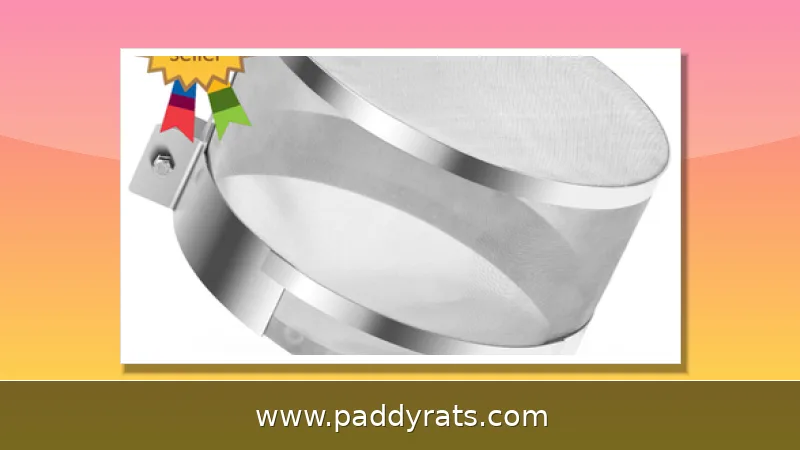
A Faraday cage works by wrapping a transmitter in a conductive enclosure that either absorbs or reflects radio waves. When you place a simple cage over a smart meter, it's said to cut RF radiation by over 95% — and the meter still does its job. Smart meter guards rely on the same principle: they form a Faraday cage around the unit and can block up to 98% of emissions, while in some setups the utility can still pull its data.
Commercial smart meter shielding kits are basically specialized EMF shields designed to block the RF signals your meter gives off. They cut radiation levels pretty substantially, but here's the thing—they still let the meter do its job. Take the Smart Meter Cloak: it relies on military-grade Faraday technology to keep RF/EMF radiation from escaping. You'll also see people in community groups swapping tips about shield envelopes for blocking smart meter signals. The catch with all of these? Any conductive barrier is directional unless it completely encloses the meter, so a partial shield only gets you so far.
Which materials and methods are used for smart meter shielding?
You've got options here, ranging from DIY setups to commercial products. Woremor RF-IE50 protection paint, for instance, is often billed as the best way to shield against RF radiation from smart meters. Shielding paints like this one work by loading a wall or enclosure with conductive particles. Another popular fix is placing iron sheeting behind a smart meter inside a garage. Just keep in mind that a flat sheet behind the meter only reduces exposure in one direction — it won't block signals coming from every angle.
The table below lays out the main approaches people use, along with what each one can realistically do.
How much does shielding reduce exposure, and what are the trade-offs?
Here's the catch: blocking the radiation also blocks the connection. Once those signals are blocked, your utility can't get its readings, which is exactly why shielding is always a trade-off and never a free win. Getting a Faraday cage properly grounded and actually blocking RF is a science in itself, and a partial or poorly grounded enclosure can end up shifting or reflecting the energy instead of absorbing it.
Shielding only really works in one direction unless you build a full enclosure, so a single sheet behind the meter is a half-measure at best. And yes, some people dismiss the whole Faraday cage idea as a hoax, since wrapping your meter basically defeats its entire purpose. The bottom line: if you shield it, you're choosing between lower exposure and reliable remote readings—you can't really have both. So if your utility stops getting readings, be ready for a visit from a technician.
Here's how the numbers stack up across some of the most common RF sources you'd find in a typical home.
How do smart meter RF levels compare with cell phones, WiFi and microwaves?
According to Alameda Municipal Power, a smart meter puts out about 4 microwatts per square centimeter at 10 feet and 40 microwatts at 3 feet. Compare that to a cell phone, which runs somewhere between 1,000 and 5,000 microwatts. FM radio and TV broadcasts come in at just 0.5 to 1 microwatts, microwave ovens at 50 to 200 microwatts, and wireless routers at 4 feet at a mere 0.2 to 1 microwatts. National Grid puts the gap in even starker terms: a cell phone emits 12,667 times more RF than a smart meter, a microwave oven 313 times more, a WiFi router 67 times more, a video game remote 30 times more, and a baby monitor 7 times more.
National Grid also notes that a smart meter usually broadcasts less than 60 seconds and typically less than 15 minutes per day, and that reaching a dose equivalent to a smart meter would require 375 years of exposure. With over 25,000 articles published on RF effects in 30 years, the body of research is large, and the exposure gap between smart meters and everyday devices remains the central fact in this debate.
How widespread are smart meters, and what standards apply?
National Grid reports that smart meters have been in use in the U.S. since 2006, with over 98 million installed and active, and nearly half of American homes have one. More than 6.2 million Canadian households and more than 32.4 million in Great Britain use them, and 27 EU countries including Sweden, Denmark, Finland, Estonia, Spain, Norway, Luxembourg, Latvia, Italy, France, Malta, Slovenia and the Netherlands reached 80% deployment.
In the UK, UKHSA explains that smart meters use radio waves for remote readings, with a Home Area Network (HAN) linking meters to an in-home display, and a communications module that in existing UK meters contains a SIM card like those in mobile phones. Communications are short intermittent bursts, which is why exposure assessments focus on peak and average levels rather than continuous output.
What does the research say about smart meter RF exposure?
UKHSA research had three phases: laboratory quantification of exposure, calculation and mapping of radio wave energy absorption in the body, and assessment in a sample of homes. Results were published in three parts in Bioelectromagnetics, and exposure is well below ICNIRP guidelines and likely much lower than mobile phones and WiFi. UKHSA also studied devices at 868 MHz and found exposure generally lower than or similar to 2.4 GHz devices.
Calderon 2019 found that smart meters use RF electromagnetic fields to communicate inside and outside the home, and that all meters in that project operate the HAN using ZigBee at 2.4 GHz. Aerts 2020 proposed a method to assess spatiotemporal RF-EMF exposure to AMI smart meters operating in the ISM 915 MHz band in urban environments. Together, these studies show that exposure varies by band, meter design and home layout, which matters when you decide how much shielding is worth the communication cost.
What do health and regulatory bodies say about smart meter RF exposure?
UKHSA says evidence to date suggests exposures to radio waves produced by smart meters do not pose a risk to health, that assessments in other countries found exposures low relative to internationally agreed guidelines, and that exposure does not provide a basis to decline having a smart meter. Health Canada reports no health risks from RF EMF from smart meters and notes devices must meet standards. ARPANSA states there is no established scientific evidence that low level RF electromagnetic energy exposure from smart meters causes any health effects.
National Grid says RF emitted by smart meters is well below FCC limits and a fraction of levels from cell phones, baby monitors and microwave ovens, with no credible evidence of any threat to human health at or below FCC exposure limits. Cancer.org notes smart meters send brief signals giving off small amounts of RF radiation, like cell phones and Wi-Fi, that walls block some radiation, and that most people are exposed to much less RF from a smart meter than from using a cellphone. The Minnesota Department of Health frames the issue as questions about potential health effects associated with radio frequency radiation (RFR) used in this technology, while LessEMF points to studies highlighting potential health risks and says prolonged exposure to smart meter radiation may be a concern.
| Method | Typical reduction | Meter still communicates? | Main limitation |
|---|---|---|---|
| DIY Faraday cage over meter | Over 95% | Often yes | Needs grounding and full coverage |
| Smart meter guard | Up to 98% | Utilities may still receive data | Directional unless fully enclosing |
| Shielding kit / Smart Meter Cloak | Significant reduction | Designed to allow function | Cost and fit vary by meter |
| RF-shielding paint (Woremor RF-IE50) | Wall-level shielding | Yes, if meter is not wrapped | Only blocks the treated surface |
| Iron sheet behind meter | Partial, one direction | Usually yes | Does not block all directions |
Frequently Asked Questions
How can I block RF emissions from a smart meter?
Common approaches include Faraday-cage style guards that cover the meter, shielding kits, flat metal sheets placed behind the meter, and RF-shielding paint such as Woremor RF-IE50. A flat sheet behind the meter may reduce exposure in one direction only, while a full cage blocks more of the signal. Expect over 95% reduction from a simple cage and up to 98% from a guard.
Does a Faraday cage around a smart meter stop it from working?
Blocking the RF signals also blocks the meter's connection, so the utility may not receive readings. Sources describe this as a trade-off: shielding can cut emissions substantially, but the meter still needs a communication path for remote reading. If readings stop, your utility may send a technician or replace the meter.
How much RF do smart meters emit compared with other devices?
Alameda Municipal Power lists smart meters at 4 microwatts at 10 feet and 40 microwatts at 3 feet, versus cell phones at 1,000 to 5,000 microwatts. National Grid states a cell phone emits 12,667 times more than a smart meter, a WiFi router 67 times more, and a baby monitor 7 times more. A typical meter transmits under one second per day.
Are smart meter RF emissions considered a health risk?
UKHSA says evidence to date suggests exposures to radio waves from smart meters do not pose a risk to health, and results are well below ICNIRP guidelines. Health Canada, ARPANSA and National Grid similarly report no credible evidence of health threats at or below FCC exposure limits. Some advocacy sources, including LessEMF, argue prolonged exposure may still be a concern.