Prison cell phone jamming blocks contraband phones by overpowering downlink signals, but it costs $1.5M to $2.5M per facility and sits in a legal gray zone the FCC is now trying to rewrite. Here is how the technology, the rules, and the alternatives actually stack up.
What Is a Prison Cell Phone Jammer and What Does It Block?
A prison cell phone jammer is a fixed or modular radio system that floods the air inside a correctional facility with the same frequencies commercial carriers use, so contraband handsets can't hold a connection to a tower. Why does anyone care? The scale of the problem makes the case on its own. The FCC has cited a September 2024 figure of nearly 500,000 contraband cellphones in the hands of roughly 25% of U.S. prisoners and jail detainees, and more than 25,000 phones were recovered across 20 states in a single year.
Georgia is a good example: the state's Department of Corrections seized and processed more than 15,500 cell phones last year, plus over 150 drones. And go back to 2008 — California officers pulled 1,331 phones off the yard in just the first six months of the year. That alone should tell you this problem didn't pop up overnight; it's been building for decades. Lee makes the point even sharper. Since last July, more than 800 phones have been shut off there, and the facility holds only about 1,100 inmates.
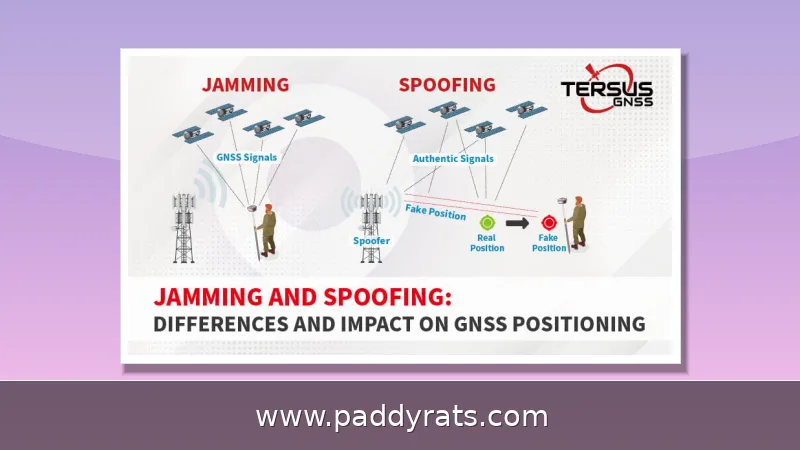
What a prison cell phone jammer blocks is actually a lot narrower than most people think. It doesn't kill the phone itself — it goes after the link between the handset and the tower. More precisely, jammers target the downlink bands, the frequencies that travel from the base station down to the phone, and they cover the generations people actually use today: 2G, 3G, 4G, and increasingly 5G. Once that downlink gets drowned out, the phone can't pick up tower signals at all. You'll see no signal bars on the screen, and calls, texts, and data connections all stop working. But here's the part that catches a lot of people off guard: jamming only cuts the network connection. The camera and microphone still work fine, so an inmate can snap photos or record video on a fully jammed phone — the device just has no way to send any of it out.
That difference ends up mattering a lot when you're actually choosing a system to install, because jamming and managed access systems aren't even solving the same problem. Jamming is a blunt instrument: it floods the downlink bands that a phone listens on, so the handset sees no signal at all and just stops working. But you don't get anything useful out of it afterward. It won't tell you who called whom, which SIM was in the device, or where the phone came from — and those are exactly the questions a managed access system is designed to answer. A jammer silences the phone in the moment but leaves no trail behind. So if what you're after is intelligence, the ability to track contraband rather than just shut it down, the tool you pick changes everything.
How Prison Jamming Technology Disrupts Base Station Signals
At its core, this all comes down to basic physics. A jammer broadcasts on the same radio frequency bands that cell phones rely on, which severs the connection between the base station and the handset — any phone within range goes offline. The key detail is that it goes after the downlink signal, meaning the tower-to-phone direction. When a handset picks up two signals on the same frequency at once, it latches onto the stronger one, so the weaker carrier signal from the tower gets drowned out and the phone just reports no service. That's exactly why an inmate looking at a jammed phone sees zero bars, even though the tower is still broadcasting as usual. And to be clear, jamming doesn't damage the phone or erase anything on it — the handset still works fine for photos, video, and games. It just can't place a call, send a text, or connect to a network.
Because jamming goes after the downlink, a phone inside the facility never picks up tower signals at all. It doesn't matter how strong the nearest cell site is, or whether an inmate is standing right next to a window. The handset just shows no bars and falls off the network, since the tower-to-phone link only works one way. Vendors build their hardware around that fact. Stratign, for instance, relies on DDS (Direct Digital Synthesis) and jams only downlink bands, which cuts down how much it interferes with uplink traffic and gives engineers finer control over the transmitted waveform. Put simply, the jammer talks over the tower instead of shouting back at it, so the disruption stays more contained and easier to tune.
| Jamming Approach | What It Targets | Effect on the Phone | Engineering Benefit |
|---|---|---|---|
| Downlink-only jamming (e.g., Stratign with DDS) | Tower-to-phone signal | No signal bars; phone cannot register or receive calls | Less interference with uplink traffic; finer waveform control |
| Broadband jamming (uplink and downlink) | Both directions of the radio link | Phone disabled, but wider collateral impact | Simpler design, but harder to contain |
X-Guard Active DoS, made by X-Surveillance, isn't really a noise jammer in the traditional sense. Rather than flooding the whole facility with interference, it reads IMSI and/or IMEI numbers and then stops the SIM from connecting to any network. It runs on 2G GSM and 4G LTE, with 5G as an optional add-on, and it can pick up BLE and Wi-Fi activity too. In practice, that means the system figures out which phone or subscriber it's dealing with first, and only then cuts service—instead of blasting every band in range. For administrators, that distinction is a big deal: it feels less like a blanket wall of static and more like precise denial aimed at specific devices or zones.
Honestly, generating the interference itself isn't the hard part — the real challenge is keeping it contained. Every stray watt that leaks past the perimeter can reach a public safety radio system, a neighboring business, or someone in the middle of a 911 call. That's why getting the calibration, antenna placement, and output power calculations right matters just as much as the hardware you ultimately purchase.
FCC Rules and the Communications Act of 1934: What Changed
This is where things get legally messy. The Communications Act of 1934 flatly bans jamming devices, and that ban is baked into federal statute — meaning the FCC can't just waive it, no matter how good the reason sounds. Under this framework, state and local agencies are prohibited from intentionally interfering with radio communications, and only federal law enforcement gets a narrow set of exceptions. So even as the FCC moves to reinterpret Section 333 and treat contraband phones as unauthorized devices, it has no power to rewrite the statute on its own. That distinction is important: the agency can change how it labels the phones, but loosening the core ban is a job for Congress alone. For prisons that want to deploy jammers, then, the real path forward runs through lawmakers, not just regulators.
On September 30, 2025, the FCC finally took action on an issue that had been stuck in neutral for years. At an open meeting, the agency adopted a draft proposal called "Phone Jamming Solutions in Non-Federal Correctional Facilities," with Chairman Brendan Carr joined by Commissioners Anna M. Gomez and Olivia Trusty. The heart of the plan is a reinterpretation of Section 333 of the Communications Act of 1934 — the old law that broadly bans jamming devices. Under the FCC's new reading, contraband phones smuggled into prisons would count as non-authorized devices, which would allow state and local facilities to jam them without running straight into that blanket prohibition. There's a catch, though: the Commission can't just waive Section 333, so the whole change hinges on redefining what counts as a protected device rather than actually rewriting the statute. Georgia AG Chris Carr sent a letter supporting the proposal, and Chairman Carr had first announced it back on September 5, 2025. As for why states are pushing so hard — Georgia's Department of Corrections seized more than 15,500 cell phones and over 150 drones last year alone, and the FCC has cited a September 2024 figure of nearly 500,000 contraband phones in the hands of roughly 25% of U.S. prisoners and jail detainees.
FCC Chairman Brendan Carr rolled out the first draft of the proposal on September 5, 2025, and backing from outside the commission piled up pretty fast after that. Georgia Attorney General Chris Carr fired off a letter in support of the notice of proposed rulemaking — a telling sign of state-level interest, especially given that Georgia has been wrestling with its own contraband problem up close. The commission itself, though, isn't exactly singing in unison. Commissioner Anna M. Gomez raised concerns about what could go wrong if non-federal players — state and local corrections agencies, for instance — were allowed to run jamming equipment. That divide is more or less what the entire proceeding boils down to. Or to put it another way, nobody's really arguing anymore over whether contraband phones are a problem — the real question is who gets to push the button, and what happens when things go sideways.
For corrections leaders, the practical takeaway is that nothing has changed yet. Jammers remain tightly regulated in the U.S., and penalties for operating them include fines up to $11,000, seizure of equipment, and criminal sanctions including imprisonment. Any facility planning a deployment should treat the FCC proceeding as a future possibility, not a current authorization.
Targeted Jamming vs Full-Facility Jamming: Range and Coverage
Coverage strategy drives both cost and risk. Full-facility jamming blankets everything inside the walls, which is simpler to design but far more likely to bleed outside. Targeted jamming aims at specific cells, zones, departments or wings, which reduces collateral interference but demands more hardware and tighter engineering.
X-Guard Active DoS, for example, is specified for targeted jamming within 30 to 150 meters covering specific cells, zones, departments or wings. It can be deployed in one hour requiring only electricity, uses encrypted Wi-Fi or UTP transmission, and supports thousands of Detector Sets manageable from one control panel.
Power and distance are not linear. A Zorelock guide notes that 50W output typically covers only around 50 meters in dense urban areas, because concrete, steel and RF noise eat into the effective range. Jammer Master documentation similarly warns that a buffer zone of at least 20 to 50 meters outside the walls may see intermittent impact — meaning neighbors can experience dropped calls even when the design is nominally contained.
The table below summarizes how the main approaches compare on the dimensions that matter most to a procurement decision.
Prison Jammer Specifications: Bands, DDS, Power and Cooling
Specifications vary widely, and the differences are not cosmetic. The table below compares the documented parameters of several systems referenced in vendor and industry material.
| System | Bands / Method | Key Specs | Notes |
|---|---|---|---|
| Stratign Prison Jammer | 2G/3G/4G/5G, DDS, downlink only | Up to 8 Tx modules, modular weatherproof cabinets, TCP/IP LAN, remote monitoring, VSWR open circuit protection, secure login, optional UPS and battery backup | Heat sink with active fans for continuous operation |
| X-Guard Active DoS | 2G GSM and 4G LTE, optional 5G; detects IMSI/IMEI | Targeted 30-150 m coverage, encrypted Wi-Fi or UTP, thousands of Detector Sets on one control panel | Deployed in one hour, electricity only; also detects BLE and Wi-Fi |
| BEL Prison Cell Phone Jammer (4G) | CDMA, GSM 900 & 1800MHz, 3G, 4G B5/B3 (LTE-FDD), B40/B41 (LTE-TDD) | DDS digital sweep, auto battery backup, over-temp and over/under voltage protection | Broad multi-band coverage |
| Zorelock reference design | 50W output per module | SMPS converts AC 210V-240V to DC 28V, independent SMPS per RF module, RJ45 Ethernet or 433MHz magnetic antennas | ~50 m effective range in dense urban areas |
Beyond bands, three engineering details separate a workable installation from a failed one. First, cooling: continuous operation requires heat sinks with active fans or equivalent thermal design, or modules derate and drop output. Second, power redundancy: auto battery backup, optional UPS, and independent SMPS per RF module keep the system alive through outages and prevent a single failure from taking down every band.
Third, protection and control: VSWR open circuit protection guards against antenna faults, over-temp and over/under voltage protection guards the electronics, and secure login plus remote monitoring keeps the system auditable. None of this is optional in a 24/7 environment where the equipment may sit in a non-climate-controlled mechanical room.
Costs, Maintenance and Signal Bleed Risks
Budget expectations are sobering. According to Urban Institute research cited by Corrections1, jammers for most medium-to-large facilities typically cost between $1.5 million and $2.5 million per facility, reflecting hardware, calibration, monitoring and maintenance demands. That figure is capital cost, not total cost of ownership.
Ongoing expenses include periodic recalibration as carriers refarm spectrum, monitoring staff or contracted services, replacement of RF modules and fans, and the engineering work required whenever a new band is added. Jamming also requires frequent monitoring, maintenance and calibration, and can bleed into nearby communities — a liability that does not appear on the purchase order.
The comparison with alternatives is where the trade-offs become clear. Managed Access Systems intercept illicit cellular signals rather than jamming them, allow whitelisting of authorized phones and emergency numbers, and capture IMEI and IMSI data to identify specific devices and SIM cards. Cell phone detectors do not interfere with communication at all and are legal in the U.S., while jammers are tightly regulated.
The risk list is not theoretical. Jammers can block 911 emergency calls and interfere with public safety communications. In India, jammers at Nabha prison interfered with nearby facilities and cut off a bank, forcing engineers to recalculate output power and location. Any U.S. deployment faces the same physics, plus federal penalties that include fines up to $11,000, equipment seizure, and imprisonment.
How Should a Facility Plan a Jamming or Interdiction Deployment?
Planning starts with spectrum, not hardware. Confirm required jamming frequencies in advance, including local 3G/4G bands and drone bands such as 2.4GHz, 5.8GHz and GNSS. Drone control links matter because contraband delivery by air is now a documented part of the problem — Georgia processed more than 150 drones last year alongside its phone seizures.
Next, assess prison size, installation locations and proximity of base stations. A facility sitting under a strong macro cell site needs different power and antenna geometry than one in a rural area. Prioritize complete coverage inside walls, and divide the facility into key and non-key areas to cut cost — you do not need maximum output in a storage wing.
Hardware selection should favor weather-resistant designs with rainproof intake vents and bottom-mounted exhaust vents, since intakes placed high will ingest rain. Plan 24/7 operation with heat dissipation and redundant power from day one; retrofitting cooling into a sealed cabinet is expensive and unreliable.
Finally, decide whether jamming is even the right tool. If the goal is intelligence — who is calling, which SIM, which device — a managed access system or detector network delivers actionable data without the legal exposure. If the goal is pure denial and the FCC eventually permits it, targeted jamming with tight containment is the lower-risk architecture. Either way, document the decision: the regulatory environment is moving, and facilities that can show a reasoned, measured approach will be better positioned than those that simply installed the most powerful transmitter available.
Frequently Asked Questions
How does a prison cell phone jammer work?
Prison jammers transmit radio frequency signals on the same bands as mobile phones, overpowering the downlink signal from the nearest base station. When a phone receives two signals at the same frequency, it picks the stronger one, so the weaker carrier signal cancels out and the device shows no signal bars. Cameras and recording still function.
Are cell phone jammers legal in US prisons?
Under the Communications Act of 1934, state and local agencies cannot intentionally interfere with radio communications, and the FCC cannot waive that statute. Federal law enforcement has limited exceptions. In September 2025 the FCC adopted a proposal to reinterpret Section 333 and allow targeted jamming in non-federal correctional facilities, but that change is not final.
How much does a prison jamming system cost?
According to Urban Institute research cited by Corrections1, jammers for most medium-to-large facilities typically cost between $1.5 million and $2.5 million per facility, reflecting hardware, calibration, monitoring and maintenance demands. That is capital cost only; recalibration, module replacement and compliance work add ongoing expense.
What is the difference between jamming and a managed access system?
Managed Access Systems intercept illicit cellular signals rather than jamming them, and can whitelist authorized phones and emergency numbers. MAS also captures IMEI and IMSI data to identify specific devices and SIM cards. Jammers block signals but do not produce that actionable intelligence, and they carry far heavier regulatory risk.