Prison signal jammers overpower contraband cell phones by transmitting RF noise on the same downlink bands, but state and local agencies still cannot legally use them under Section 333 of the Communications Act. The FCC has proposed rules that would change that, and facilities weighing jamming against managed access systems face a $1.5 million to $2.5 million per-facility decision.
What Is a Signal Jammer for Correctional Facilities?
A signal jammer for correctional facilities is a fixed RF transmitter setup designed to overpower cellular traffic inside a prison or jail, cutting contraband phones off from the commercial networks they depend on. These systems range from small single-band blockers to networked, multi-band setups with remote monitoring. Interest in them has surged because the FCC has proposed letting state and local correctional agencies jam contraband devices — something federal law currently forbids. The scale of the problem explains the urgency: Prison Legal News cited a September 2024 figure of nearly 500,000 contraband cellphones used by roughly 25% of U.S. prisoners and jail detainees, while corrections1 reported more than 25,000 contraband phones recovered across 20 states in a single year. Georgia's Department of Corrections alone seized and processed over 15,500 cell phones and more than 150 drones last year.
Terminology matters here, especially when you're digging through procurement documents or regulatory filings. People in this space—vendors, agencies, contractors—throw around signal jammer, prison jammer, cell phone jammer, signal blocker, RF jammer, and signal inhibitor as if they all mean the same thing, and honestly, most of the time they do. Micro-jamming is the one term worth flagging, since it typically refers to tightly targeted setups that confine interference to a single housing unit or wing instead of blanketing an entire campus. Then you've got contraband cell phones, managed access systems (MAS), and cell phone detectors, which describe either the problem itself or the alternatives to jamming. And once you get into the technical specs, the same handful of terms keeps surfacing—downlink bands, DDS (Direct Digital Synthesis), VSWR, IMEI, IMSI—repeated across documentation from vendors like Stratign, Jammermfg, Zorelock, Cellbusters, Jammer Master, Phantom Technologies, Netline Technologies, and Madoors.
How Prison Jammers Work: Downlink RF Interference Explained
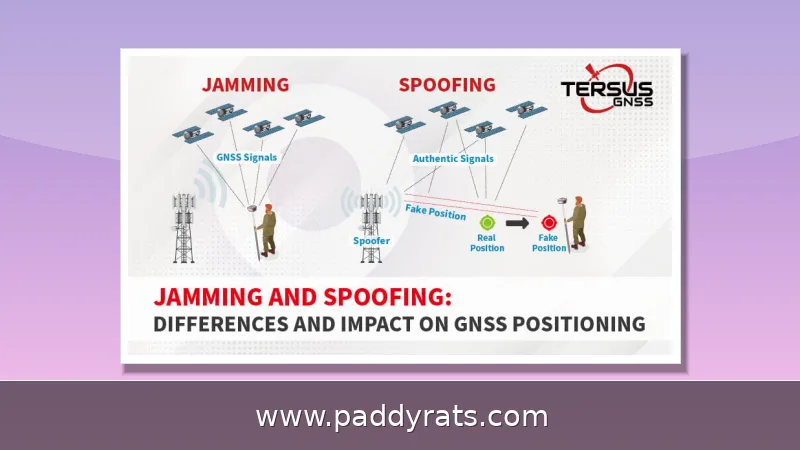
A prison jammer works by broadcasting RF signals on the same frequency bands cell phones use, which severs the link between the handset and the nearest base station. The jammer pushes out a signal stronger than anything arriving from the closest tower, so the phone grabs onto that stronger signal and the weaker one effectively cancels out. Because the interference targets the downlink, the phone simply drops to zero bars rather than throwing some kind of error message. That's precisely why inmates and visitors tend to assume the network is just down, never suspecting that someone is deliberately blocking it. Stratign's systems are a good illustration: they rely on Direct Digital Synthesis (DDS) to drive jamming performance and hit only downlink bands, leaving uplink traffic completely untouched.
The upside of downlink-only jamming is pretty straightforward: a phone inside the covered area can't register on the network or pull anything down from it, even if the handset itself keeps trying to transmit. That distinction ends up shaping a lot of the engineering calls behind a system—how much power the vendor builds in, where the antennas get placed, and so on. There's another catch, though. A jammer has to be tuned to the exact frequencies of every network operating in that area, and because carriers deploy different bands depending on the region, a setup built for one market may be totally useless in another. Zorelock makes this point plainly in its buying guide: nail down your required jamming frequencies before you order anything, since 2G, 3G, 4G, and 5G allocations differ from country to country—China and the US, for instance, don't run the same LTE bands. And as more contraband gets flown in, drone-related frequencies at 2.4GHz, 5.8GHz, and GNSS are taking up a bigger share of the discussion.
FCC Rulemaking: Why Jamming Was Banned and What Is Changing
Under Section 333 of the Communications Act of 1934, willful or malicious interference with licensed radio communications is prohibited—and that ban extends to state and local agencies as well, meaning they can't intentionally disrupt radio signals. That's essentially the reason prison jamming has remained more of a theoretical option than a practical one for state systems in the US, even as the number of contraband phones seized behind bars has continued to climb. The federal Bureau of Prisons, however, has been exempted from those Communications Act restrictions and tested micro-jamming at a South Carolina prison, a program it announced on April 12, 2019. Overseas, UK law enforcement agencies, intelligence agencies, and jails have been using signal jammers since 2012 under strict regulation, while Brazil, New Zealand, and Sweden have all weighed making exceptions for correctional facilities.
The regulatory picture changed on Sept. 5, 2025, when FCC Chairman Brendan Carr announced an initial proposal, and the FCC was set to vote on issuing the notice of proposed rulemaking on Sept. 30, 2025. The proposed rule is called "Promoting Technological Solutions To Combat Contraband Wireless Device Use in Correctional Facilities." It appeared in the Federal Register on November 26, opening a public comment period that ran through December 26. Carr wasn't alone in pushing this. He was joined by attorneys general from Alabama, Alaska, Arkansas, Iowa, Kansas, Kentucky, Louisiana, Mississippi, Missouri, Montana, Nebraska, North Dakota, Ohio, Oklahoma, Pennsylvania, South Carolina, South Dakota, Tennessee, Texas, Utah, Virginia, and West Virginia. On top of that, a separate group of 23 state attorneys general sent the FCC its own joint letter. Still, not everyone supports the idea. Public Knowledge senior vice president Harold Feld and other critics have raised concerns about interference and how the program would be supervised.
| Milestone | Date | What Happened |
|---|---|---|
| Initial proposal announced | Sept. 5, 2025 | FCC Chairman Brendan Carr unveils plan to allow prison jamming |
| Scheduled FCC vote | Sept. 30, 2025 | Vote to issue notice of proposed rulemaking |
| Federal Register publication | Nov. 26 | Proposed rule published, comment period opens |
| Comment deadline | Dec. 26 | Public comment period closes |
| BOP micro-jamming test | April 12, 2019 | Federal test announced at a South Carolina prison |
The proposed rule doesn't legalize jamming on its own — at least not yet. What it would do, assuming it gets adopted, is create a pathway for correctional facilities to operate jammers without violating Section 333. Even then, a lot of unanswered questions would still be hanging out there: how equipment gets certified, how facilities coordinate with carriers, where exactly the geographic boundaries fall. Until those details get sorted out, facility planners should treat the proposal as a signal of where things are headed, not as permission to go ahead. That distinction has real-world consequences, since any procurement decision made today comes with genuine regulatory risk until the final rules are officially on the books.
Prison Jammer Specifications: Bands, Power, Cooling and Remote Control
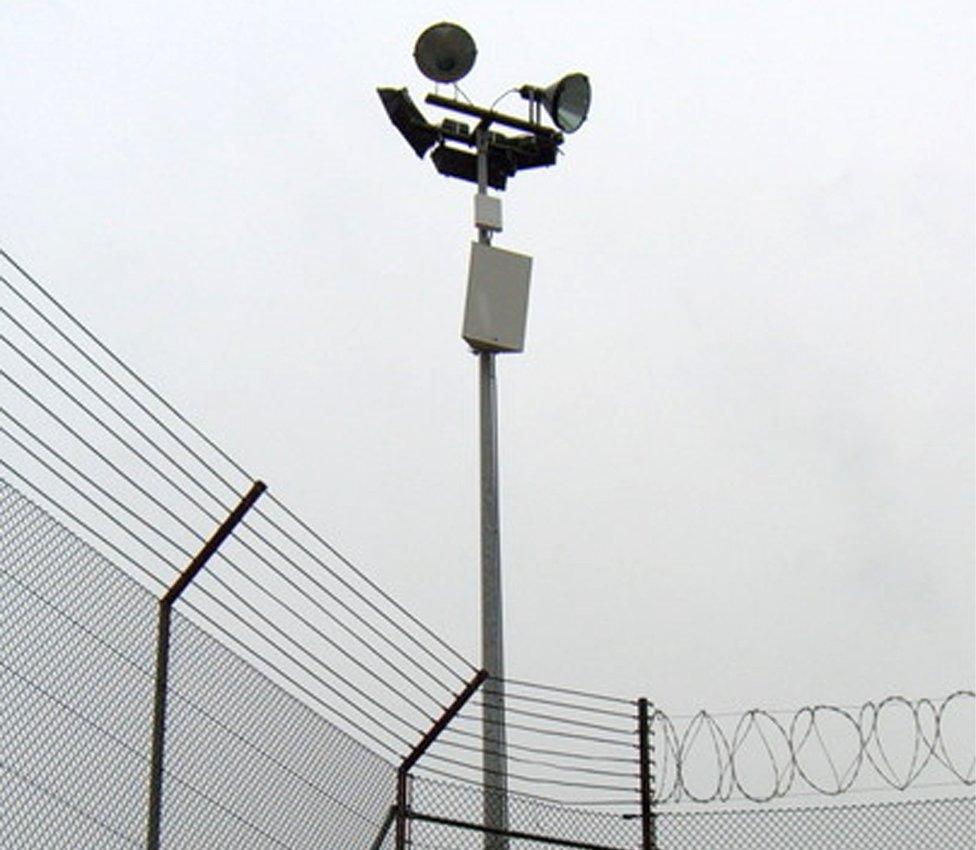
The hardware side of things is all over the map, and honestly, the specs are what determine whether a unit is still running after years of nonstop use inside a concrete-and-steel facility. Take Stratign: their systems use a modular design, so they can be tailored to whatever country they're headed to, and they ship in weatherproof cabinets built for rough outdoor conditions. You can load up to eight Tx modules to cover different frequency bands, plus optional Wi-Fi or Bluetooth bands. They handle 2G, 3G, 4G, and 5G, and multiple jammers can be networked over a LAN and controlled from a single terminal. Control and monitoring work either locally or remotely, and there's automatic on/off scheduling, a heat sink design with active fans for continuous operation, open circuit protection (VSWR), and secure login with log, inventory, and map reports. UPS and battery backup are optional add-ons.
Zorelock's buying guide is worth a close read, since it points out a few practical limits that buyers often miss. In urban areas, a 50W jammer typically covers only about 50 meters, while drone jamming can reach several hundred meters to a kilometer. If a unit is mounted outdoors, weather resistance is a real concern: you need side air intakes with rainproof housing, plus bottom-mounted exhaust vents and connectors. For 24/7 operation, heat dissipation becomes the make-or-break factor — that means a thick aluminum heat sink with fans at both the top and bottom, and a separate Switched-Mode Power Supply (SMPS) for each RF module, stepping AC 210V–240V down to DC 28V. IoT features, whether through RJ45 Ethernet or 433MHz magnetic antennas, let you manage everything from one central point. As for products, Madoors sells a prison signal jammer with a per-band switch and a power-adjustable knob, all in an aluminum alloy casing, while Jammermfg advertises high-power RF suppression across GSM, 3G, 4G, 5G, and Wi-Fi, zonal coverage control for isolating individual blocks or wings, a tamper-resistant casing, integration with signal detectors, and optional anti-drone jamming.
| Vendor | Key Specs | Listed Price Range |
|---|---|---|
| Stratign | Modular, up to 8 Tx modules, 2G-5G, LAN control, UPS option | Quote-based |
| Jammermfg | GSM/3G/4G/5G/Wi-Fi, zonal control, anti-drone options | About $958-$1,498 (5G/4G/3G/2G unit); $1,349-$2,149 (20-antenna model) |
| Madoors | Per-band switch, power-adjustable knob, aluminum alloy casing | Not listed |
| Zorelock | Guidance on coverage, cooling, SMPS per RF module | Not listed |
Those listed prices cover individual units, not a facility-wide deployment. A single 20-antenna model at roughly $1,349 to $2,149 is a component, not a solution, and the gap between component pricing and installed system cost is enormous once engineering, cabling, power, monitoring, and calibration are included.
Jammers vs Managed Access Systems: Capabilities Compared
Managed Access Systems intercept illicit cellular signals rather than jamming them, which changes what a facility gets from the investment. MAS allows whitelisting of authorized phones and emergency calls, so staff devices and 911 traffic keep working, and it captures IMEI and IMSI data to identify contraband devices. That intelligence is actionable: investigators can tie a seized handset to a specific subscriber identity and build cases. Jammers do not produce actionable intelligence and jam all signals within an intended area, which means authorized phones and emergency calls are affected alongside contraband devices unless the deployment is carefully zoned.
| Capability | Jammers | Managed Access Systems |
|---|---|---|
| Mechanism | RF interference on downlink bands | Interception of cellular signals |
| Authorized phone use | Blocked in coverage area | Whitelisted and allowed |
| Emergency calls | Typically blocked | Can be permitted |
| IMEI/IMSI capture | No | Yes |
| Investigative intelligence | None | Device identification data |
The trade-off is not simply cost. Jamming can block signals effectively, but it requires careful oversight, frequent monitoring, maintenance, and calibration. Jammers must be set to the specific frequencies of all available networks in the area and regularly checked to prevent signal bleed into nearby communities, where interference with licensed communications could draw FCC enforcement. MAS deployments carry their own operational demands, including carrier coordination and ongoing data handling, but they avoid the legal exposure that comes with radiating interference beyond the facility fence.
Cost, Maintenance and Coverage Gaps in Real Facilities
Cost is the question every facility administrator asks first, and the honest answer is that jamming is a capital project, not a purchase order. Research cited by corrections1 indicates jammers for most medium-to-large facilities typically cost between $1.5 million and $2.5 million per facility, covering hardware plus the ongoing monitoring, maintenance, and calibration the technology requires. That range assumes a facility with substantial perimeter and housing-unit coverage needs; smaller or more tightly zoned deployments could cost less, but the floor is still well above consumer-grade equipment pricing.
Coverage gaps are the operational reality that follows from those physics. A 50W jammer covering roughly 50 meters in an urban environment will not blanket a large campus, and signal bleed at the edges is a constant calibration problem. Facilities also have to account for the frequencies in use by every carrier serving the area, which can change as networks are refarmed and 3G is retired. The Urban Institute's 2023 report by J Shaffer examined these deployment questions, and vendors such as Securus Technologies and FilterMag operate in the adjacent market for detection and managed access. For agencies weighing a $1.5 million to $2.5 million commitment, the deciding factor is usually not whether jamming works but whether the facility can sustain the monitoring and legal compliance that keeps it working.
What Should Correctional Agencies Do While the Rules Are Pending?
The FCC proposal has moved the conversation from whether jamming is possible to how it would be governed, but final rules are not in place. Agencies that jump ahead of the rulemaking risk enforcement under Section 333, and equipment purchased before certification and coordination requirements are settled may not be deployable. A more defensible path is to document the contraband phone problem with seizure data, evaluate managed access systems and cell phone detectors as near-term options, and monitor the Federal Register docket for the comment record and any subsequent order. The 23-state attorney general coalition letter and the support from Carr and 22 state attorneys general show political momentum, but momentum is not authorization.
How do signal jammers work in prisons?
Prison jammers transmit RF signals on the same frequency bands as mobile phones, overpowering the downlink signal from the nearest base station. The phone picks up the stronger jammer signal, cannot distinguish it from the tower, and loses service within the jammer's range. Because the interference targets the downlink, the handset shows no signal bars rather than an error, and only downlink bands are typically jammed.
How much does a prison signal jammer cost?
Research cited by corrections1 indicates jammers for most medium-to-large facilities typically cost between $1.5 million and $2.5 million per facility, covering hardware plus the ongoing monitoring, maintenance, and calibration the technology requires. Individual vendor units are far cheaper, with Jammermfg listing prices from about $958 to $2,149, but those components do not include engineering, installation, or compliance work.
Are prison cell phone jammers legal in the United States?
Section 333 of the Communications Act of 1934 bans willful interference with licensed radio communications, so state and local agencies cannot currently jam. The FCC has proposed rules that would authorize correctional facilities to deploy jamming without violating Section 333. That proposal was published in the Federal Register and opened for public comment, but it is not final, so state and local jamming remains unlawful until an order is adopted.
What is the difference between jamming and managed access systems?
Managed Access Systems intercept illicit cellular signals rather than jamming them, letting officials whitelist authorized phones and emergency numbers. MAS also captures IMEI and IMSI data to identify contraband devices, while jammers produce no actionable intelligence and jam all signals in range. The practical result is that MAS preserves staff and emergency communications and generates investigative leads, whereas jamming simply denies service across the coverage area.
Frequently Asked Questions
How do signal jammers work in prisons?
Prison jammers transmit RF signals on the same frequency bands as mobile phones, overpowering the downlink signal from the nearest base station. The phone picks up the stronger jammer signal, cannot distinguish it from the tower, and loses service within the jammer's range. Because the interference targets the downlink, the handset shows no signal bars rather than an error.
How much does a prison signal jammer cost?
Research cited by corrections1 indicates jammers for most medium-to-large facilities typically cost between $1.5 million and $2.5 million per facility, covering hardware plus the ongoing monitoring, maintenance, and calibration the technology requires. Individual vendor units are far cheaper, with Jammermfg listing prices from about $958 to $2,149, but those components exclude engineering and installation.
Are prison cell phone jammers legal in the United States?
Section 333 of the Communications Act of 1934 bans willful interference with licensed radio communications, so state and local agencies cannot currently jam. The FCC has proposed rules that would authorize correctional facilities to deploy jamming without violating Section 333. That proposal was published in the Federal Register for public comment, but it is not final.
What is the difference between jamming and managed access systems?
Managed Access Systems intercept illicit cellular signals rather than jamming them, letting officials whitelist authorized phones and emergency numbers. MAS also captures IMEI and IMSI data to identify contraband devices, while jammers produce no actionable intelligence and jam all signals in range. MAS therefore preserves staff and emergency communications and generates investigative leads.