Contraband cellphones drive violence inside prisons, and the FCC is moving to loosen its long-standing jammer ban. Here is how prison and detention center jammer installation actually works, what the rules allow, and what to verify before you deploy.
Why prisons and detention centers deploy cell phone jammers
Contraband phones inside a lockup are not some mild nuisance; they are every bit like a weapon. The FCC pointed to a September 2024 estimate by SOC LLC that suggests tens of thousands of contraband cellphones are in the handsoters. In one year, a 2024 Urban Institute study found that 20 state prison systems seized as many as 20,000 contraband phones — and the Georgia Department of Corrections processed more than those numbers combined with over 15,500 phones plus more than even150 drones in just one single year. Those numbers help explain how the installation of prison jammers has gone from a fringe proposal to an accepted discussion about procurement.
The final straw that takes administrators beyond the technical discussion is human cost. In 2010, Sergeant Robert Johnson was shot six times at Lee Correctional Facility in South Carolina after an inmate called for a hit from behind bars using a contraband phone. Murder of an 88-year-old retired veteran in Tattnall County, Georgia, after telephone solicitation for homicide from a gang leader already behind bars (2021). For example, an inmate serving 30 years was convicted in a drug trafficking ring run from behind bars that resulted in the indictment of 21 people as part of a larger case out of Oklahoma last year. Detection technology has also revealed more than 35,000 call and text attempts for one state prison within just a few weeks -- about three weeks or so.
Scale matters too. South Carolina confiscated about 4,000 contraband cell phones in 2015, and federal prisons recovered more than 8,700 between 2012 and 2014. Meanwhile, local jails held 664,200 people at midyear 2023 — basically the same as the 663,100 they held at midyear 2022 — so the detained population exposed to contraband devices isn't getting any smaller. And when a single handset can coordinate a drug operation, intimidate a witness, or put out a hit, cutting off that radio link stops being a nice-to-have and starts being a core security function.
How do prison cell phone jammers work: downlink bands, DAS and micro-jamming
It is not like a jammer suddenly kills the handset. It sends out radio energy on the same frequency bands as is being used by the handset which increases so-called noise floor, resulting in loss of connection between carrier base station and device. The key design decision is that most correctional systems jam only downlink bands—those frequencies broadcasting from the tower to a phone. That keeps the jamming footprint more limited and ensures they don't cook up those uplink paths that carriers use for their own network management.
Micro-jamming systems Most of the micro-jamming installations consist of small receivers and transmitters which are deployed in a distributed antenna system, or DAS array covering areas targeted for jammers. Whereas this prior network relies upon a solitary high-power transmitter, a DAS disseminates low-fidelity hubs throughout cellblocks, yards and corridors which confines spillover past the limit. Working cycle: 24/7 full-band signal scanning → automatic interference module matching → full-mode operation & continuous communication monitoring then affective suppression. Smart prison jammers have the capability to prevent unauthorized calls while at the same time allowing for authorized ones, either automatically or controlling them completely by an operator.
Two alternatives sit alongside jamming. A Managed Access System, or MAS, creates an internal cellphone network within the jail so that only authorized phones can get in – whether they are registered with a DA or not. Contraband Interdiction System: A CIS scans devices for their unique address to detect contraband, at which point a user designated correctional facility official (DCFO) can send the carrier an order to deactivate and block these devices. This is why there are different legal postures, and a distinct failure mode for each approach — which explains why facility planners seldom employ one strategy alone.
What the FCC rule change means for state and local facilities
The wall has been federal law. 47 U.S.C. § 333 makes it a federal crime to willfully or maliciously interfere with radio communications that are authorized by the FCC, and jamming equipment is not allowed under than any circumstance. This means that the below timeline is important: it shows an agency seeking to create an exception rather than defending a rule. The FCC voted September 30, 2025, to send out a Third Further Notice of Proposed Rulemaking loosening the cellphone-jamming ban in prisons and jails.
| Date | Action | Significance |
|---|---|---|
| 2017 | Managed Access System rules take effect | 1,900 MAS units authorized across 31 states |
| 2019 | NTIA reports on micro-jamming testing | Technology judged potentially effective |
| March 2025 | HR 2350 and S 1137 introduced | Would bar FCC from prohibiting prison jamming |
| Sept. 5, 2025 | Chairman Brendan Carr announces initial proposal | Commissioners Gomez and Trusty adopt the draft |
| Sept. 30, 2025 | FCC votes to issue Third Further Notice | Opens door for state and local facilities |
The reality on the ground looks very different. Since the 2021 rules took effect, only 16 designated correctional facility officials have been approved, and CIS has been authorized at just 34 facilities — all while more than 25,000 contraband cellphones have been recovered across 20 states. The Bureau of Prisons did test micro-jamming at Broad River Correctional in South Carolina and at a site in Maryland, and back in 2019 the NTIA reported that the technology could actually work. On the legislative side, Rep. David Kustoff's HR 2350 and Sen. Tom Cotton's S 1137 were introduced in March 2025; both would bar the FCC from prohibiting jamming in prisons and jails. Georgia Attorney General Chris Carr has thrown his support behind the proposal, and 31 attorneys general have urged Congress to pass both bills.
Key specifications: bands, power, coverage and antenna placement
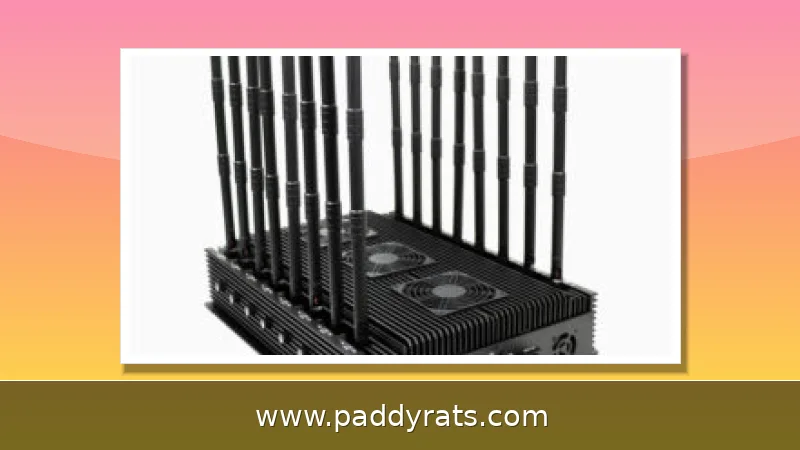
Specs are what determine whether a system actually holds up inside a real facility or just looks good on a datasheet. Take Stratign's prison jammers: they're modular units housed in weatherproof cabinets, and each one can hold up to eight transmit modules. They cover 2G, 3G, 4G, and 5G using DDS technology, with remote control and monitoring over a TCP/IP LAN, configurable power, automatic on/off switching, a heat sink design with active fans, open circuit protection through VSWR monitoring, secure login, and optional UPS and battery backup. Why pack in all that? Because in a correctional setting, a quiet failure isn't something you can just shrug off.
Coverage: the one that buyers most frequently get wrong. According to Zorelock guidance, a 50W jammer can only cover about 50 meters in densely populated urban areas; drone jamming is capable of interception at the distance from several hundred meters up to virtually reaching the mark of one kilometer while mobile (at vehicle level) jammys are more limited. Portable jammers have a range of around 30 ft, and larger devices can reach up to 1 mile. Power delivery is about as important if not moreso than raw output: an SMPS converting AC 210V–240V to DC 28V for the RF modules, and prison jammers usually have a separate SMPS per RF module (in case of redundancy).
| Element | Typical specification | Why it matters |
|---|---|---|
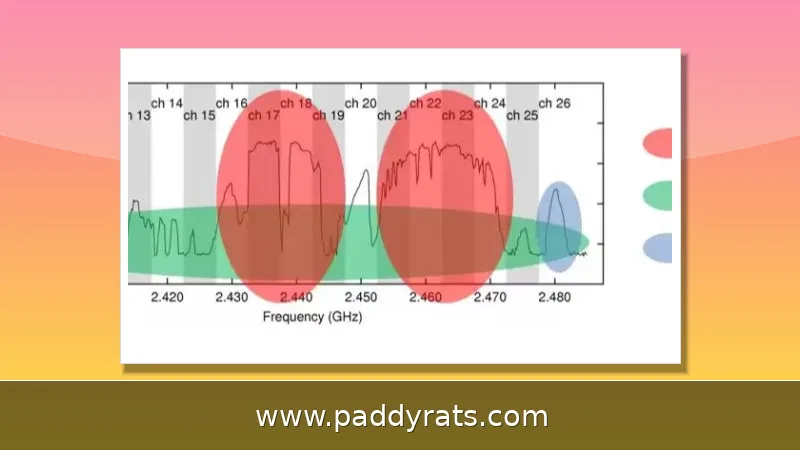
| Bands | 2G/3G/4G/5G downlink, plus 2.4GHz, 5.8GHz, GNSS | Drone control and navigation signals are now a core threat |
| Power | 50W urban unit; larger units to ~1 mile | Dense base-station grids shrink effective range |
| Redundancy | Independent SMPS per RF module | One failed supply cannot take down the array |
| Networking | RJ45 Ethernet or 433MHz magnetic antennas | Magnetic mounts resist deliberate cable damage |
| Management | MCTech software, up to 512 units | Zone maps and per-band control for selective operation |
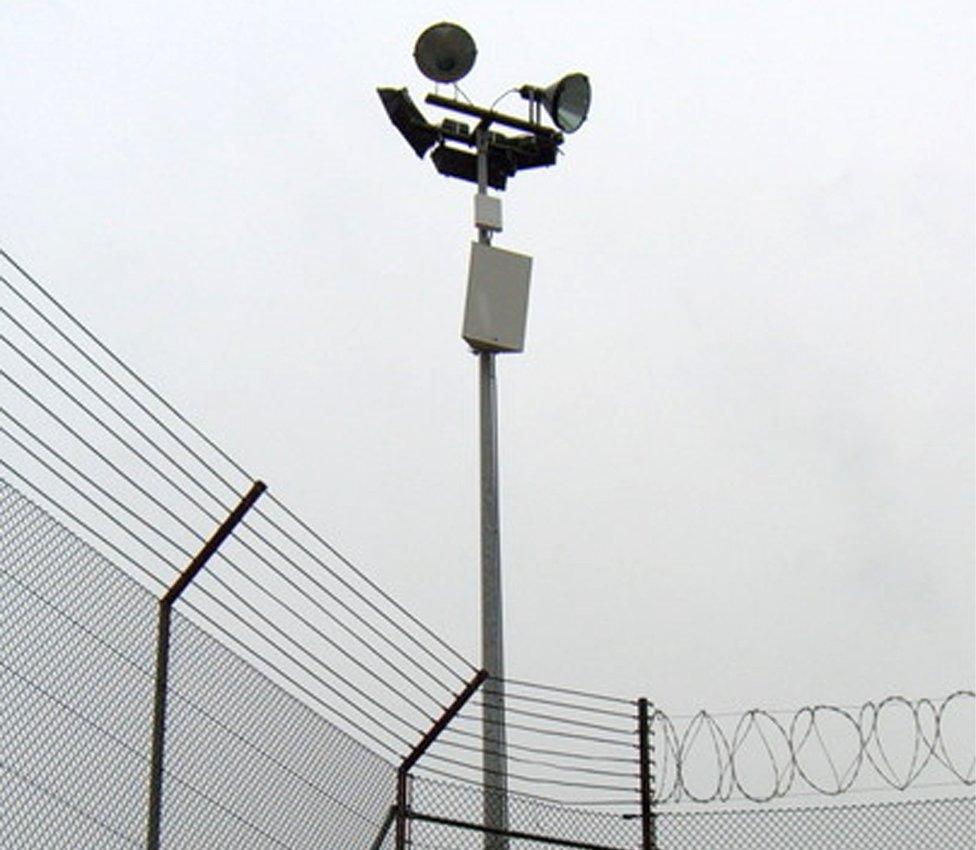
Networking and software round out the picture. RJ45 Ethernet or 433MHz magnetic antennas handle remote management, and magnetic antennas are chosen specifically to prevent deliberate cable damage by inmates. MCTech software visualizes jammer operation on scanned topographic or zone maps, allows selective operation of each band, and can control up to 512 units. Jamkor advises against indoor prison installations entirely, recommending mounting at the outer wall, lamp tower, watch tower, or a dedicated tower instead. NTIA emission measurements at Cumberland FCI covered 300 MHz to 4.34 GHz with multiple bandwidths and detectors.
Site survey and installation steps for correctional facilities
Every credible deployment starts with a detailed site survey. The goal is to observe which areas actually need signal blocking and to understand what the client is trying to accomplish, because a yard, a cellblock, and an administrative wing present different RF problems. Skipping this step is the most common reason a system underperforms after installation.
| Step | Action | Output |
|---|---|---|
| 1 | Detailed site survey of areas needing blocking | Defined coverage zones and client requirements |
| 2 | Analyze local signal distribution and building structures | Antenna selection by frequency band |
| 3 | Confirm required jamming frequencies in advance | Verified band list from local telecom authority |
| 4 | Assess prison size, mounting locations, nearby base stations | Realistic coverage and power plan |
| 5 | Assign experienced staff for large-scale projects | Correct commissioning and documentation |
The technical work is specific. Analyze local signal distribution and building structures with professional instruments, then select antennas by frequency band rather than by convenience. Confirm the required jamming frequencies in advance, consult the local telecom authority, and cross-check against frequency check websites so the band list matches actual carrier activity around the facility. Assess prison size, suitable installation locations, and the proximity of surrounding base stations, since a nearby tower changes the power budget substantially. For large-scale correctional signal jamming projects, use experienced staff rather than general contractors learning on site.
Outdoor deployment: weatherproofing, heat dissipation and 24/7 power
Outdoor units live in harsh conditions, so enclosure design is not cosmetic. For outdoor installations, ensure air intake vents sit on the sides with rainproof structures, while exhaust vents and connectors go at the bottom, perpendicular to the ground. That orientation lets heat escape while keeping water out, and it keeps cable entry points away from direct rain exposure.
Heat dissipation is the reliability bottleneck. Active fan cooling and heat sink design keep RF modules within operating temperature, and open circuit protection via VSWR monitoring catches antenna faults before they damage amplifiers. Because these systems run continuously, an independent SMPS per RF module, plus optional UPS and battery backup, prevents a single power failure from creating an outage that inmates quickly notice and exploit.
Placement completes the design. Jamkor's guidance against indoor prison installations reflects a simple reality: interior mounting puts hardware within reach of the population, while outer walls, lamp towers, watch towers, and dedicated towers keep equipment both protected and better positioned for coverage. Combined with magnetic antennas that resist cable tampering, that layout supports the 24/7 operation a facility actually requires.
What to verify before you buy or deploy
Buyers should confirm required bands with their local telecom authority before ordering, because 2G, 3G, 4G and 5G allocations vary by country and carrier. Rising drone threats have pushed 2.4GHz, 5.8GHz and GNSS bands into the critical category as well, since drone control signals are weaker and can be disrupted at longer range. A band list copied from another jurisdiction is not a specification; it is a guess.
Legal review belongs on the same checklist. Under 47 U.S.C. § 333, willful interference with authorized radio communications remains a crime, and the FCC's September 30, 2025 action is a proposal to reinterpret the rule so contraband phones count as unauthorized devices, not a final authorization for every facility. Until the rulemaking concludes, state and local agencies should document their authority, coordinate with carriers, and consider MAS or CIS alongside jamming. This article is informational and does not constitute legal advice.
Frequently Asked Questions
How do prison cell phone jammers work?
Prison jammers transmit signals on the same radio frequency bands as mobile phones, disrupting the link between the cell-phone base station and the handset. Most micro-jamming installations use small receiver and transmitter devices in a distributed antenna system (DAS) array, and systems typically jam only downlink bands to limit interference beyond the facility perimeter.
Can prisons legally install cell phone jammers in the US?
Under 47 U.S.C. § 333, willfully interfering with authorized radio communications is a crime, and the FCC bans jamming equipment. On September 30, 2025, the FCC adopted a proposal to reinterpret the rule so contraband phones count as unauthorized devices, opening the door for state and local facilities, but the change is not yet final.
What frequencies should a prison jammer cover?
Systems should target local 2G, 3G, 4G and 5G bands, which vary by country and carrier. Because of rising drone threats, 2.4GHz, 5.8GHz and GNSS bands are also cited as critical. Buyers are advised to confirm required bands with their local telecom authority before ordering.
How far can a prison signal jammer reach?
Range depends on power and surroundings. In dense urban areas with many base stations, a 50W jammer may cover only around 50 meters, while larger devices can reach up to about 1 mile. Drone jamming can reach several hundred meters to 1 km because drone control signals are weaker.