Prison cell phone jammer systems flood the airwaves inside cellblocks to cut off contraband phones, but they are illegal for state and local agencies under FCC rules. Here is how the technology works, what it costs, and how jamming compares with managed access and detection alternatives.
What Is a Prison Cell Phone Jammer System and Why Do Facilities Want One?
A prison cell phone jammer system is basically a network of transmitters that blasts radio energy on the same frequencies commercial phones rely on. The goal is simple: raise the noise floor high enough that handsets inside a facility can't hold a connection to a carrier tower. Why do corrections officials keep pushing for this? Because contraband phones stopped being a small smuggling problem a long time ago. The FCC's own working number, drawn from a September 2024 estimate by SOC LLC, puts nearly 500,000 contraband cellphones in U.S. prisons and jails — roughly 25% of the incarcerated population.
The real push for reform comes from the human toll. Back in 2010, Sergeant Robert Johnson was shot six times at Lee Correctional Facility in South Carolina — an inmate had used a contraband phone to call in a hit on him. In Georgia, an 88-year-old veteran in Tattnall County was killed after a gang leader behind bars ordered the hit by phone. Two 13-year-old boys lost their lives in an Atlanta drive-by, again arranged by an incarcerated gang leader inside a state prison. A North Carolina gang leader used a prison phone to order the kidnapping of a prosecutor's father, and out in California, prison gangs have relied on smuggled handsets to order murders and run drug trafficking operations.
The seizure numbers say more than any policy memo ever could. In just one year, corrections officers in 20 states pulled over 25,000 contraband phones out of cells, and a 2024 Urban Institute study found that 20 state prison systems had confiscated as many as 20,000 devices. That figure almost certainly undersells the real total, of course, since it counts only the phones that were actually found. Georgia gives you a good sense of how quickly the flow moves: the Department of Corrections seized and processed more than 15,500 cell phones and over 150 drones in a single year, including 8,074 phones in 2023 and another 5,482 in 2024 so far. None of this is new, either. South Carolina confiscated roughly 4,000 contraband phones back in 2015, and federal prisons recovered more than 8,700 handsets between 2012 and 2014. Every one of those numbers represents a device that got past security in the first place — which is exactly the point administrators keep making when they argue that interception alone can't keep up.
| Jurisdiction | Devices Seized | Time Period |
|---|---|---|
| 20 states (combined) | More than 25,000 phones | Single year |
| 20 state prison systems (Urban Institute study) | As many as 20,000 devices | 2024 study |
| Georgia Department of Corrections | Over 15,500 phones and more than 150 drones | One year |
| Georgia (phones only) | 8,074 phones | 2023 |
| Georgia (phones only) | 5,482 phones to date | 2024 |
| South Carolina | About 4,000 phones | 2015 |
| Federal prisons | More than 8,700 handsets | 2012–2014 |
How Do Prison Cell Phone Jammers Work? Downlink Bands, DAS and Micro-Jamming
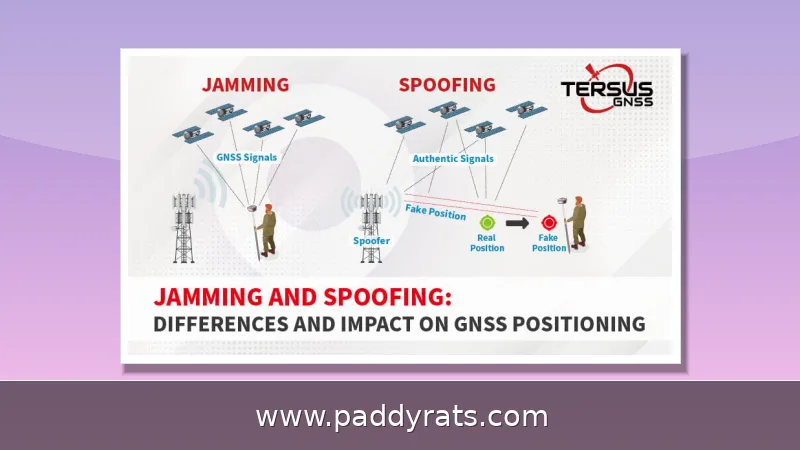
A prison jammer works by transmitting radio energy on the same frequency bands that cell phones use. That extra energy raises what engineers call the noise floor — the background level of radio interference in a given area — until the link between the carrier's base station and the handset can no longer hold. Picture trying to hear a whisper across a crowded room: the signal is still there, but it gets buried. Most correctional systems jam only the downlink bands, meaning the frequencies broadcast from the tower down to the phone. That choice keeps the jamming footprint contained and avoids messing with the uplink paths carriers depend on for network management. And that distinction matters more than it might sound. A jammer that also crushes uplink traffic can disrupt legitimate carrier operations well beyond the fence line, interfering with calls and data for people who have nothing to do with the facility.
Micro-jamming takes a more surgical approach. Instead of one high-power transmitter blanketing the whole facility, these setups use small receivers and transmitters arranged in a distributed antenna system (DAS) array. That array usually covers cellblocks, yards, and corridors, which keeps the jamming footprint confined to the areas that actually need it. The signal doesn't bleed into nearby homes, roads, or businesses. The working cycle runs nonstop: 24/7 full-band signal scanning, automatic interference module matching, full-mode operation, ongoing communication monitoring, and then effective suppression of unauthorized devices. In practice, the system listens first and interferes second, so it can respond to new phones or shifting signal conditions without someone having to babysit it around the clock.
| Component | Function |
|---|---|
| Small receivers and transmitters | Deployed in a DAS array covering cellblocks, yards, and corridors |
| DAS array | Confines spillover to areas that need coverage |
| 24/7 full-band signal scanning | Continuously monitors for active signals |
| Automatic interference module matching | Matches the right interference to the detected signal |
| Full-mode operation | Runs across supported modes |
| Ongoing communication monitoring | Tracks activity during operation |
| Effective suppression | Disables unauthorized devices |
Smart prison jammers bring a level of selectivity that basic jamming equipment just can't offer. Rather than flooding a cellblock with noise and killing every signal in range, these systems are designed to block unauthorized calls while letting approved ones through — and that filtering can happen automatically or be handled by an operator. Take Stratign: it uses Direct Digital Synthesis (DDS) technology to fine-tune its jamming performance, and its systems can be networked over a LAN so staff can run everything from one central location. Shoghi's Intelligent Prison Jamming System comes at the problem from a different direction. It scans for and identifies active 2G, 3G, 4G and 5G phones, grabs each device's unique identity along with its model number and the SIM's country of origin, and then uses all of that to build white lists and black lists. X-Guard Active DoS pushes things even further by combining jamming with IMSI/IMEI catching. It works on 2G GSM and 4G LTE, can detect BLE, Wi-Fi, 2G GSM, 4G LTE and optionally 5G, and can send a trigger that cuts connectivity on one specific targeted device instead of everything around it.
Prison Jammer System Specifications and Features to Compare
Specifications vary widely from one vendor to the next, and a single number like total output wattage tells you surprisingly little about how a system will actually perform inside a cellblock. A 100-watt unit aimed at open ground behaves nothing like a micro-jamming array tuned for concrete walls, tiered ranges and narrow corridors, so buyers should compare coverage geometry first: where the signal goes, how tightly it stays inside the perimeter and how much bleeds into nearby neighborhoods or public roads. Detection capability matters just as much, since a system that can identify and catalog contraband handsets is far more useful than one that simply drowns everything in noise. Management tooling deserves equal weight too — how many zones one console can control, how quickly detectors deploy, and whether the platform handles whitelists, blacklists and targeted shutdowns without constant babysitting. The table below summarizes representative parameters from the X-Proximity X-Guard Active DoS platform alongside the broader feature sets vendors advertise for correctional deployments.
| Parameter | X-Proximity X-Guard Active DoS | Typical Vendor Feature Sets |
|---|---|---|
| Jamming range | Targeted jamming within 30 to 150 meters | Varies by platform; often zone- or wing-specific |
| Coverage focus | Specific prison cells, zones, departments or wings | Cellblocks, yards and corridors via DAS arrays |
| Detection capability | IMSI/IMEI catching; detects BLE, Wi-Fi, 2G GSM, 4G LTE and optionally 5G | Active phone scanning, identity capture, white/black lists |
| Deployment | Each Detector Set deploys in one hour, requiring only electricity | Micro-jamming nodes installed throughout the facility |
| Networking | Detections transmitted via encrypted Wi-Fi or UTP networks | LAN networking; control from a single location |
| Management scale | Thousands of Detector Sets managed from one control panel | Centralized console with automated or operator control |
| Parameter | Typical Specification | Why It Matters |
|---|---|---|
| Targeted jamming range | 30 to 150 meters | Confines suppression to specific cells, zones, departments or wings |
| Deployment time per Detector Set | About one hour, electricity only | Reduces installation cost and downtime in occupied facilities |
| Detection bands | BLE, Wi-Fi, 2G GSM, 4G LTE, optional 5G | Determines which contraband devices can be found, not just blocked |
| Data transport | Encrypted Wi-Fi or UTP networks | Keeps detection and identity data off unsecured links |
| Fleet management | Thousands of Detector Sets from one control panel | Lets a single operator run an entire campus |
| Control model | Automatic or operator-managed whitelists | Preserves authorized calls while blocking contraband traffic |
Those numbers help explain why today's prison jamming systems look less like one big blast of interference and more like a carefully managed radio network. With a footprint of just 30 to 150 meters, a facility can cover a single housing unit without drowning the town next door in stray signals, and encrypted backhaul keeps the identity data pulled off handsets safely inside the agency. The catch is complexity. Every extra node means more calibration and more monitoring, and the staff running the system need a higher level of technical skill than a simple on-off jammer would require.
Jammers vs Managed Access Systems vs Detection Technology
Jammers and Managed Access Systems take fundamentally different approaches to the same problem. A jammer simply floods the cellular bands with noise, overwhelming the signals moving between a phone and the nearest tower, so nothing gets through. A Managed Access System, or MAS, works more like a gatekeeper: it intercepts illicit signals and routes communications through equipment that mimics a real network tower, which lets officials whitelist authorized phones and emergency numbers while shutting out everything else. That architecture also means MAS captures IMEI and IMSI data — the unique device and subscriber identifiers — which a jammer never produces. That distinction sits at the center of the policy fight. MAS hands an agency evidence it can actually act on, such as identifying which device made a call, while a jammer mainly denies service and leaves investigators with little to follow up on.
Detection technology occupies a third category, and it works on a fundamentally different principle: instead of blocking calls, it locates devices and records what they do. That distinction matters because a jammer silences a handset, while a detection system tells investigators that the handset exists, where it is, and how it is being used. The activity volumes can be striking. In one state prison, over a 23-day stretch, a detection technology logged more than 35,000 call and text attempts — a figure that shows how heavily contraband handsets get used even when interception is already in place. In practice, detection is often paired with a Managed Access System, so that investigators can tie a specific device to a specific inmate, cell or visitor rather than simply confirming that contraband phones are somewhere in the facility.
| Approach | Primary function | What it tells staff |
|---|---|---|
| Jamming | Blocks calls by disrupting the link between phone and base station | That phones in range are disabled, not who was using them |
| Managed Access System (MAS) | Routes authorized traffic and denies unauthorized devices | Which devices are authorized versus contraband |
| Detection technology | Finds devices and logs call and text activity | Device location and activity patterns for investigations |
When you line up the three main approaches side by side, the decision usually hinges on three things: cost, legal exposure, and how much day-to-day work each option demands. Jamming looks attractive on paper because it is the cheapest concept to deploy, but it comes with real baggage. The signal does not always stay inside the fence, so bleed into nearby homes, businesses, and even public roads is a constant worry, and for state and local agencies, jamming remains flatly prohibited under federal law. Managed Access Systems and detection technology flip that equation. They cost more per facility and generally depend on cooperation from wireless carriers, but they produce something jamming cannot: identity data and an audit trail that prosecutors and corrections investigators can actually use in a case. That difference matters when the goal is not just stopping a call but building evidence against the people behind it. In practice, many facilities have stopped treating these as an either-or choice and now run detection and MAS side by side, layering tools to cover each other's gaps.
What the FCC Rule Change Means for State and Local Facilities
Under the Communications Act of 1934, specifically 47 U.S.C. § 333, state and local agencies are not permitted to intentionally interfere with authorized radio communications. The FCC's long-standing prohibition on jamming equipment extends to state and local governments, though the federal Bureau of Prisons has been exempted from Communications Act prohibitions and permitted to use jammers at several federal penitentiaries, including at least one in Georgia.
That legal wall is now under review. FCC Chairman Brendan Carr announced the initial proposal on September 5, 2025, and the Commission voted on September 30, 2025, to issue a Third Further Notice of Proposed Rulemaking loosening the cellphone-jamming ban in prisons and jails. Georgia Attorney General Chris Carr sent a letter supporting the FCC proposal on September 26, 2025, joined by attorneys general of Alabama, Alaska, Arkansas, Iowa, Kansas, Kentucky, Louisiana, Mississippi, Missouri, Montana, Nebraska, North Dakota, Ohio, Oklahoma, Pennsylvania, South Carolina, South Dakota, Tennessee, Texas, Utah, Virginia and West Virginia.
For state and local facilities, the practical meaning is that jamming authority may become a real option rather than a theoretical one, but it would still arrive with conditions. A rulemaking is not a blanket permission slip, and any loosening would likely define where jamming can be deployed, how signal bleed is measured, and what coordination with carriers is required. Corrections leaders such as Georgia Department of Corrections Commissioner Tyrone Oliver and South Carolina Corrections director Brian Stirling have argued for more tools, while wireless experts including North Carolina-based Ben Levitan have stressed the interference risks that any new rule must contain.
Prison Cell Phone Jamming Costs, Limitations and Operational Trade-Offs
Jammers for most medium-to-large facilities typically cost between $1.5 million and $2.5 million per facility, according to research cited by corrections leaders. That figure covers hardware plus the frequent monitoring, maintenance and calibration that jamming requires to avoid signal bleed into nearby communities. It does not include legal review, carrier coordination or the staff training needed to run a whitelist policy without cutting off authorized emergency calls.
Operational limitations are just as important as price. Signal bleed is the classic failure mode: a jammer strong enough to cover a yard can reach homes, businesses and even public safety radios outside the fence. Downlink-only jamming reduces but does not eliminate that risk. Jammers also produce no identity data, so they cannot tell investigators which inmate placed a call, which device was used, or which SIM was in the handset, all of which MAS and IMSI/IMEI-catching systems can provide.
Scale is another constraint. Local jails held 664,200 people at midyear 2023, roughly the same as 663,100 at midyear 2022, and each facility would need its own coverage design. Researchers including Bryce Peterson, Ph.D., and KiDeuk Kim have studied how contraband phone access varies across systems, which suggests a single national answer is unlikely to fit every campus. The realistic path for most agencies is a layered approach: detection to find devices, managed access to intercept and identify, and jamming only where the legal authority and the engineering both support it.
Which Vendors and Products Serve the Correctional Jamming Market?
The correctional jamming market is small and specialized. Named products include the Stratign Prison Jammer, Phantom Technologies smart prison jammer, X-Guard Active DoS by X-Surveillance (X-Proximity), Shoghi Communications Intelligent Prison Jamming System, and Cellbusters Zone Protector. Each takes a slightly different approach, from DDS-based jamming to combined jamming and IMSI/IMEI catching, and buyers should treat vendor claims about range and band coverage as starting points for testing rather than settled facts.
Vendor selection also depends on which problem an agency is actually trying to solve. A facility that mainly needs to stop calls in a housing unit may prefer a micro-jamming DAS deployment, while an agency building cases against smuggling networks will get more value from detection and MAS platforms that log identities and call attempts. In practice, the strongest deployments pair hardware from more than one vendor and keep a documented calibration schedule, because an uncalibrated jammer is both a legal liability and a maintenance problem.
Budget planning should assume ongoing costs beyond the initial purchase. The $1.5 million to $2.5 million per facility range cited by corrections leaders reflects hardware plus recurring monitoring and calibration, and multi-site agencies should expect per-campus engineering surveys. Any agency weighing jamming before the FCC rulemaking concludes should also budget for legal counsel, since state and local use remains prohibited under 47 U.S.C. § 333 until the rules actually change.
What Should Corrections Agencies Watch Next?
The immediate signal to watch is the FCC's Third Further Notice of Proposed Rulemaking and the comment record around it. The September 30, 2025 vote opened a formal process, and the September 26, 2025 letter from Georgia Attorney General Chris Carr and 23 other state attorneys general shows that state-level demand is organized. How the Commission defines permissible jamming, and whether it requires carrier coordination or detection reporting, will determine whether the $1.5 million to $2.5 million per facility math ever becomes routine.
Agencies should also track the technology convergence already underway. Systems that combine jamming with IMSI/IMEI catching, whitelist management and detection are becoming the default pitch, which means the old jammer-versus-MAS debate is blurring into a question of which capabilities a facility can legally operate. Facilities that invest in detection now will have the data to justify whatever jamming authority the FCC eventually grants, and they will be able to show measurable results rather than relying on vendor promises.
Finally, the scale of contraband recovery keeps the pressure on. With more than 25,000 phones seized across 20 states in a single year and Georgia alone processing over 15,500 phones and 150 drones in one year, the operational case for stronger interdiction is already made. The open question is not whether facilities need better tools, but which combination of jamming, managed access and detection the rules will allow them to deploy.
Frequently Asked Questions
How do prison cell phone jammers work?
Prison jammers transmit radio energy on the same frequency bands mobile phones use, raising the noise floor and breaking the link between the carrier base station and the handset. Most correctional systems jam only downlink bands, the frequencies broadcast from the tower to the phone, which limits the jamming footprint and avoids disrupting carrier network management.
Why are prison cell phone jammers illegal for state and local agencies?
Under the Communications Act of 1934, specifically 47 U.S.C. § 333, state and local agencies are not permitted to intentionally interfere with authorized radio communications. The FCC's long-standing prohibition on jamming equipment extends to state and local governments, though the federal Bureau of Prisons has been exempted at several penitentiaries, including at least one in Georgia.
How much does a prison cell phone jammer system cost?
Jammers for most medium-to-large facilities typically cost between $1.5 million and $2.5 million per facility, according to research cited by corrections leaders. That figure covers hardware plus the frequent monitoring, maintenance and calibration that jamming requires to avoid signal bleed into nearby communities, but it excludes legal review and staff training.
What is the difference between a jammer and a managed access system?
Jammers disrupt cellular signals by overwhelming them, while Managed Access Systems intercept illicit signals and route communications through a system that mimics a network tower. MAS allows officials to whitelist authorized phones and emergency numbers, and it captures IMEI and IMSI data that jammers do not produce, which makes it more useful for investigations.