Exam room signal blockers flood cellular, Wi-Fi, and Bluetooth bands with interference so phones show no service during testing. Here is how they work, what they block, and how to test one before you buy.
What Is a Signal Blocker for Exam Room Privacy?
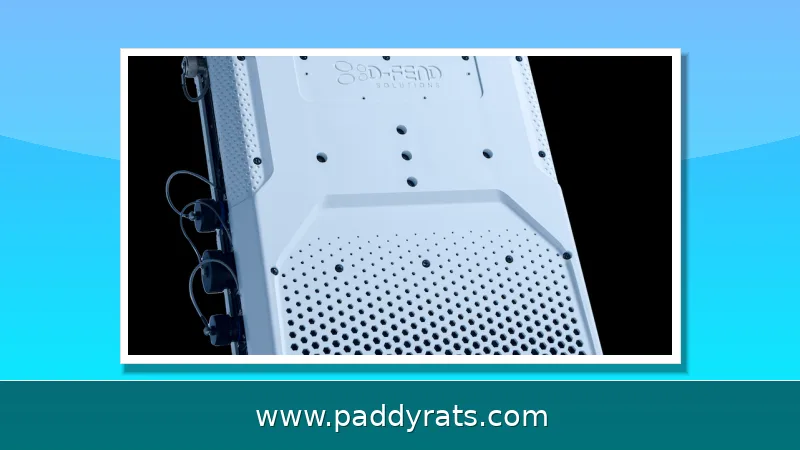
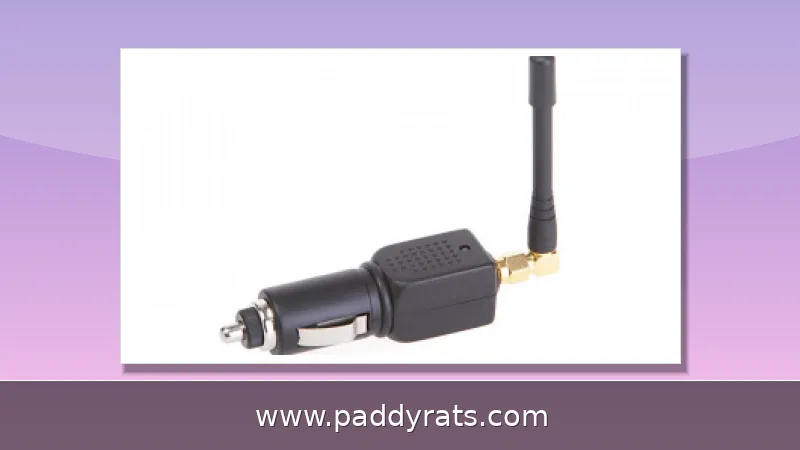
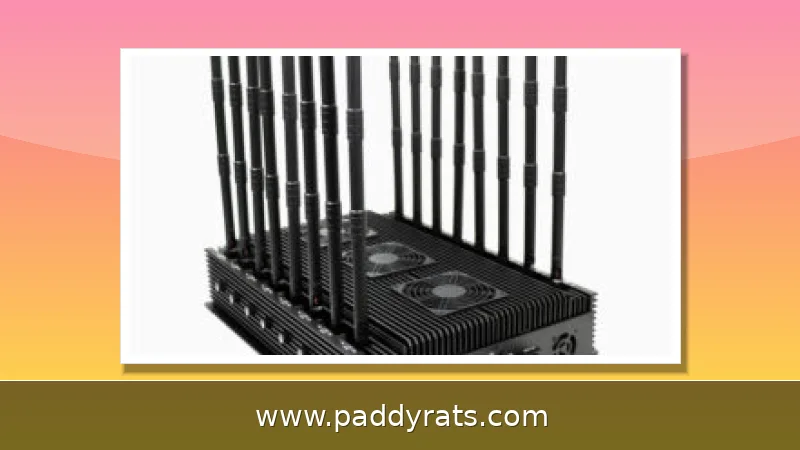
An exam room signal blocker is basically a device that floods the radio frequencies phones and other wireless devices depend on, so nothing in the room can reach a cell tower or Wi-Fi access point. When schools use an exam signal jammer during testing, students stay offline—which shuts down the easiest cheating routes and, as a bonus, cuts down on classroom distractions and takes some pressure off the invigilators. These devices come in a few different shapes: tabletop units, wall-mounted panels, briefcase-style protectors, and passive Faraday enclosures. You'll also hear them called RF jammers, RF blockers, signal scramblers, mobile phone silencers, or room level selective jammers—and the name actually matters, since each type of hardware behaves differently once it's sitting in a real exam hall.
The basic idea is pretty straightforward: a phone signal blocker puts out radio frequency energy that overpowers whatever signal the phone is receiving, which is why the handset ends up showing "No Service" or "No Network." That's also why a jammer that's actually working breaks the link between the tower and the subscriber — it's not just making the audio sound bad. When I tested some of the smaller desktop units myself, phones dropped to emergency-only mode within seconds, but Wi-Fi laptops stayed connected unless the 2.4 GHz band was targeted too. That difference is exactly why you should actually read the specs instead of trusting some vague privacy claim on the box.
How Does an Exam Signal Jammer Work?
An exam signal jammer works by broadcasting interference on the very frequencies that phones and other devices rely on, which knocks out calls, internet access, GPS tracking, and radio transmissions. Since those interference signals blanket the communication bands inside the exam room, a handset can't decode the tower's downlink anymore — and just like that, the network vanishes from the status bar. The jammer doesn't need to know a phone number or intercept any data; all it has to do is push the noise floor above the signal the phone is trying to hear. That's also why the effect stays local and depends on distance, rather than causing some permanent network outage.
There are basically two mechanisms that dominate the market right now. Active jammers just keep pumping out interference nonstop, though the smarter ones will actually detect a working phone first and only then block it — that saves power and cuts down on stray RF. Passive setups go a different route, using a Faraday cage: conductive panels built into the walls that block signals with no transmitter involved at all. Then there are acoustic methods, which are more about room privacy than exam security. Audible masking noise handles stethoscope and laser microphone snooping, while ultrasonic noise (inaudible to the ear) overwhelms phone microphones. EO Security's Speech Protectors are a good example — they pair ultrasonic emitters with selective jamming, which goes to show how far this privacy hardware category has come from the days of a single black box.
Which Frequency Bands Do Exam Room Jammers Cover?
Coverage is the first thing you should look at, since a jammer that only handles 2G and 3G won't do much against today's phones. Most exam room jammers block 2G, 3G, and 4G cellular signals, while the better indoor systems throw in 5G, Wi-Fi at 2.4 and 5 GHz, Bluetooth, GPS, and GNSS as well. Take Phantom Technologies, for example: they describe indoor jamming systems that cover cellular 2G through 5G, dual-band Wi-Fi, and GNSS within a set radius, usually up to tens of meters indoors. And as Zeeko points out, phone signal blocking devices can disable cellular, Wi-Fi, GPS, Bluetooth, or all of them at once, depending on the type of device you're dealing with.
The table below compares some representative hardware from Jammer Store, Jammer Master, and Topsignaljammer, based on their published prices and coverage claims. Just keep in mind that these are vendor-stated figures, not independent lab results, so it's worth confirming current pricing before you order.
| Device | Listed price | Coverage or range | Notable spec |
|---|---|---|---|
| Colibri Y3 | $250.00 | Portable, short range | Entry-level handheld |
| GP5000 | $119.99 | Portable, short range | Low-cost single-purpose unit |
| Albatross Pocket 3G | $179.00 | Portable, pocket size | 3G focus |
| Stalker 5G 12 bands | $850.00 | Portable, multi-band | 12 bands including 5G |
| HPJ20-H 20 bands | $2,190.00 | High-power stationary | 20 bands, wide coverage |
| JM019 24 antennas | $1,150.00 | Portable 5G | 24 antennas |
| W6 Pro full band Wi-Fi jammer | $99.99 | 2-10 meters | USB and OBD power, LCD |
When you're comparing exam room signal blockers, the specs that actually matter are antenna count, per-channel wattage, and total output — not whatever fancy labels are on the box. Take the CM3 full-band wide-range Wi-Fi jamming device from Topsignaljammer: it's listed at $169.99, covers 100–150 square meters, puts out 2W per channel, and maxes out at 6W total. Then you've got a 20-band stationary unit priced above $2,000, which is built for professional settings where one room has to be completely covered. A $99 pocket jammer, on the other hand, is really just a personal privacy tool with a range you measure in meters. So before you buy, match the band list to the devices you genuinely need to silence — and keep in mind that adding 5G coverage tends to push the price up fast.
How to Test a Signal Jammer in the Examination Room
Testing is the step that determines whether a jammer will actually protect an exam, and it is where most buyers cut corners. Because the cheating candidates have SIMs that come from multiple carriers, and due to how different 4G networks behave under interference test it against several operator networks – not just one. A spectrum analyzer or signal generator is useful, but a simple field test works as well: place the jammer in an enclosed space and see if your test phone registers on the network, makes a call or retrieves data. Is there service in one place and not another so you walk the circumference, seeing where it comes back on that border is really edge-of-coverage.
Expect imperfect behavior at the margins of what's allowed. All variety of cellular networks will totally prevent in the focused on zone and still, startup takes time and some destination immediately after grinding between which jammer is turned off. Personally, I have found that a handset may take 30 to 60 seconds (or more) after interference stops before it will re-register, which could mislead the staff during a quick test. Perform the check twice, first with the jammer on the ground and second sitting upright against furniture at desk height because surrounding surfaces change how far a signal can travel. Keep count of the results by band, to show administrators later that you covered ground.
Portable vs Fixed Exam Room Signal Blockers
Portable versus fixed is the main trade-off in this category. Portable jammers are built for immediate use, and Jammer Master lists portable units averaging about 1.5 kg, which one person can carry between rooms. Fixed high-power systems are designed for professional environments where coverage must be consistent across a large hall. Jammer Store notes that portable jammers reach roughly 8 to 15 meters while stationary jammers cover far larger areas. Signal jammers in exam rooms are generally small, do not occupy much space, and remain very portable, which is why schools often start with a handheld unit before committing to a permanent installation.
Cost follows the same split. A handheld 16-antenna unit at $699 or a 24-antenna 5G portable at $1,150 sits in the middle, while a 20-band stationary system at $2,190 targets institutions. One practical concern is running multiple jammers at the same time: interference within a certain range affects signal strength, so overlapping units can create dead zones and hot spots rather than uniform coverage. A single well-placed higher-power unit usually beats three cheap ones stacked in the same room, and it is far easier to document for compliance purposes.
Signal Jamming vs Faraday Cages and Phone Boxes
A Faraday cage is the simplest method: unique panels installed on walls passively block signals without emitting anything. That passivity is a real advantage in regulated environments, because the room does not transmit RF and cannot accidentally disrupt neighboring classrooms or public networks. The trade-off is flexibility. Once the panels are up, the room is shielded permanently, and you cannot switch coverage on and off for a single exam. Active jammers detect a working phone and block the signal, which gives operators control but also raises questions about interference beyond the room boundary.
Storage products sit between the two approaches. EO Security's Faraday Safebox Portable holds up to 8 devices at 6 kg with battery life up to 12 hours; the standard Faraday Safebox holds up to 16 phones at 15 kg on AC power; the SAFEBOX holds up to 4 phones at 2.6 kg; and the ASU 1 holds a single phone at 0.5 kg. For acoustic privacy, the EO Security Briefcase offers an ultrasound range up to 3 meters with 110 emitters and 9W of acoustic output at 1 kg and up to 4 hours of battery, while the SHIELD covers up to 1.5 meters with 21 emitters, 3W, 0.8 kg, and up to 5 hours. The Circle EO-J jams signals up to 10 square meters in a 1 kg antenna-free design, and the TOWERS line pairs 110 or 24 emitters with 9W output, with TOWERS+ adding signal jamming up to 10 square meters. SOLOMON supports up to 30 participants with individual audio channels.
Why Do Schools Use Signal Blockers in Exam Rooms?
Schools use signal blockers to prevent students from using phones to cheat, reduce the burden on invigilators, and maintain a distraction-free environment. Blocking mobile signals also stops social media and internet browsing during exams, which supports academic integrity in settings where proctoring alone cannot watch every desk. Testing facilities have used signal jammers for exactly this purpose for years, and the practice has spread as phones became capable of discreet messaging and AI-assisted lookups. The privacy benefit runs in both directions: candidates cannot photograph exam papers, and staff do not have to police every pocket.
That said, the approach is not universally accepted. A Reddit discussion in r/Professors, posted about three years ago with 24 votes and 65 comments, argued that in-person testing still needs Bluetooth and Wi-Fi jammers because cellular blocking alone leaves short-range cheating channels open. One commenter suggested a five-sided Faraday cage exam room as a more complete solution. The thread reflects a real operational point: if your threat model includes smart watches and earbuds, cellular-only hardware is not enough, and you should verify Bluetooth and Wi-Fi coverage in the same test.
Choosing the Right Exam Room Signal Jammer
Start with the bands you must block, then work backward to power, range, and form factor. If your exam hall is small and you only need to stop cellular cheating, a portable multi-band unit in the $650 to $1,150 range is usually sufficient. If you need to cover Wi-Fi and Bluetooth as well, confirm those bands explicitly in the specification sheet rather than assuming they are included. For large halls or permanent installations, a stationary system with higher total output and more antennas will deliver more even coverage, though it costs several times more and requires careful placement to avoid spillover.
Finally, plan for verification and disclosure. Document the tested radius per band, keep a log of startup and shutdown times, and check local regulations before transmitting RF in an occupied building. Vendors such as Phantom Technologies, EO Security, Jammer Store, Jammer Master, and Topsignaljammer publish specifications and prices that give you a starting point, but only your own on-site test tells you whether a device truly delivers exam room privacy.
Frequently Asked Questions
How does an exam room signal jammer work?
It continuously emits interference signals on the same frequencies used by mobile phones and other wireless devices. This covers the communication bands inside the exam room area, so phones show no service and cannot connect to the internet or send messages. The jammer breaks the link between the tower and the handset rather than intercepting any data.
Which signals can an exam room signal blocker block?
Devices generally block 2G, 3G, and 4G cellular signals, and some models also cover 5G, Wi-Fi at 2.4 and 5 GHz, Bluetooth, GPS, and GNSS. Indoor systems typically block within a defined radius of up to tens of meters. Check the band list before buying, because cellular-only units leave Bluetooth and Wi-Fi cheating channels open.
How do you test whether an exam room jammer is working?
Test the shielding distance with several mobile networks rather than one operator, since candidates use different networks. Use a spectrum analyzer or signal generator, place the jammer in a closed room, and check whether the instrument still detects signals from a test phone. Walk the perimeter to find where service returns.
Why do schools use signal blockers in exam rooms?
They prevent students from using phones to cheat, reduce the burden on invigilators, and maintain a distraction-free environment. Blocking mobile signals also stops social media and internet browsing during exams, supporting academic integrity. Some institutions add Wi-Fi and Bluetooth jamming or Faraday enclosures for fuller coverage.