Renters can legally cut weak or unwanted cell reception using passive materials like copper mesh and Low-E glass, but active jammers are banned by federal law with fines up to $11,000. Here is what actually works, from Faraday cages to renter-friendly boosters.
Why Cell Signal Is Weak in Apartments
There's a ritual I know too well: I walk into my own living room, glance at my phone, and watch four bars drop to one. It's almost never my carrier's fault. Distance from the nearest tower sets the baseline, sure, but the building itself usually decides what actually makes it through. Reinforced concrete, structural steel, metal roofing and siding, brick, masonry — they all soak up or bounce back radio frequency energy long before it ever reaches your couch. And in a dense urban neighborhood, you can add a pile of competing signals on top of all that.
Congestion is a big part of the problem too, not just the building itself. When hundreds of people in one complex are all streaming video at the same time after work, the network gets overloaded and everybody's speeds take a hit. Then there's terrain to factor in — hills, bluffs, canyons, thick tree cover, even stormy weather can all weaken reception before the signal ever gets anywhere near your block. And don't forget all those background apps quietly refreshing on your phone; they can make a weak connection feel even worse than the dBm number would lead you to believe.
Apartments stuck in the middle of a building, along with stairwells and basements, are usually the worst for reception since they're farthest from any exterior wall or window. If your unit is sandwiched between two others with thick shared walls, you might be sitting in a dead zone that no amount of fiddling with your phone settings will fix. The only real way to know what you're dealing with is to measure the actual signal number instead of eyeballing your bars.
Is Jamming Legal in a Rented Apartment?
No — and renting doesn't change that. Federal law bans operating, marketing, or selling any kind of jamming equipment that interferes with authorized radio communications, and there are no exceptions for a business, classroom, home, or car. If you're caught, you could face fines of up to $11,000, seizure of the equipment, and criminal penalties that include prison time. Even local police departments don't have independent authority to run jammers; only federal agencies can use them, and only in limited situations.
A jammer basically shouts over your cell tower. It broadcasts a radio frequency signal on a frequency close to the one coming from the nearest tower, but at a much higher power. Your phone, hearing both at once, grabs the stronger signal and drops the weaker one — that's why you end up staring at zero bars. The tower's downlink is what gets drowned out, so your handset can't hear anything it's being sent. This same trick is exactly why jammers can take out 911 calls and public safety communications, and it's the main reason the ban on them is so tough.
It's possible to detect a jammer, but it's not something most people run into. Spectrum analyzers can pick one up, though they're pricey and you need to know what you're doing to use one properly. If you think authorized communication is being jammed in your building, don't try to play detective yourself — just call your wireless provider and let them handle it. One thing worth noting: cell phone detectors, unlike jammers, are perfectly legal in the United States. And this isn't a rare problem, either. Customs and Border Protection has reported a roughly 830% jump in signal jammer seizures since 2021.
Legal Passive Ways to Block or Reduce Signal
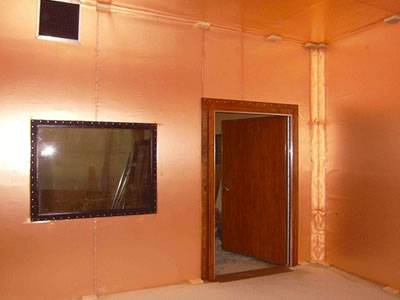
Passive blocking is a whole different story legally, since nothing is actually transmitting. There are no rules against passive cell phone blocking, which means you're free to build a Faraday cage out of copper mesh or chicken wire around a room. Aluminum foil works too—it's metal, so it blocks cellular signals, and it's a go-to material for DIY Faraday cages. And because none of these methods emit RF, they don't fall under the jammer prohibitions at all.
Of course, that legal freedom comes with a catch: a Faraday cage blocks everything, including the signal you'd need for an emergency call. So in practice, most renters use passive blocking in a more targeted way—lining a single wall, a closet, or a small workspace instead of wrapping the entire apartment. If you ever need to call 911, just step outside the shielded area, or make sure you have a landline as a backup.
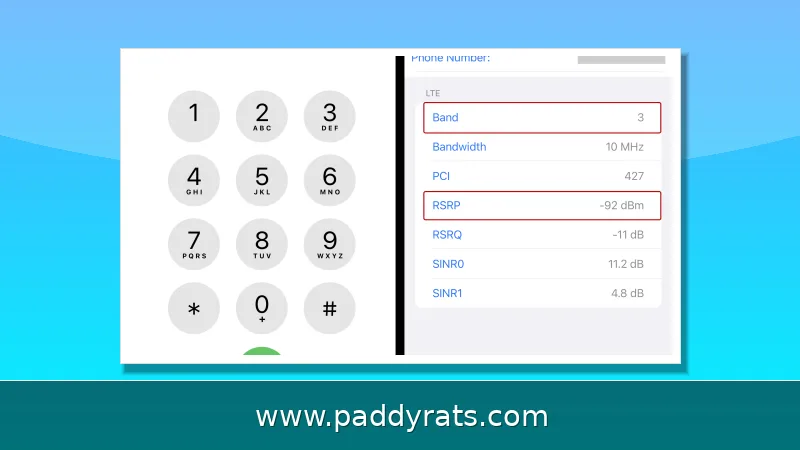
Before you spend any money, measure first. Cell signal strength is measured in dBm, and it usually falls somewhere between -30 dBm and -120 dBm — the closer to zero, the stronger the signal. Anything better than -85 dBm is generally considered good. Don't trust the bars on your phone, though; there's no industry standard for what one bar actually means, so they can be misleading. Instead, use field test mode or a signal app to get a real number. And if you're still on the fence about whether it's worth buying anything at all, a professional site survey with a signal meter is the gold standard.
Materials That Block Cell Signal
If you're trying to figure out why one apartment gets great reception and the one right next door is basically a dead zone, the walls usually tell the story. Below is a rundown of the building materials that tend to weaken or outright kill a cell signal indoors.
| Material | Why It Blocks Signal | Typical Effect Indoors |
|---|---|---|
| Reinforced concrete | High density and thickness absorb RF energy | Strong attenuation, common in newer high-rises |
| Metal roofing and siding | Reflects radio waves at the surface | Severe loss near exterior walls |
| Structural steel | Creates a partial enclosure around the unit | Dead zones in interior rooms |
| Low-E glass | Metal-oxide coating repels cell signal | Weak reception even next to a window |
| Brick and masonry | Dense mineral mass scatters incoming waves | Moderate to strong loss |
| Drywall, plywood, solid wood | Low density, minimal RF absorption | Little to no measurable effect |
| Fiberglass insulation | Generally transparent to cellular frequencies | Negligible impact on its own |
The practical takeaway is that energy-efficient windows are often the hidden villain. Low-E glass contains a metal-oxide coating designed to reflect heat, and it repels cell signal just as effectively. Combined with concrete density, that explains why so many modern units have excellent insulation and terrible reception. Thick walls between units, stairwells and basements compound the problem, which is why interior apartments frequently become dead zones even when the building sits in a strong coverage area.
Renter-Friendly Boosters and Landlord Rules
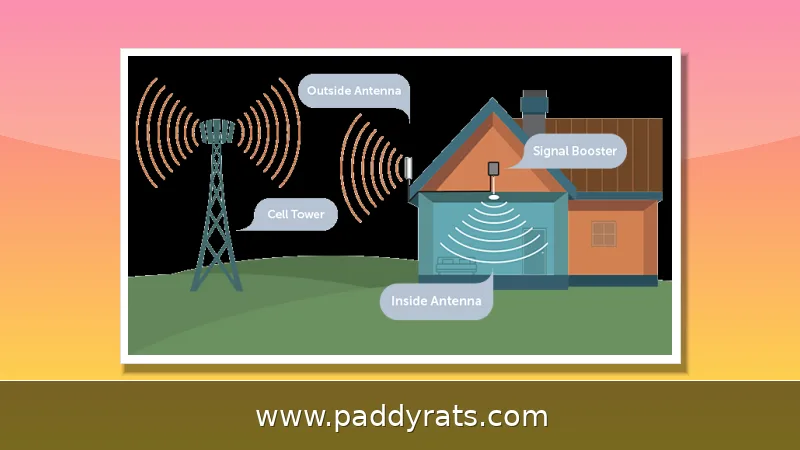
When passive blocking is not the goal and you actually want better reception, a signal booster is the legal tool designed for the job. Boosters capture existing 5G, 4G and LTE signals, amplify them and rebroadcast them indoors, and they work across all carriers and devices. Renter-friendly kits use window or balcony antennas instead of roof mounts, which keeps you out of most lease conflicts.
Before buying, contact the apartment manager or landlord about outdoor antenna mounting regulations. Some properties allow mounting on a balcony rail, a tripod on the balcony or placement next to a window, while others prohibit drilling or roof access outright. Proper separation between the indoor and outdoor antennas is also required to avoid interference, so a kit that lets you position both units cleanly matters more than raw coverage claims.
The table below compares the booster options I see most often in renter conversations, along with their rated coverage and realistic expectations.
| Model | Rated Coverage | Realistic Coverage | Antenna Setup |
|---|---|---|---|
| weBoost Home Studio (470166) | Up to 1,500 sq ft | 200-500 sq ft in weak areas | Yagi directional outdoor, compact indoor |
| weBoost Home Room (472120) | Up to 1,500 sq ft | Varies with outside signal | Directional outdoor panel, desktop indoor |
| weBoost Home MultiRoom (470144) | Up to 5,000 sq ft | Typically 2,000-3,000 sq ft | Outdoor yagi, fabric front panel indoor |
| Apartment Amplify Booster Kit | Up to 3,000 sq ft | 5G-ready, window mountable | Bolton Beacon antenna inside or outside window |
HiBoost also sells a range of residential models priced at $259.99, $299.99, $369.99, $399.99, $569.99, $599.99 and $1,029.99 depending on coverage and features. For whole-building problems, enterprise solutions exist: Distributed Antenna System networks amplify and distribute cellular signals through a property, and Boingo is described as the largest indoor DAS provider in the United States. SureCall SignalMax Fiber DAS is described as the first FCC-certified Part 20 hybrid-fiber DAS pre-approved for all major carriers, scalable from 50,000 to 500,000 sq ft, while SureCall Force5 2.0 covers up to 25,000 sq ft typical and 100,000 sq ft ideal with SureIQ technology and remote monitoring. Those are landlord-level purchases, not renter purchases.
Checking Reception Before You Sign a Lease
The cheapest fix for bad apartment reception is never signing the lease in the first place. During a tour, walk every room, send texts and make an actual call rather than trusting the bars on your lock screen. Pay attention to interior rooms, bathrooms and anywhere you plan to work, since those are the spots most likely to fail once the building is full of residents.
Crowdsourced data helps fill in the gaps. Sites like DeadCellZones.com show reported problem areas, and tower maps from CellReception or AntennaSearch reveal how far the nearest infrastructure actually is. Test the apartment's internet speed during the same visit, because Wi-Fi calling and texting, plus a Google Voice number for calls over Wi-Fi, can carry you through weak cellular coverage without any hardware at all.
If the building has a carrier femtocell or microcell such as a Verizon Network Extender or AT&T Cell Booster, ask whether it is active and which carrier it serves, since those units need broadband internet and only support one provider. The scale of the problem is worth keeping in perspective: Pew Internet and American Life found that 72 percent of Americans experience some dropped calls due to bad reception, and 45 percent of people use smartphones to access the internet instead of buying broadband. Los Angeles leaders and law enforcement have also warned about burglars using WiFi jammers, a reminder that jamming is a public safety issue, not a personal convenience. Signs of a WiFi jammer include signal drops near the router, repeated disconnects, high latency and packet loss, while wired Ethernet connections keep working normally.
What to Do When You Suspect a Jammer Nearby
If multiple devices lose service at the same time and the signal fluctuates erratically, that pattern is more consistent with a jammer than with ordinary weak coverage. A WiFi jammer shows up differently: drops near the router, repeated disconnects and packet loss, while a wired Ethernet connection keeps humming along. Documenting when and where the outages happen gives you something concrete to report.
Your first call should be to your wireless network provider, not to a store that sells counter-surveillance gear. Spectrum analyzers can detect jammers, but the equipment is uncommon and interpreting the readings requires real expertise. Federal enforcement is the appropriate channel because jamming interferes with licensed spectrum and can block emergency calls, and the penalties for operating a jammer are severe enough that most cases end with seizure rather than a warning.
For renters, the practical path stays simple: measure your signal in dBm, use passive materials if you want less reception, use a properly installed booster if you want more, and never buy a jammer no matter how tempting the listing looks. That combination keeps you on the right side of federal law while actually improving how your apartment works.
Frequently Asked Questions
Is it legal to use a cell phone jammer in my rented apartment?
No. Federal law prohibits operating, marketing or selling any jamming equipment that interferes with authorized radio communications, with no exemptions for a business, classroom, residence or vehicle. Violations can bring fines up to $11,000, equipment seizure and criminal sanctions including imprisonment, and renting the apartment changes nothing about that.
What can I legally use to block cell signal in a rental?
Passive blocking is the legal route. Dense building materials, metal mesh, aluminum foil or a Faraday cage can weaken or stop signals without transmitting anything. There are no rules against passive cell phone blocking, unlike active jammers, so copper mesh around a room or foil on a wall is permissible even in a leased unit.
Will a signal booster help if my apartment has weak reception?
Yes. Boosters capture existing 5G, 4G and LTE signals, amplify them and rebroadcast them indoors, and they work across carriers and devices. Renter-friendly kits use window or balcony antennas, but you should first ask your landlord about outdoor antenna mounting regulations and keep the indoor and outdoor antennas properly separated.
How do I check cell reception before renting an apartment?
Walk every room, send texts and make calls during the tour instead of trusting the bars on your phone. Check crowdsourced sites like DeadCellZones.com and tower maps at CellReception or AntennaSearch, and test the apartment's internet speed so you know whether Wi-Fi calling can cover any weak spots.