A cell phone jammer floods the same radio frequencies your phone uses, drowning out the tower signal and killing service. Here is how jamming works, why it is illegal in the US, what real specs and prices look like, and how to detect interference.
What Is a Cell Phone Jammer and What Does It Block?
A cell phone jammer — you'll also see it called a mobile phone jammer, signal blocker, or signal scrambler — is a device that deliberately transmits radio signals on the same frequencies your phone uses to communicate with a cell tower. It doesn't listen in on your calls or data. What it actually does is drown them out, so your handset loses service and the signal bars disappear. A close cousin, the GPS jammer, pulls the same trick on satellite navigation bands, and the slang term "text stopper" usually refers to jamming aimed at blocking messaging.
Jammers started out as tools for law enforcement and the military. Officers relied on them to shut down communications among criminals and terrorists, to stop explosives that could be set off by a cell phone, and to keep hostage situations under control when a single call could put lives at risk. There's an odd irony here: the same technology that keeps a bomb squad safe can also block someone from dialing 911. That's precisely why regulators handle these devices with so much caution.
How Do Cell Phone Jammers Work?
Cell phone jamming is essentially a denial-of-service attack carried out over the airwaves. The jammer broadcasts an RF signal that's stronger than whatever's coming in from the nearest cell tower, and since your phone has no way to distinguish between the two, it grabs the stronger one. The legitimate signal gets drowned out in the process, so the handset just shows no service at all. And because the jamming targets the downlink, you won't see a busy signal or an error message — the phone simply drops to zero bars.
A typical jammer circuit is really three smaller subcircuits that have to work together. First, there's an RF amplifier, which takes the signal coming out of the tuned circuit and feeds it to the antenna through a coupling capacitor—that capacitor's job is to block any DC. Then you've got a voltage controlled oscillator paired with a tuned circuit made from a capacitor and an inductor, and together they generate the actual jamming waveform. That waveform is just random noise, which is exactly the point: it's why a phone can't pull anything usable out of the signal.
A jammer can't just broadcast on whatever frequency it wants—it has to sit right inside the same frequency field the mobile operators are using. In a GSM network, that means 900 MHz and 1800 MHz in Europe, while other regions run on different bands. Here's the tradeoff: the wider the frequency range a jammer has to cover, the more power it burns through. That's exactly why multi-band units end up bulkier, run hotter, and cost a lot more than their single-band counterparts.
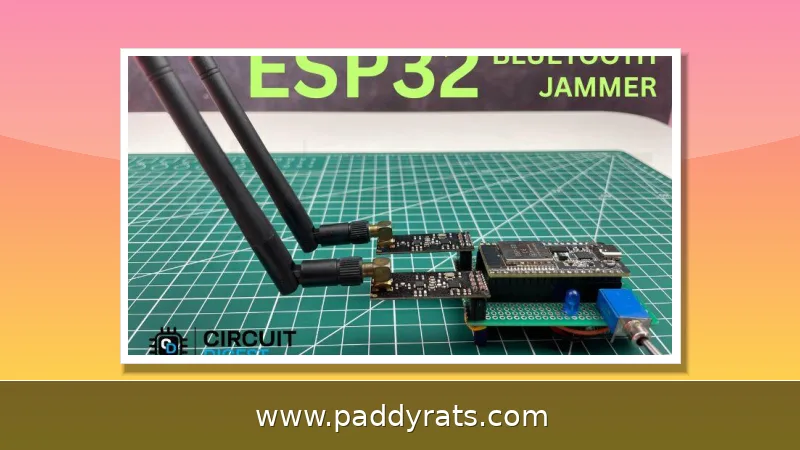
Hobbyists ask about building these all the time. A basic DIY cell phone signal jammer circuit doesn't need much: resistors R1 (emitter loading) and R2 (base biasing); capacitors C1 (frequency generation), C2 and C3 (feedback), C4 (noise reduction), C5 and C6 (coupling), and C7 (decoupling); a transistor Q1 for amplification; and an inductor L1 for frequency generation. Put those together and you can interfere with UMTS, 3G, CDMA, GSM, and PHS networks. But here's the catch—Arduino forum threads are full of warnings that a homemade jammer may be illegal and can put public safety at risk, so it's best to treat those schematics as educational only.
Are Cell Phone Jammers Legal?
In the United States, using a cell phone jammer is against federal law. Selling, advertising, distributing, or even just operating cell signal jammers is illegal here and in much of the world. Why? The FCC points out that jammers can seriously jeopardize critical public safety communications—they can block 911 and other emergency calls, and they can interfere with law enforcement communications too. On top of that, radio frequencies are legally protected under the Communications Act of 1934.
The penalties aren't exactly slap-on-the-wrist stuff, either. You could be looking at fines of up to $11,000, having your equipment confiscated, and even criminal charges that carry jail time. Cell phone detectors, on the other hand, are perfectly legal in the United States — which explains why a lot of venues would rather monitor for jamming than try to block signals themselves. As for federal law enforcement, they're allowed to use jammers too, but only under a narrow set of exceptions.
A few places have debated narrow exceptions. Some state lawmakers have pushed to legalize jamming inside correctional facilities, largely to deal with contraband cell phones, and countries like Brazil, New Zealand, and Sweden have looked at similar exceptions for prisons. The UK has gone further: since 2012, law enforcement, intelligence agencies, and jails there have used signal jammers under strict regulation. The pattern holds up pretty consistently — jamming stays in the hands of government agencies, not ordinary consumers.
If you were hoping a signal booster might be a cheap way around this, unfortunately that won't work either. A signal jammer will interfere with a cell phone signal booster, since boosters work by amplifying a signal that's already there. If a jammer is blocking that signal, there's nothing left to amplify. So in a sense, every signal jammer is also a signal booster jammer.
Cell Phone Jammer Specifications and Range
Range depends almost entirely on output power and antenna design. A low-powered jammer will typically block calls within about 30 feet (9 m), while a higher-powered unit can create a cell-free zone the size of a football field. One caveat worth keeping in mind, based on real-world use: a jammer that originally gave you a shielding radius of 10 meters might only manage 5 meters in the same spot. Walls, terrain, and how strong the nearest tower's signal happens to be all shift the result.
Vendor listings give a clearer picture of what money buys. The table below summarizes publicly listed models and prices from Jammer Store, alongside the Hocell and Bel India specifications.
| Model | Type | Power / Bands | Range | Listed Price |
|---|---|---|---|---|
| Colibri Y3 | Portable mini (2.4/5.8 Wi-Fi, Bluetooth) | Not stated | Not stated | $250.00 |
| GP5000 Car Anti-Tracking GPS Blocker | Vehicle GPS blocker | Not stated | Not stated | $119.99 |
| Albatross Pocket 3G (GPS) GSM Jammer | Pocket portable | Not stated | Not stated | $179.00 |
| Alligator Powerful 10 Bands Jammer | Multi-band | 10W | Not stated | $720.00 |
| Stalker 5G 12 Bands | Portable 5G | 12 bands | Up to 20 m | $850.00 |
| HPJ1000-5G | Desktop | 70 W | Up to 60 m | $999.00 |
The Hocell Digital 5G Cellular Signal Jammer lists a max output jamming power of 30±2 dBm for Wi-Fi and ≥33 dBm for other systems, assuming a carrier signal strength of ≥-75 dBm, with a jamming distance greater than 10 m when RSSI is ≥-70 dBm. The Bel India portable jammer lists 10W output plus VSWR protection, over-voltage and under-voltage protection, and over-temperature protection. A government tender specification for a cell phone jammer required the ability to jam a network at a minimum of 50 m while staying easily portable and usable in all climates.
How to Detect and Respond to Jamming
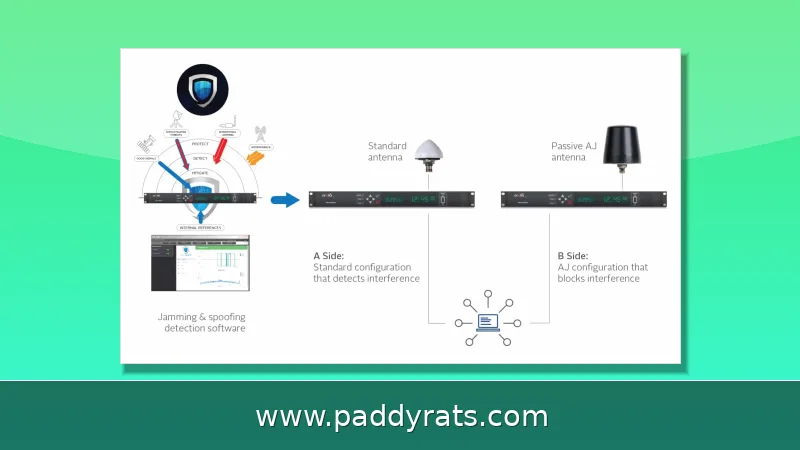
The most common symptom of jammer interference is dropped service in a place where your phone normally works. Apps that claim to detect jammers are largely unproven and, ironically, require a working signal to function. Spectrum analyzers can detect jammers by analyzing frequencies, but they are not commonly available and require specialized knowledge to interpret correctly.
Physically, a jammer usually looks like a walkie-talkie, a cell phone, or a wireless router, which makes them easy to miss. If you suspect jamming, contact law enforcement or file a complaint with the FCC, and contact your wireless network provider so they can check for interference on their side. Documenting the time, location, and symptoms helps investigators and your carrier trace the source.
Cell Phone Jammer Market and Product Landscape
Despite the legal restrictions, the market keeps growing. Cognitive Market Research recorded the cell phone signal jammer market at $574.401 million in 2021, and projected it would reach $856.375 million by the end of 2025. That growth reflects demand from prisons, government agencies, and overseas buyers in jurisdictions where jamming is permitted, not from US consumers.
The vendor landscape splits into a few clear categories. Cellbusters provides cell phone detection technology and legal jamming solutions overseas. Jammer Store sells portable, desktop, and drone jammers for cellular, GPS, and Wi-Fi bands. Wilson Amplifiers covers jammer FAQs for buyers trying to understand the rules. Phantom Technologies offers the Selective Cellular Jammer SCJ1800, which blocks only cellular phones identified as threatening, a narrower approach aimed at minimizing collateral disruption.
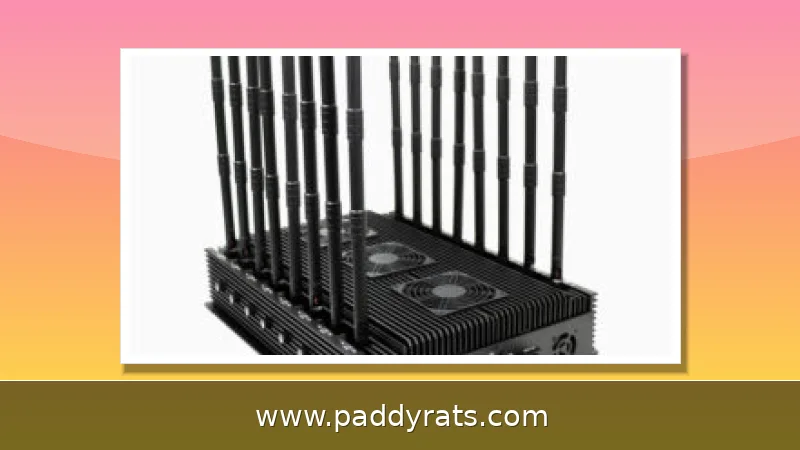
On the hardware side, Hocell lists a Digital 5G Cellular Signal Jammer, and Bel India lists a Portable Cell Phone Jammer with 10W power output. These listings show how the category has moved beyond bulky government gear into pocket-sized and desktop formats, even as the legality question stays unresolved in most countries.
Health, Research, and the Bottom Line
Health research on jammers is thin but not empty. A 2018 study by Shojaeifard et al., cited 17 times, examined electromagnetic fields from mobile phone jammer exposure. When jamming is effective, the jammer power equals the signal power at the receiver, and a jammer device usually emits radiation. That is one more reason regulators treat these devices as controlled equipment rather than consumer electronics.
My takeaway after reviewing the specs, prices, and rules: a cell phone jammer is a powerful, tightly regulated tool with legitimate government and law-enforcement uses, and serious legal exposure for everyone else. If your real problem is weak coverage, a carrier-approved signal booster is the lawful fix. If you suspect someone is jamming you, report it rather than retaliate with your own device.
Frequently Asked Questions
How does a cell phone jammer work?
A jammer transmits a radiofrequency signal on the same frequencies as cell phones, but stronger than the nearest base station. The phone cannot distinguish the two signals, so the weaker legitimate signal cancels out and the device loses service. This is described as a denial-of-service attack.
Are cell phone jammers legal in the United States?
No. It is illegal to sell, advertise, distribute, or operate cell signal jammers in the United States and much of the world. The FCC cites risks to public safety communications and 911 calls, and the Communications Act of 1934 outlaws interference with authorized radio broadcasts.
What is the range of a cell phone jammer?
Low-powered jammers block calls in a range of about 30 feet (9 m). Higher-powered units can create a cell-free zone as large as a football field. One vendor lists a 12-band portable 5G jammer at up to 20 m and a 70 W desktop unit at up to 60 m.
Can a signal booster stop a cell phone jammer?
No. A signal jammer interferes with a cell phone signal booster. Boosters amplify an existing signal, but if that signal is blocked by a jammer, the booster will not work. Any signal jammer is also a signal booster jammer.