Cell phone jammers flood your phone's downlink frequencies with RF noise, killing calls, texts, GPS, and WiFi. Here is how to detect one, shield your devices with Faraday cages or bags, and report it to the FCC, which can fine violators up to $11,000.
What Is a Cell Phone Jammer and How Does It Work?
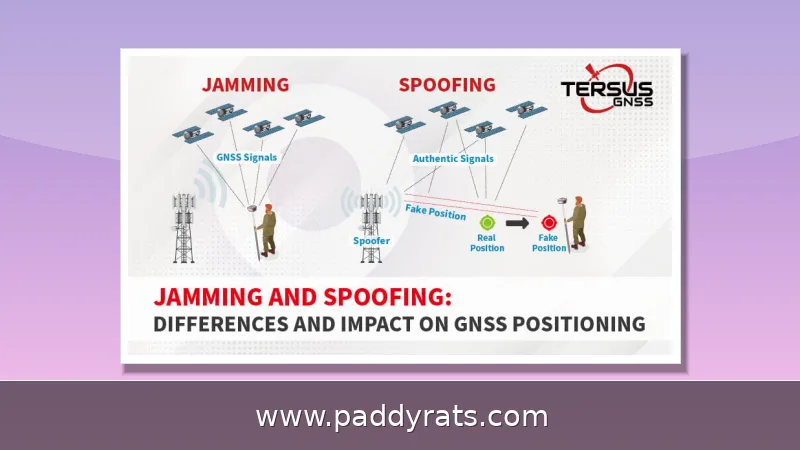
A cell phone jammer is basically a radio transmitter that floods the same frequencies your phone uses to communicate with the nearest cell tower. It's a denial-of-service attack over the air. Since the jamming hits the downlink signal, your phone can't hear anything from the tower — the bars drop to zero, and calls, texts, and mobile data all stop working. Anything within range just goes dark.
A basic jammer only blocks one band at a time, but that's often enough to fool your phone into thinking there's no network around. The fancier ones go further and use protocol jamming to hit the control channels directly, which makes the whole outage a lot harder to figure out. As for which frequencies get targeted, you're usually looking at 700MHz up through 2100MHz to cover 2G, 3G, 4G, and 5G, along with GPS at 1575MHz and WiFi at both 2.4GHz and 5GHz.
Range is all over the place depending on what you're dealing with. A portable, battery-powered unit with built-in antennas usually covers somewhere around a 30-foot radius, but bigger rack-mounted systems can reach up to a mile. Wilson Amplifiers points out that in practice, jamming range is often no more than 30 square feet. That's why one device sitting in a parking lot can shut down an entire storefront.
Signs a Cell or WiFi Jammer Is Being Used Nearby
The biggest giveaway is when several phones all lose service at the same time, especially in a spot where you normally get great reception. So if your phone and the phone belonging to the person next to you both start dropping calls, showing zero bars, or bouncing between full signal and nothing, that pattern points to interference rather than a problem with your carrier. And here's the frustrating part: restarting your phone or flipping airplane mode on and off usually won't do a thing, since whatever's causing the issue isn't coming from inside the device itself.
WiFi jammers leave behind a different kind of evidence. You might notice your signal tanking whenever you're standing near the router, along with high latency, dropped packets, and speeds that crawl — yet your wired Ethernet connection hums along like nothing's wrong. That split between wired and wireless is honestly one of the clearest clues you can get, and you don't need any fancy test equipment to spot it.
Apps that claim to detect jammers? Take them with a grain of salt. Most of them only work when you already have a decent signal, which kind of defeats the whole point. A spectrum analyzer, on the other hand, can actually confirm whether interference is present—but those run expensive, and you need real RF know-how to use one properly. For the average person, the most practical approach is just paying attention to patterns: if several of your devices start acting up at the same time, that's usually your best clue.
Legal Status: FCC Rules and Penalties for Jammers
In the United States, using, marketing, or selling a jammer is against the law. Radio frequencies fall under the protection of the Communications Act of 1934, and there are no exceptions for businesses, classrooms, homes, or vehicles. If you get caught, you could face fines of up to $11,000, have your equipment seized, and even face criminal charges that include prison time. Local police don't have independent authority to operate jammers either; only federal agencies are permitted to use them, and even then only in limited situations.
This isn't just a theoretical problem, either. U.S. Customs and Border Protection has logged roughly an 830% jump in signal jammer seizures since 2021. Over the past year, Los Angeles officials and law enforcement have been warning about burglars increasingly using WiFi jammers. And in June, the Department of Homeland Security tied jamming devices to a string of bank robberies in Vermont, while similar devices turned up in an attempted jewelry store heist in La Verne, California.
Other countries take a different approach. Brazil, New Zealand, and Sweden have all weighed making exceptions for correctional facilities, and since 2012 the United Kingdom has allowed jammers in law enforcement, intelligence work, and prisons, though under tight regulation. Cell phone detectors are a different story: they're legal in the U.S. even though jammers aren't. That leaves property owners with a legitimate tool for spotting trouble instead of breaking the law themselves.
Practical Ways to Block or Escape Jammer Interference
There's no easy way to block a jammer's transmission, since jamming goes after the receiver, not the tower. So your realistic options come down to three things: move far enough away from it, switch bands if your phone supports that, or track the device down and shut it off. A jammer doesn't always look suspicious — it can pass as a walkie-talkie, a spare phone, or even a wireless router — which is why a quick physical sweep of the area is often the fastest way to solve the problem.
First, rule out the simple stuff: check your device and network settings for any pending updates, make sure airplane mode isn't turned on by accident, and give the phone a restart. If you've got several devices all losing service in an area where reception is normally fine, that's when you should start taking it more seriously. Moving just a few hundred feet can bring your signal back if the jammer is a low-power portable unit, and switching to a different frequency band can help too, though only against single-band models.
For WiFi jammers, plug in. Wired Ethernet keeps working when the airwaves are flooded, so point-of-sale terminals, cameras, and back-office machines should have a cable fallback. For homes and businesses, layer perimeter lighting, fences or gates, and video surveillance as outer defenses, then report suspected jamming to law enforcement or file an FCC complaint under Interference, then Signal Jammers, in the FCC Phone Issues form.
Faraday Cages, Bags and Other Shielding Options
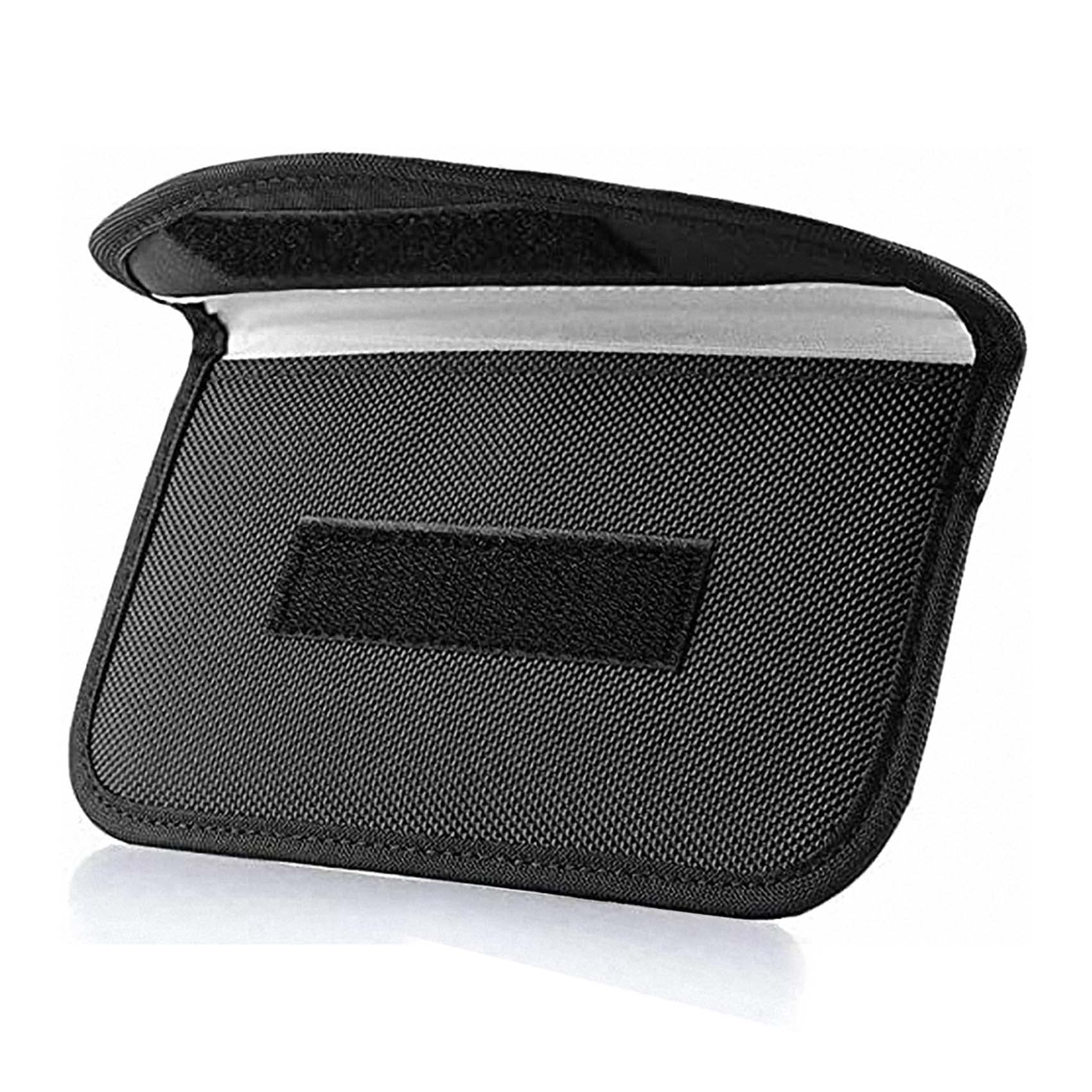
A Faraday cage or Faraday bag passively blocks cell, WiFi, and Bluetooth signals by wrapping a device in conductive material. It is the simplest shielding method, needs no power, and costs little. Faraday bags are sold in a range of materials for privacy and are legal to own and use, which makes them the go-to answer for anyone asking how to shield a phone from a portable jammer.
The tradeoff is that shielding works both ways. A phone inside a Faraday bag cannot be jammed, but it also cannot receive calls, texts, or emergency alerts. That makes these enclosures useful for meetings, forensic transport, and key fob protection, but a poor choice for a device you need to stay reachable.
Signal boosters and amplifiers do not stop jammers. A booster amplifies the existing tower signal, and a jammer is effectively a booster jammer, so the noise gets amplified too. If you are weighing options, the table below summarizes what actually works against interference.
Why Signal Boosters and Amplifiers Do Not Stop Jammers
It is a common misconception that a cell signal amplifier will punch through jamming. Boosters are designed to capture a weak but valid tower signal and rebroadcast it indoors. When a jammer is present, there is no clean signal to amplify, only noise, and some boosters will simply amplify that noise across the band, making things worse for everyone nearby.
That is why any jammer is also a signal booster jammer. The two devices fight over the same spectrum, and the jammer usually wins because it is closer and louder. If you need reliable coverage in a building, the correct sequence is to fix legitimate coverage gaps with a booster, then address interference through detection and reporting rather than counter-jamming.
This matters legally as well. Building your own countermeasure with an RF amplifier, a voltage-controlled oscillator, and a tuning circuit, or with a 555 timer DIY build, puts you on the wrong side of the same rules that ban jammers. Detection tools and shielding are the compliant path.
Detection Tools, Costs and Enforcement Snapshot
If you want to move from guesswork to evidence, a few tools and reference points help. The table below compares what is available, what it costs, and how it is regulated, based on vendor listings and public enforcement data. Prices are listed as published by the sellers and can change.
| Item | Typical price | What it does | Legal status (U.S.) |
|---|---|---|---|
| 4G Phone Jammer JM021 | $520.00 | Blocks cellular bands | Illegal to use, sell, or market |
| Handheld WiFi Bluetooth Jammer JM012 | $569.99 | Blocks 2.4GHz and 5GHz | Illegal to use, sell, or market |
| Handheld Phone Jammer JM018 (16 antennas) | $699.00 | Multi-band, ~25 meters | Illegal to use, sell, or market |
| Drone UAV Signal Jammer JM004 | $2,399.99 | Directional ISM and navigation bands | Illegal to use, sell, or market |
| Faraday bag or cage | Low cost | Passively blocks cell, WiFi, Bluetooth | Legal to own and use |
| Spectrum analyzer | Specialty pricing | Detects interference | Legal; requires expertise |
The pattern is clear: the tools that block signals are the ones the FCC prohibits, while the tools that detect or shield are lawful. Since 2021, CBP has seen roughly an 830% increase in jammer seizures, and the FCC Jammer Enforcement page was updated just days ago, which shows regulators are actively tracking this space. If you find a jammer, document it, preserve the evidence, and let the FCC or local law enforcement handle removal.
Risks, Compliance and Common Questions Answered
Jammers do not just silence annoying ringtones. They can block 911 emergency calls and public safety communications, interfere with law enforcement radio, GPS, WiFi, and police radar, and disrupt medical and industrial systems that share the same spectrum. That public-safety risk is the core reason the U.S. bans them outright, with no carve-out for a quiet classroom, theater, train car, or vehicle.
The common questions follow the same logic. Can you block a jammer signal? Not directly, because jamming targets the receiver, so relocate, switch frequency, or locate and disable the device, then report it. Is there a way to shield a phone from a portable jammer? Yes, a Faraday cage or bag will do it passively and legally. Does a jammer block a signal booster? Yes, and an amplifier will not stop a jammer either.
One more practical point: apps claiming jammer detection are largely unproven and need a working signal to run, so treat them with skepticism. If you want a defensible answer, rely on multi-device testing, wired fallbacks, and a formal complaint. This article is informational and is not legal advice.
Frequently Asked Questions
Can you block a cell phone jammer signal?
You cannot easily block a jammer's transmission, because jamming affects the receiver rather than the tower. The practical options are relocating out of range, switching frequency if your device allows it, or physically locating and disabling the device. Signal boosters and amplifiers do not stop jammers. Report suspected jamming to law enforcement or the FCC.
Is it legal to use a cell phone jammer?
No. In the United States, federal law prohibits operating, marketing, or selling jamming equipment that interferes with authorized radio communications, including cellular, PCS, police radar, and GPS. There are no exemptions for businesses, classrooms, residences, or vehicles. Penalties can include fines up to $11,000, equipment seizure, and imprisonment.
How do I know if a cell phone jammer is being used nearby?
Common signs include multiple phones suddenly losing service in an area with normally good reception, erratic signal fluctuations, and dropped calls. WiFi jammers cause signal drops near the router, high latency, packet loss, and slower speeds, while wired Ethernet connections keep working. Apps claiming to detect jammers are largely unproven.
Does a Faraday cage or Faraday bag block cell signals?
Yes. A Faraday cage or Faraday bag passively blocks cell, WiFi, and Bluetooth signals by enclosing a device in conductive material. It is the simplest shielding method and does not require special costs. Faraday bags are sold in various materials for privacy and are legal to own and use.