DIY WiFi jammer builds using the ESP8266 deauther, ESP32 and nRF24L01 modules are widely documented online, but every one of them runs straight into federal law. Here is how the hardware works, what it can realistically do, and why the FCC says you cannot legally operate it.
What Is a WiFi Signal Jammer and How Does It Work?
A WiFi jammer works by blasting radio frequency energy on the same bands your router relies on — usually 2.4 GHz and 5 GHz — so nearby wireless devices can't sort out a clean signal anymore. There's nothing subtle about it: the interference just has to be loud enough to drown out the legitimate traffic, and once that happens, the client and the access point can't exchange data reliably. Anything connected over Ethernet keeps working fine, though, since the jammer is only going after the radio link, not the network behind it.
A typical WiFi jammer circuit isn't really one circuit at all—it's three smaller ones working together, each with its own job. First up is the RF amplifier, which takes the signal being generated and boosts it to a power level that's actually usable. Then there's the noise circuit, usually a set of capacitors, that spits out broadband noise instead of a clean tone. The last piece is the tuning circuit, which pairs an inductor with a capacitor to lock the output onto one specific frequency. Depending on the values you pick, that frequency could be 2.4 GHz, 5 GHz, or the license-free 5.8 GHz band that analog FPV video uses. Stack all three stages together and what you get is interference noise sitting right on top of the WiFi channel—that's the stuff that drowns out the legitimate signal your router is trying to send.
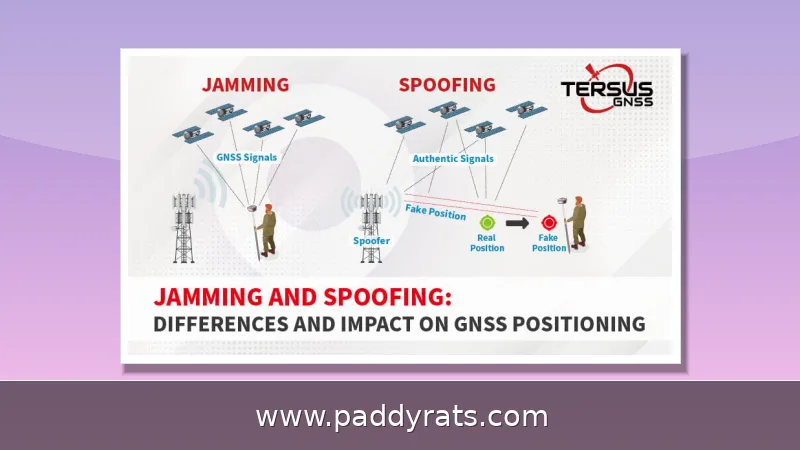
Cellular jammers follow the same playbook as WiFi jammers — they just point it at a different part of the radio spectrum. Rather than going after the 2.4 GHz or 5 GHz bands WiFi lives on, they flood the frequencies phones use to communicate with cell towers, burying that exchange under pure noise. The outcome looks identical from the outside: a device that ought to be connected suddenly isn't, whether that's a laptop trying to reach a router or a phone attempting to make a call. This shared mechanism explains why the FCC lumps jamming hardware into one broad category rather than treating WiFi interference as some separate problem. Change out the tuning circuit, and the same basic blueprint can take down cellular, PCS, GPS, or police radar. The band shifts; the underlying trick stays the same.
ESP8266 Deauther: The Most Common DIY Approach
The ESP8266 deauther is where most people start, and it helps to understand that this isn't a jammer in the classic RF-noise sense. Rather than flooding the airwaves with interference, firmware like spacehuhn's deauth toolkit exploits a quirk in the Wi-Fi protocol itself: it uses management packets to fire off deauthentication frames, essentially forged "you're disconnected" notices that tell a router to drop a specific device. The device never has to crack a password or touch the network's encryption. Anyone within range of the same network can push those frames, and since most routers ship with management-frame protection turned off by default, the target device just obeys and drops offline. That's exactly why the trick works so often, and why the deauther has become the go-to project for beginners messing around with ESP8266 and NodeMCU boards.
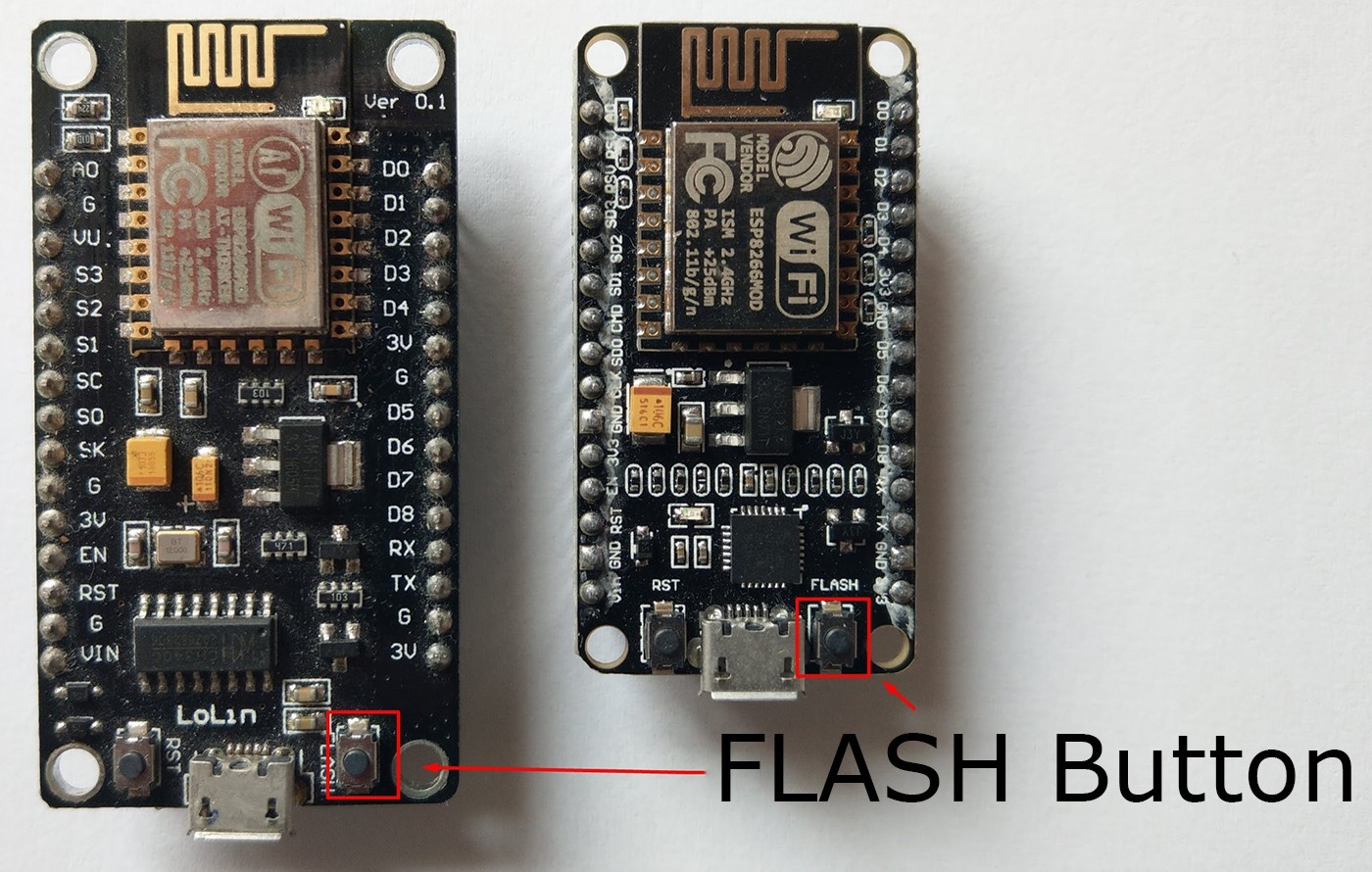
Cost is a big reason the ESP8266 route dominates DIY jammer discussions. Community tutorials often pitch the ESP8266-01 as a cheaper stand-in for a NodeMCU ESP8266 board, and since both chips run the same deauther firmware that spacehuhn made popular, a beginner can get going for just a few dollars. That low entry price, plus the fact that you don't need any soldering-heavy RF circuitry, explains why the deauther approach turns up so often in YouTube builds and Reddit threads. The catch is what the attack actually does. A deauthentication attack is more annoying than destructive — it kicks devices off a network by spoofing management frames, and because most routers ship with management-frame protection turned off, it usually works. In some cases it can also help an attacker grab a WPA handshake that later gets cracked into a WiFi password. What it won't do is flood a whole neighborhood with interference the way a true jammer does.
| Board | Relative Cost | Firmware | Notes |
|---|---|---|---|
| ESP8266-01 | Cheaper option | ESP8266 deauther | Presented in tutorials as a low-cost alternative to NodeMCU |
| NodeMCU ESP8266 | Higher than ESP8266-01 | ESP8266 deauther | Same firmware; easier to flash and power |
If you spend any time on Reddit, you'll notice these threads get real traction—and that says a lot about how curious people are. One DIY ESP32-BlueJammer post racked up 541 upvotes and 117 comments, while a beginner-friendly guide to building a WiFi and Bluetooth jammer pulled in 2.5K votes with 145 comments. Clearly, there's plenty of search demand out there, even if the legal answer stays the same no matter how you frame it.
ESP32 and nRF24L01 Jammer Builds: Components and Setup
If you've already messed around with a basic deauther build, ESP32 and nRF24L01 projects are the natural next step, and it mostly comes down to what the hardware can actually do. The nRF24L01 is a genuine 2.4 GHz transceiver, which means it can sweep across the band and blast noise on the same frequencies your router relies on, instead of just spitting out deauthentication frames the way the ESP8266 deauther does. Hooking one up isn't hard: the module communicates with the host board over the SPI pins, so it plays nice with either an Arduino or an ESP32. Two pins, CSN and CE, take care of the handshake, with CE putting the module into active mode and CSN letting the board switch between command modes. Whatever the radio is up to gets sent back to the board through the serial interface and shown in ASCII, so you can watch it respond in real time. On the cost side, one documented ESP32 plus nRF24L01 build ran about 35,000 IQD, and the parts list stays pretty lean: an ESP32, the nRF24L01 module and antenna, two 1200 mAh 3.7V batteries, a TP4056 charging module, a 10uF capacitor, a pair of on/off buttons, an LED, and a piece of veroboard. Just keep your expectations in check, because builders say these rigs only work within a foot or two, so close range is really where they earn their keep.
| Component | Role in the Build |
|---|---|
| ESP32 | Host board; runs the firmware and drives the transceiver |
| nRF24L01 module + antenna | 2.4 GHz transceiver that sweeps the band and generates interference |
| 2x 1200 mAh 3.7V battery | Portable power source |
| TP4056 charging module | Charges and manages the batteries |
| 10uF capacitor | Stabilizes power to the module |
| 2x on/off button | Power and mode control |
| LED | Status indicator |
| Veroboard | Mounts and connects the components |
Here’s what a typical parts list for an ESP32 plus nRF24L01 Bluetooth and WiFi jammer build tends to look like:
| Component | Role in the build |
|---|---|
| ESP32 board | Main microcontroller running the firmware |
| nRF24L01 module | 2.4 GHz transceiver that generates interference |
| nRF24L01 antenna | Extends effective range |
| 2x 1200mAh 3.7V battery | Portable power |
| TP4056 charging module | Charges and protects the cells |
| 10uF capacitor | Smoothes power to the transceiver |
| 2x on/off button, LED, veroboard | Control, status and assembly |
If you're looking for a written reference instead of some half-finished forum post, the Arduino Project Hub version is probably the one you'll see cited the most. It uses an Arduino Uno Rev3 paired with a SparkFun Transceiver Breakout nRF24L01+ that ends in an RP-SMA connector, so you can attach an external antenna rather than being stuck with the tiny trace antenna on those cheaper nRF24L01 boards. The guide was published on August 8, 2022, and a copy showed up on Hackster the same day, meaning these instructions have been bouncing around two different communities for a good while now. The traffic supports that too — the Arduino Project Hub page has pulled in 162,955 views and 39 respects, which is a surprising number of people paying attention to something that, from what most builders say, only really works up close. Cost is another thing that catches people off guard, because part prices vary a ton depending on where you live. One ESP32 and nRF24L01 build came out to 35,000 IQD, and honestly that number tells you more about what local suppliers happen to charge than about any kind of standard budget you could actually plan around.
Circuit-Level Design: RF Amplifier, Noise and Tuning Stages
Strip away the microcontroller and the firmware, and you're left with the analog heart of the whole thing — the part that actually does the jamming. The design boils down to three stages working in sequence. First, a voltage-controlled oscillator, or VCO, generates a carrier wave; its frequency is set by an input voltage, which is what makes it tunable. Next, a noise stage smears that clean carrier into something messy and broadband, so the interference spreads across the band instead of sitting on a single pinpoint frequency. Finally, an RF amplifier boosts the signal to a useful power level and hands it off to an antenna. GreatScott followed exactly this recipe when he built a 2.4 GHz VCO WiFi jammer, and Hackaday documented a comparable short-range build that only mustered about 20 cm of effective interference against a laptop's WiFi connection — a useful reminder that the analog front end, not the code, usually sets the ceiling on performance.
That 20 cm figure is the honest headline for homebrew analog jamming. A written circuit document circulating online claims a WiFi jammer circuit that blocks signals within roughly 40 meters, but that number assumes a properly tuned amplifier and antenna, which is far beyond what a breadboard build delivers. FPV analog video gear runs on license-free 5.8 GHz bands, and builders sometimes repurpose a 2.4 GHz AV transmitter as a crude interference source, which is exactly the kind of out-of-band broadcasting that draws attention.
Building RF circuits that interfere with legitimate signals, or that broadcast outside their allocated band, is generally a bad idea and can attract authorities. The technical barrier is low enough that the real constraint is legal, not electrical.
Range, Power and Real-World Performance Limits
Published range claims for DIY jammers swing wildly depending on who's doing the measuring and how they define "jammed." A circuit write-up in one document claims a reach of roughly 40 meters, which sounds impressive until you line it up against a Hackaday experiment with a 2.4 GHz VCO that managed just 20 centimeters — barely enough to interrupt a laptop sitting on the same desk. Somewhere in between sit the ESP32 and nRF24L01 builds that hobbyists actually post about. A Reddit user behind a popular ESP32-BlueJammer thread reported it working within a foot or two, noting that close range is where it feels genuinely effective. Cost doesn't track neatly with range either: one ESP32 plus nRF24L01 project came in at 35,000 IQD, while an Arduino Project Hub nRF24L01 build using an Uno Rev3 and a SparkFun transceiver breakout has racked up 162,955 views and 39 respects without promising anything dramatic. The takeaway is that most DIY jammers are short-range toys, and any number you see should be read as a best-case estimate rather than a guarantee.
| Build / Source | Reported Range | Notes |
|---|---|---|
| Circuit document (RF amp, noise, tuning stages) | ~40 meters | Claimed figure for blocking WiFi signals |
| Hackaday 2.4 GHz VCO jammer | 20 cm | Interfered with a laptop's WiFi connection |
| Reddit DIY ESP32-BlueJammer | A foot or two | Close range described as very effective |
| ESP32 + nRF24L01 project | Not specified | Estimated cost: 35,000 IQD |
| Arduino Project Hub nRF24L01 build | Not specified | 162,955 views, 39 respects; Uno Rev3 + SparkFun breakout |
| Build | Reported range | Notes |
|---|---|---|
| Hackaday 2.4 GHz VCO jammer | ~20 cm | Interfered with one laptop's WiFi |
| Reddit DIY ESP32-BlueJammer | 1-2 feet | Close range described as very effective |
| Circuit document design | ~40 meters | Assumes tuned amplifier and antenna |
The pattern is consistent: handheld builds work at conversational distance, not across a street. Reddit users running the ESP32-BlueJammer reported it was effective within a foot or two, and that close range seemed very effective. Anything claiming whole-home coverage from a pocket device is overstating what the hardware can do.
Power delivery is the usual bottleneck. The nRF24L01 is a low-power transceiver, and the TP4056 plus 3.7V cell combination in most portable builds cannot sustain the current a real amplifier would need. That is why the same project appears in tutorials as both a WiFi and a Bluetooth jammer: at these power levels, the practical effect is local disruption rather than a wide-area blackout.
How Can You Tell If a WiFi Jammer Is Being Used Nearby?
Detection is mostly pattern recognition, because consumer gear will not flag jamming directly. The signs include a significant drop or total loss of WiFi signal strength even when you are standing next to the router, devices repeatedly disconnecting and reconnecting, high latency, packet loss and reduced bandwidth across every wireless client at once. If a wired Ethernet connection keeps working normally while every WiFi device in the room fails, that split is the clearest signal.
This matters beyond curiosity. Customs and Border Protection has seen roughly an 830% increase in signal jammer seizures since 2021, and in the past year Los Angeles leaders, law enforcement and security experts have warned about burglars using WiFi jammers to defeat connected cameras and alarms before breaking into homes. In June, the Department of Homeland Security reported jamming devices used in several Vermont bank robberies, and jamming hardware was recovered after an attempted jewelry store robbery in La Verne, California.
For homeowners, the practical takeaway is redundancy. A camera system that depends entirely on 2.4 GHz WiFi is a single point of failure, and a wired or cellular-backed path is the only thing that keeps working when the airwaves go quiet.
Is It Legal to Build or Use a WiFi Jammer?
No. The FCC states that federal law prohibits operating, marketing or selling any jamming equipment that interferes with authorized radio communications, including cellular, PCS, police radar and GPS. There are no exemptions for a business, a classroom, a residence or a vehicle, and even local law enforcement lacks independent authority to use jammers; only federal agencies may be authorized in narrow instances.
The prohibition applies to the device in use, not just to the sale. Possessing a build is one question; switching it on is the one that creates a federal violation, and the enforcement record shows seizures and prosecutions are not hypothetical. DEF CON and similar venues have hosted talks on jamming hardware for years, but conference context does not create a legal carve-out.
There is also a practical argument that gets less attention: an out-of-band transmitter can interfere with emergency communications, aviation and public safety systems far beyond the WiFi network you meant to target. That is the reasoning behind the blanket ban, and it is why the answer to whether you can legally build one stays the same no matter how cheap the parts get.
What Hardware Do DIY WiFi Jammer Projects Use?
Across the tutorials, the same short list of parts keeps appearing. Instructables hosts a three-step Wi-Fi Jammer Using ESP8266-01 guide, and a seven-step build for drones, WiFi and 4G networks that relies on high-voltage modules and circuits. The Arduino Project Hub and Hackster nRF24L01 write-ups both date to August 8, 2022, and YouTube is full of variations: a Mini WiFi Jammer ESP8266 deauther project, an ESP32 Wi-Fi and Bluetooth jammer walkthrough, a Bluetooth and WiFi jammer using ESP32 with nRF24L01, a portable ESP8266 build, and a 2.4 GHz AV transmitter approach in a series episode.
Medium has covered the same territory with a piece on building a jammer and fake hotspot generator with the ESP8266, and Reddit maintains a DIY WiFi and Bluetooth jammer guide pitched at absolute beginners. Tejas submitted a WiFi jammer project to the Hackaday Prize in 2017, and CiferTech published an nRF24L01 build, while PendTech and Puspendu Ghosh covered the topic on YouTube.
The common thread is that none of these projects require exotic parts. FireBeetle boards, NodeMCU ESP8266, ESP8266-01, ESP32, an Arduino Uno Rev3, a SparkFun nRF24L01+ breakout and a Maxim 2.4 GHz VCO are all off-the-shelf components, which is precisely why the legal warning matters more than the bill of materials.
Comparisons and Trade-Offs Between Build Approaches
Choosing between the ESP8266 deauther, an nRF24L01 build and an analog VCO circuit comes down to what you are actually trying to do, and each has a distinct profile.
| Approach | Strength | Weakness |
|---|---|---|
| ESP8266 deauther | Cheap, well documented, easy firmware | Targets individual devices, not the band |
| ESP32 + nRF24L01 | Covers WiFi and Bluetooth, portable | Low power, short effective range |
| 2.4 GHz VCO circuit | True analog interference | Hard to tune, often under 1 meter |
Deauth attacks are described as annoying and can help an attacker obtain a WiFi password, but protection exists in the form of management-frame protection that most routers simply do not enable by default. Wired connections are unaffected by any of these approaches, since only wireless devices are disrupted.
The trade-off that matters most is not technical. Building RF circuits that interfere with legitimate signals or broadcast out of band is generally not a good idea and could attract authorities, so the cheapest, easiest build is also the one with the clearest legal exposure.
Frequently Asked Questions
Is it legal to build or use a WiFi jammer?
No. According to the FCC, federal law prohibits operating, marketing or selling any jamming equipment that interferes with authorized radio communications, including cellular, PCS, police radar and GPS. There are no exemptions for use in a business, classroom, residence or vehicle, and even local law enforcement lacks independent authority to use jammers.
How does a WiFi jammer actually work?
A WiFi jammer transmits powerful radio frequency signals on the same bands as local networks, such as 2.4 GHz and 5 GHz, creating enough digital noise that wireless devices cannot communicate with a router. Circuit designs combine an RF amplifier, a noise-generating circuit using capacitors, and a tuning circuit with an inductor and capacitor.
What hardware do DIY WiFi jammer projects use?
Common builds rely on an ESP8266 or ESP32 microcontroller, sometimes paired with nRF24L01 transceiver modules connected over SPI. Some projects add a TP4056 charging module, 3.7V batteries, capacitors, on/off buttons and veroboard. The ESP8266 deauther firmware sends deauthentication frames to disconnect devices from an access point.
How can I tell if a WiFi jammer is being used nearby?
Signs include a significant drop or loss of WiFi signal strength even near the router, devices repeatedly disconnecting and reconnecting, high latency, packet loss and reduced bandwidth. Wired Ethernet connections keep working normally because jammers only affect wireless devices.