Building a homemade signal jammer is a federal crime in the US, and the safety and interference risks go far beyond the legal exposure. Here is what the FCC rules, real DIY circuit limits, and drone jamming trade-offs actually look like.
What Is a Homemade Signal Jammer and How Does It Work?
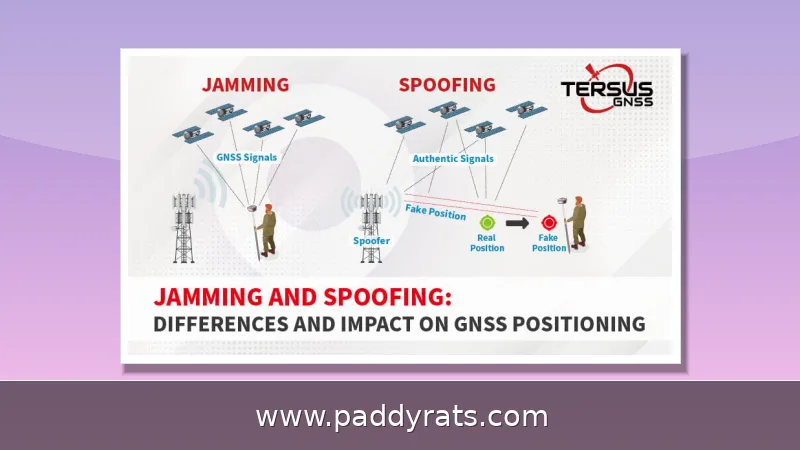
A homemade signal jammer is really just a DIY radio transmitter that floods a target band with noise, so any receiver in the area can't pick out the original signal anymore. It doesn't crack encryption or hijack a device — it just talks louder than whatever's trying to communicate, whether that's a phone checking in with a cell tower, a drone listening for its controller, or a GPS unit waiting on satellites. And that's the key thing to understand here: jammers don't discriminate. They blanket the whole band, not just the one device you're trying to silence.
Every signal jammer runs on the same basic principle: it blasts RF noise onto whatever frequencies the target device is using, drowning out the signals coming from cell towers and satellites. Commercial units and homemade builds both rely on this brute-force approach, which is exactly why even a low-power circuit can cause trouble far beyond whatever it was aimed at. Hobbyists like to call their builds harmless because the output is only a few watts, but wattage alone doesn't tell you much. What really determines the interference footprint is the frequency band being hit and the antenna doing the radiating—pair a modest transmitter with a decent antenna and it can cover a surprisingly large area. Good intentions don't shrink that footprint one bit.
Which Frequencies Do DIY Jammers Target?
Most DIY builds zero in on the bands where everyday consumer devices actually operate, and honestly, that list is short enough to memorize. Here in the US, cell traffic runs over 700MHz, 800MHz, 900MHz, 1800MHz, 1900MHz, and 2100MHz, GPS sits at 1575MHz, and WiFi uses 2.4GHz and 5GHz. If drones are the target, the picture gets a lot bigger: 433MHz and 900MHz handle the control links for commercial and homemade drones, 1.2GHz and 1.5GHz carry video and telemetry, and 2.4GHz and 5.8GHz cover DJI and most other commercial models, with the GNSS bands (GPS, GLONASS, Galileo, and BeiDou) layered on top. Notice the pattern? These are all shared, unlicensed, or publicly used slices of spectrum — which is exactly why a homemade transmitter tuned to any of them can reach far beyond whatever device its builder had in mind.
| Target | Frequencies |
|---|---|
| Cellular (US) | 700MHz, 800MHz, 900MHz, 1800MHz, 1900MHz, 2100MHz |
| GPS | 1575MHz |
| WiFi | 2.4GHz, 5GHz |
| Drone control (commercial and DIY) | 433MHz, 900MHz |
| Drone video and telemetry | 1.2GHz, 1.5GHz |
| DJI and most commercial drones | 2.4GHz, 5.8GHz |
| GNSS | GPS, GLONASS, Galileo, BeiDou |
That overlap is the whole problem. A circuit tuned to 2.4GHz isn't going to politely stop at a drone—that same band is carrying WiFi, Bluetooth, cordless phones, baby monitors, wireless mice, and a long list of other unlicensed devices. So whatever range a jammer has on the drone, it has on everything else sitting in that slice of spectrum. In practice, a single homemade circuit usually covers just a narrow band anyway, because the oscillator, amplifier, and tuning stages can only be pushed so far before the signal starts drifting or the transistor overheats. That's precisely why builders keep stacking extra stages onto the board—one for 900MHz, another for 1.5GHz, maybe a third for 5.8GHz—in hopes of catching every control and video link a drone might use. But every new stage widens the blast radius. The interference risk doesn't stay flat; it climbs with each band they add, and so do the odds of knocking out a neighbor's WiFi or stepping on a frequency someone else depends on.
Legal Risks: FCC Rules and Penalties for Jamming
Federal law doesn't leave much room to argue here. Through its Jammer Enforcement program, the FCC bans operating, marketing, or selling any jamming equipment, and that covers just about anything capable of interfering with authorized radio communications. This isn't some soft agency guideline, either. It traces back to the Communications Act of 1934 — specifically 47 U.S.C. 301, 302a, and 333 — and Congress gave those provisions real teeth. Each violation can run up to $112,500 per incident, and criminal prosecution is on the table as well. Plenty of people assume that building a jammer at home for personal use slips through some kind of loophole. It doesn't. The violation starts the moment you switch the device on, and selling or advertising it counts as a separate offense. So the build itself isn't the safe harbor people sometimes imagine — once a homemade jammer goes live, federal exposure begins.
| Legal basis | Key provisions | Penalty exposure |
|---|---|---|
| FCC Jammer Enforcement program | Prohibits operation, marketing, or sale of jamming equipment, including devices that interfere with authorized radio communications | Enforcement action per violation |
| Communications Act of 1934 (47 U.S.C. 301, 302a, 333) | Statutory foundation for the jamming ban | Fines up to $112,500 per incident; potential criminal prosecution |
| Personal-use build | No loophole: operating the device is the violation; selling or advertising it is a separate violation | Federal exposure begins once the jammer is operated |
Drone jamming has its own stricter set of rules. Under the FEMA C-UAS Grant Program, grant money can't be used to buy weapons of any kind, and mitigation equipment is reserved for certified law enforcement personnel only. The SAFER SKIES Act, folded into the FY2026 NDAA, takes this a step further: it lets state and local law enforcement operate counter-drone jamming gear, but only after they've completed training at the FBI's National Counter-UAS Training Center in Huntsville, Alabama. The same authorization extends to correctional facility security agencies and agencies tasked with protecting National Special Security Events (NSSEs) and SEAR-rated events, such as the FIFA World Cup 2026. In other words, even agencies below the federal level have to meet specific training and mission requirements before they can legally jam anything — which leaves private citizens and companies firmly on the outside looking in.
Who Is Legally Allowed to Operate Jamming Equipment?
The list of who can legally jam signals is a lot shorter than most people assume. Under Title 10, the Department of Defense and military installations already had that authority, and JIATF-401 guidance from January 2026 expanded how far it reaches. DHS is on the list as well, which means CBP and the Secret Service can jam in certain situations, and the same goes for DOJ, including the FBI. The Department of Energy is authorized to jam for the sake of protecting nuclear facilities, while the Coast Guard holds that power for maritime security.
Everyone else falls on the wrong side of that line. The FCC's position is pretty blunt: private companies can't jam unless they're acting under direct federal authority, individual property owners can't do it at all, and private security firms are out too unless an authorized agency has contracted them for the job. So think about what that actually rules out. A homeowner who keeps watching drones drift over the backyard has no self-help jamming option under federal law. A venue operator worried about contraband phones moving through a crowd? Same story. Neither does a small business owner whose WiFi keeps getting stepped on. The logic here is simple enough: radio spectrum is shared infrastructure, and the FCC treats any unauthorized transmitter that deliberately overpowers it as a threat to everyone else on those same airwaves. The penalties behind that view aren't symbolic, which is exactly why the list of who may lawfully jam stays short and specific.
Safety and Interference Risks of Homemade Jammers
The frequencies used by drones, phones, and GPS don't exist in a vacuum—they share the same crowded airspace as WiFi, Bluetooth, cellular networks, and aviation navigation. That overlap is exactly what makes an improperly deployed jammer so dangerous. When you broadcast raw noise into these bands, you aren't just blocking the one device you're targeting; you're potentially drowning out everything else operating nearby. The consequences can be severe: disrupted emergency communications, interference with nearby aircraft, and the shutdown of wireless infrastructure across a wide area. This isn't some theoretical edge case that only happens under perfect conditions—it's the predictable, almost inevitable result of flooding bands that carry 911 calls, air traffic control links, and public safety traffic. In other words, a homemade jammer doesn't discriminate. It just blasts noise, and whatever happens to be on those frequencies pays the price.
There is also a direct health and hardware angle. Exposure to electromagnetic fields from mobile phone jammers has been studied in the peer-reviewed literature, including work by Shojaeifard in 2018 that has been cited 17 times, and DIY builds typically lack the shielding, heatsinking and thermal design of commercial units. A homemade jammer may only block certain frequency bands and mobile carriers in a limited range, so the operator gets partial results while accepting the full legal and safety exposure. Researchers have repeatedly recommended further and deeper research to produce more sophisticated jamming devices that do not affect other communications, which is an admission that today's tools are blunt instruments.
Technical Limits of DIY RF Jammer Circuits
The physics here don't leave much room for wishful thinking. A basic jammer circuit typically disrupts RF signals across a modest 5 to 10 meters, and if you add a 2-meter antenna, that reach might stretch to roughly 10 to 15 meters—hardly the wide-area coverage people imagine when they picture a jammer. Well-designed RF jamming equipment relies on 22pF trimmers and spans 50 MHz to 1 GHz, a range that demands careful tuning; push a design to jam from 500 MHz and you're likely to run into stability problems, with the circuit drifting or failing to hold its target frequency. On top of that, a cell phone jammer circuit isn't a single block of electronics—it needs three subcircuits working in concert: an RF amplifier, a voltage controlled oscillator and a tuning circuit. Skip any one of them or wire them poorly, and the whole thing underperforms.
| DIY Jammer Spec | Typical Value / Requirement |
|---|---|
| Base jamming range | 5–10 meters |
| Range with 2-meter antenna | About 10–15 meters |
| Ideal trimmer | 22pF |
| Ideal frequency coverage | 50 MHz to 1 GHz |
| Forcing 500 MHz jamming | Likely stability issues |
| Required cell phone jammer subcircuits | RF amplifier, voltage controlled oscillator, tuning circuit |
Component-level detail matters more than most tutorials admit. Typical builds include resistor R1 for emitter loading, R2 for base biasing, capacitors C1 through C7, transistor Q1 for amplification and inductor L1 for frequency generation. Build steps call for winding primary and secondary coils the same way, installing a fast diode to shield the transistor, using a large heatsink, connecting flyback coils with screws rather than solder, presoaking the coil in paraffin wax, and using 1mm coil thickness with 0.1mm magnetic wire; the secondary gives 8-9mm sparks requiring a 20W power supply. For peak resonance, attach a 0-10V DC voltmeter, adjust the 22p trimmer to a maximum reading of 3V, then fine-tune back to the proper frequency. One documented cell phone jammer build used a 450MHz tuning frequency.
Homemade vs. Commercial Jammers: Range, Power and Coverage
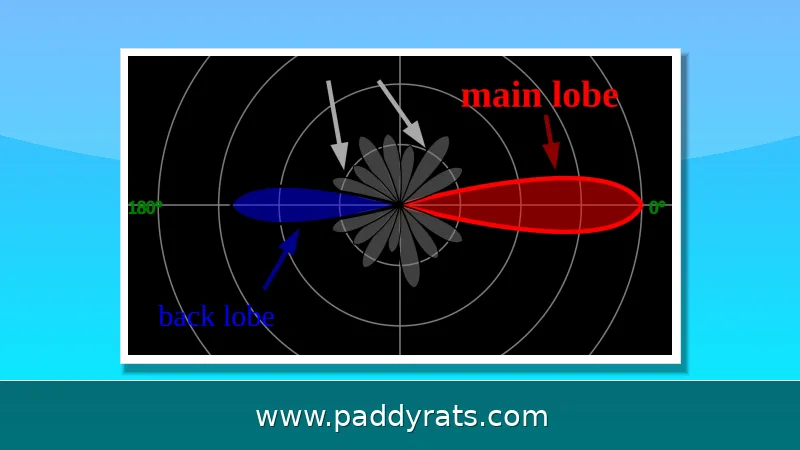
The gap between a DIY circuit and a commercial unit is mostly about power, antennas and heat management. Portable jammers are compact and battery-powered with limited range, while stationary jammers are more robust with higher power output for larger areas. Drone jammer guns project a cone of about 15-30 degrees, and heavy-duty models work from up to almost a mile away; one system provides 360-degree coverage out to 1.9 miles.
Targeting strategy separates the categories as well. Drone jammers target only drone frequencies to minimize disruption, while wide-band full spectrum jammers block multiple bands at once. For rogue UAV control, jamming is described as the preferred and safest method because it preserves the drone and presents fewer risks than netting or shooting it down. The table below summarizes how the main options compare on the dimensions that matter most.
Market Context and Commercial Pricing
Signal jammers are used to disrupt wireless communication across various frequencies including cellular networks and satellite communication, and fixed jammers are one category tracked in Technavio's 2024 market analysis. Pricing for commercial hardware shows why the legal market is dominated by authorized agencies and specialized buyers rather than consumers.
The numbers below are list prices for commercial units, included here to illustrate the cost gap between a DIY circuit and a compliant, professionally engineered device. Note that buying or operating these devices is restricted to authorized users in the United States.
Bottom Line on Homemade Signal Jammer Risks
The legal exposure alone settles the question for most readers: operating a homemade signal jammer is prohibited under the Communications Act of 1934, with fines up to $112,500 per incident and potential criminal prosecution, and only a short list of federal agencies and trained state and local law enforcement can jam lawfully. The technical case is just as weak, since a typical DIY circuit reaches 5-15 meters at best while creating interference that can spread across WiFi, Bluetooth, cellular and aviation navigation bands.
If the goal is protecting a property, a venue or an event from drones or unwanted wireless traffic, the practical path runs through authorized mitigation providers and law enforcement channels, not a breadboard. This article is informational and does not constitute legal advice; consult an attorney or the FCC directly before considering any RF mitigation equipment.
Frequently Asked Questions
Is it illegal to build or use a homemade signal jammer?
Yes in the United States. Under the Communications Act of 1934, specifically 47 U.S.C. 301, 302a and 333, the FCC prohibits operating, marketing or selling devices that block, jam or interfere with authorized radio communications. Violations carry fines up to $112,500 per incident plus potential criminal prosecution.
What frequencies do homemade jammers usually target?
DIY builds commonly target cellular bands from 700MHz to 2100MHz, GPS at 1575MHz, WiFi at 2.4GHz and 5GHz, and drone control links at 433MHz, 900MHz, 1.2GHz, 1.5GHz, 2.4GHz and 5.8GHz. A single homemade circuit often covers only a narrow band, so builders add stages and increase interference risk.
How far can a homemade RF jammer reach?
A simple DIY jammer circuit can jam radio frequency signals between 5 and 10 meters. Adding a 2-meter antenna extends the range to roughly 10-15 meters. Longer antennas increase range but also raise the risk of interfering with unrelated nearby communications, including emergency and aviation bands.
Why are homemade jammers dangerous beyond being illegal?
The same frequencies used by drones, phones and GPS are shared with WiFi, Bluetooth, cellular networks and aviation navigation. An improperly deployed jammer can disrupt emergency communications, interfere with nearby aircraft and knock out wireless infrastructure across a wide area, while offering only narrow-band blocking in a limited range.